
Taking the Shot.

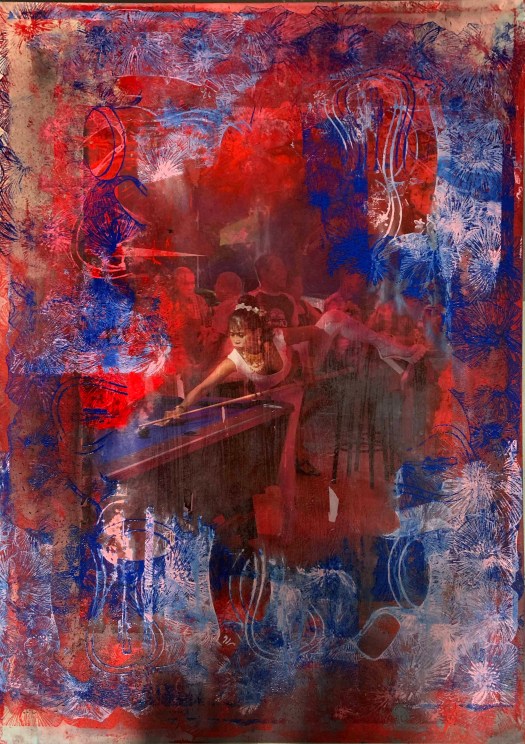
I have started to overprint the under image with deep and cerulean blue.  The surface was than blasted with a jet of water to achieve a range of accidental effects and bleeding colour stains.  I have tried to control this process with sponges and used brushes to direct the glaze to specific areas on the piece.  Subsequently, the top layer is divided into smaller compositional areas and the pattern of poppies is somehow more difficult to decipher. The next step is to continue with the printing process, while extending the colour pallet and move towards using gold.

Gold and its metaphorical significance is integral to the overall creative intention and the language of visual communication.

Opulence and ugliness; value and kitsch; ultimate symbol of desire and repulsive reality – my thinking is inspired by the two references below:

Marc Quinn, Siren, 2008

His solid gold statue of Kate Moss titled ‘Siren’ was displayed at the British Museum Statuefilia Exhibition in the Nereid Gallery.

Image result for mark quinn moss

https://www.telegraph.co.uk/news/celebritynews/3122144/Kate-Moss-gold-statue-unveiled-at-British-Museum.html


Maurizio Cattelan: “America”, 2016 at the Guggenheim Museum in New York.

Recently, this piece was stolen from Blenheim Palace.  It was exhibited on loan from the permanent collection of the Solomon R. Guggenheim Museum.

An installation view of Maurizio Cattelan's "America" at the Solomon R. Guggenheim Museum in New York.

https://www.guggenheim.org/exhibition/maurizio-cattelan-america


Facebook Advert

Art Number 22 has already collected information to be printed in the catalogue for the exhibition. This will be available in both versions: printed and online.

Yesterday, a Facebook promotional campaign started to attract likes.
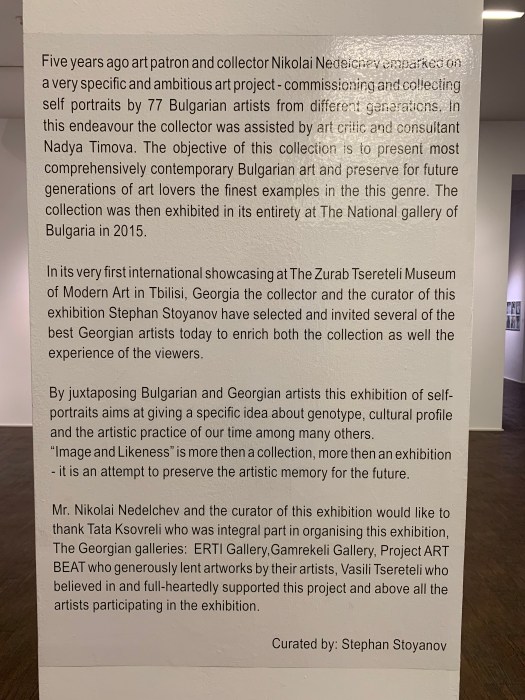
I enclose a screenshot of the most recent advert below:

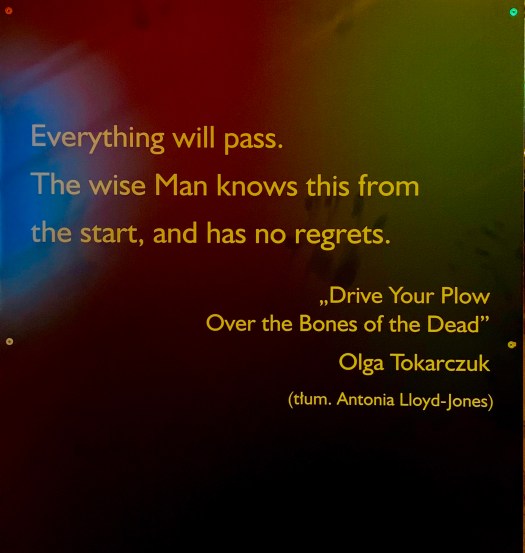
Everything Will Pass

Even the longest journey will come to an end. Nothing lasts forever. It is so difficult to embrace this concept, while engaging in critically analysing life and attempting to understand its wonders. Every trip starts and ends. What is important is the concept. What is left is the experience of travelling and many associated memories.

I am trying to reflect on life of the coach driver in Burma. The tiredness, waiting, uncertainty and anticipation . All of this in order to return back to the place of origin before restarting the adventure again. Is every trip the same? Has the routine and work experience overtaken the exploration of the unknown road ahead. Or… is it simply just entrapped in the vacuum of repetitive hypnosis of life. This is all, perhaps best summarised by the above phrase from a book by the most recent Nobel Prize winner – Olga Tokarczuk.

Snake Seller.

Some of my thinking for this piece was inspired by learning from overpowering photographs of manufacturing by Edward Burtynsky.  My attention was particularly drawn to images of miners.

‘Manufactured Landscapes’, Edward Burtynsky, courtesy of Nicholas Metivier Gallery, Toronto, available at https://www.vice.com/en_uk/article/dpk8yw/edward-burtynsky-shows-us-impending-enviro-apocalypse-in-high-definition

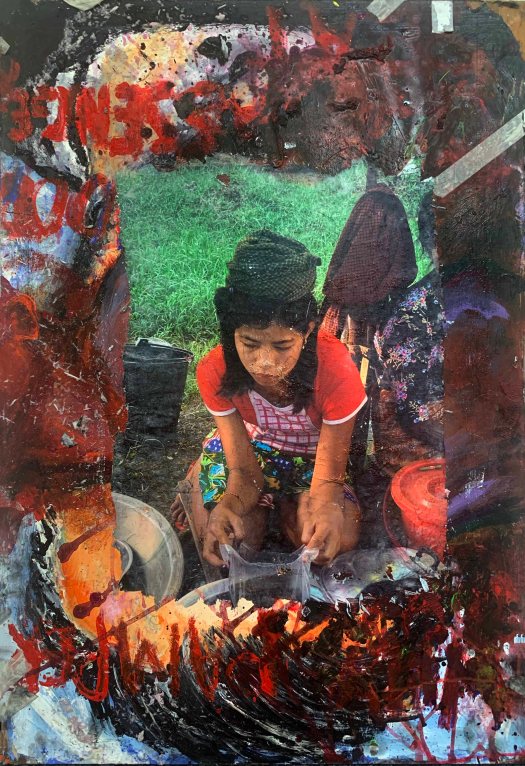
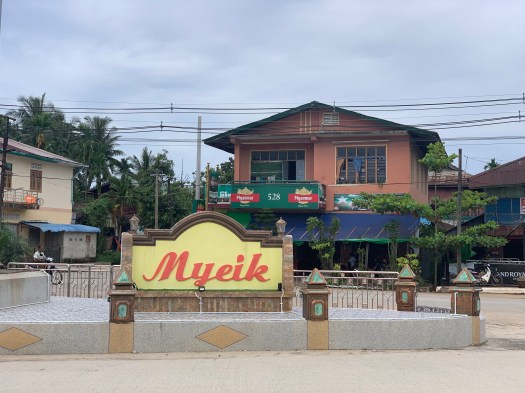
I have just started to work on a new portrait of a young woman.  She is a local worker at a market in Myiek, Myanmar.  The bazaar is based next to famous hot springs.  This increases the attractiveness of this placement and maximises potential sale opportunities.  She is a snakes vendor.  She spends all her days crouching down on her knees, while waiting for prospective customers.  Although she works outdoors, her individual stall can be seen through a window-like hole in a sheet of graffitied metal.  The contrast between brown and ochre colouring of the facade, raw redness of her T-shirt and the dynamic green of the grass make an illusion of quite dramatic and full colour compositional arrangement.

Her head is decorated with a traditional Burmese turban.  She is very serious, almost contemplative and very tense.  She looks down, perhaps away, and tries to kill time by organising one of her snakes neatly in a plastic bag, always in readiness for the next sale.

She spends most of her time waiting in anticipation for a successful transaction and making a profit.  All her days are alike, full of repetition, boredom and sameness. However, competition is tough.  Sales are limited.  This makes her existence very uncertain and fills her daily life with misery and anxiety.

I am hoping to overprint this piece with a repetitive pattern to increase the power and the overall impact.  This process will be documented in stages.

snake seller

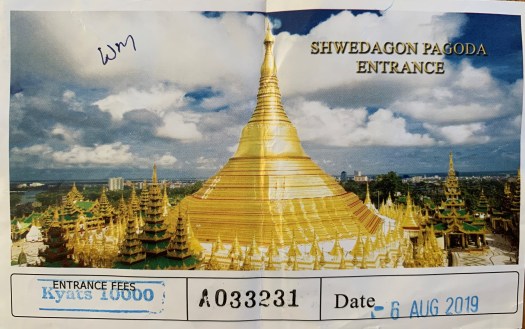
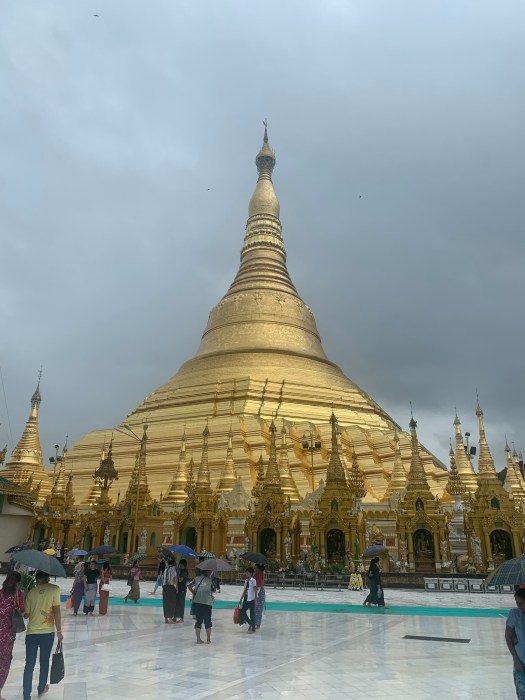
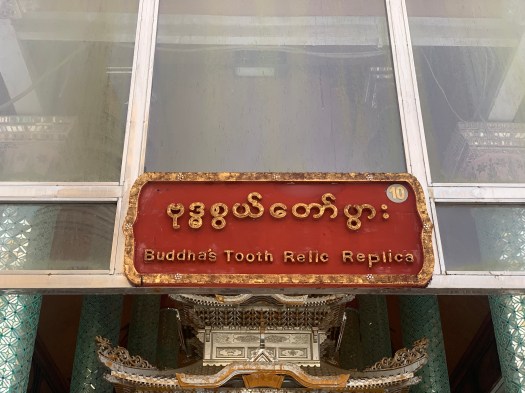
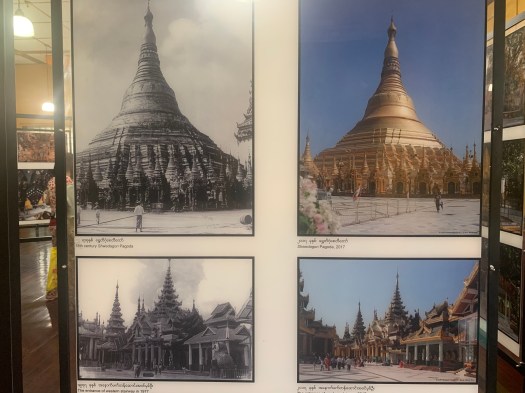
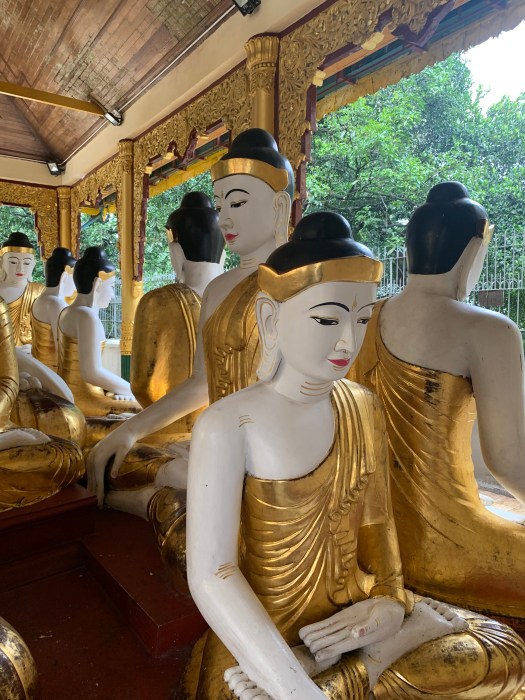
Shwedagon Pagoda, Myanmar.

img_4980

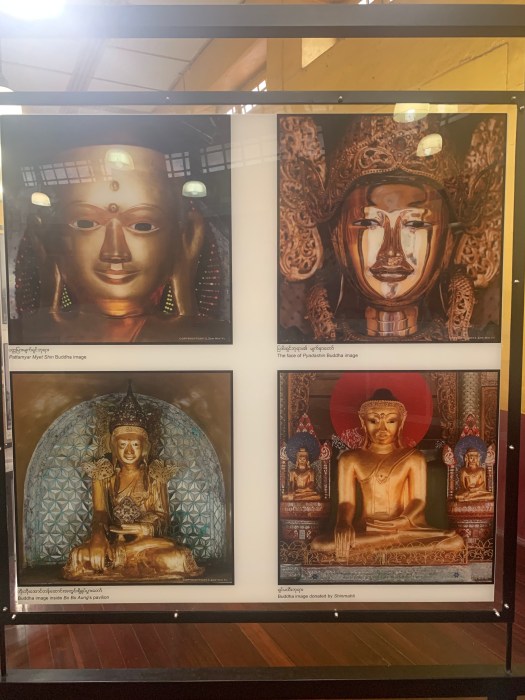
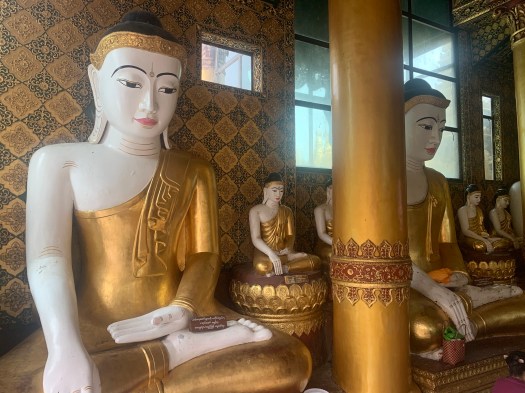
Despite the pouring rain (rainy season) the visit to the Shwedagon Pagoda was a truly remarkable experience. I was stunned while exploring various parts of this enormous religious complex. It appeared to be a massive golden city dedicated to the beliefs of Buddha.

I spent most of the day photographing details of buildings, monuments and learning from the Shwedagon Museum. So little has changed over the years and the ambience of the place has remained exactly the same.

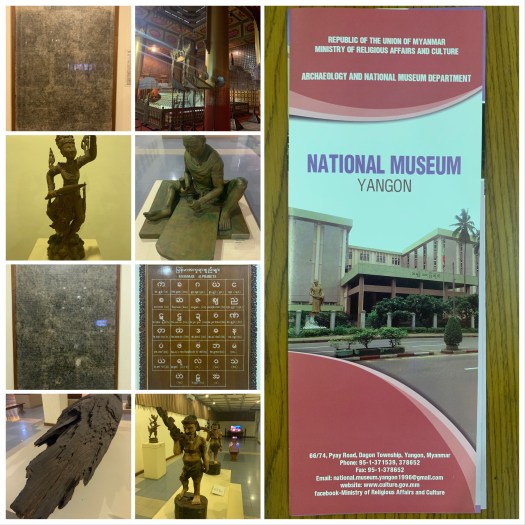
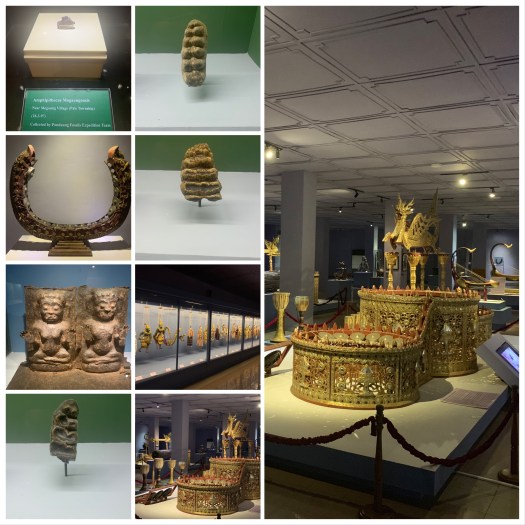
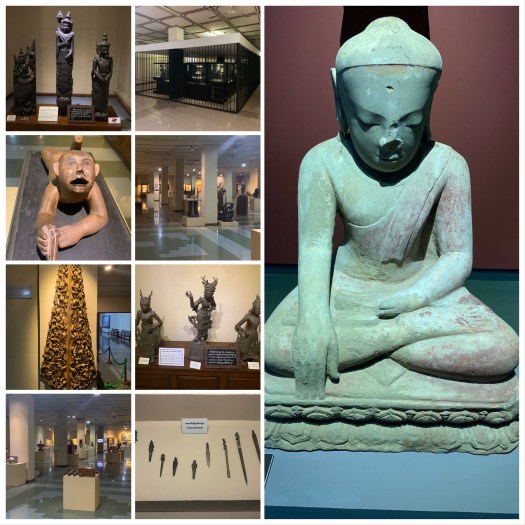
National Museum in Yangon, Myanmar.

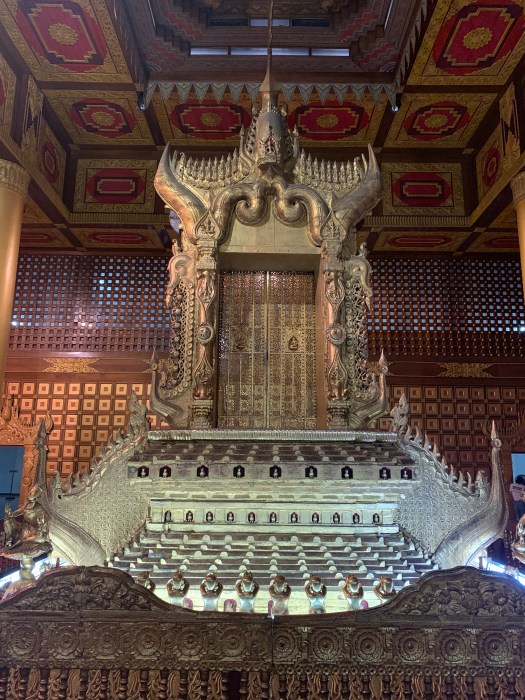
Lion Throne Showroom.

The main exhibit of the National Museum is the Lion Throne. It is over 150 years old, made from Yamanay wood and guided all over.

This artefact was used by the King to adjudicate on law cases. It was taken to Kolkata and finally returned to Myanmar after Independence in 1948. This is the only throne left intact as the other 8 were destroyed during World War II.

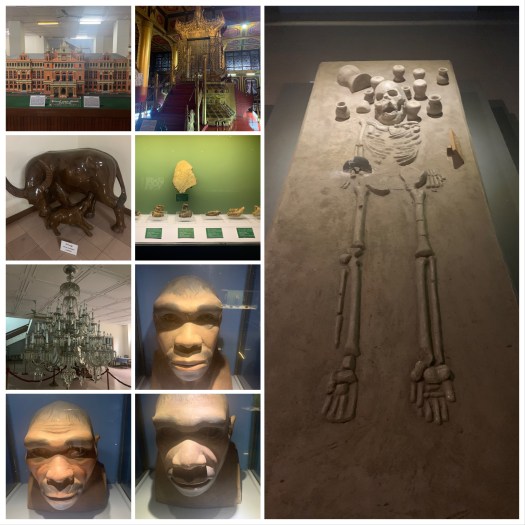
The other floors display Royal Regalia, Natural History, Prehistoric Period and Myanmar Arts and Crafts.

The overall impression was totally overwhelming. I was particularly impressed by a collection of bones, which were 50 million years old and a broad collection of sculptures and carvings.

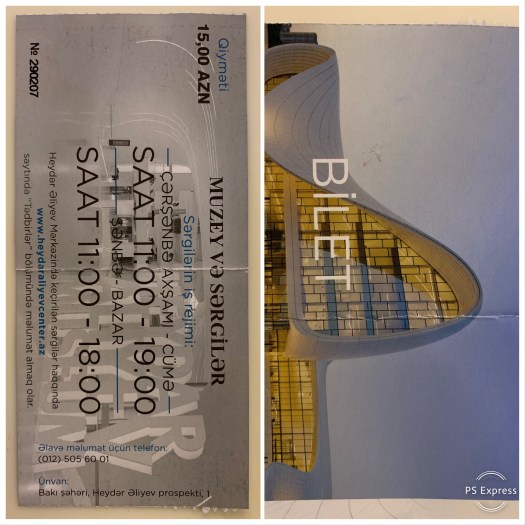
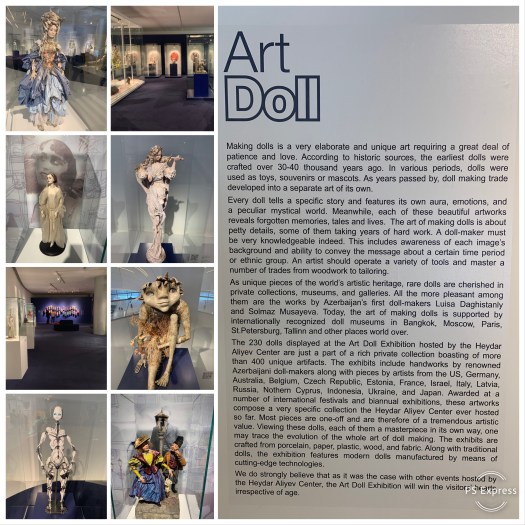
Heydar Aliyev Center

The form of the building of this artistic centre is based on the signature of the president of the country. The architectural design looks totally different from every possible angle and the overall effect is highly futuristic and very overwhelming.

The most distinct features are the fluidity of form and ambience of the space created.

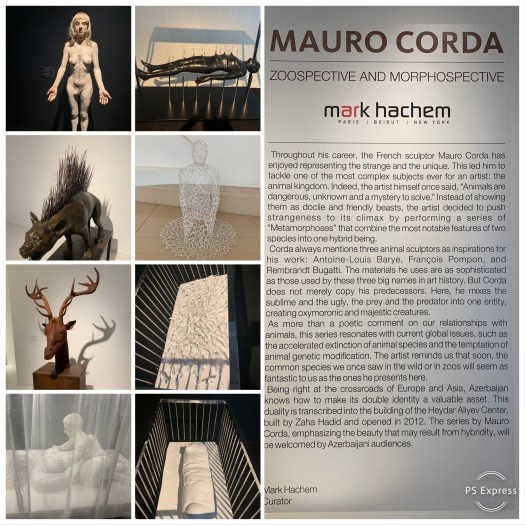
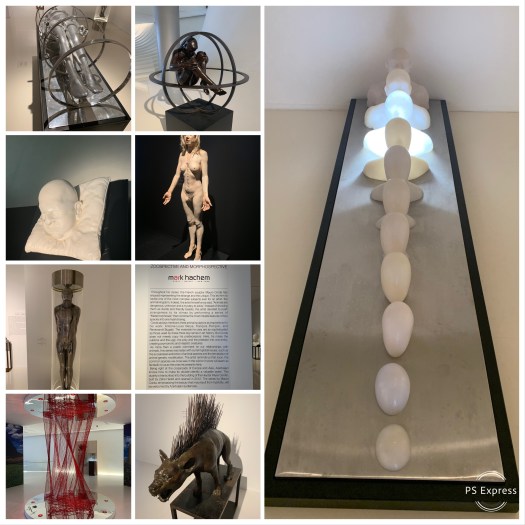
The content of permanent exhibitions is dedicated to glorification of the achievements of the dictatorship as well as evidencing the historical and cultural heritage of the nation.  This is also supported by a number of displays by internationally renounced artists, including to my surprise, Tony Cragg and Anish Kapoor.  I would have never dreamt to think that both artists would have knowingly agreed to exhibit their work at the ‘cathedral’ of totalitarianism.

The key exhibitions also include a collection of cars owned by President Aliyev, a timeline of his family in power and a display of a range of memorabilia of personal and national significance.

I must admit that I felt quite guilty to enter this building and support the ambiguous ethos, purpose and function of this questionable monument. However, my curiosity was stronger and, on reflection, the exhibitions were very well curated and presented.

Overall, the main element of my learning could be summarised by the following thoughts:

The central principle of abstract art and non-figurative representations is the refusal to imitate visible reality in the process of creation. Instead of copying nature and recreating the surrounding world, the toolset of artistic creativity, such as composition, colour, texture, line and form themselves become the object of art, main interest and the subject matter.  Furthermore, the idea of the form replaces the subject.

All of work, which I have produced so far, consists of a bizarre conglomerate of abstract elements and those, which are somehow recognisable.  I am definitively interested in ambiguity through the creation of non-representational compositions and supporting their meaning and visual communication with readable components and fragments.  This combination allows me to create both a new space and new understanding.

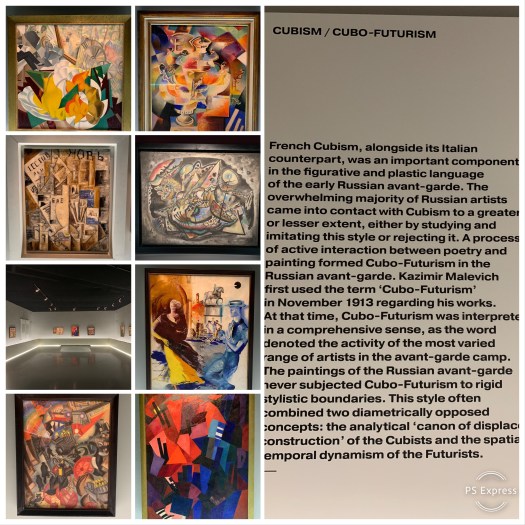
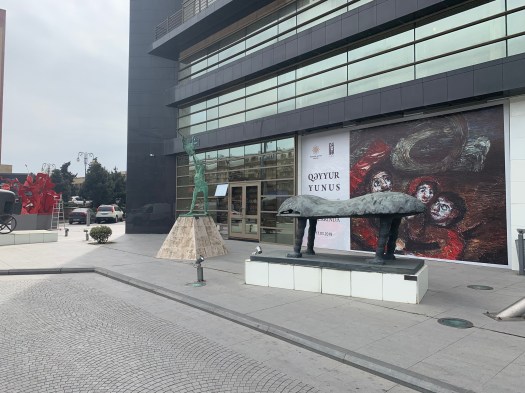
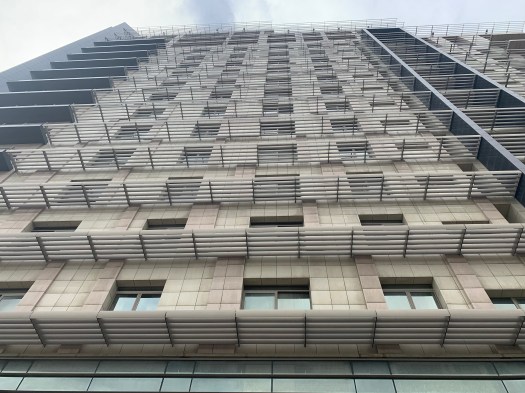
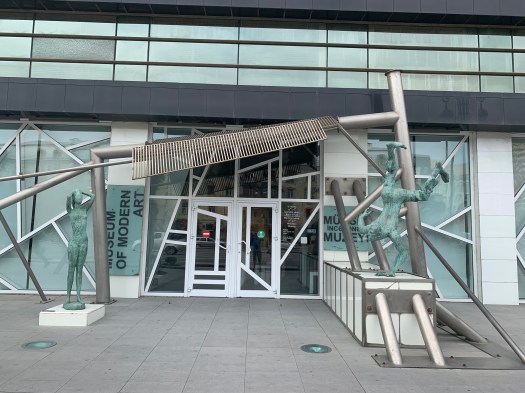
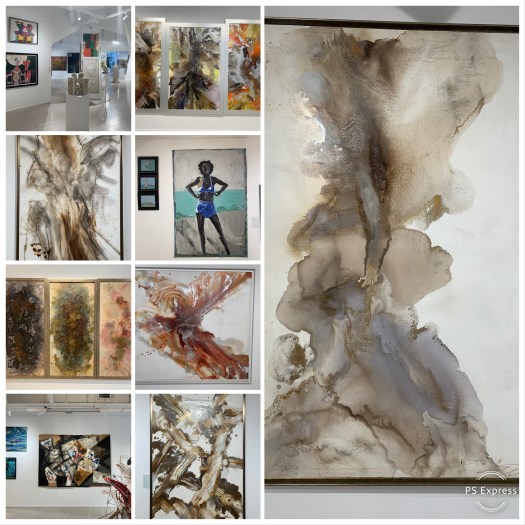
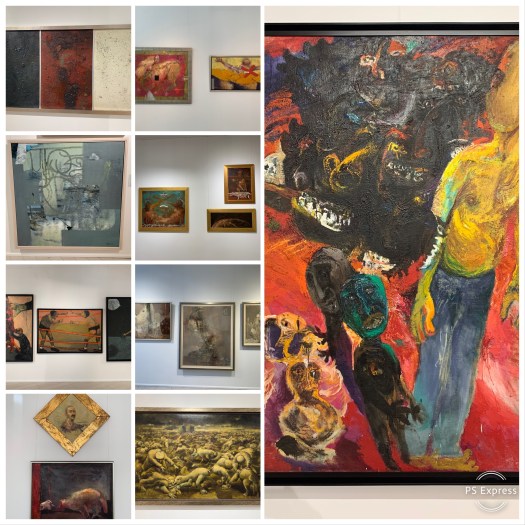
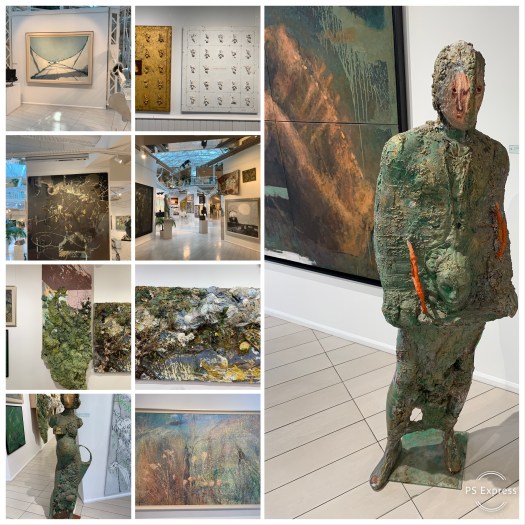
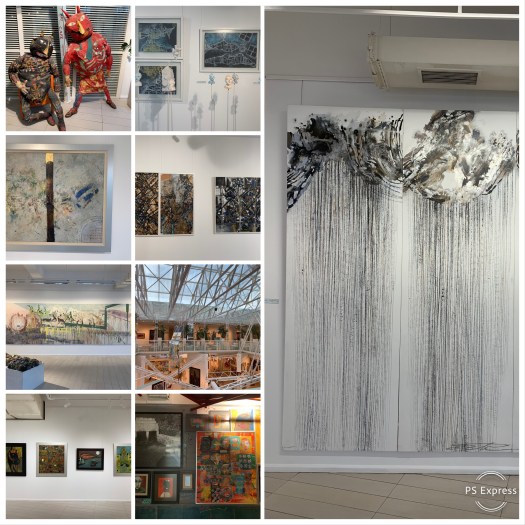
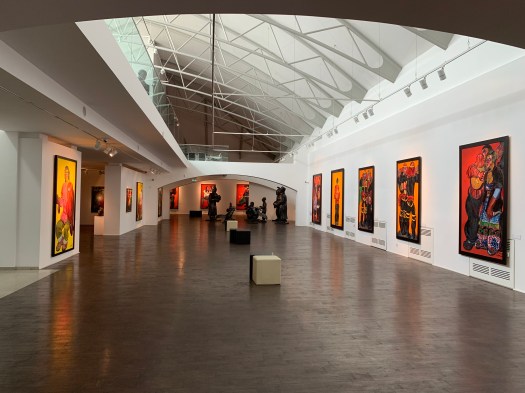
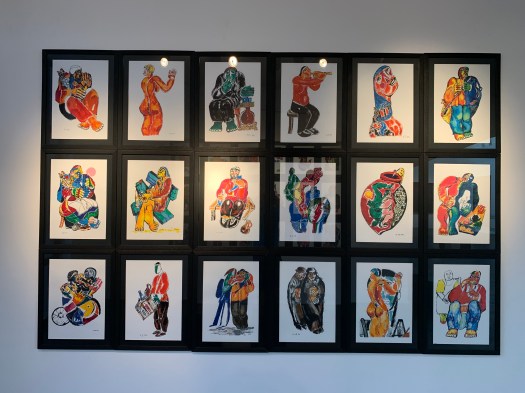
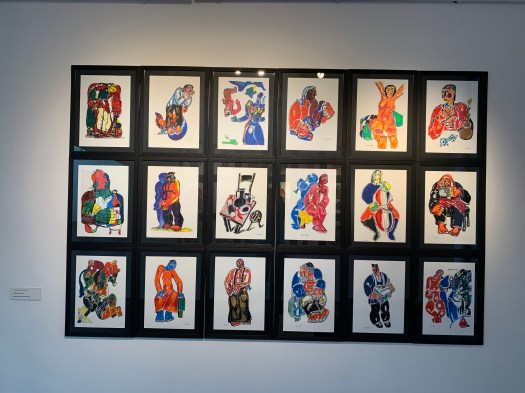
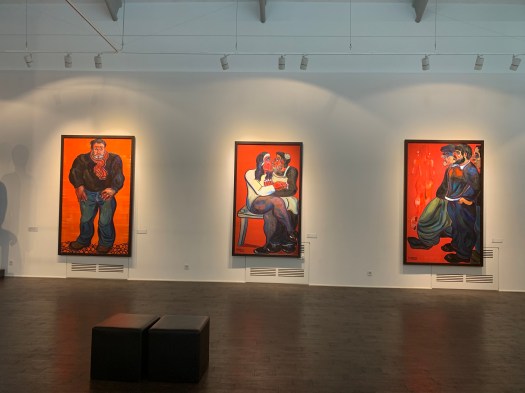
MOMA Baku

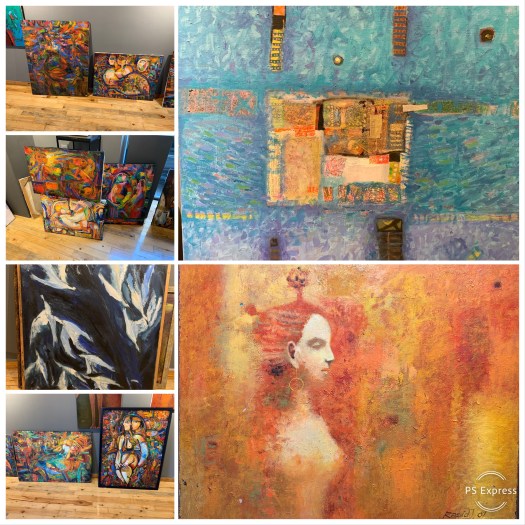
This extensive gallery is absolutely inspirational! Both, the architecture and curation of the work provide an exciting inside into a range of developments in the contemporary art of the Balkan region. It draws from numerous influences of the Persian Empire, long standing cultural and religious traditions and, finally, Russian occupation. The impact of war in Nagorno Karabakh and a conflict with Armenia is also clear.

Due to the international profile of exhibits, I have also started to recognise some of the artists, whose work was on display in Tbilisi.

The work is very expressive with a strong narrative element. My head is buzzing with new ideas.