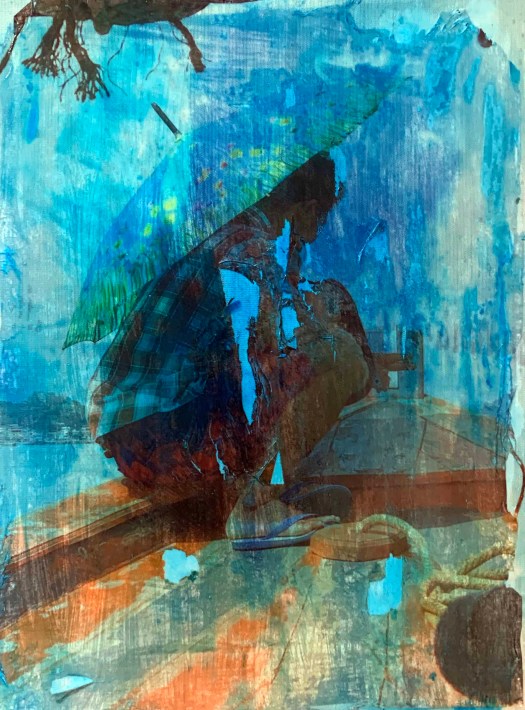
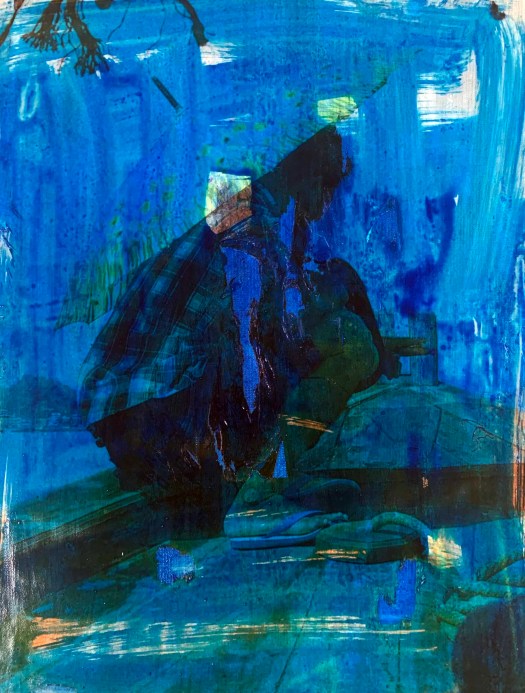
I have started to work on a long process of glazing the already existing underpainting. Every wash of colour was subsequently cleaned of with a sponge and cloth. The objective was to make the painting more moody and dramatic. This technique has also allowed me to reveal individual areas of the glaze while allowing some of the original colour to get through the layers.
This painstaking process has already taken its toll on integrity of the surface. The chips and cracks of the underage have become more and more apparent. When the work is completely dry, I intend to reinstate the machine intervention process.
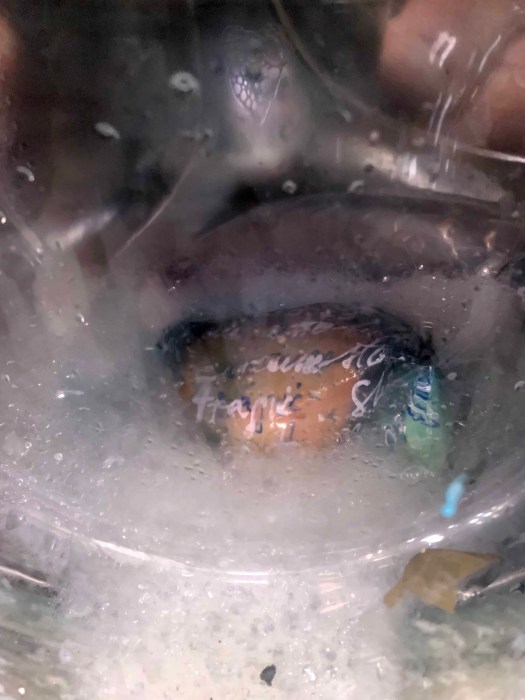
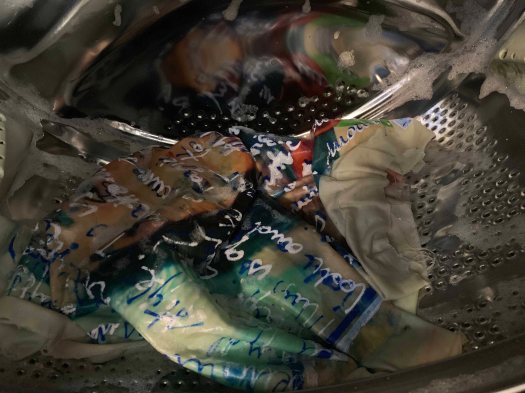
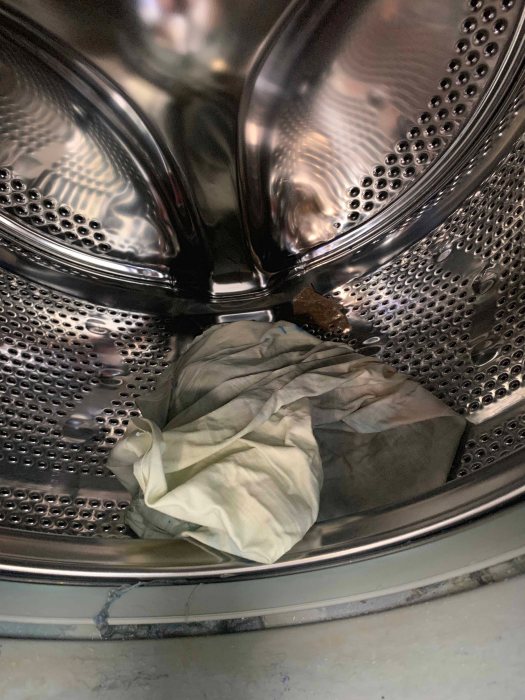
I plan to video record a long and hot machine cycle. Whatever is remaining after will constitute the beginning of the next stage of the painting process.
It has taken me a long time to sort out and organise a broad range of images for further development. Despite contracting Chickungunya, my research trip to Myanmar, Thailand and Cambodia, has proven to be very successful in terms of both: life-changing experiences and gathering primary sources.
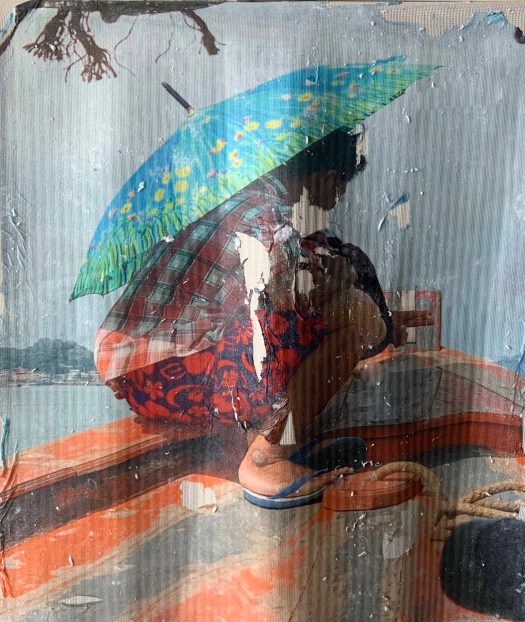
I have started working on a new piece. The work portrays a Burmese captain in charge of a long boat. His job is to transport people and cargo from Ranong in Thailand to Kawthoung at the furthest southern point of Myanmar. His main clientele are poor illegal workers from Burma trying to earn a few baht in Thailand.
Following a long conversation with him, I become one of his passengers. To maximise income, he accepts as many people as possible. He even travels on the very front of the boat to save valuable space. This place is very uncomfortable and rocky. He is also fully exposed there to the power of the tropical sun. He tries to get some relief from the burning heat by hiding under a colourful umbrella.
The image is very clashing in colour – very kitsch. This is further enhanced by his crude and cramped body position.
His ankle reveals a massive tumour.
There is a gigantic growth on his leg, perhaps caused by prolonged exposure to the sun and continued contact with polluted water in the port.
My creative intention was to portray him in his usual setting, while crossing the same water many times every day.
The focus is on him. The beautiful surroundings no longer matter. He cannot see the landscape. He is trapped in his daily routine.
The colour of his shirt blends in with the orange stripes of paint on the boat.
The umbrella is feminine and looks absolutely ridiculous.
You’re not the girl with long hair, oval eyes, luscious lips and perfect teeth.
You don’t look like the girl on the magazine cover or runway,
Hell, you might even be straighter than an arrow.
But you’re the most beautiful.
The way you love hard, laugh with abandon, push your glasses back to your face, wipe the sweat off your forehead, the way that crown dances on your head.
Sure, you’re a queen,
Of hearts, of love, freedom, beauty, wisdom.
Your huge heart is large enough to hug all the children of the world.
you refuse to be undermined and wield your sword in the fight for truth.
This is my last blog entry and one day before I am due to fly out to Thailand and ultimately travel through Myanmar. I am planning to gather a broad range of primary sources for a further experimentation with the newly initiated process.
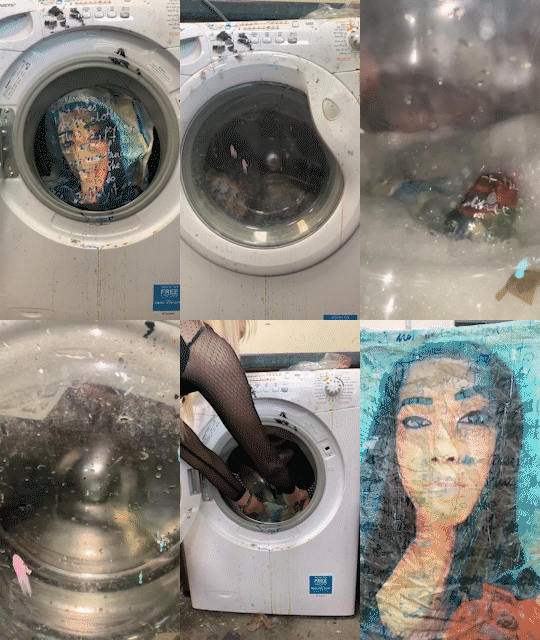
I have edited a number of documentary recordings of various stages of the washing process. The creative potential is definitively there and I will continue to question the metaphorical meaning of the uncertainty of the washing process.
A video and a GIF below, document the process of my work and thinking. There is also an intriguing dialogue between the resistance of the fragile image and the brutal and violent machine intervention.
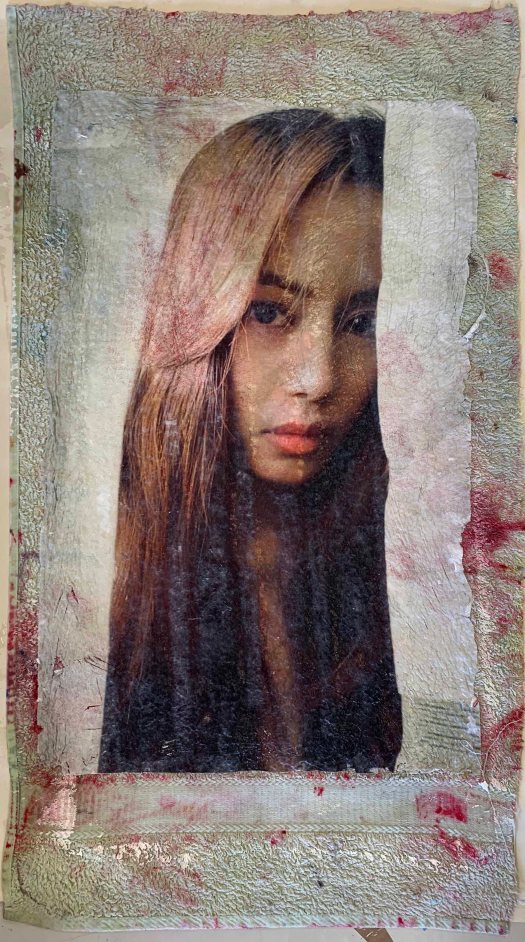
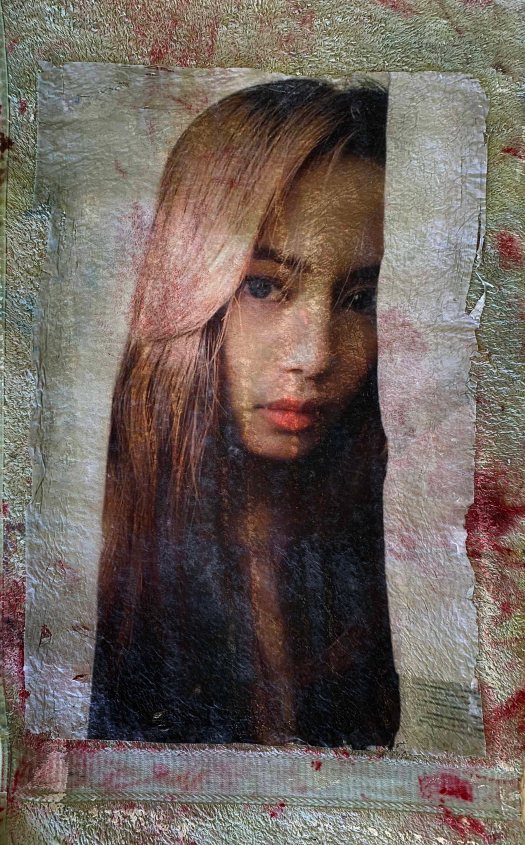
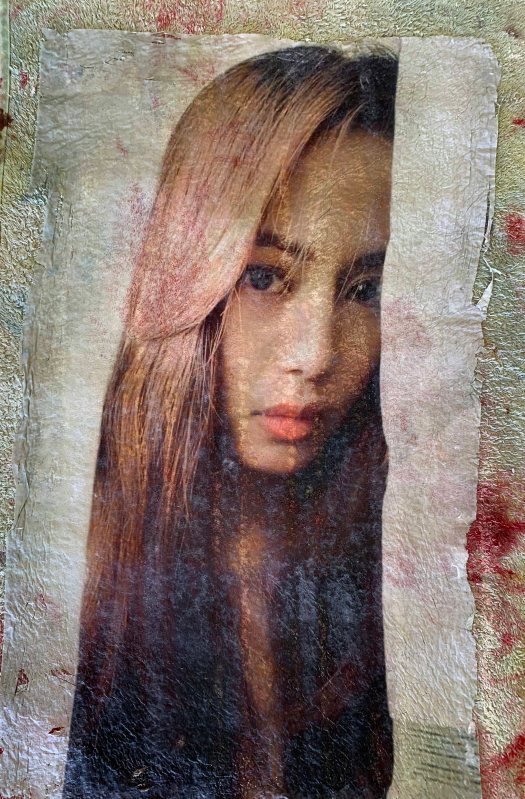
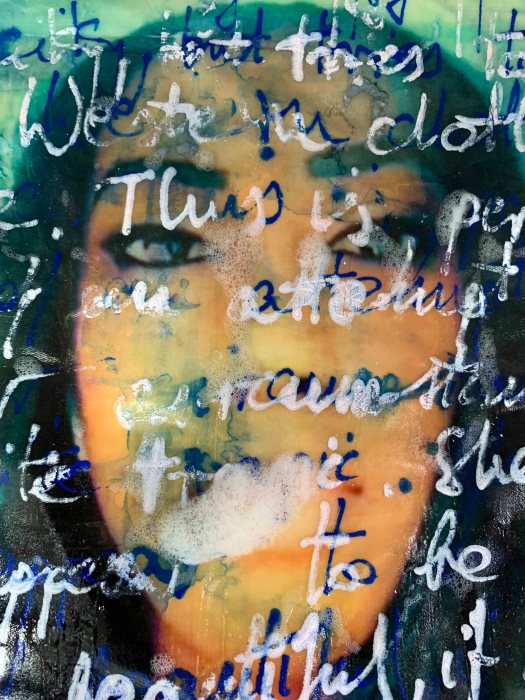
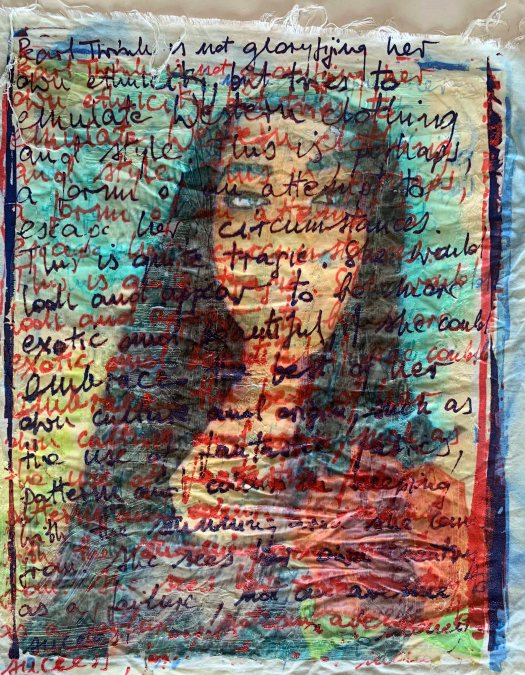
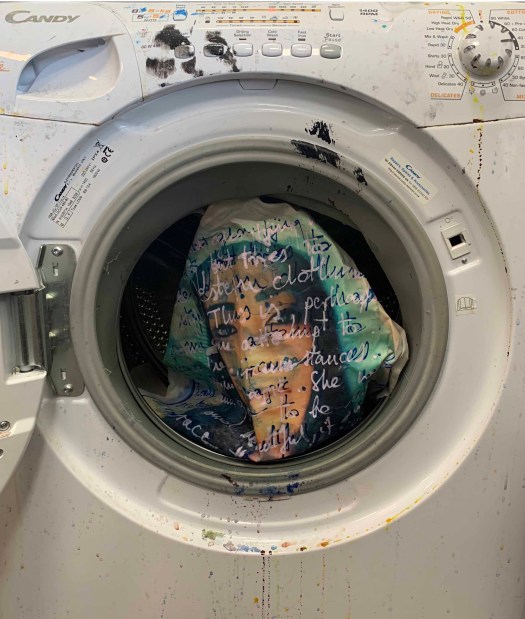
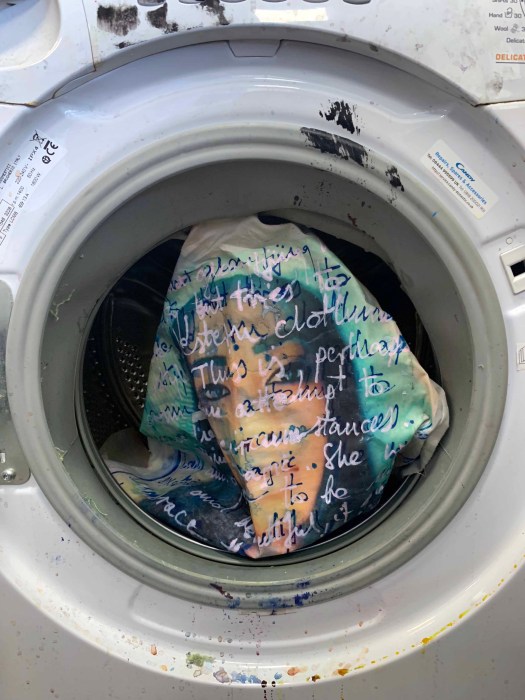
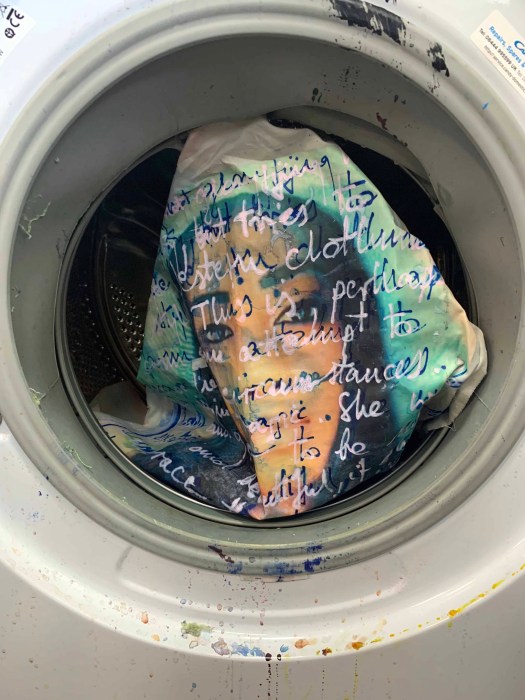
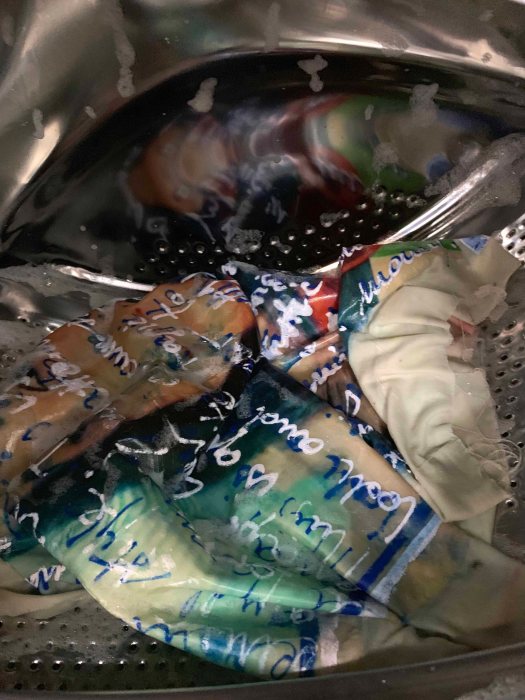
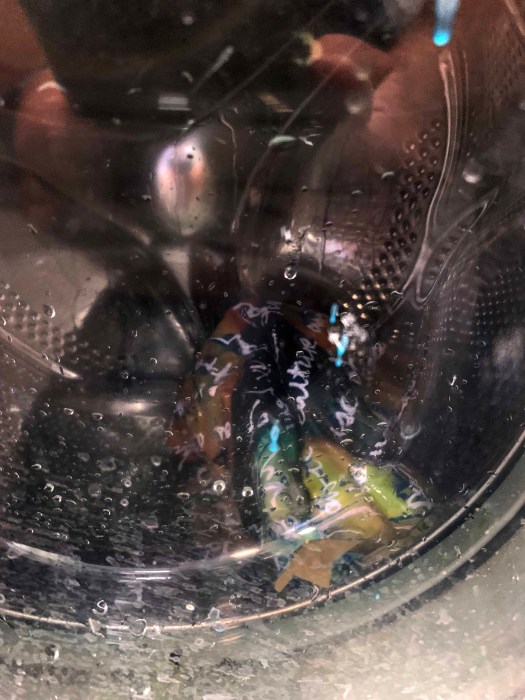
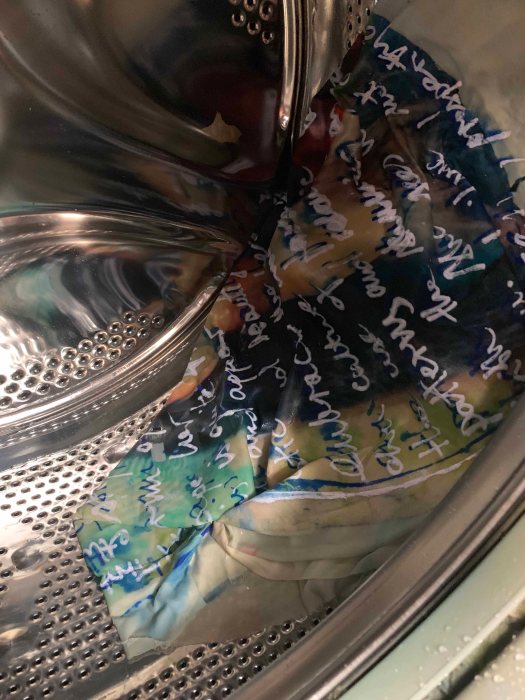
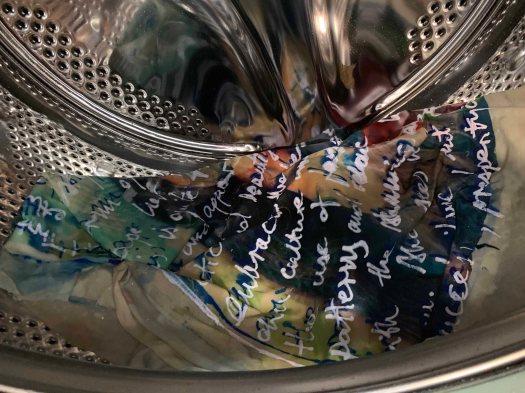
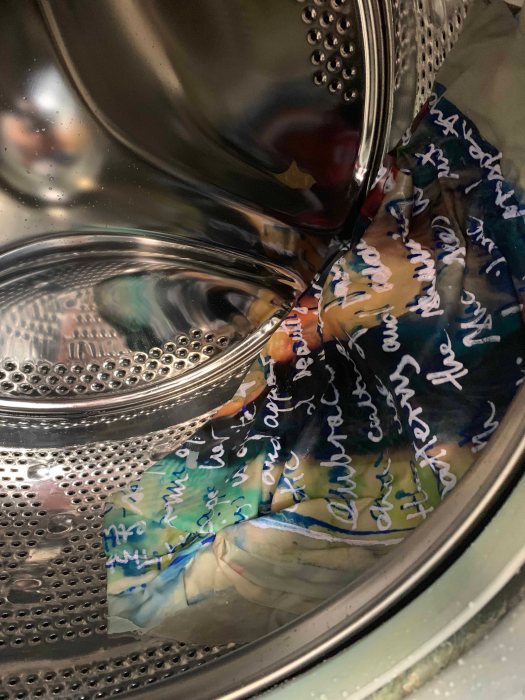
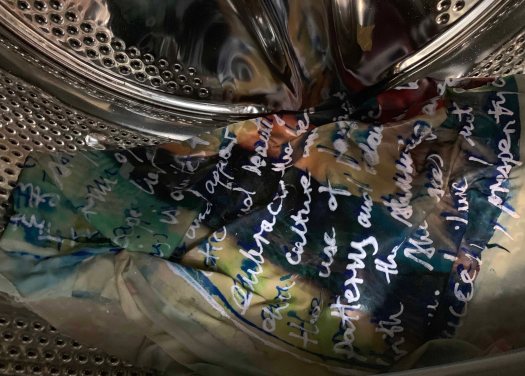
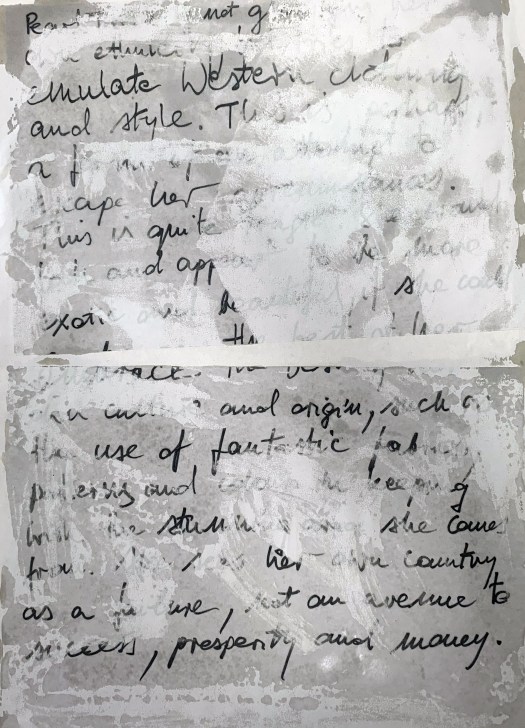
I have just started the next phase of the long planned process of experimentation with machine intervention. I have alternated individual washing cycles with the overprinting and refreshing of the image. When the ink was dry, I used the washing machine again and programmed different lengths and temperatures to maximise the effect of uncertainty and unpredictability. Cold washes had minimal impact on the image. The screen-printed text started, however, to become softer and softer. Therefore, it appeared to be more ambiguous and difficult to decipher. The surface of the painting itself, became damaged and populated with watery holes and creases. This change to the texture and integrity of the piece has started to create an impact on the dynamics of the painting.
My plan is to continue with this process in order to find out, how far it can be stretched. What I would like to establish is the limit of uncertainty. How far can this process be taken to before the inevitable becomes the obvious, predictable and very certain. I am fascinated by a dialogue and interdependence between both contradictory perspectives and the testing of the boundaries.
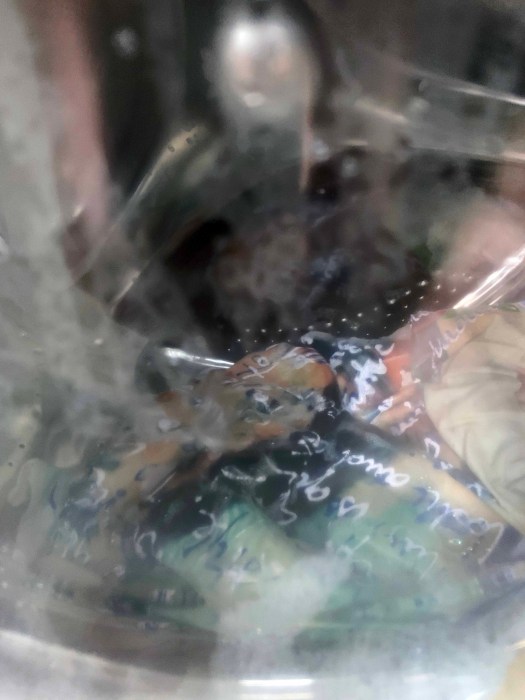
I have managed to record several interesting images depicting this new to me method of working.
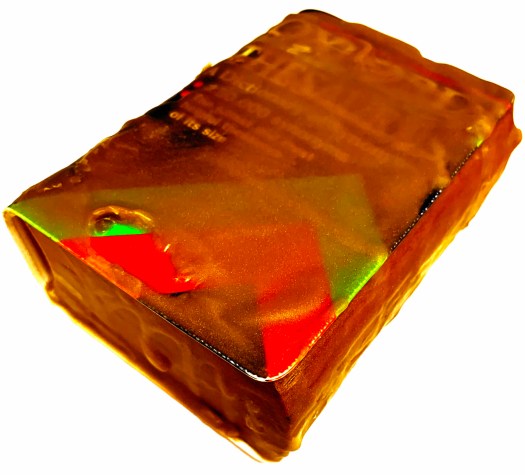
The brief was to manipulate an everyday object in order to alter its meaning and purpose.
I have chosen a pocket version of a dictionary, which used to be a symbol of all important and desirable knowledge. Frequently, it was the only source of finding answers to questions.
I have produced this piece as a part of an induction project with my new Foundation Art students. My creative intention was to communicate the fact that, in the contemporary times, not many people read. Published books have slowly become obsolete and replaced by online editions. The gold coloured wax is also of significance, because of its associated status and meaning,
Final proposal for my submission to the Interim Exhibition.
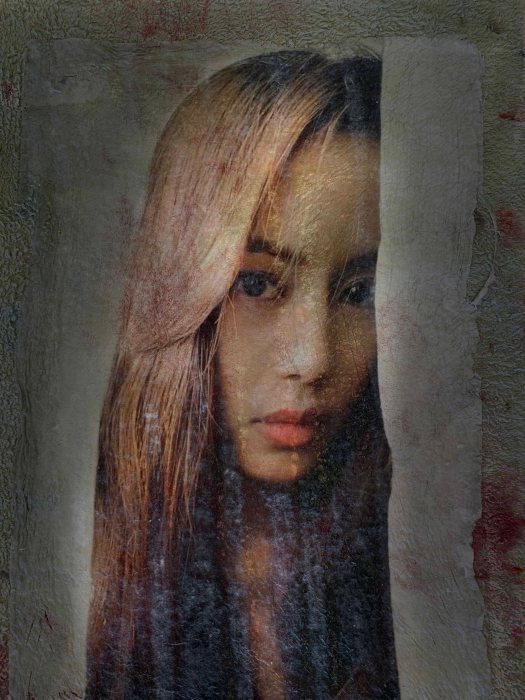
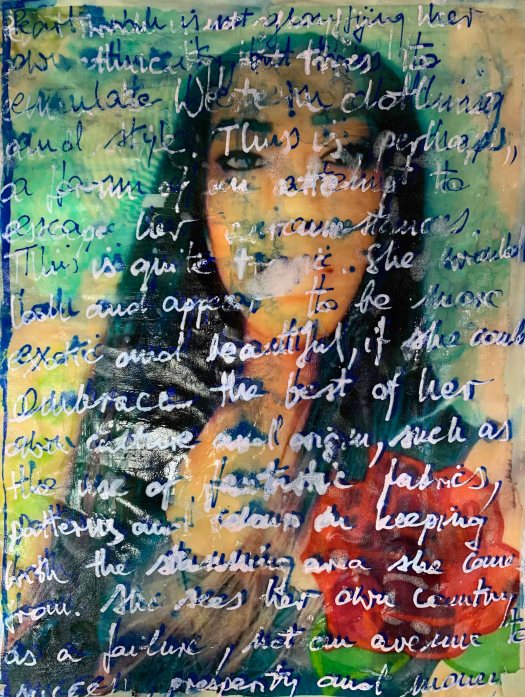
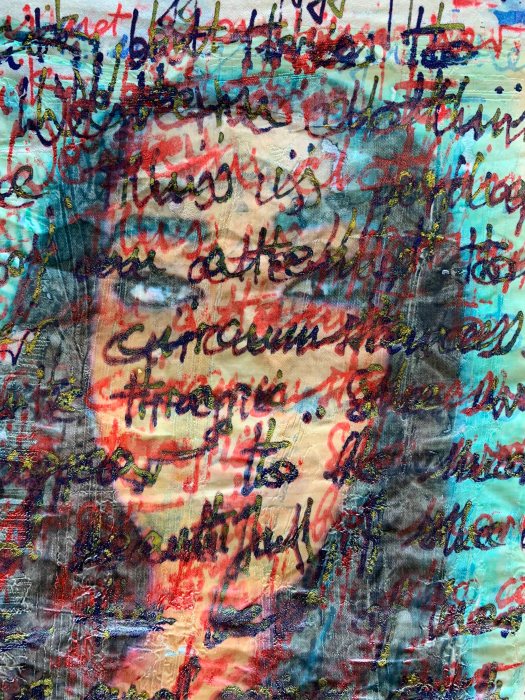
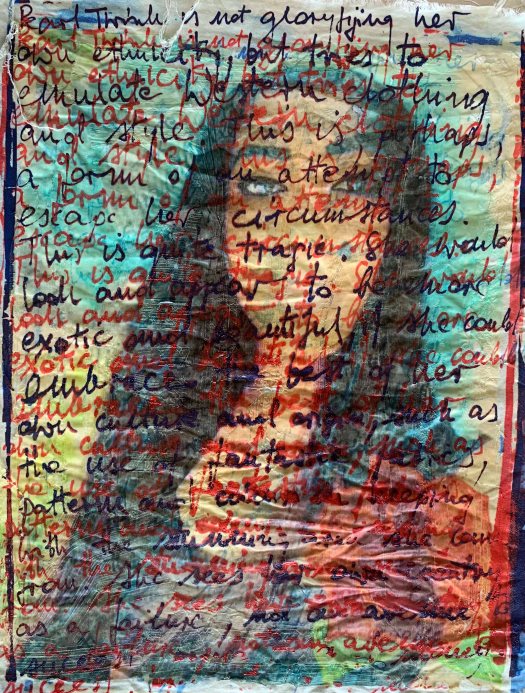
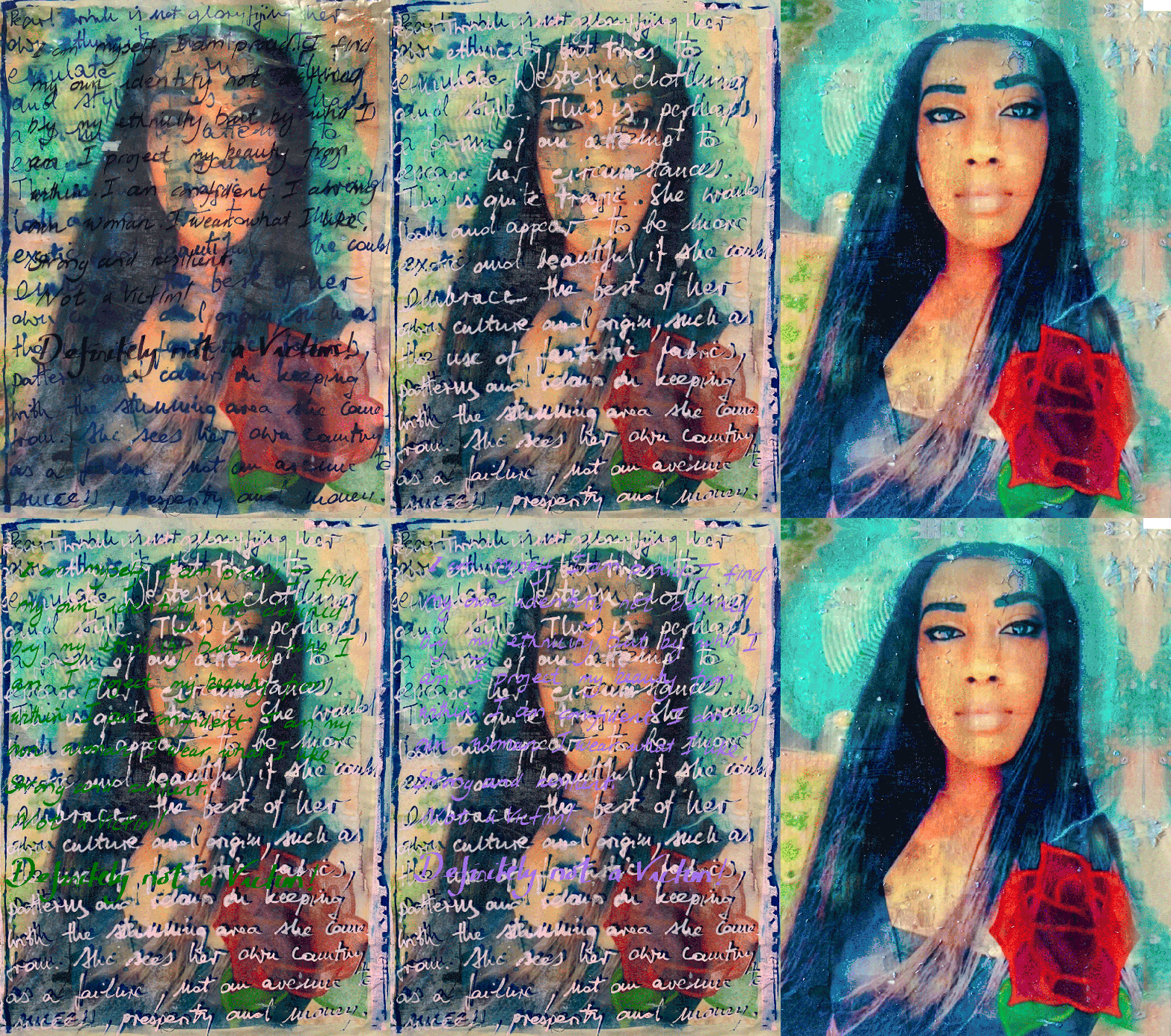
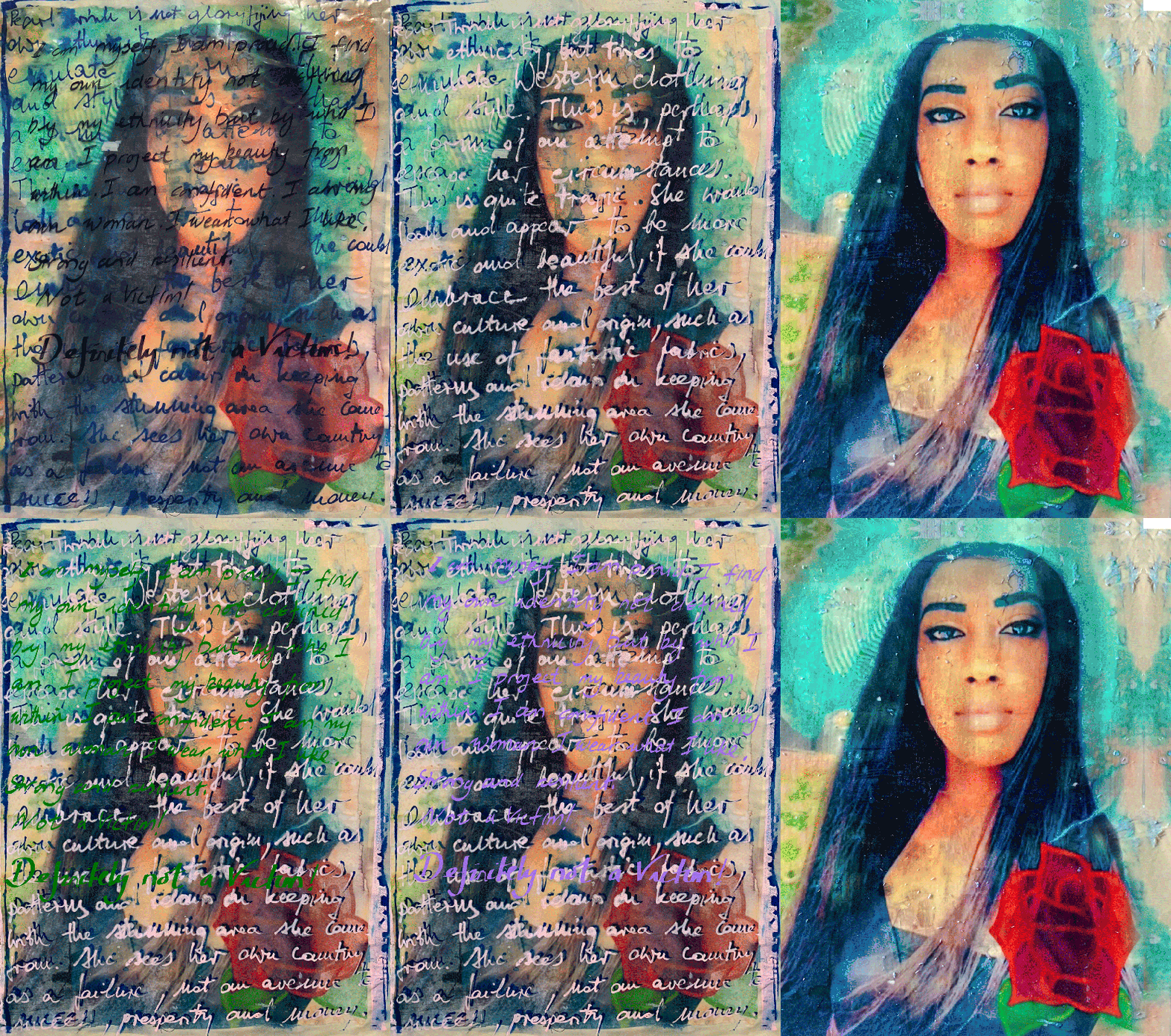
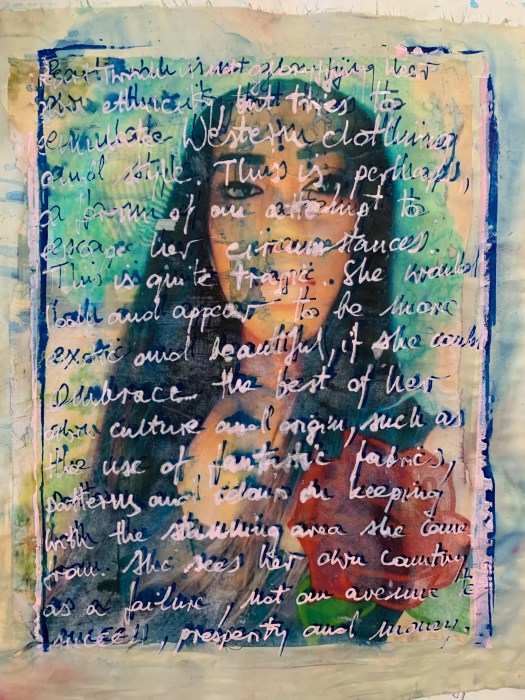
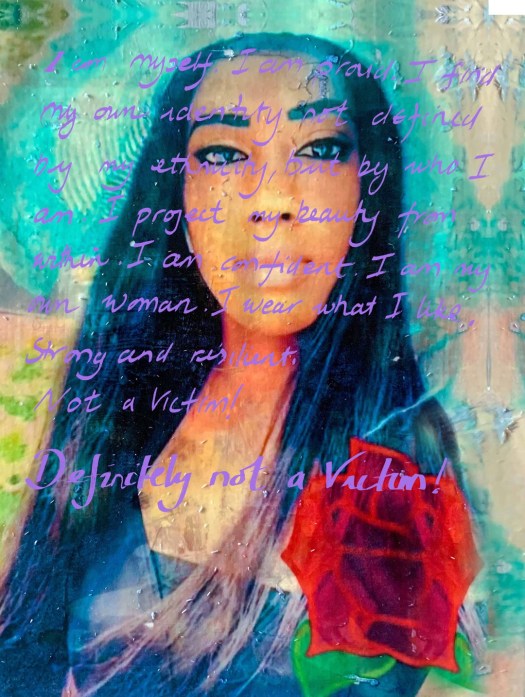
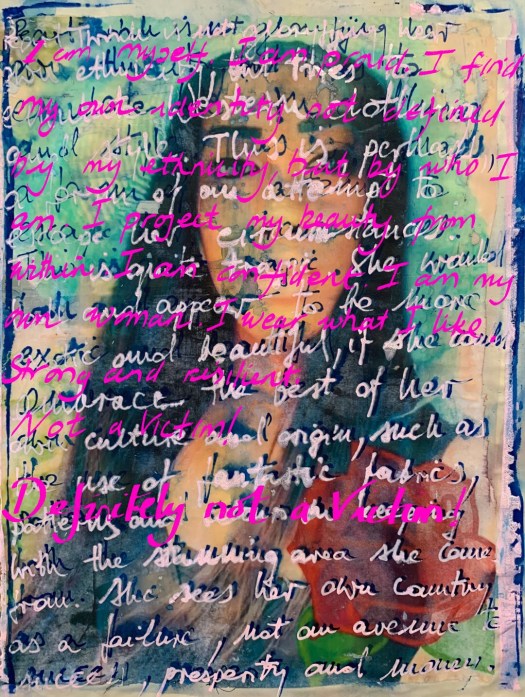
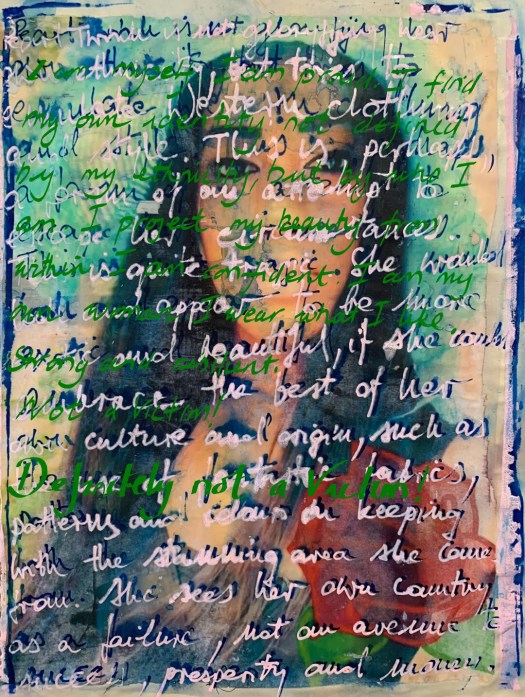
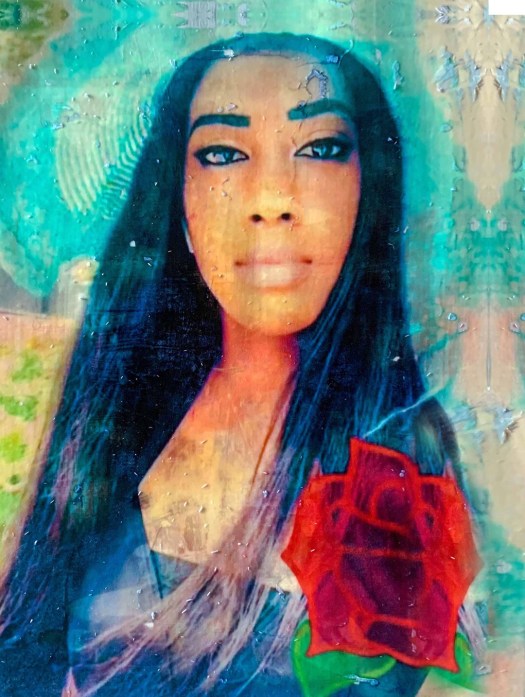
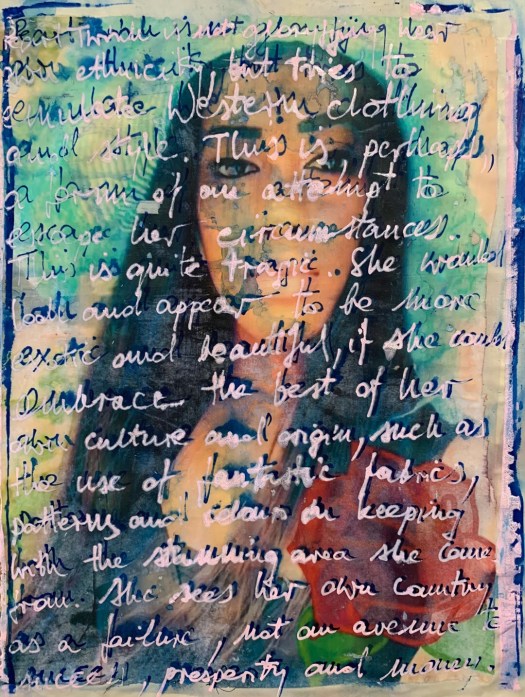
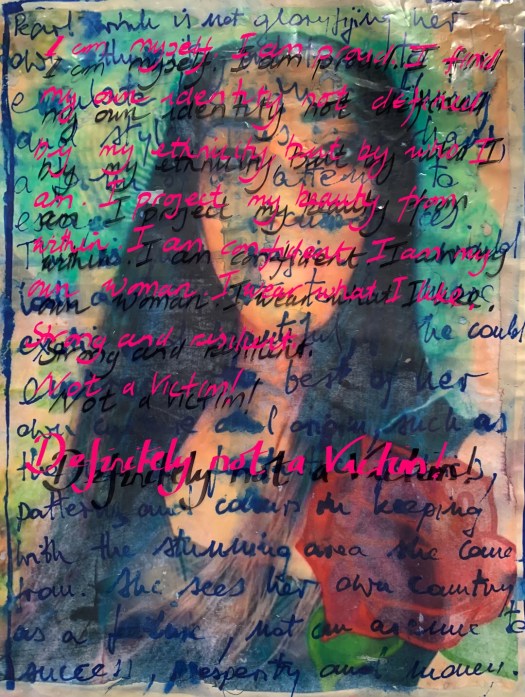
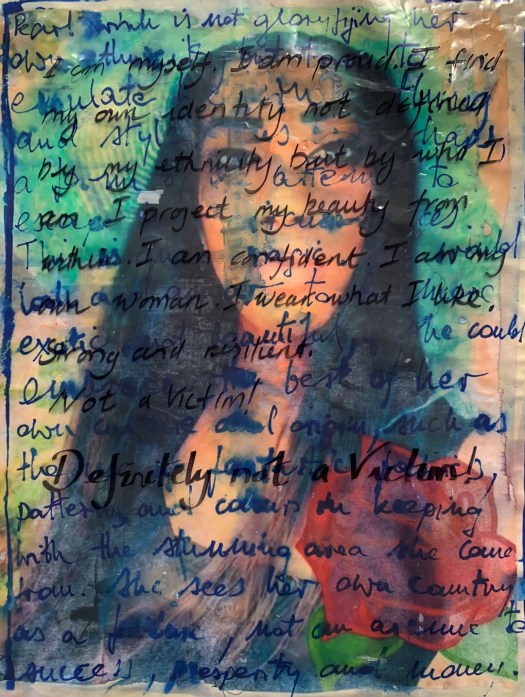
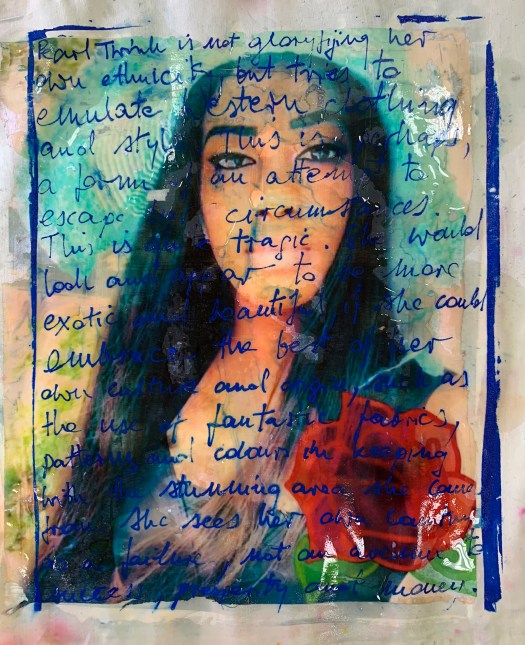
This portrait is hypnotically hovering behind the text – emerging from the writing and vanishing again. The model is looking down with pride and confidence. She is emerging through the messages and remains deadpan – a distant observer.
The video instigates a sense of a dialogue between provocations and her responses to them. Despite the attention, she remains undisturbed.
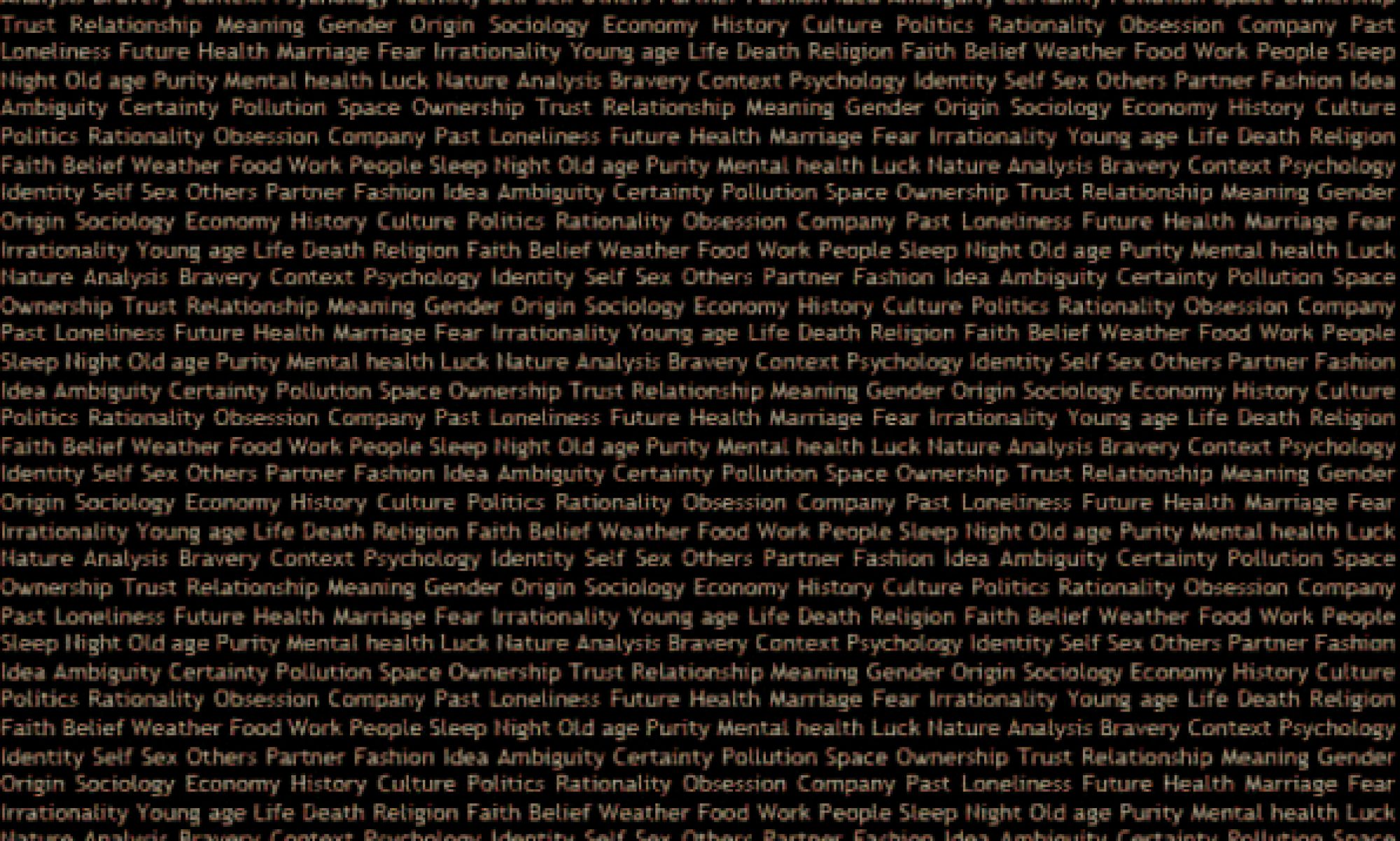
The piece tries to question the presumption within our prejudice and allows us to understand the contradictory point of view – the opposite perspective. Therefore, forcing us to confront and reflect on our own behaviour in the context of making judgements without thinking and appropriate analysis. We simply devalue the status of a person from a different culture. Labelling and categorising removes individuality and creates a climate for a lack of our responsibility towards them.
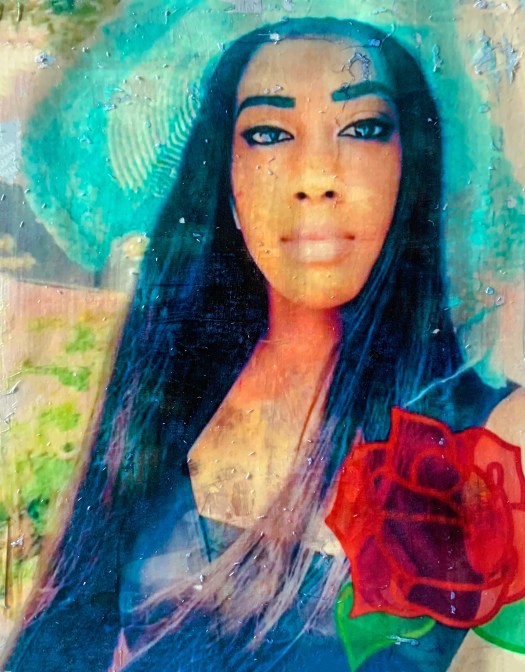
The patterns and colours echo the culture of her native Nigeria. They are vibrant and dynamic, reflecting the power of pure Chroma highlighted by the tropical sun.
Earlier versions during the developmental stages were jumpy. I felt that the portrait did not interact well with the messages.
This is a smoother and more refined version in Premier. However, there is a jump at the end, which makes the looping disjointed.
I am very excited to have started working on an alternative direction of my project. My new piece is a portrait of Pearl Twink, a girl I met in Lekki, Lagos, Nigeria.
The concept for this piece is to instigate a dialogue between my reflections on her definitively uncertain life, and interweave them with her responses to my provocative statements. The plan is to use a range of processes, including painting and screen printing. This will be possibly extended and developed through video and Gifs. The narrative element continues to be very important. It reinforces the ambiguity of the message I am trying to communicate and questions it’s place in the broader contexts.
The previously overused blasting process will be now replaced by a machine intervention. I will experiment with using a variety of washing powders, temperatures and lengths of cycles to remove the under image and the overprinting layers of text.
All my new work will be created on unprimed and unstreatched canvases. Currently, I am using Calico and synthetics. However, during my forthcoming trip to Burma, I intend to collect a variety of materials and appropriate, locally produced fabrics, to increase the element of authenticity of my project.
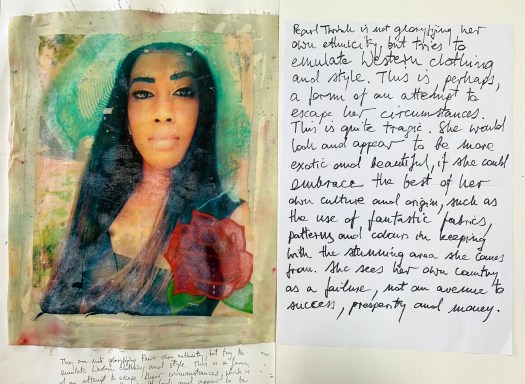
I have already started to develop an under image. It is still a recognisable portrait of Pearl Twink. This part of the process is associated with deep reflections. My thoughts are jotted down all over the piece as rough notes and the most important content is just below the image.
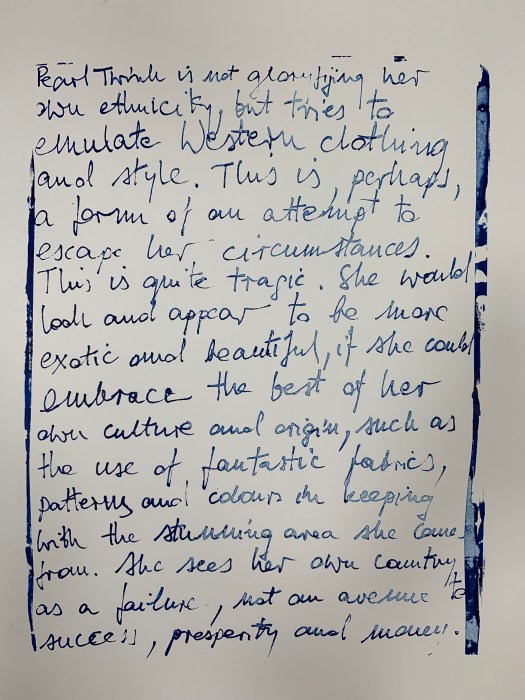
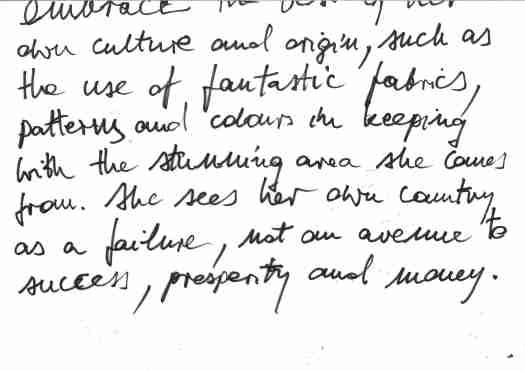
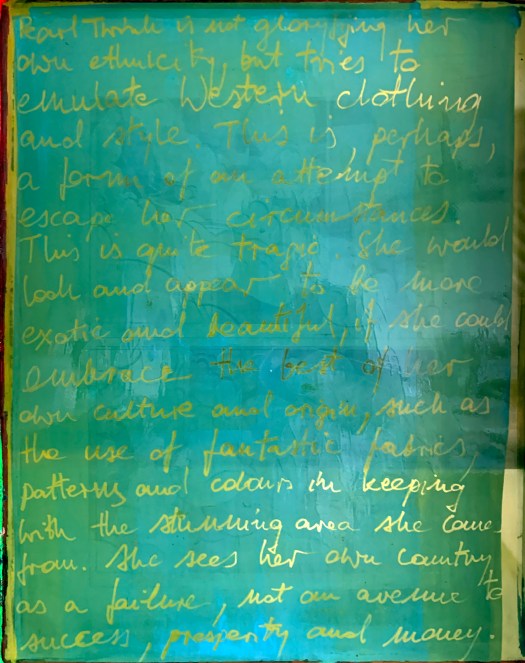
Subsequently, I have refined this text and its content. I wanted for my message to be more provocative as well as form a discussion between her ideas and my judgements.
A copy of the refined text is below. I have also experimented with different ways of making the text less readable and partly invisible.
Subsequently, I was faced with a dilemma: should I use a handwritten text on top of the under image or develop a typographic silk screen?
The screen idea has worked very well and the inking process was very fulfilling. I felt that this process has began to work as I had intended.
Additionally, the overprinting has started to take shape and created fine details and a sense of layering.
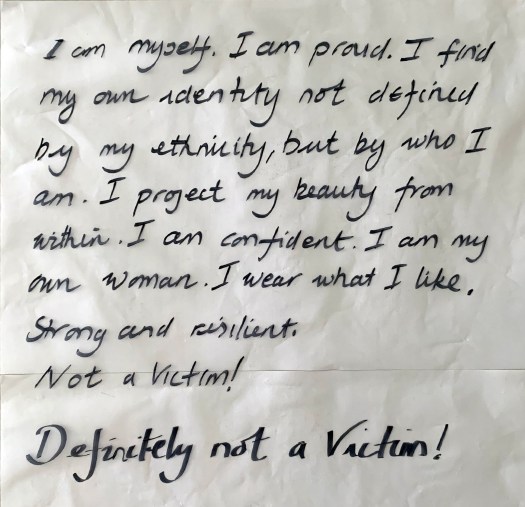
The message containing Pearl Twink’s response is also ready to be transferred onto a silk screen. As soon as this is done, I will initiate the overprinting process, which will be subsequently washed off by experimenting with machine intervention.
This is intended to reinforce the element of uncertainty and waiting in anticipation; worries and anxieties of what will happen during the ‘washing’ cycle. There is no stopping it whilst the process is started. All I can do is to wait to see the result and assess the accidental value of my risky approach. The potential of loosing it all is real!
As an alternative idea, I am also considering to develop an animation, or perhaps, a video piece, and include the flashing and alternating of individual stages of the overprinting process and the messages.
I could not resist to record the last attempt of blasting the ink off to reveal the content of the screen and its message.
I have tried to experiment with a wide range of approaches to painting and communicating through the visual language. Initially, I explored possibilities of using the already established process of over-printing a painted surface, which is subsequently blasted off with a water jet. This method was gradually developed and extended further. Additionally, I became more interested in the size of my work and started painting on smaller pieces of unstretched canvas. My creative intention was to differentiate between micro and macro environments and consider the pieces in terms of their size, scale and impact.
This is significant in terms of the quality and energy of mark, which I am able to achieve. The image ‘handling’ process is also diametrically different. The smaller size of canvas makes the blasting process much more dramatic and devastating. It is also less precise in terms of the amount of control I have over the tool and its power.
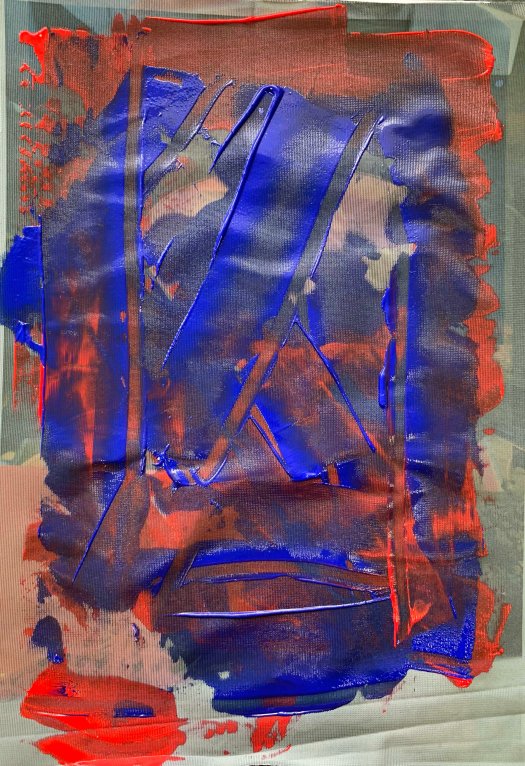
Some of the images below, were almost totally washed off by the jet of water. However, the brush marks were much more powerful and distinct; making the entire composition more abstract and almost unrecognisable. The pictorial content was fully covered and the underneath layers of paint were totally invisible.
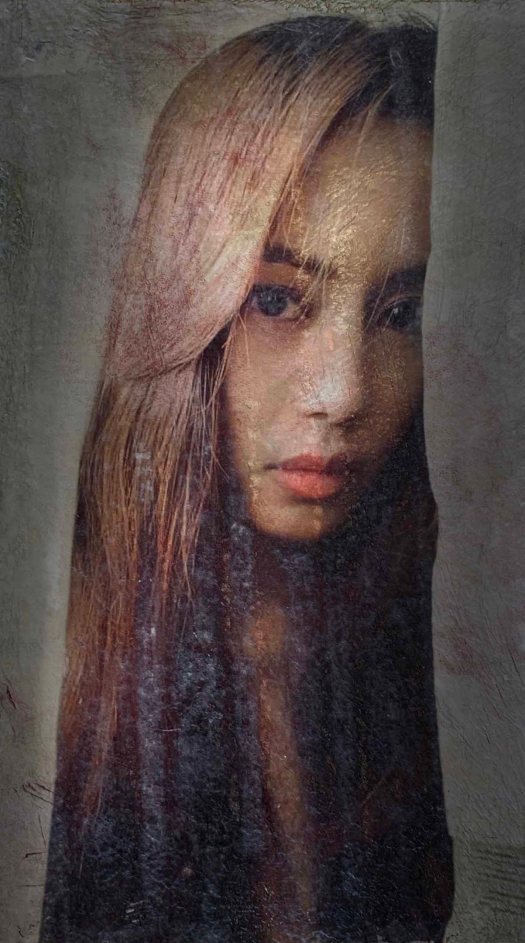
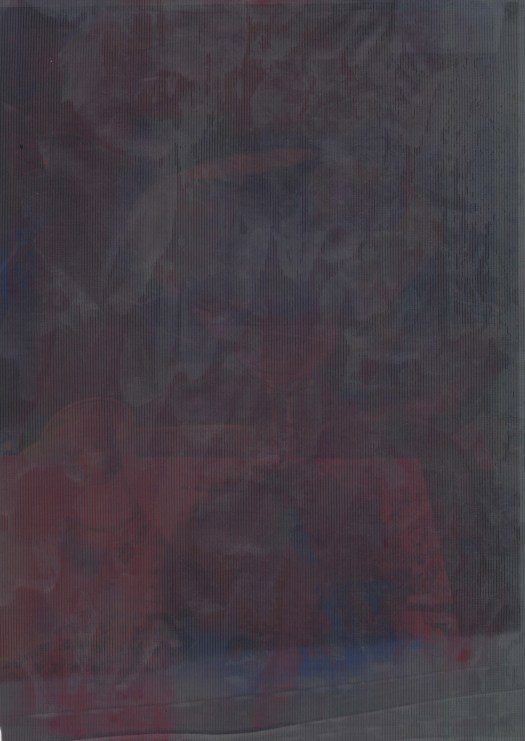
My images have started to become very fragile. I had to use the process of digital scanning in order to recover some visual aspects of them and save important details from being erased and permanently lost.
Perhaps, the next stage of my experimentation will include working on lighter colour backgrounds, thinner fabrics and using materials, which are much more delicate and fragile to enhance the possibility of happy accidents and increase the imperoding process of blasting.
When working on upstretched fabrics, I can also consider using bleach, Vanish and other chemicals. I will replace the water jet with a washing machine.
This should give me a completely new and alternative path as a direction for my experimentation.














 HYPNOTIC REPETITION