New Face

Following a long period of consideration and reflection, I have restarted work today on the Thai Masseur piece.

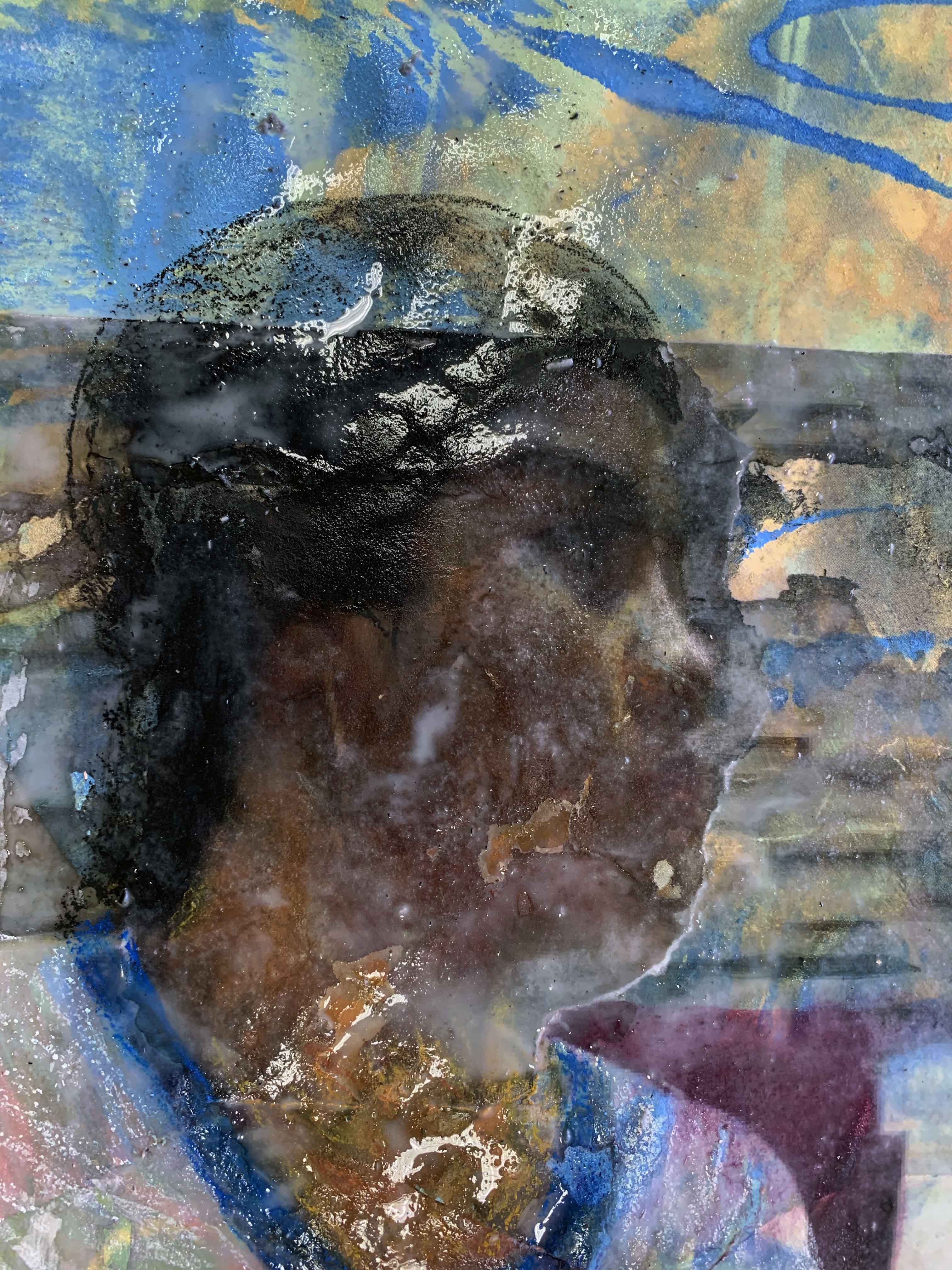
The main issue was to complete painting the face. On the one hand, I wanted for the portrait to be recognisable, on the other, I have struggled with solving a number of ethical issues regarding a possible reaction and rejection of my work by the model. I experienced this kind of a situation with one of the former pieces. Subsequently, this unpleasant episode had let to the destruction of my own work and several alterations to other experiments.

My new idea is inspired by deeply glazed and moody flemish paintings. I am especially inspired by Metsu and his self portrait. He positioned himself inside a window arch. This implies a composition within a composition. I am also using a double rectangular. My creative intention is to achieve a sense of ambiguity while drawing all attention to the centre – on the masseur. I want to rely on a visual suggestion of portraiture rather than a descriptive portrayal of a woman. The plan is to leave her facial features undefined, like a ghostly outline of what is really there.
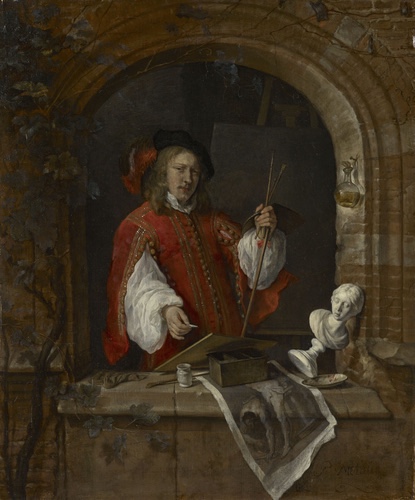
https://www.rct.uk/collection/405943/a-self-portrait

GABRIEL METSU (LEIDEN 1629-AMSTERDAM 1667)

A Self-Portrait c.1655-8 Oil on panel | 37.7 x 31.4 cm (support, canvas/panel/str external) | RCIN 405943

To give the surface more vibrancy, I used water solvable oil pastels. ‘Dancing’ with a crayon on top of the painting allows me to achieve a sense of mystery – secret light, which brings out parts of the skull and the jaw – all in the dusk of the space portrayed.

The next stage of the painting process will be to glaze the overall piece with a variety of transparent layers of an acrylic medium, perhaps combined with some watered down PVA glue. This is to prepare the surface for the overprinting stage using the silk screen technique and enhance a feeling of unity between the different formal elements and parts of the composition.

I have already prepared a new pattern based on decorative elements, which I have isolated from the interior of the massage salon. I will use this design to create a random over-image. This, in turn, will have a dual function. The first is to help to engage the centre in the overall painterly illusion. The second aim is to increase the amount of detail and enhance holistic and expressive qualities of my piece.

At this stage, I am considering using a range of gold and crimson tones. This initial plan might be subsequently altered in favour of a more spontaneous and instinctive decisions and reflections in action.

I am enclosing photographs of the final stages of work today and a close up of the ‘New Face’

British Library

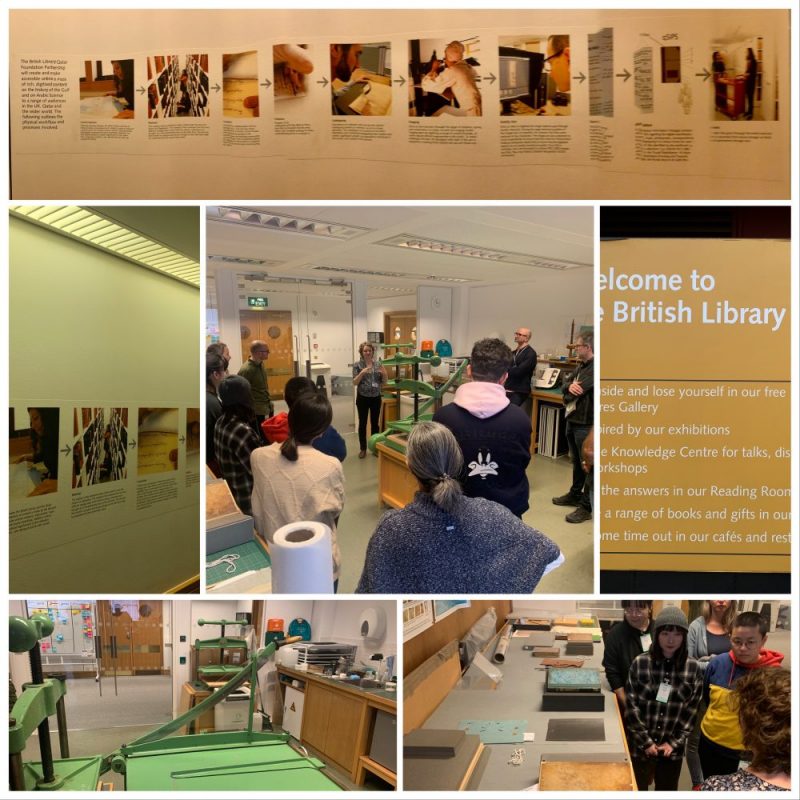
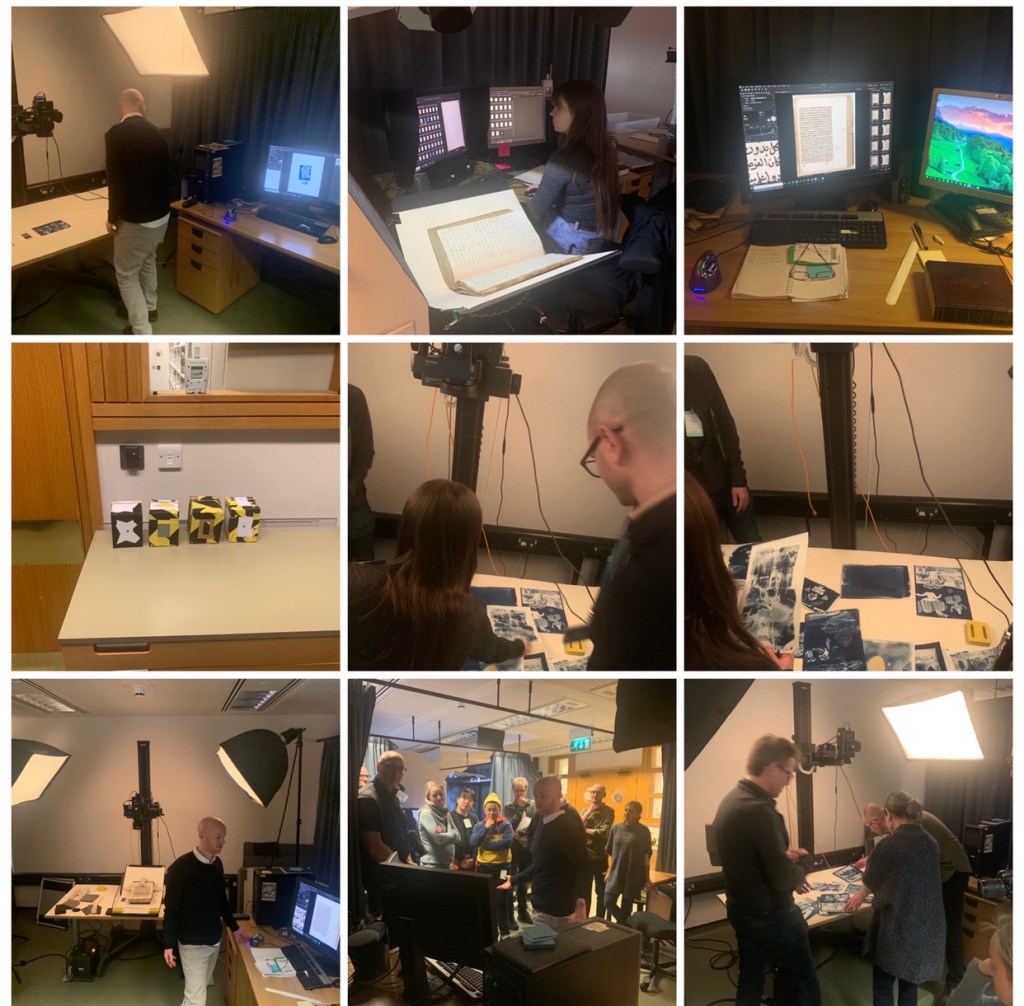
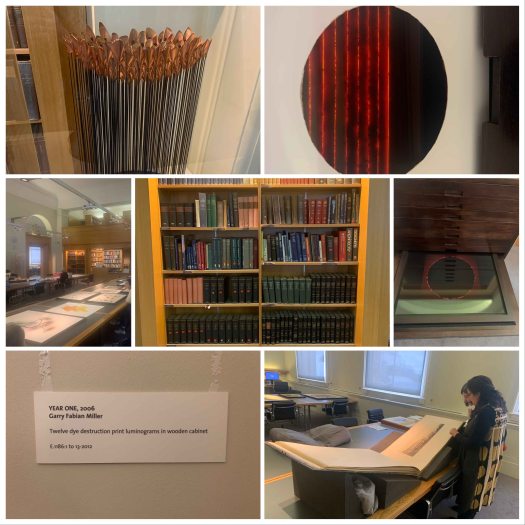
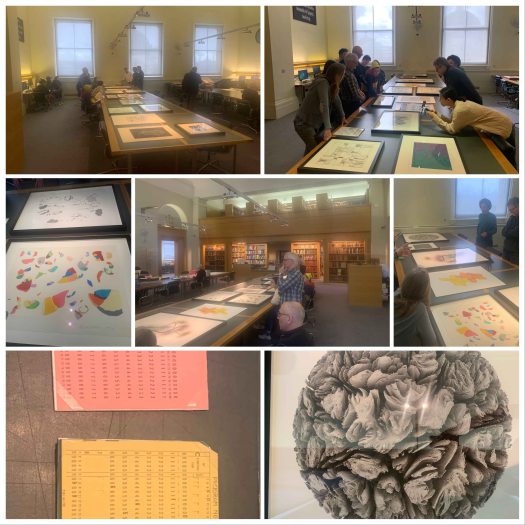
It was quite amazing to be privileged to see the entire archiving department at the British Library. I had a chance to see the hidden aspects of preserving valuable publications and manuscripts by a team of highly sophisticated individuals. It was clear that the work process of archiving tens of thousands of photographs was very repetitive and mundane. It requires a lot of focus and patience. The team are highly motivated and full of intrinsic energy and passion. Their mission was to create archive files to the best of their abilities – true art forms, as they said.

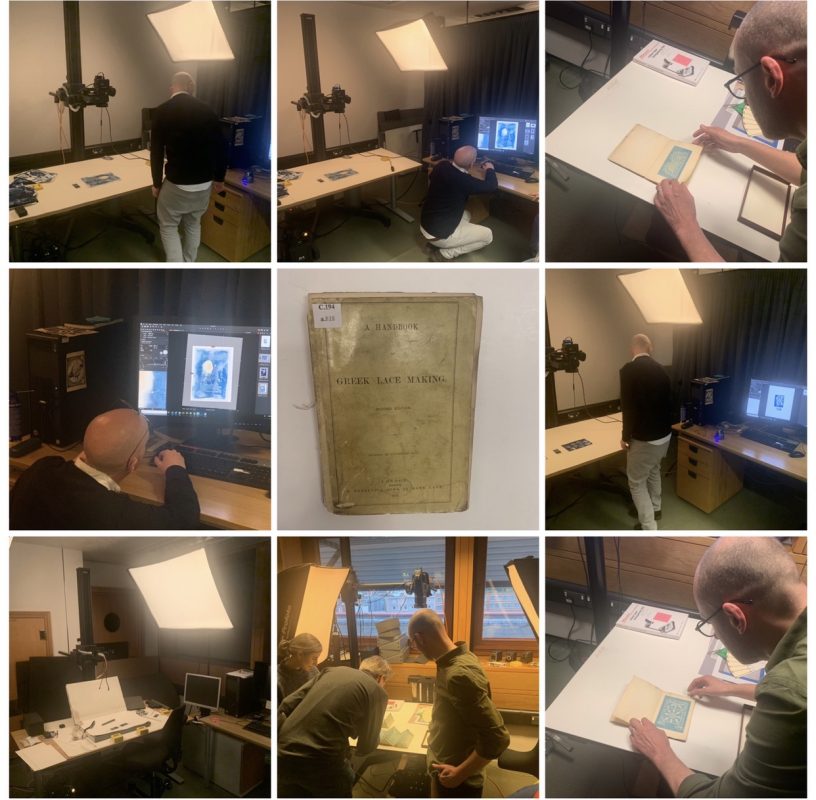
I was also extremely touched to have my cyanotype experimentation photographed and archived by the team. Thank you ever so much!

Victoria and Albert Museum

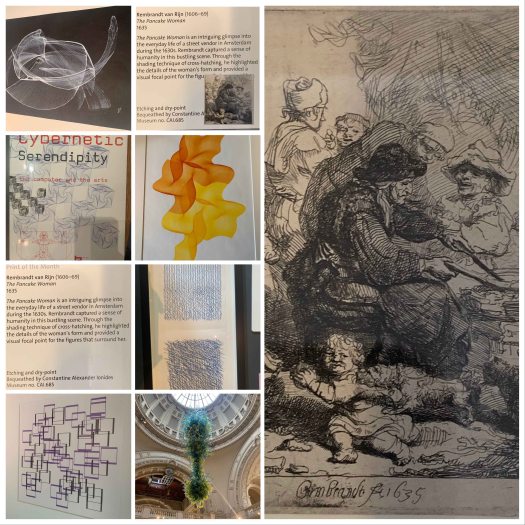
This was a fascinating journey through the history of computer generated printmaking. The talk was delivered by a senior curator Doug Dodds and his assistant MELANIE. Both have amazing knowledge regarding the collection at the V&A and far beyond.

The content of the presentation covered a detailed explanation of and discussion about key example of computer generated art going back to the early 60s.

The overall experience was highly informative and truly inspirational.

Verity Wyn Evans

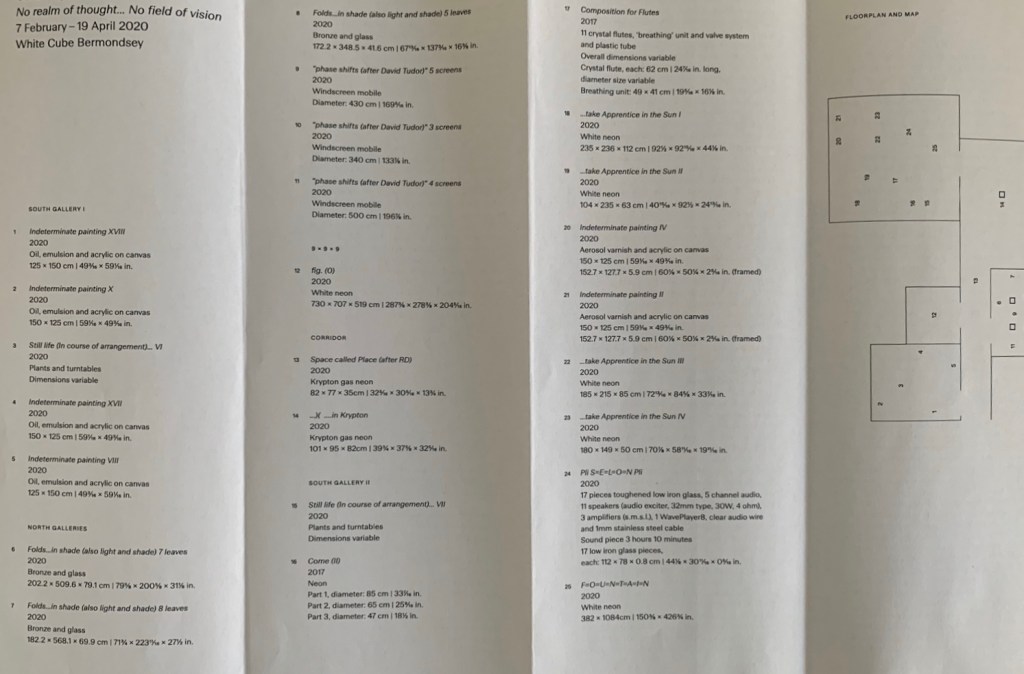
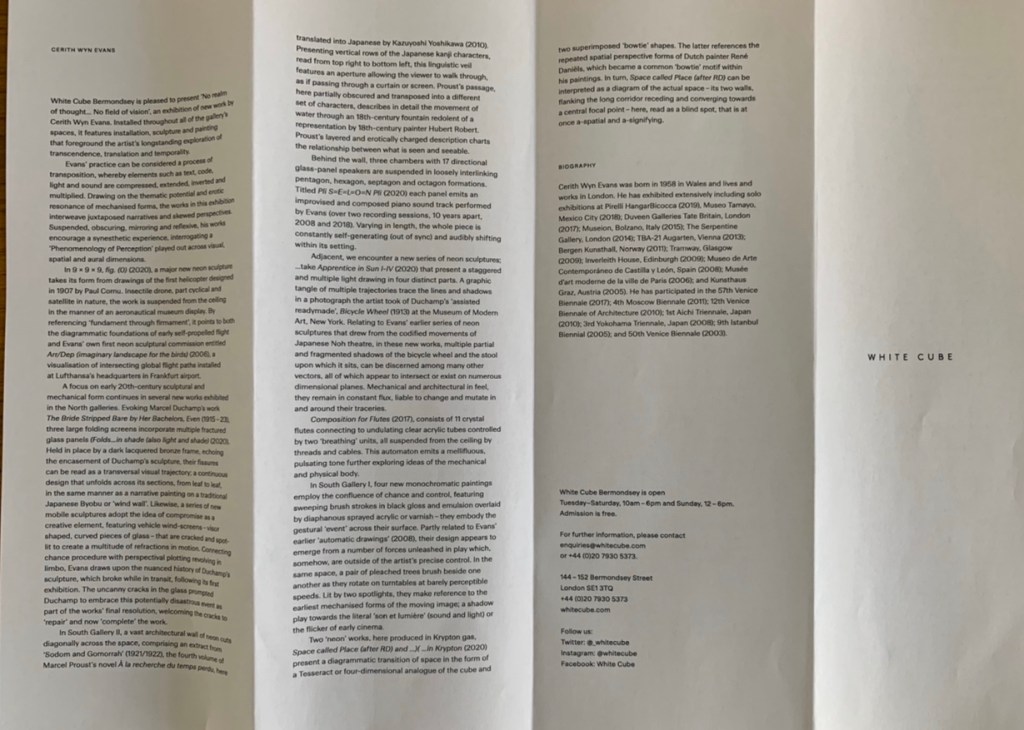
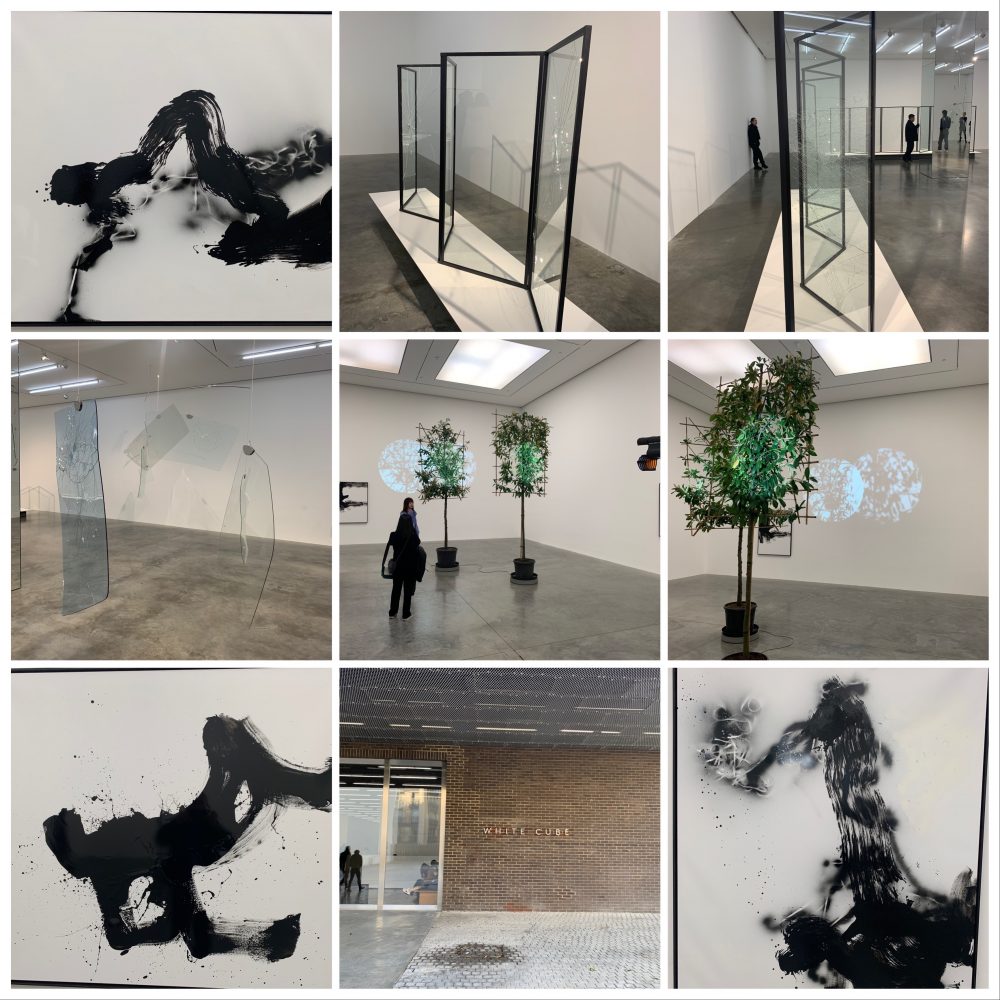
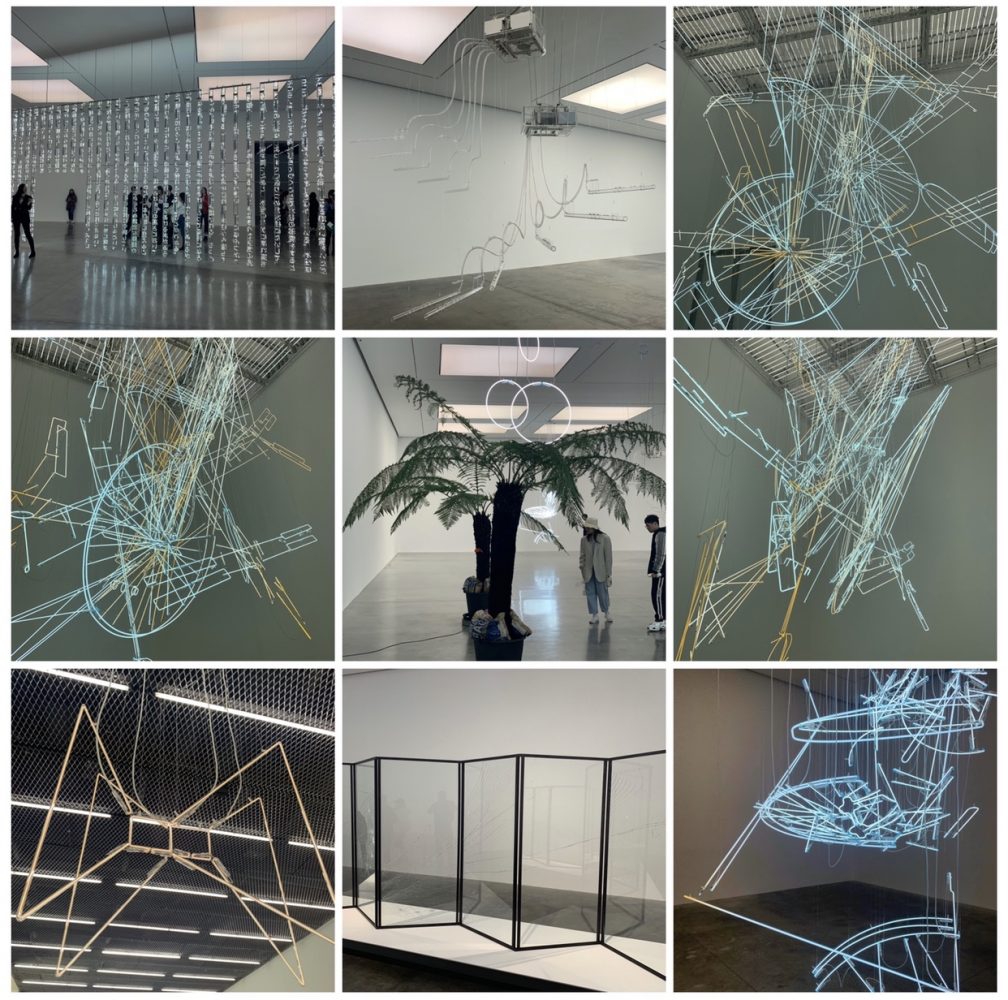
I have just visited fascinating glass and light exhibition at the White Cube Gallery in Bermondsey. Her pieces are full of reflections and transparency, incorporating visitors to participate in the overall scene. The work has poetic, reflective qualities and astonished with precision of execution and bizarre aesthetics of broken shards. The artefacts are suspended in the air, somehow interacting with each other while populating empty spaces. The inclusion of Chinese writing in one of the rooms contextualises her ideas while making references to both the Great Wall and a metaphorical open doorway in it.

The viewing is quite an emotional experience.

Andrew Gadd at Art Number 23

I have finally organised to collect Burmese Captain from an exhibition at the Old Biscuit Factory. I am so pleased to have recovered this piece.

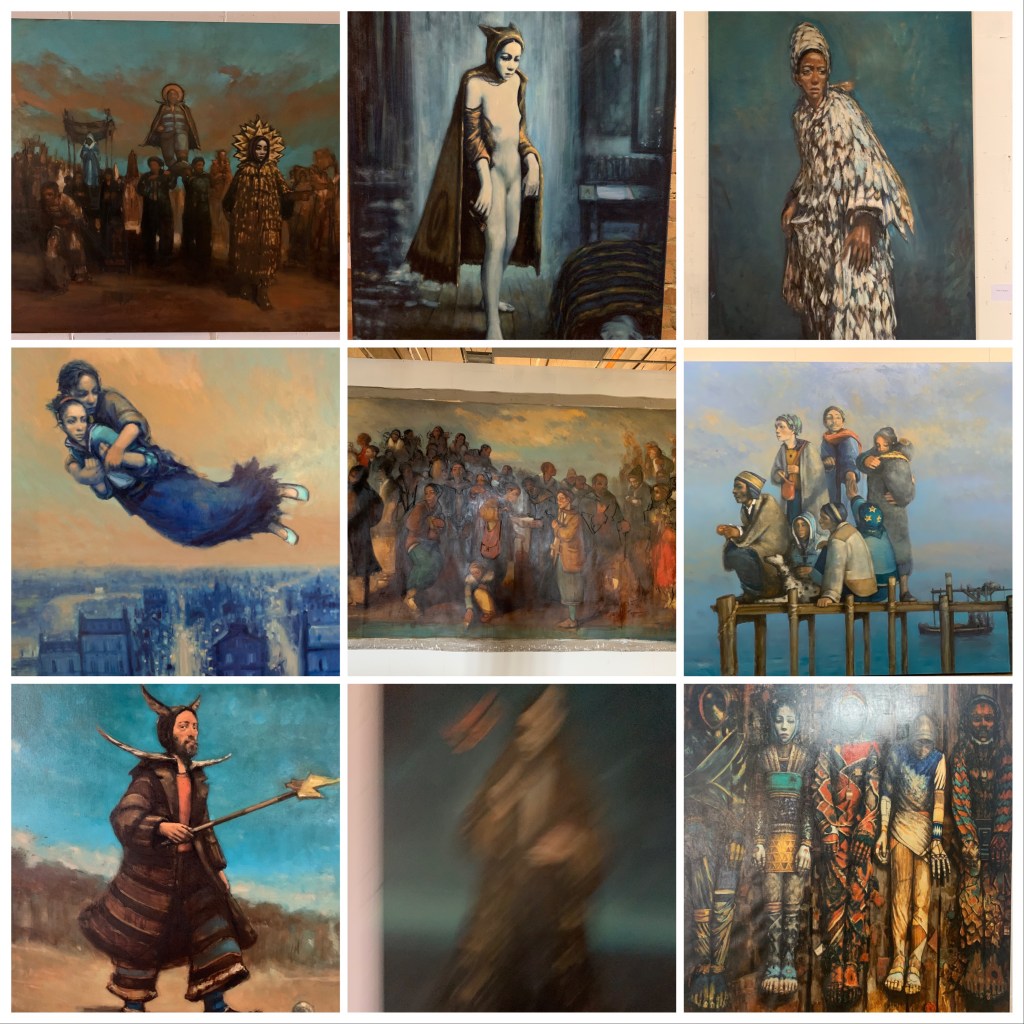
At the same time, I got a chance to preview a new exhibition of large scale dramatic paintings by Andrew Gadd. He studied at Falmouth and the Royal Academy of Art. His paintings resemble a combination of war inspired pieces from the Renaissance and Russian romanticism in painting.

I include a selection of his work below:

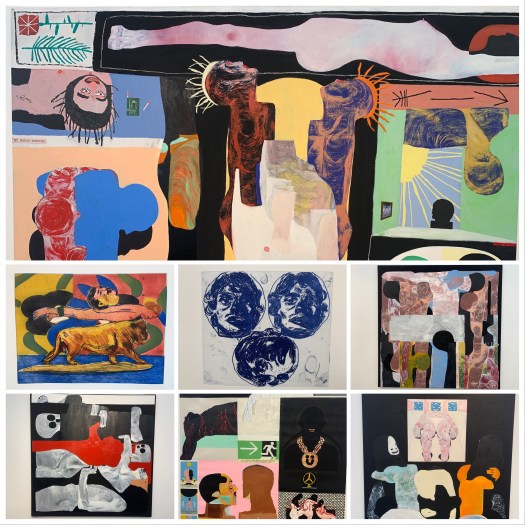
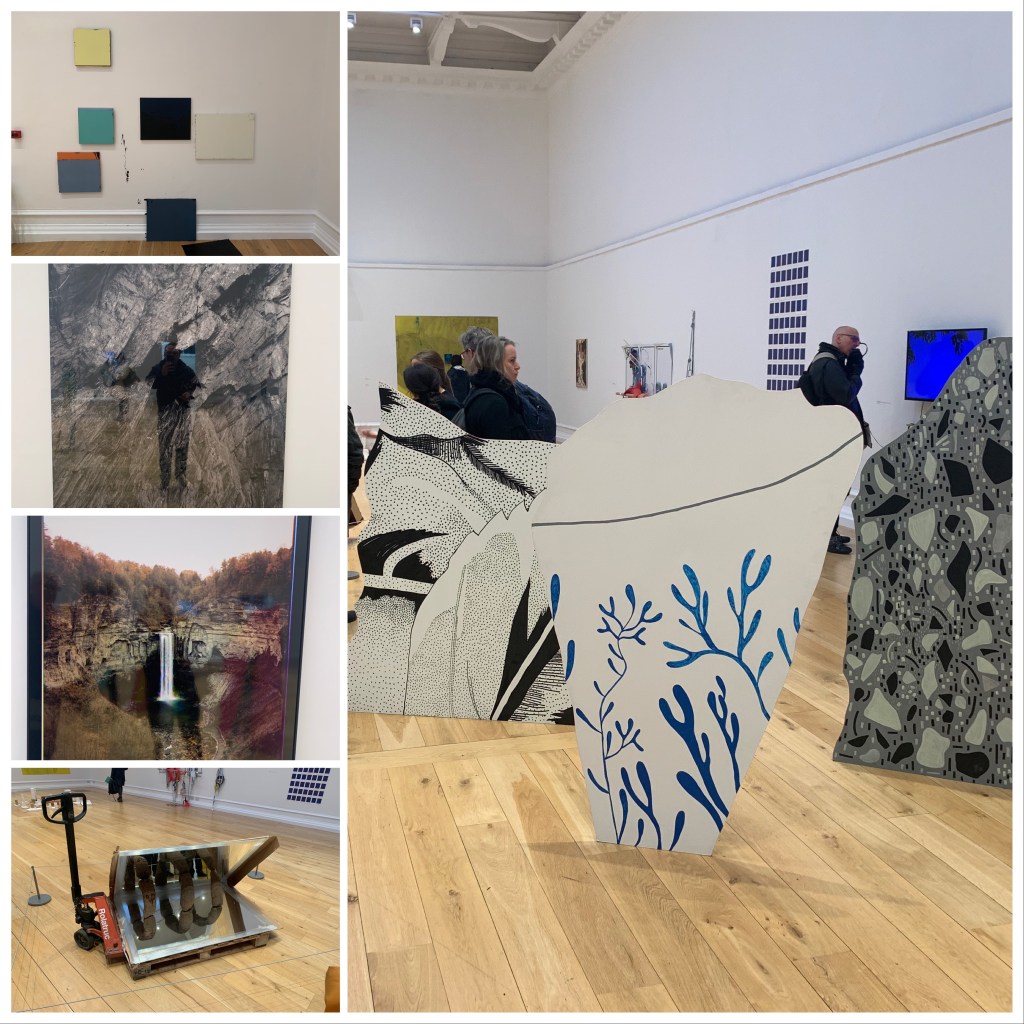
East London Gallery Visits, Saturday, 22nd February 2020

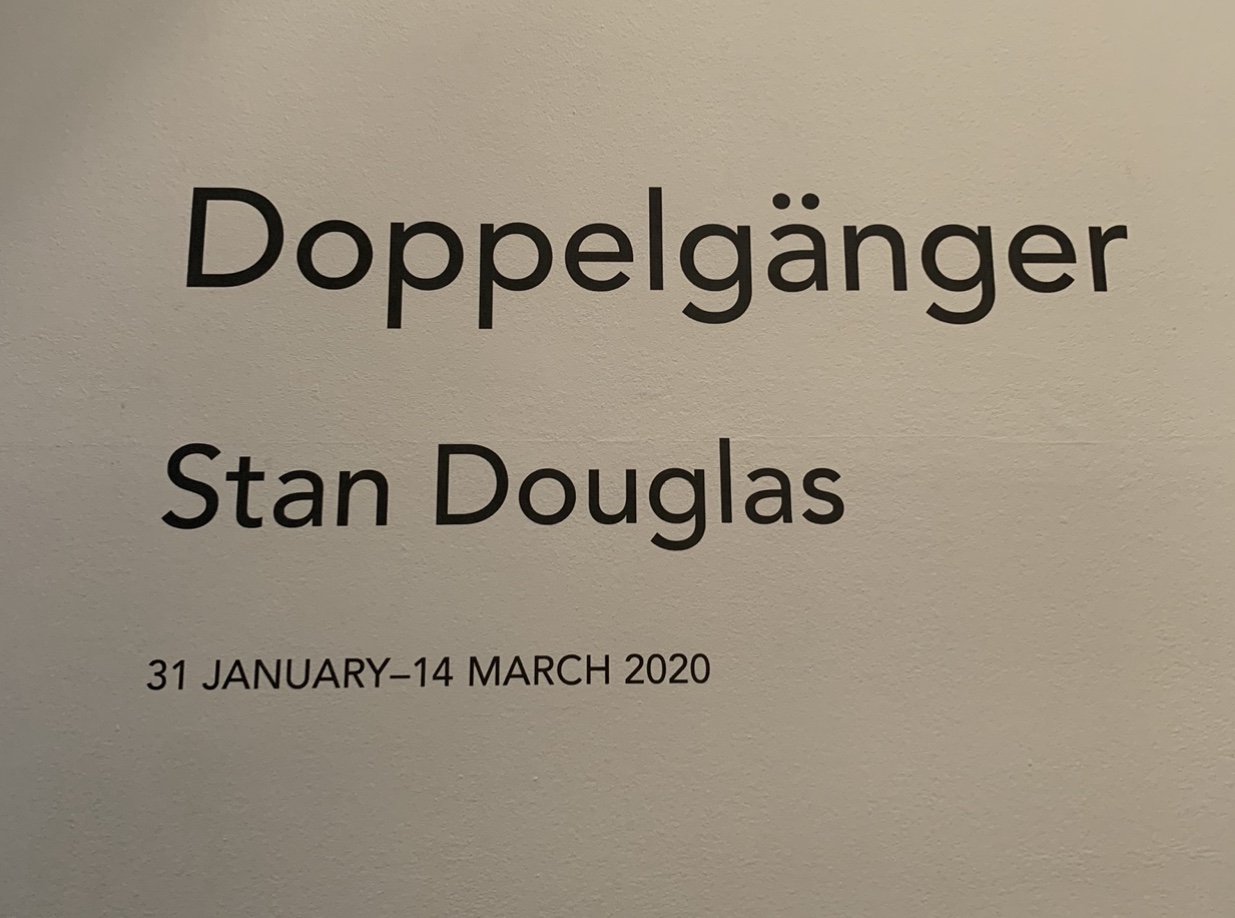
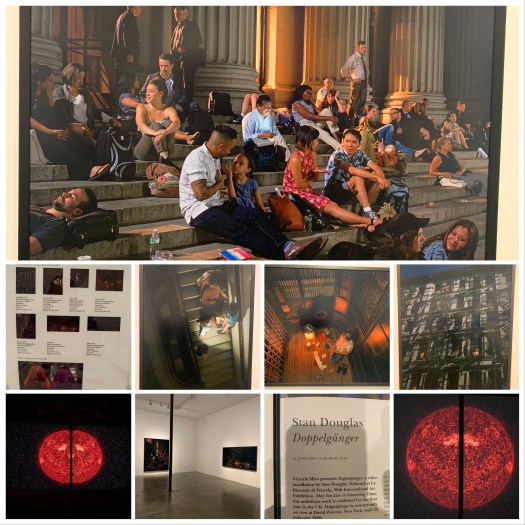
The first gallery – Victoria Miro

The first exhibition contained a range a highly commercial and very large scale photographs printed on dibond. The detail portrayed was truly and surrounded by a dusk of space. The use of chiaroscuro was absolutely impressive and drew references to the masters of the Renaissance. The show was accompanied by a 20 minute film projected on dual screens. The narrative was set in the context of futuristic space travel and science fiction concepts.

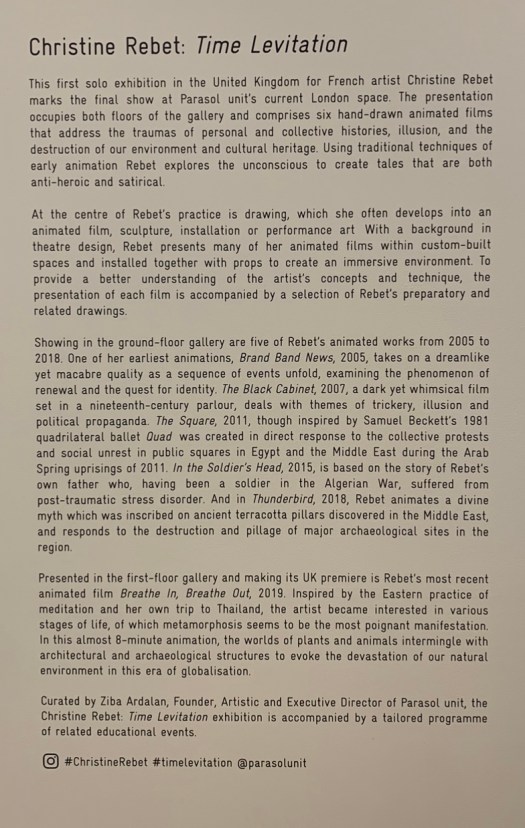
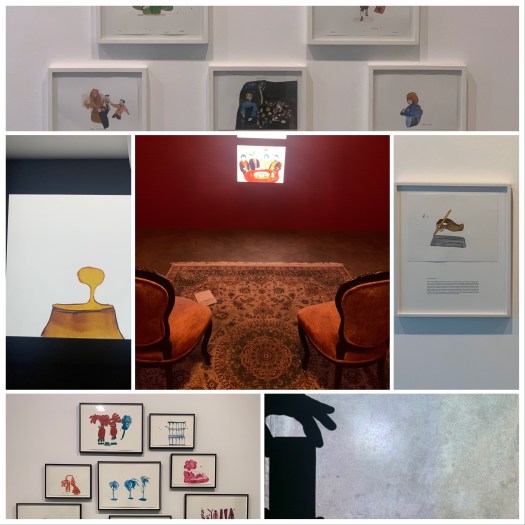
The second gallery – Parasol Unit

This exhibition displayed a range of drawings, illustrations and animations. The underpinning themes range from a dream like macabre to dealing with post dramatic stress disorder and the Eastern practice of meditation.

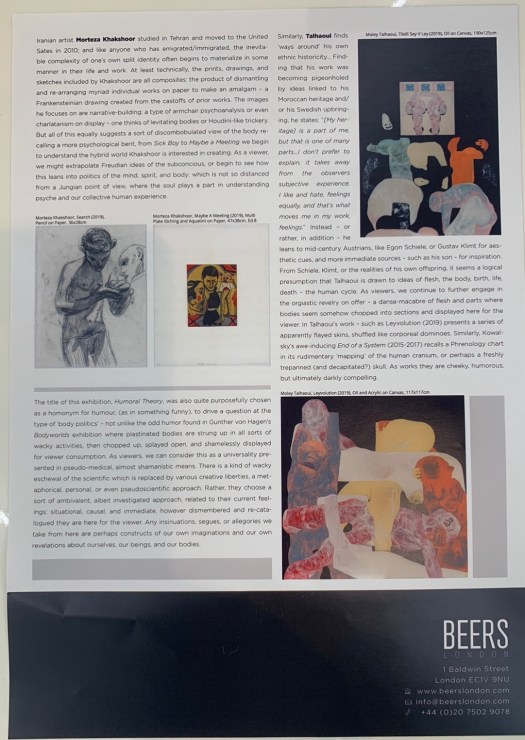
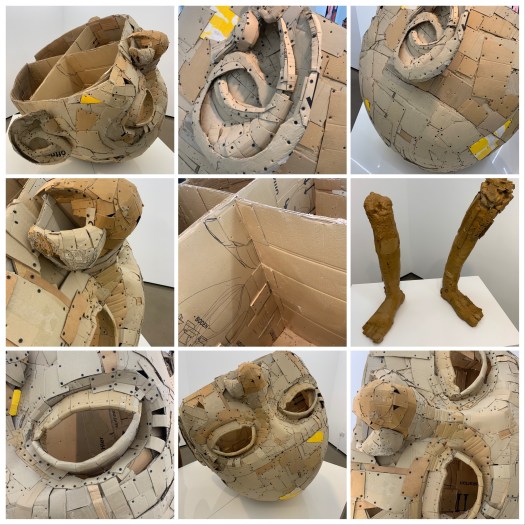
The third gallery – Beers.

This is a joint show between three artists covering a range of fascinating paintings, which question the artist’s identity. There are also intriguing sculptures made from screwed cardboard portraying the human form in great detail and sensitive etchings on paper.

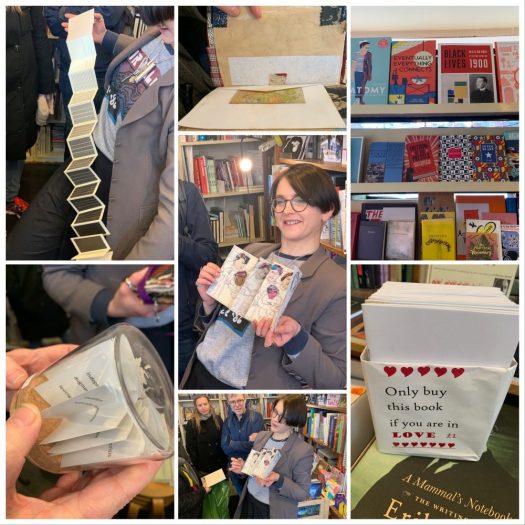
The fourth gallery – Art Book Shop.

This little book shop sells a range of artists’ and limited edition books. It is very small but stylish and well stocked with original and value items.
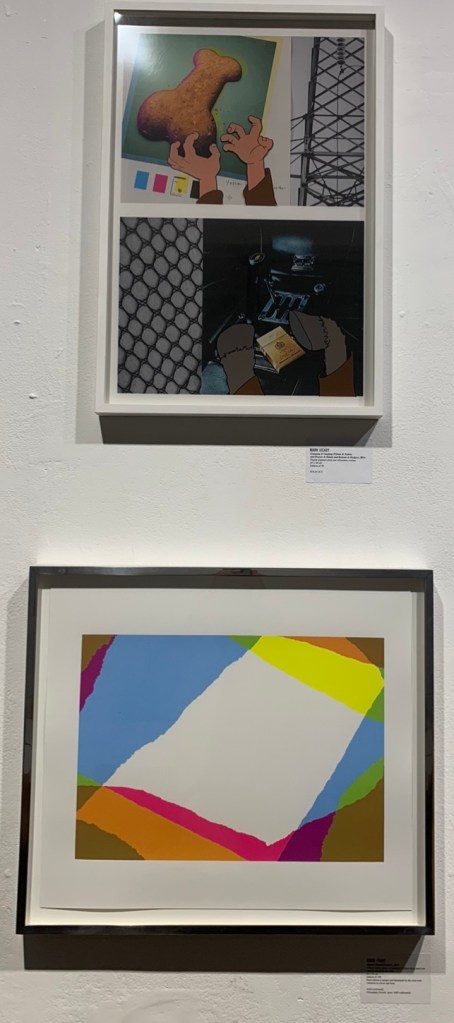
 

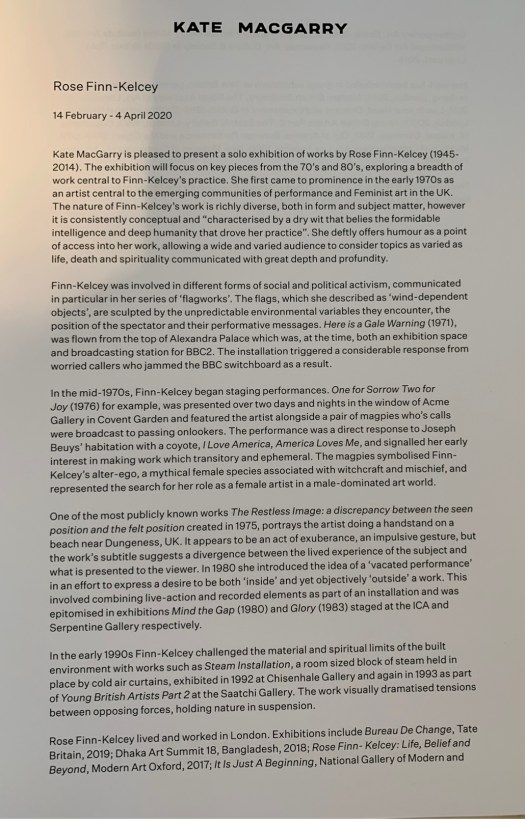
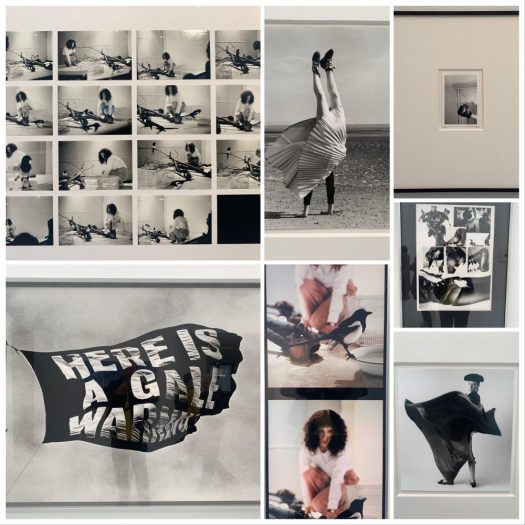
The fifth gallery – Kate MacGarry

A solo exhibition by Rose Finn-Kelcey portraying her key pieces from the 70’s and 80’s.

Her works comment on different forms of social activism and staged performances.

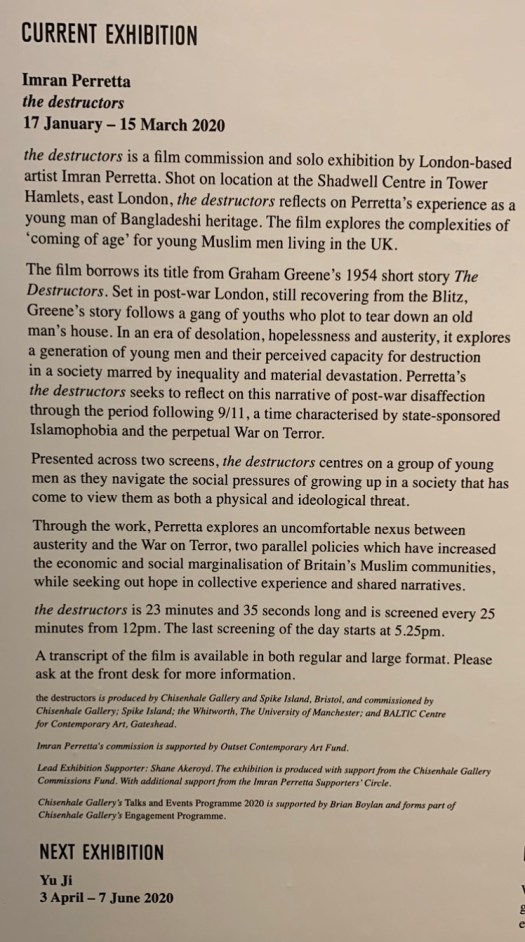
The sixth gallery – Chisenhale


The gallery promotes cutting edge artists from the UK and international. They work very close with artists and offer four commissions per year.

Current exhibition is a 23 minutes film by Imran, a London and Bangladeshi artist. The piece is split into three chapters was shot quite close to the gallery and is supported with a personal narrative.

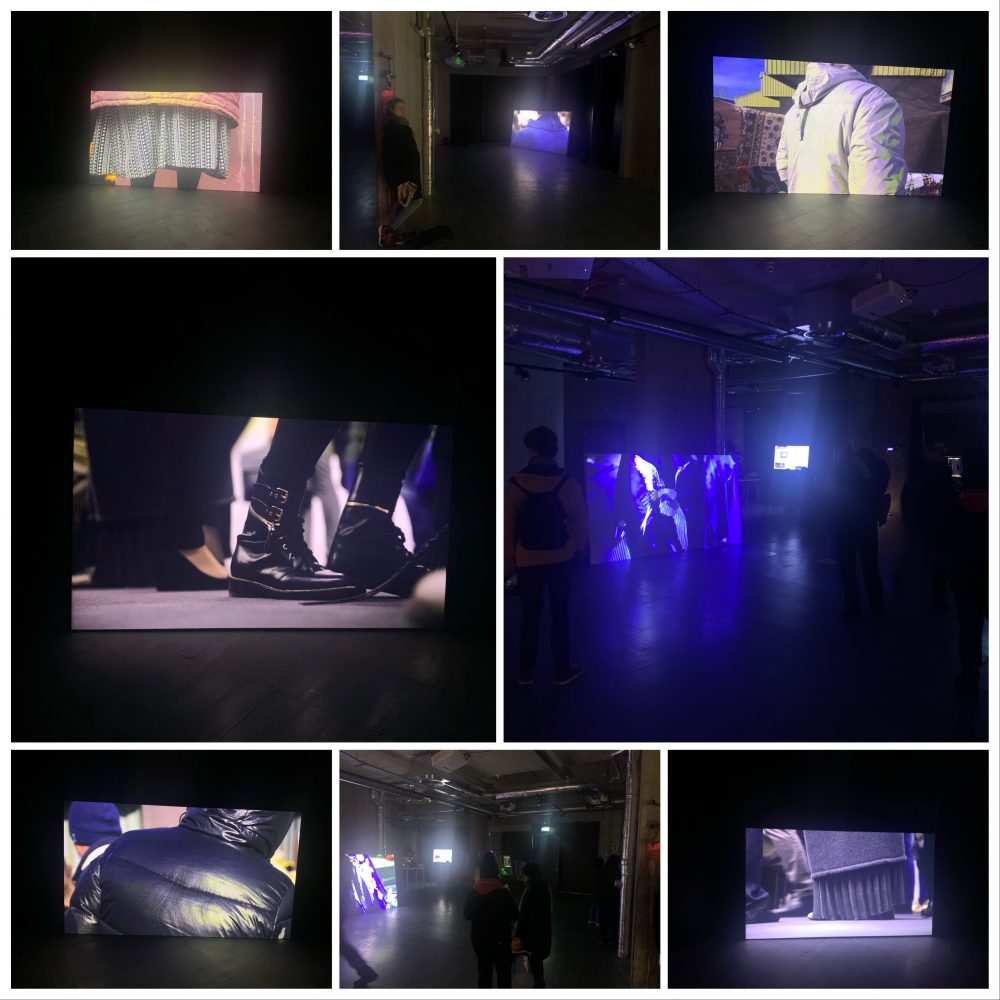
This a second projection, which I saw today. Both have used a dual screen approach. The idea is that both are projections are separate yet they work together and make a contribution to the holistic image. This allows for the use of mirroring and opens up totally new possibilities in terms of juxtapositioning of exciting angles and viewpoints, frequently contradicting the screens and switching one off.


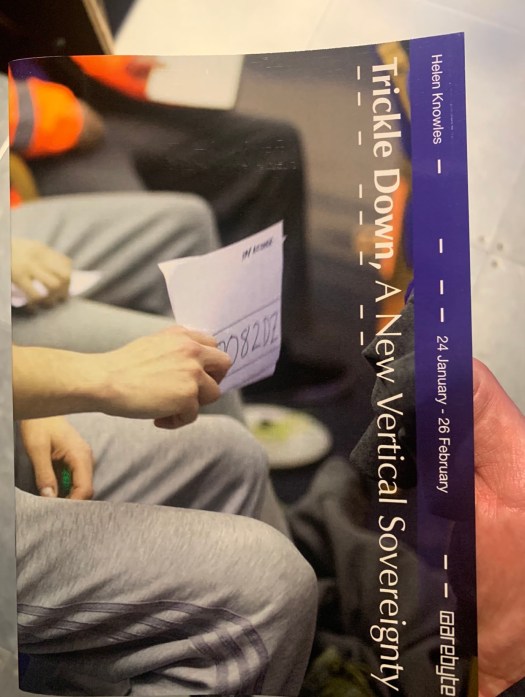
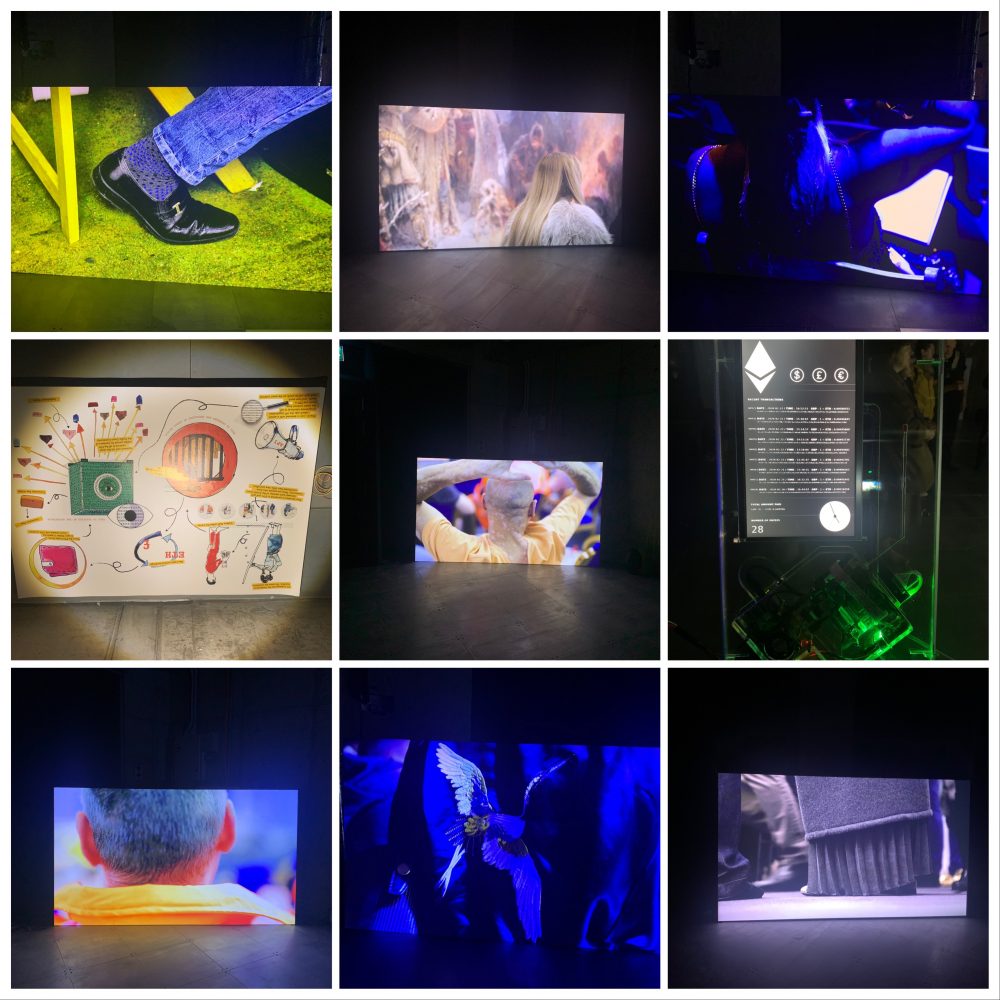
The seventh and last gallery – AreByte exhibition was based on four, large-scale projections.

Each one was a recording from a different type of art auction. The first was based on prisoners bidding for their time, the second was filmed in a market for the poor, their fire one was recorded during an auction for the wealthy and the last for the upper classes. All projections were triggered by inserting a pound coin into a slot, which was than converted into a cryptocurrency.

The exhibition commented through contrast and compare activity, on uneven money and wealth distribution in the contemporary society.

The filming was focused on the backhand shoes of people in each group category.

Overall, an excellent and thought provoking visualisation of divisions in a capitalist and market driven world.


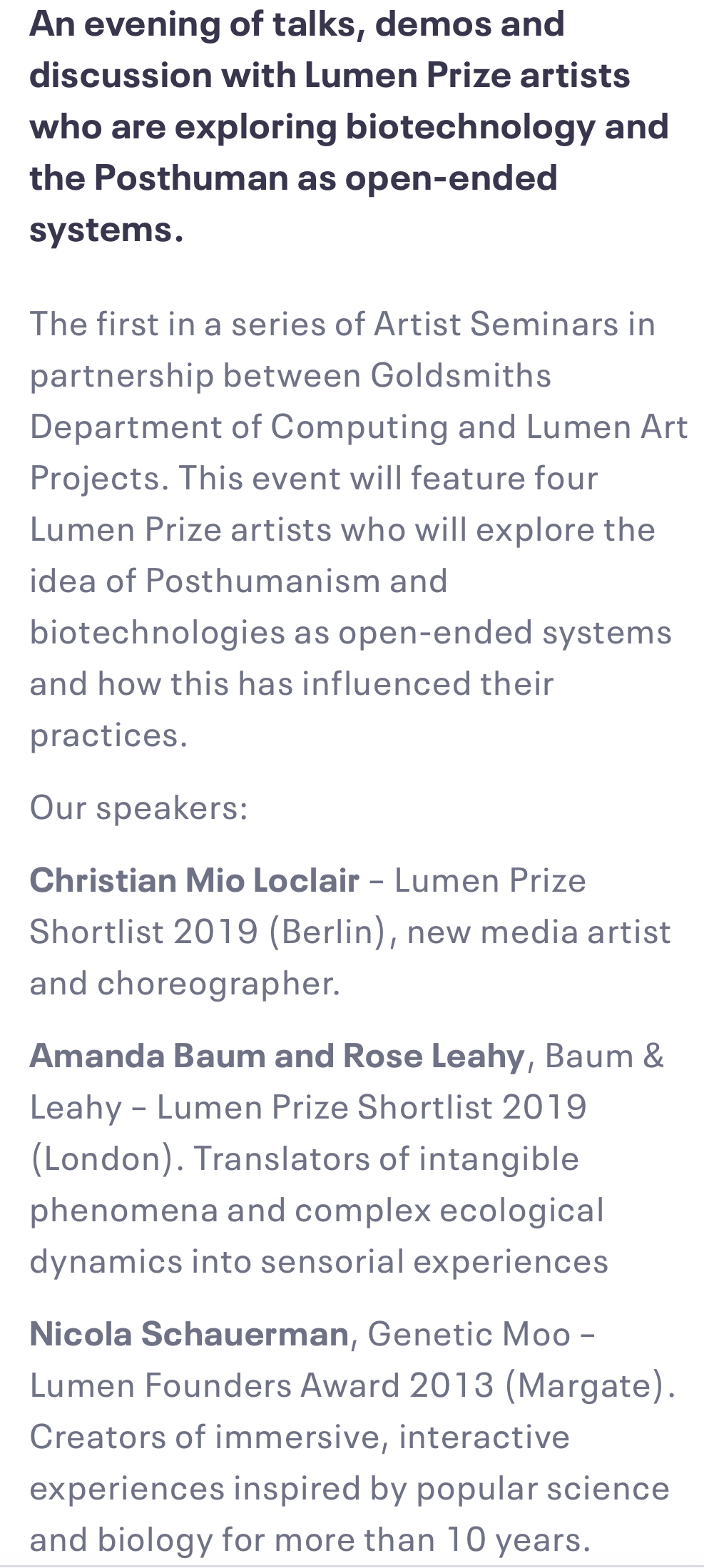
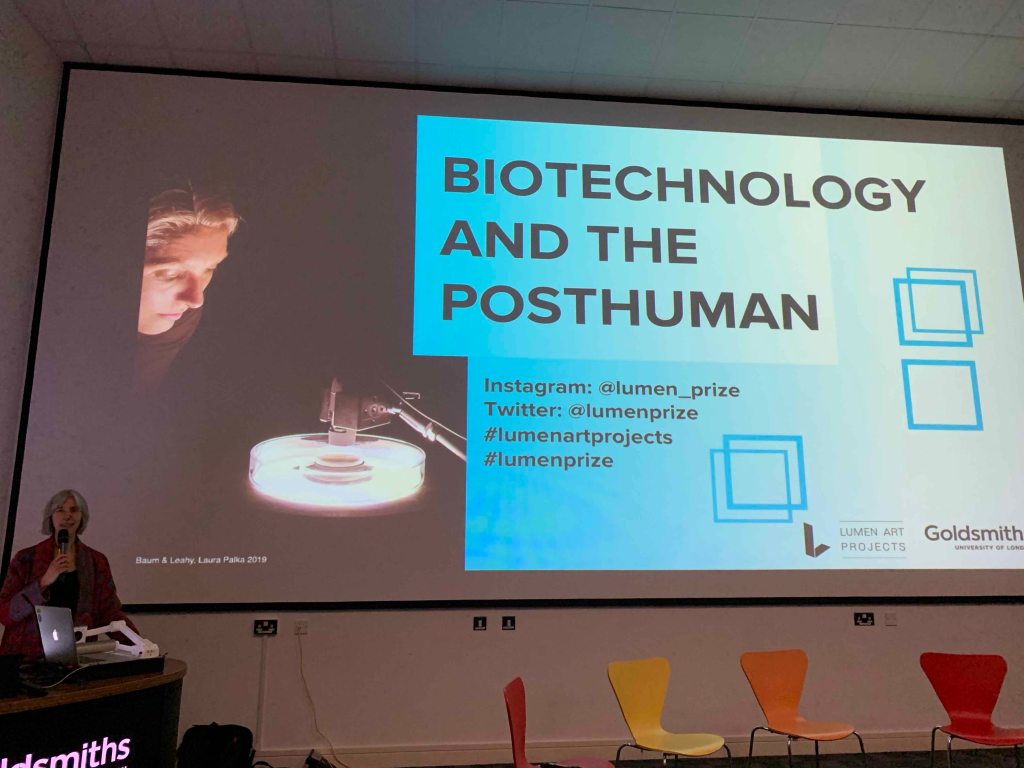
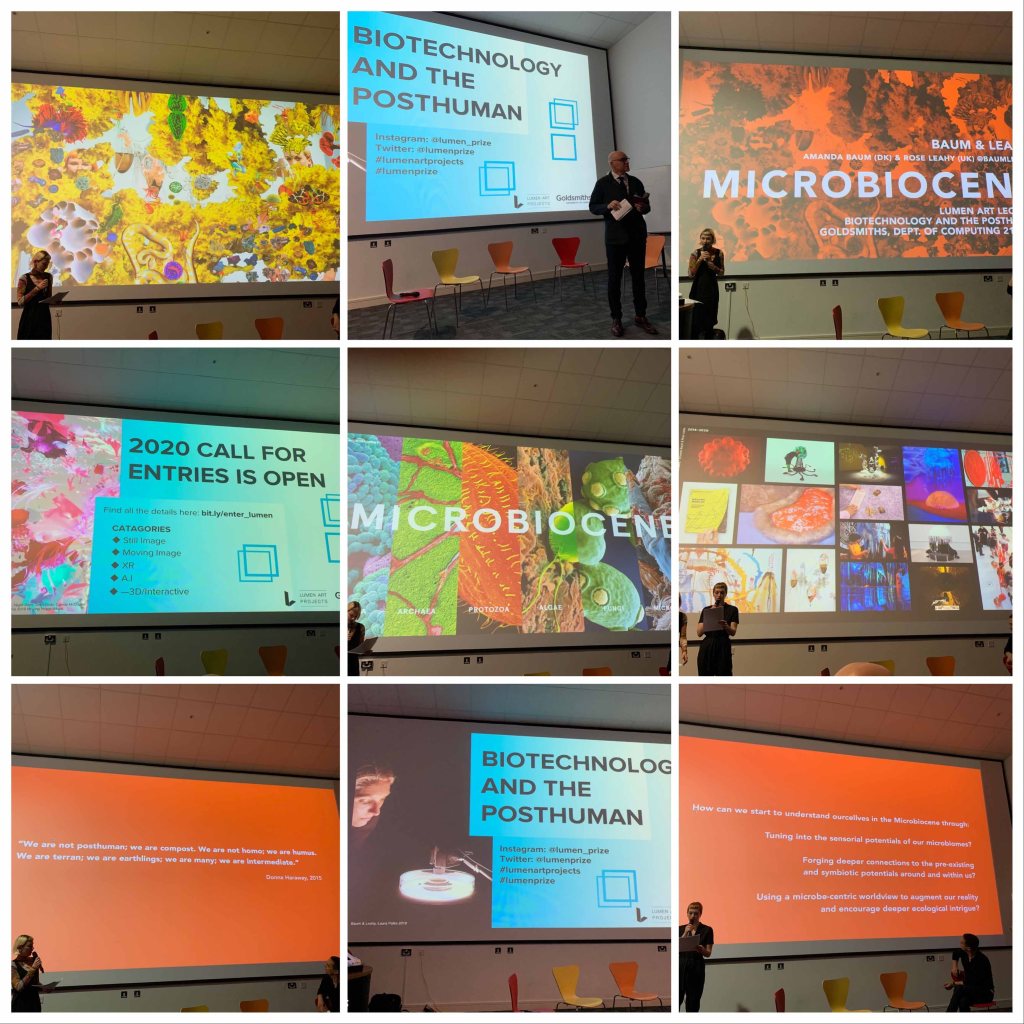
Biotechnology and The Post Human

A fascinating and thought provoking evening of presentations by renowned international artists. There is an awful food for reflection and digestion. I feel truly challenged and stimulated to embrace a range of powerful concepts, which were presented during this evening at Goldsmith’s.

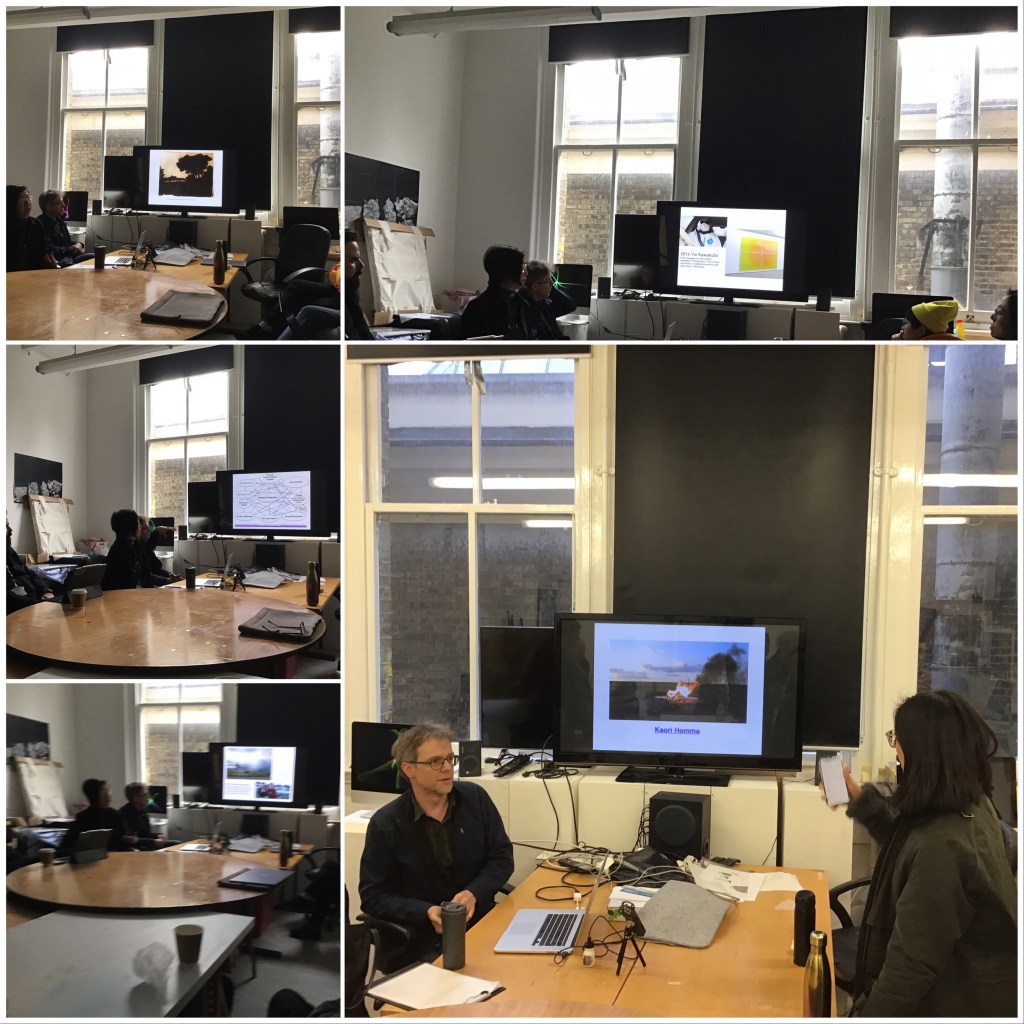
Artist Talk – Kaori Homma

Kaori’s presentation was a very personal review of her own art work and inspirations. To contextualise this and extend our critical analysis of her work, she framed her practice by recollecting several important life events, which were pivotal in the refining of her practice.

She identified the impact of her motherhood, life-threatening illness of her daughter and the recent Tsunami in Japan as the three most remarkable stages in the development of her art practice.

Maori has also elaborated on her broad understanding of her creative practice and identified a number of key components, which make a contribution to the holistic idea of being an artist.