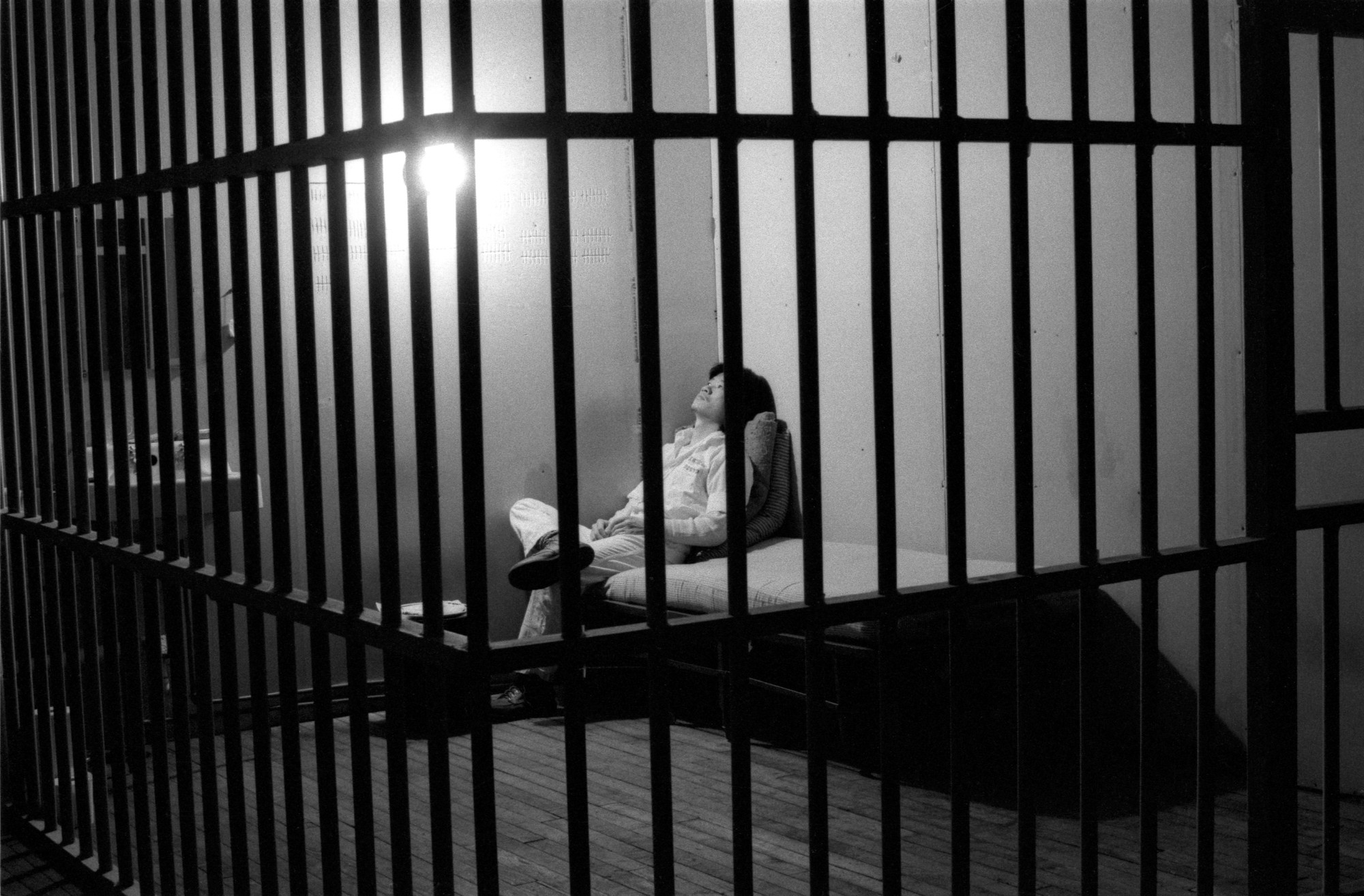
I have recently come across the work of a Taiwanese artist – Tehching Hsieh (1950). He is best known for his five One Year Performances: between 1978 and 1986.
Marina Abramović described him as a “master of performance”., when commenting on his video documenting the whole year of being locked inside a cage and, another one, punching a time clock every hour. His other pieces include an attempt to live solely outdoors for the period of 365 days. In another famous piece he tied himself to another person. Finally, he struggled to avoid any art related activity for another year.
His fascinating pieces shed a completely new light on a new understanding of the emerging concept of self isolation and waiting. This thinking is of significant relevance to my own visual investigation. Although his thinking is very similar to my project, there is one crucial difference – his work is time bound. I have researched people, who are entrapped and suspended in the vacuum of hypnotic repetition in definitively. It is impossible to predict, when their daily struggle will be over. They also do not know, when they will be allowed to return to their former life ‘cages’.
Tumbling around with my thoughts – lockdown in a dark and claustrophobic chamber of an expanding pandemic – waiting for the end!
The aim of this post is to present my work in progress in order to methodically review my practice, refine my thinking and creative intentions. It is essential for me to reflect on how my visual investigation has developed, altered and evolved, especially in response to today’s global crisis.
The above video draws a parallel to the current global crisis. Isolation and fear are overwhelming. However, The Pianist had his resource, his instrument. He was afraid to touch it and play music. My situation is contradictory – I have a lot of time in loneliness, but cant access my work and studio. Everything appears to by suspended in waiting for the return to my former hypnotic repetition of daily routines and distractions!
My project continues to change with a degree of unexpected persistency and without unnecessary overreliance on resources. The above video clip reinforces that what really matters is the act of creation; whatever the circumstances.
My role as an artist is to comment on and respond to an ever-changing, dynamic and turbulent environment.
Therefore, my principal function is to observe the world with great sensitivity and translate my research findings into art, which communicates my thinking and reflections.
My work, in turn, acts as a beacon, pointing out at new possibilities of how to understand, digest and embrace the world!
I need to accept that my initial project ideas have been altered, distorted and, perhaps, contradicted in the light of the current, brutal and rapidly progressing events.
Friday, 20th March 2020 at 9.30 with Jonathan Kearney.
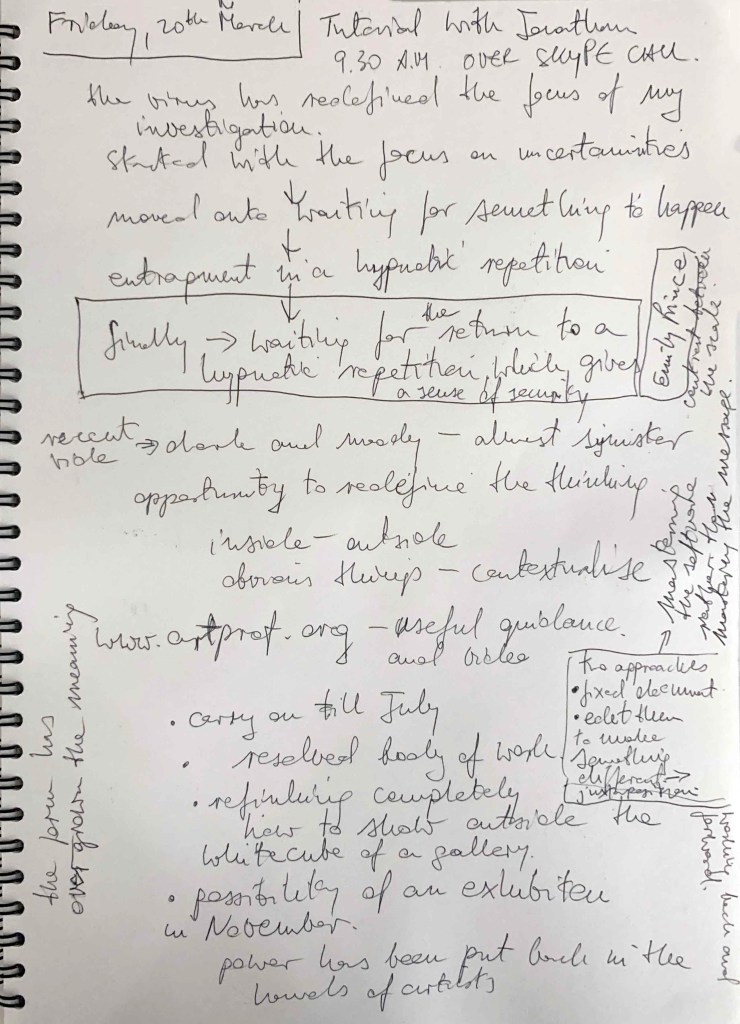
Notes from Skype Tutorial with Jonathan Kearney. Friday, 20th March 2020 at 9.30
This was a very unusual tutorial. It was a very personal and untypically long deep conversation in definitely extraordinary circumstances. We were both deeply concerned about a continuously expanding pandemic and all its brutal implications on all contexts of our life.
The current situation is unprecedented and overwhelming. It has an enormous impact on all aspects of our existence. Therefore, it would be at least arrogant to assume that I had no radical influence on my creative intentions and the direction of my visual interrogation.
I have explained to Jonathan the sensitivities involved in my research journey so far. Subsequently, we discussed the sudden and unexpected turn in my project, which is deeply routed in the power of the Coronavirus.
All previously taken for granted status quo had to be refined and re-evaluated. This process continues and builds up on speed. The certainty of the past has become the opposite, possibly the most uncertain. Right has changed to wrong and vice versa. The world as we know it has been turned upside down and brutally destroyed. This overpowering situation has a pivotal impact on the way, in which we live and perceive the surrounding Universe. This radical change has vulgarly and violently twisted every context and area of our inhabitation of the Earth.
My current observation is that people around the world are anxiously waiting for the return to their old hypnotic routines. They beg for entrapment and look forward to going back to their previous existence.
Subsequently, we have focused on discussing the impact of this global crisis on our final show and the arts in general. The main issue is to rethink how to display the work in a virtual environment. The idea is to try to reinforce the meaning of the project. My biggest worry was to avoid diluting my intentions and messages.
I explained to Jonathan that I would not like for the form to unnecessarily overgrow the broader meaning of my visual investigation. We continued to elaborate on a number of possibilities. Jonathan suggested that I should consider editing my films together to create an entirely new piece. Therefore, I would take my current work to a completely new level. I argued that I was attempting to avoid producing a media film, rather than a video artefact. This part of our debate was very stimulating and thought provoking. I made a number of notes – a photograph of this page in my sketchbook is included at the top of this post.
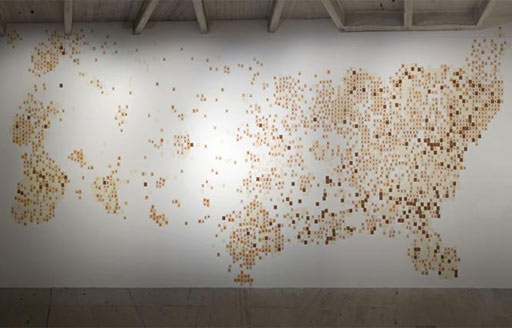
Finally, I pointed out at an exhibition of work by Emily Prince, which I saw at the Saatchi Gallery. She dealt with a visual portrayal and organisation of a large sample of data. Her drawings were colour coded, structured and displayed in two separate formats: daily columns of deaths and the map of the USA indicating the origin of killed soldiers.
I could employ a similar approach and continue filming the process of washing of my paintings. This would result in a large projection split into a large number of individual screens.
I also referred to the painstaking and methodical approach employed by Roman Opalka. He photographed himself every day for 45 years, while wearing the same shirt and and holding identical facial expression. This was in addition to the series of his Counted Paintings, from 0 to infinity. I included his quote as his words are of a special significance today.
“Time as we live it and as we create it embodies our progressive disappearance; we are at the same time alive and in the face of death–that is the mystery of all living beings. The consciousness of this inevitable disappearance broadens our experiences without diminishing our joy. There is always the omnipresent idea of nature, of its ebb and flow of life. This essence of reality can be universally understood; it is not only mine but can be commonly shared in our unus mundus.”
Roman Opalka – “Rencontre par la séparation”, AFAA, Paris, 1987
My ultimate plan is to project three videos. Additionally, I would also like to restreatch the washed paintings onto their original frames and include them in my exhibition.
However, in response to the rapidly evolving and changing global crisis, I have decided to continue to evolve my ideas. My ultimate creative intention is to formulate a response, which is the most current, insightful and communicate the intrinsic qualities of my work and thinking.
I am focusing on the development of work with a strong feel of the zeitgeist. This is to elevate my role as an artist and to respond to the current issues, which affect our society in a dramatic and powerful way. I would like for my work to be an intelligent, though provoking and erudite comment. My pieces are the leader of critical analysis of reality. They point at and identify new ways of embracing our fragile lives in the context of devastating change. I am an observer of our history being made out there, here and now!
After all, we are travelling through space on a piece of rock; simultaneously spinning around and rotating at a great speed. Our existence is bizarre and impossible to imagine for an outsider.
Let’s hope that our journey is allowed to continue, develop, prosper and flourish!
This is my recent attempt to respond to the current situation. My project has redefined itself a few of times during a very long and turbulent journey through 9 countries. My observations and reflections have substantially changed their focus.
My initial interests were firmly placed on the uncertainties of tomorrow. The context for my investigation was mainly related to a range of economic disadvantages of people in the countries, which I visited. I was both: fascinated and terrified to learn how they deal with their daily lives. How inventive and creative they must become in order to survive.
Subsequently, I realised that everyone is waiting for a new pivotal occurrence. Something important to happen and bring about a significant and positive change. One way of dealing with this lengthy, stagnant and monotonous process is to get subjected by the conditioning of a hypnotic repetition.
My visual exploration of workers, who were suspended in the vacuum of that process, followed. I become intrigued by creating painterly responses based on analysis workers in Asia. This has allowed me to produce some of my recent and key achievements:
Thai Masseur
2. The Wheel of Fortune Seller
3. Three Burmese Monks
My video of the washing cycle of The Wheel of Fortune Seller is broken down into a number of independent parts. Each one is intended to be to have a separate meaning and be a metaphorical parallel to a chapter in life; from the start to the end:
Introduction of a middle-aged man with a face mask holding a Stanley knife. This scene is full of anticipation and automatic questioning: Who is he? What are his intentions? What is going to happen next? Are his intentions sinister?
Engagement of a background sound recording. This is a repetitive voice of an Asian female. It is difficult to understand and decipher. Her broken accent becomes much more clear with time. Her messages contextualise the scene.
Cutting the painting out and the shaking off. What is the intention? The voice starts slowly to become annoying. The shaking off is metaphorical for causing a loss of something and undergoing or suffering from a misfortune. My creative intention is to communicate how special and significant is the current pandemic situation in all broader contexts.
Magic of loading the washing machine. The painting appears to fly into the drum on its own. There is something theatrical, unreal and intriguing about this. It appears to be a bizarre ballet, a performance in the surroundings of a dirty corner – full of stains and clutter; in front of a red fire extinguisher, which symbolises a state of predicted and unavoidable emergency.
Washing – mundane and foreseeable. This part, coupled with a lengthy spinning cycle, is designed to test the patience. A new thought is born in my mind – when will this finish? Here again, this is a current question of primary importance and substance – perhaps on everyone’s mind (sic!)
Unloading. The female voice comes back. Something is finalised, concluded, yet the ‘old’ is reborn and reformed. It comes back like a haunting ghost from the past.
Final shake. It is intended to agitate – to get rid of what is there. The old is removed and no longer desired. The Wheel of Fortune Seller is erased from the surface of the painting. The old memories are gone. Let us hope, the real person behind the primary source character has a new and better life to enjoy and celebrate.
My intention was to create an almost religious and spiritual connotation.
Ultimately, the washed canvas will be stitched back onto the original stretcher. This refers to and implies a cyclic quality of life and its all events.
I have asked a group of my Foundation students to watch my Bye Bye Three Monks video. My intention was to receive some constructive feedback from my own learners. I projected the 6minutes and 47 seconds long film on a large screen in the base studio. There was a group of 15 learners available for this experiment.
The key points, which were risen during a plenary session are as follows:
I was waiting for something to happen and felt quite sleepy.
The video was relaxing and hypnotic; calming.
There was a sense of transformation from frustration to relaxation.
Some students felt quite exhausted after watching the vireo, while others found it relaxing and smoothing.
There was a little uncertainty as nothing was happening – concussion regarding the meaning of the piece.
Supporting sound, especially ‘Hugo, Hugo’, adds an element of pace into it.
The film is too long – after a minute, it may become uninteresting. However, later, it becomes enjoyable again.
This feedback has reinforced me in thinking that the video work well and communicates my ideas with sophistication. I may need, however, to support my work with a form of a postcard with appropriate text explaining the context of my investigation. I have used this idea during my most recent exhibition at Art 23 in London and received very positive feedback.
I have made some real progress today. I set up a video recording session of the washing of the Three Burmese Monks piece. Everything was arranged in the print room. As the DLSR run out of power, I had to result to using my iPhone XSMax with a tripod.
Following a discussion of details included in my storyboard, Georgie, our technician, agreed to help with the washing performance.
My picture frame was purposely wanky and crocked. I wanted to include a glimpse of a fire extinguisher and PVC pipes in the view. I also thought that bleeding stains on dirty floor make a valuable contribution to the overall impact of captured images, their meaning and the recording.
The raw footage is relatively long and full of accidental disruptions. They will all need to be edited out in order to create a cohesive video piece. The details of my plan will emerge soon, and continue to evolve and grow.
I enclose the final washed up image of the Three Burmese Monks piece and some raw and culminate footage below:
Following a long period of consideration and reflection, I have restarted work today on the Thai Masseur piece.
The main issue was to complete painting the face. On the one hand, I wanted for the portrait to be recognisable, on the other, I have struggled with solving a number of ethical issues regarding a possible reaction and rejection of my work by the model. I experienced this kind of a situation with one of the former pieces. Subsequently, this unpleasant episode had let to the destruction of my own work and several alterations to other experiments.
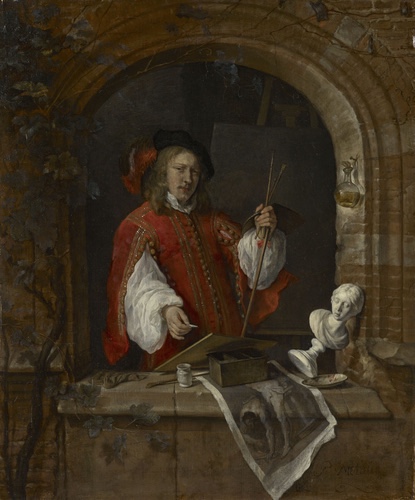
My new idea is inspired by deeply glazed and moody flemish paintings. I am especially inspired by Metsu and his self portrait. He positioned himself inside a window arch. This implies a composition within a composition. I am also using a double rectangular. My creative intention is to achieve a sense of ambiguity while drawing all attention to the centre – on the masseur. I want to rely on a visual suggestion of portraiture rather than a descriptive portrayal of a woman. The plan is to leave her facial features undefined, like a ghostly outline of what is really there.
A Self-Portrait c.1655-8 Oil on panel | 37.7 x 31.4 cm (support, canvas/panel/str external) | RCIN 405943
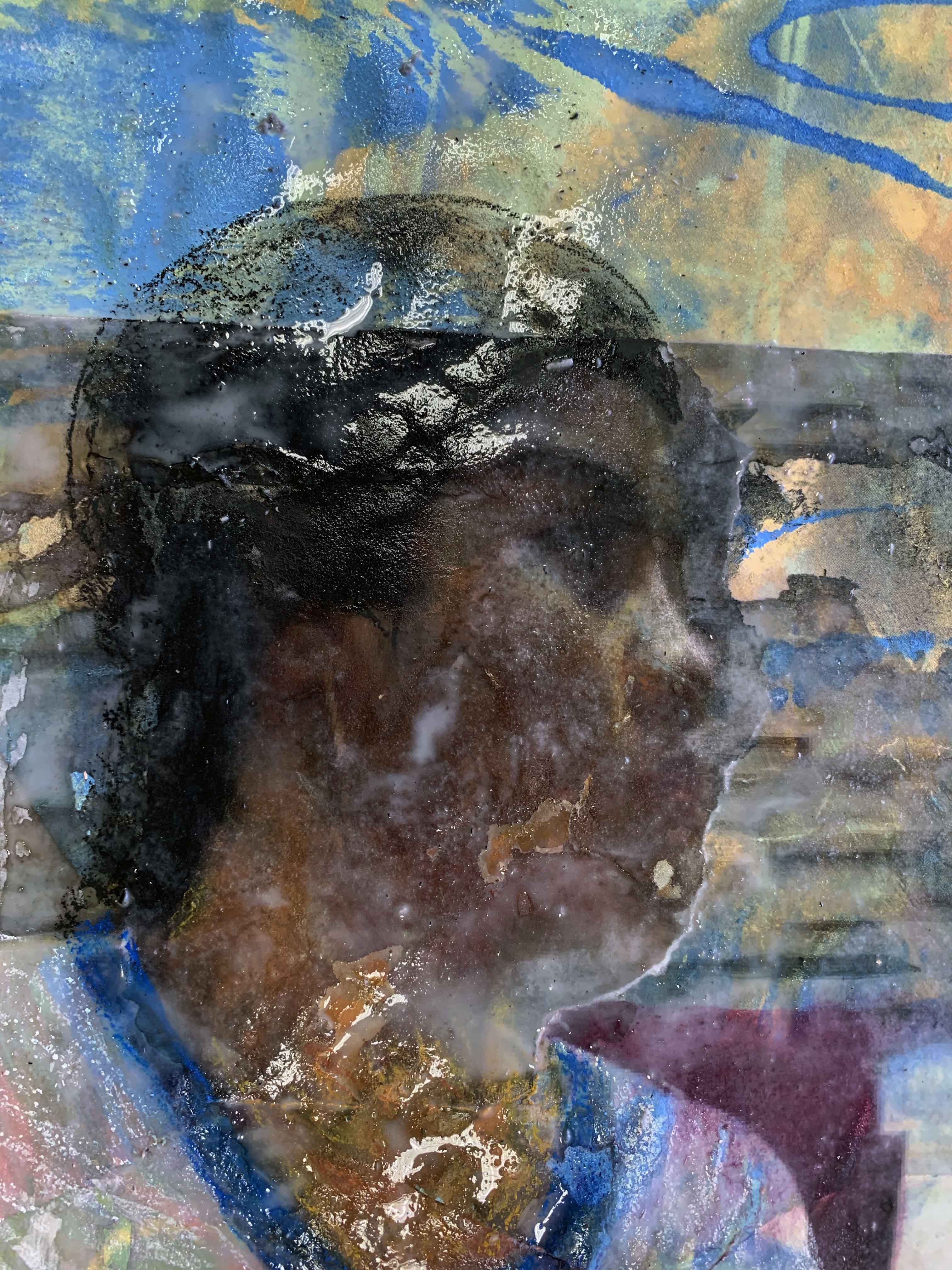
To give the surface more vibrancy, I used water solvable oil pastels. ‘Dancing’ with a crayon on top of the painting allows me to achieve a sense of mystery – secret light, which brings out parts of the skull and the jaw – all in the dusk of the space portrayed.
The next stage of the painting process will be to glaze the overall piece with a variety of transparent layers of an acrylic medium, perhaps combined with some watered down PVA glue. This is to prepare the surface for the overprinting stage using the silk screen technique and enhance a feeling of unity between the different formal elements and parts of the composition.
I have already prepared a new pattern based on decorative elements, which I have isolated from the interior of the massage salon. I will use this design to create a random over-image. This, in turn, will have a dual function. The first is to help to engage the centre in the overall painterly illusion. The second aim is to increase the amount of detail and enhance holistic and expressive qualities of my piece.
At this stage, I am considering using a range of gold and crimson tones. This initial plan might be subsequently altered in favour of a more spontaneous and instinctive decisions and reflections in action.
I am enclosing photographs of the final stages of work today and a close up of the ‘New Face’
In preparation for my presentation, I have created a separate category on my blog titled Seminar. The entry is split into four individual parts as follows:
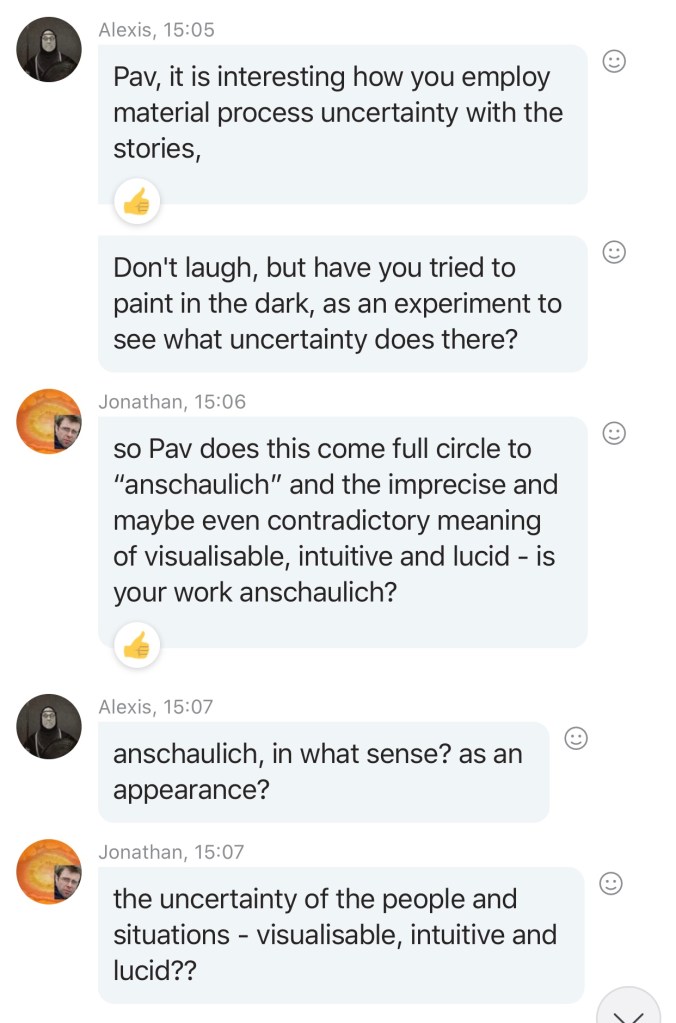
The idea was to introduce all participants to a logical journey of though. I started with an outline of the theoretical concept of “anschaulich”. Than, I moved on to contextualising and extending a framework of references. Subsequently, the presentation concluded with a form of an appraisal of several visual pieces, which I have created in consequence to my research observations and findings.
I was under a general impression that my ideas were well received and complemented on. I paced the delivery in order to ensure that there was a suffict time available to discuss all parts of the prepared material with the group.
Rushing through the seminar or missing out on the final section were not an option. Therefore, timing was of primary importance as well as directing the way, in which the debate was progressing.
I found the session very beneficial to refining my thought processes and reflections on how to make meaningful progress. It also confirmed my previous feedback and reinforced the importance of a recording a running narrative explaining the meaning of my work and its context. I am convinced that the use of sound will have a substantial impact on the broader understanding of both my project and my creative intentions.
I have now embraced this advice and taken it fully on board.
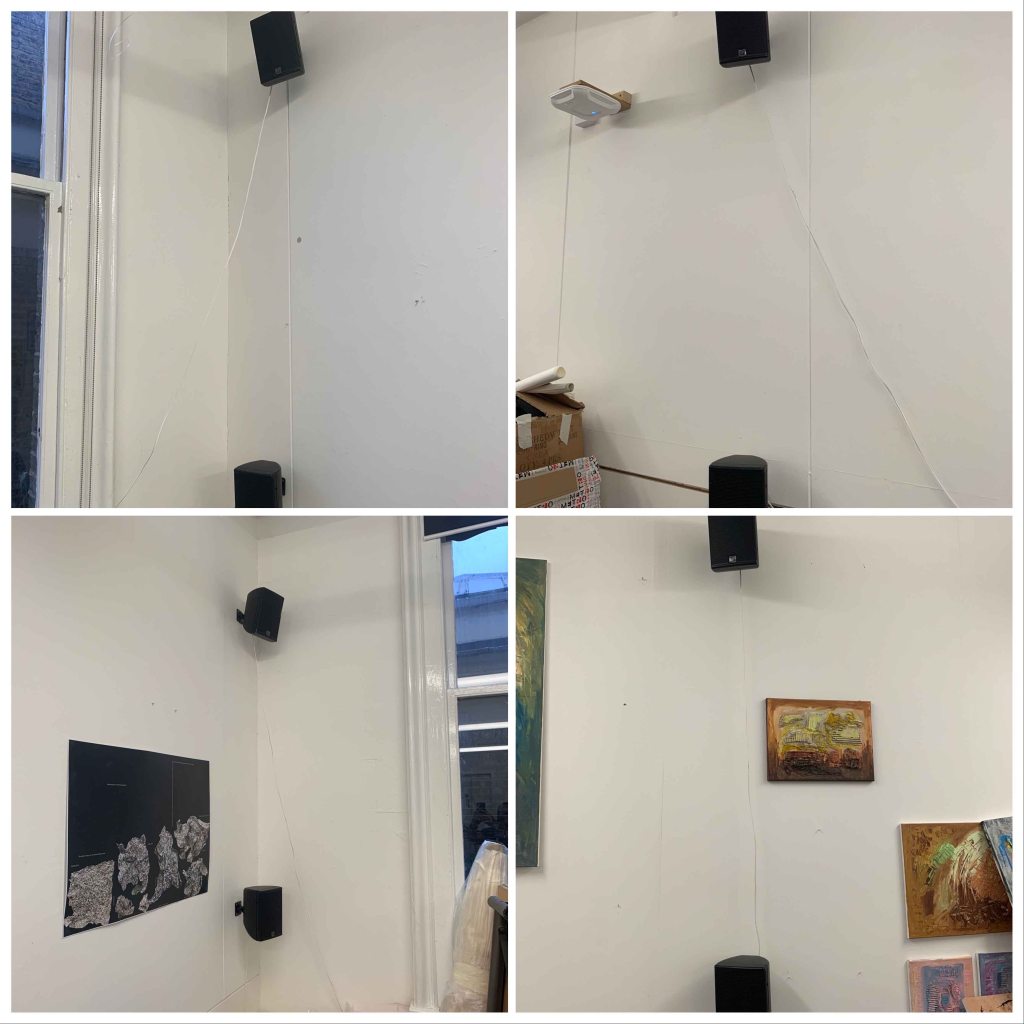
Both have an extensive knowledge and experience of working with sound and use sophisticated equipment to fully explore a broad range of opportunities this medium offers.
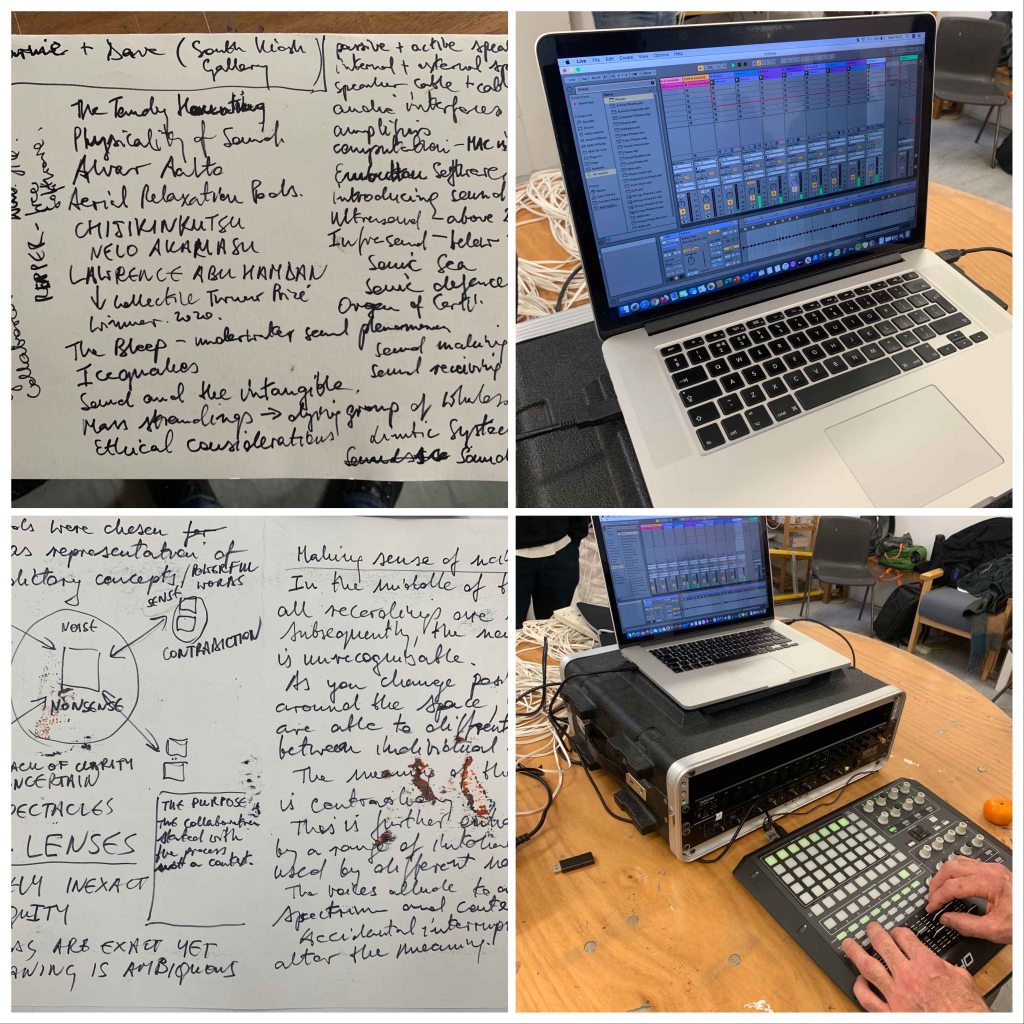
Following an illustrated presentation of technical and theoretical ideas, we were split into groups of three. The aim was to develop a cohesive sound project covering approximately 2 minutes of time.
I worked with KK and Alexis. Following a debate, we settled down on a concept inspired by the work of Bruce Nauman.
The work process was split into five distinct stages:
1. Brainstorming ideas and refinement of supporting thinking.
2. Composing the text comprising of a list of contradictory words and meanings
3. Recording of four narrations.
4. Editing of sounds and problem solving.
5. Refinement and re-evaluation of project concept, and creative intentions. Critical analysis of our work.
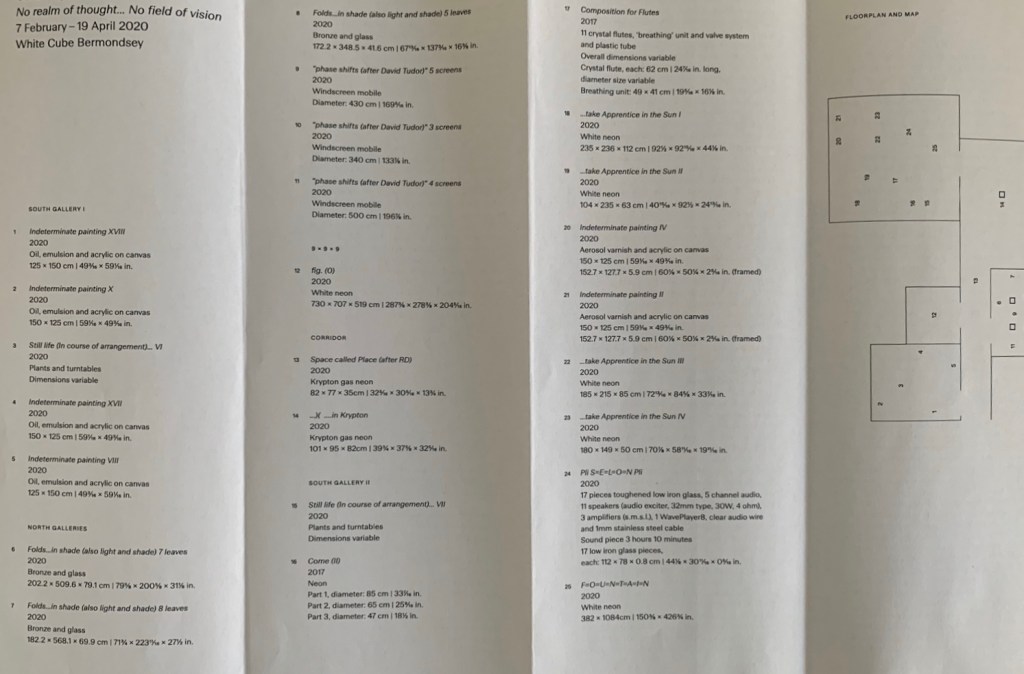
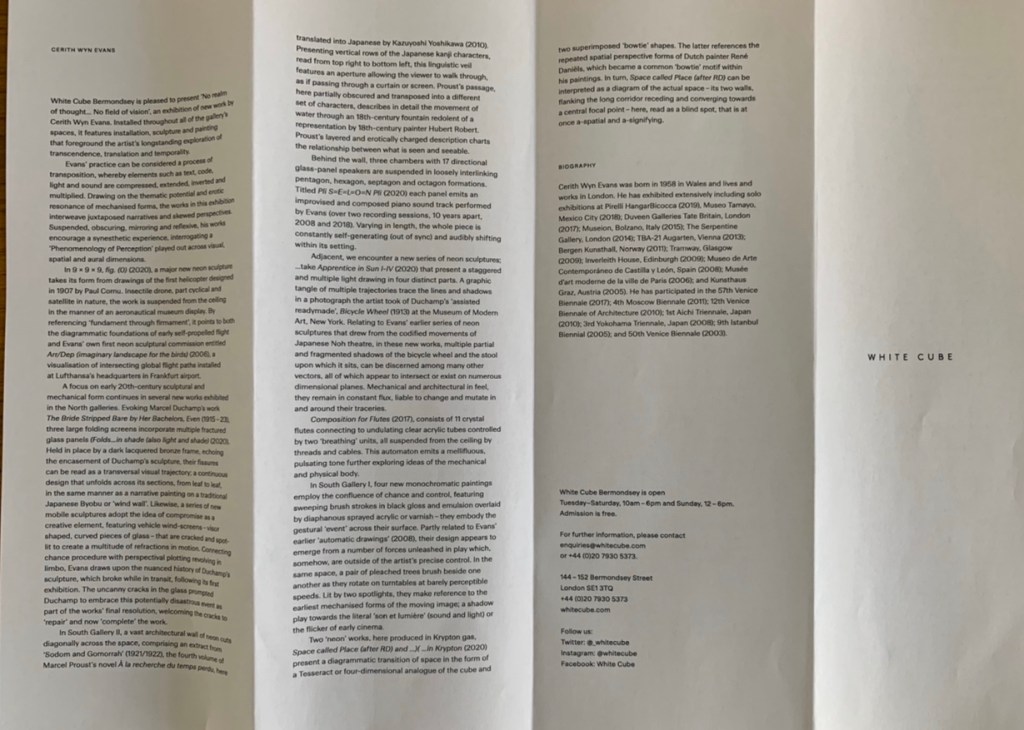
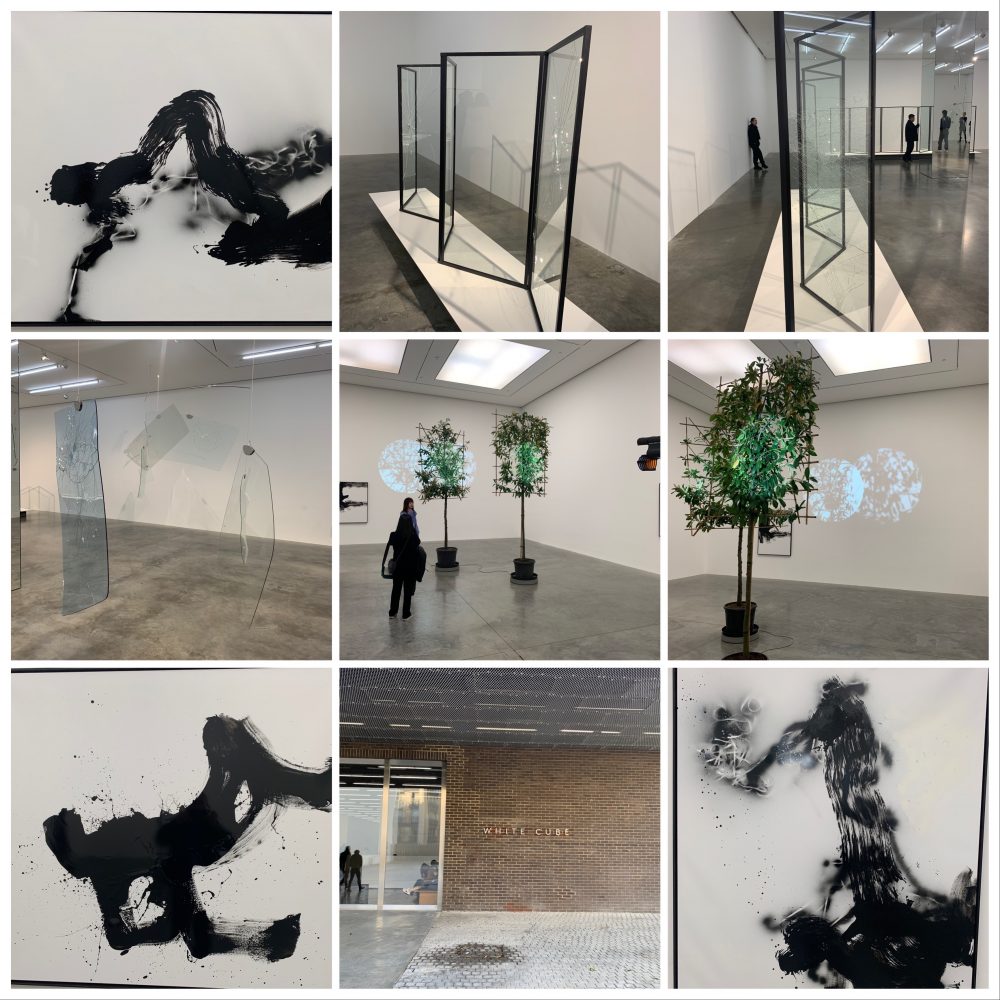
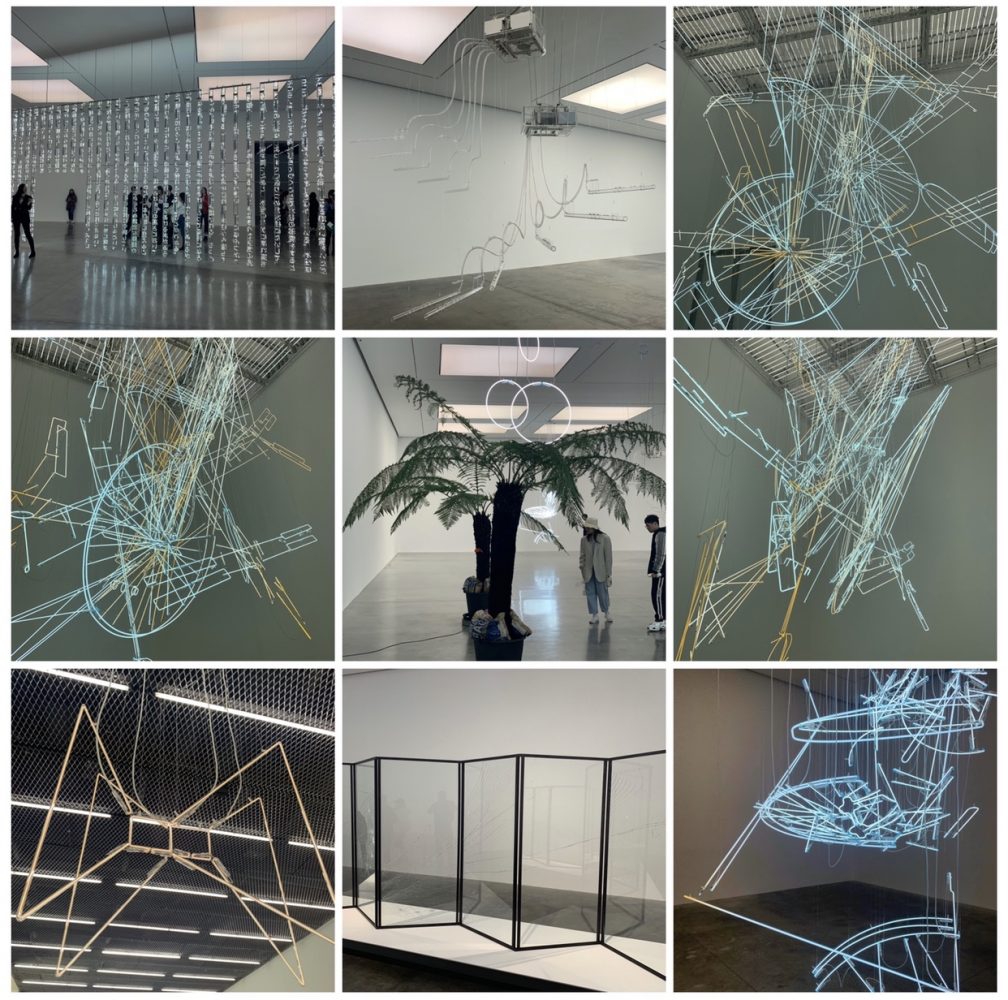
I have just visited fascinating glass and light exhibition at the White Cube Gallery in Bermondsey. Her pieces are full of reflections and transparency, incorporating visitors to participate in the overall scene. The work has poetic, reflective qualities and astonished with precision of execution and bizarre aesthetics of broken shards. The artefacts are suspended in the air, somehow interacting with each other while populating empty spaces. The inclusion of Chinese writing in one of the rooms contextualises her ideas while making references to both the Great Wall and a metaphorical open doorway in it.
This has been a very intensive and exciting day. Matt Edwards, who run this workshop is an expert with a fast knowledge in this area. The purpose was to initiate experimentation with filming and editing footage in an intentional and meaningful way. A strong focus on the overall idea is very important in order to develop a holistic and professional piece.
In order to ensure consistency between individual workshops and experimentation, I have decided to create and record a mini pop-up show of my screen prints.
I used a Nikon D90 camera and a tripod. The idea was to capture a broad view of an art studio. All work in progress provides the frame with detail and sets the seen, while contextualising the video. I practiced with recording myself, while continuously displaying prints on a white wall to form a large rectangular composition. Subsequently, the pieces were removed one by one. White wall as a start and the same white wall as the end. This concept has provided my with the boundaries for my action and narrative.
I have experimented with a range of possibilities and considered a number of unassuming angles for shooting. My creative intention was to ‘go’ beyond a simple use of a documentary or media approach. I wanted to create a short art film.
Simultaneously, this provided me with an excellent opportunity to photograph my prints using a digital SLR.
As soon as all images and video footage are processed, I will include them and other visual material in this post.
Premier Pro is an advanced piece of sophisticated video editing software, which allows for a superb level of control, manipulation and intervention.
To aid my memory, I made a number of notes. I hope to use them as guidance in further experimentation. I am excited about taking my current ideas further and this process will begin shortly.
I feel that I have learned a lot about the impact of colour changes on video and the way in which it is perceived and understood by an audience.
Surprisingly, there is a similarity to how this applies to traditionally developed imagery.
I created a number of clips and sequences and experimented with additional effects including the use of alteration layers.
All in all, the day was very successful and demanding. I have benefitted from being challenged, especially in the context of experimentation and risk-taking leading to the development of new ideas and discussions of alternatives.
I am looking forward to the next stage of refinement of the work, which I have started to produce today.
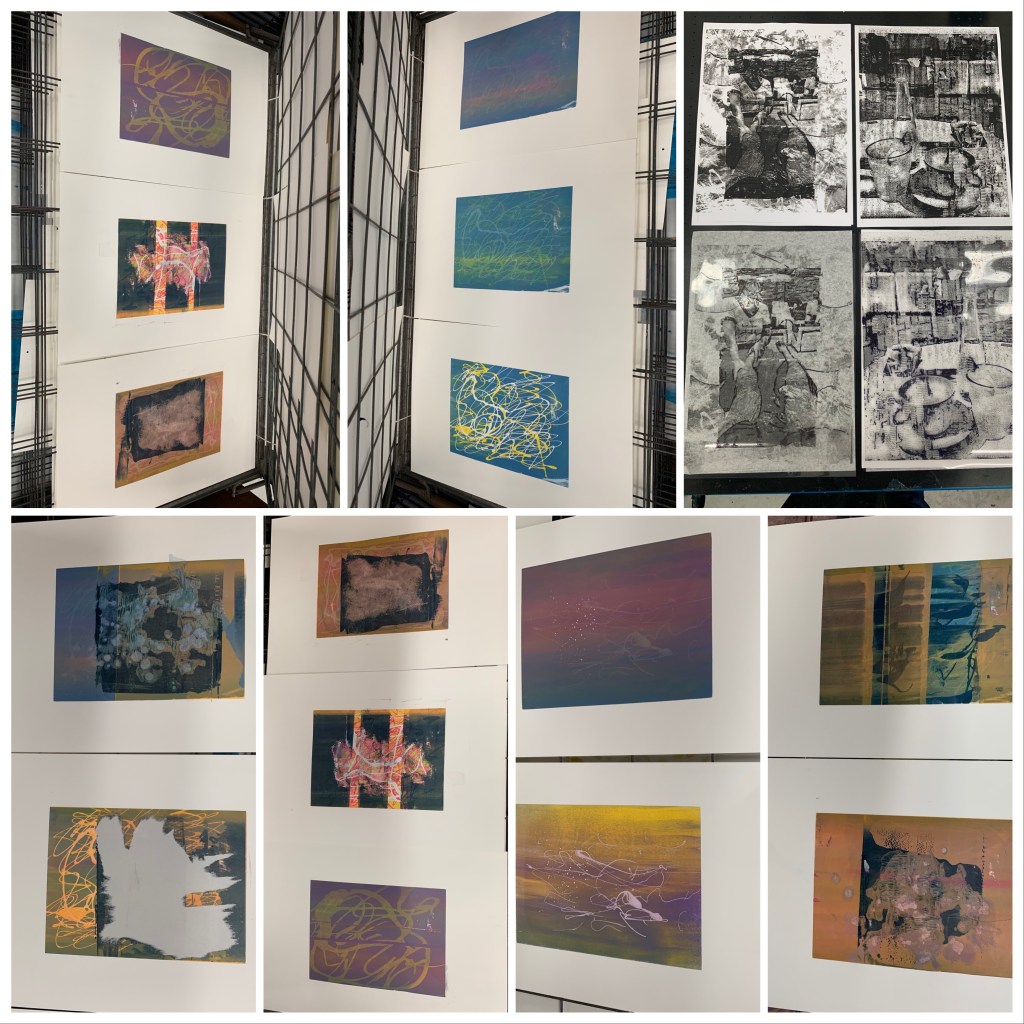
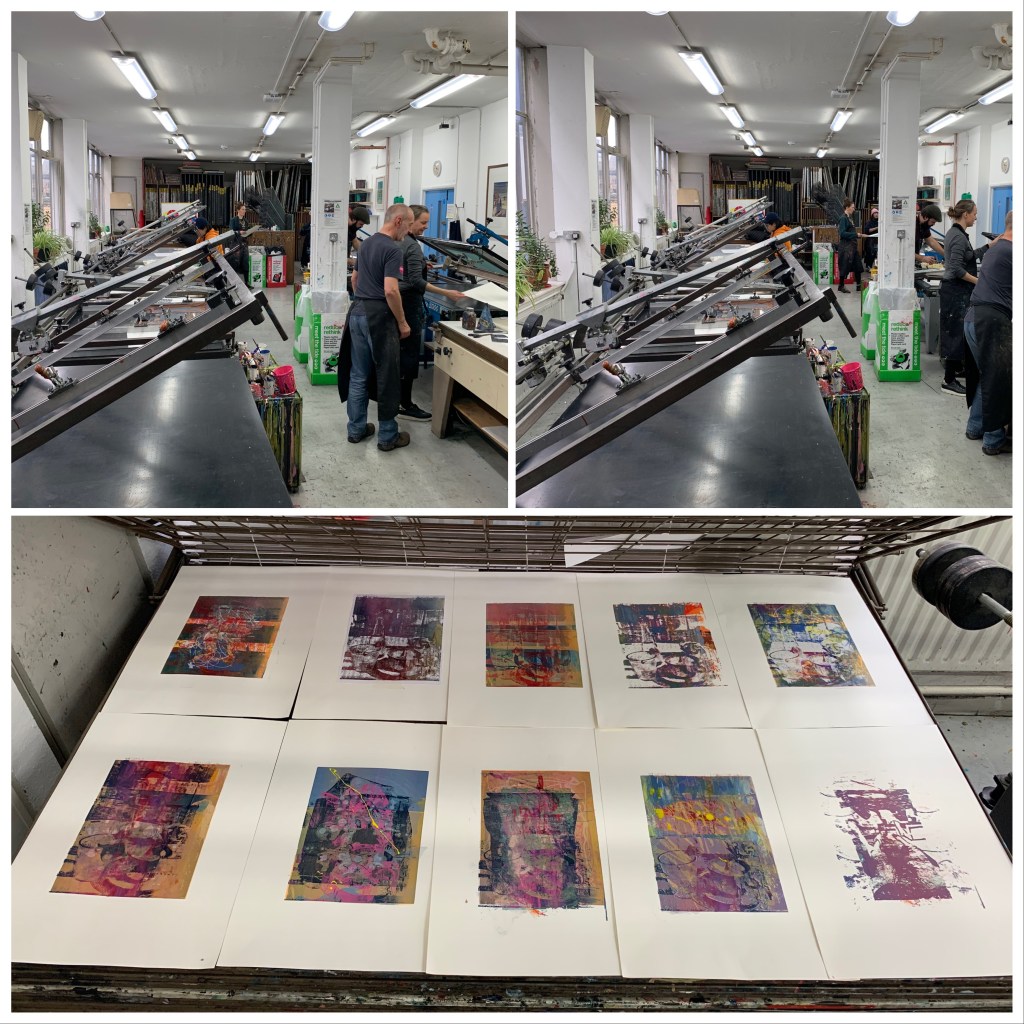
To diversify my experiences from last year with mono-printing and etching, I opted for screen-printing.
Following an excellent presentation of technical possibilities, we reviewed an extensive range of examples of prints, covering numerous pieces produced by both, staff and students.
Tony Lee delivered a detailed demonstration of a variety of processes, while discussing alternatives to the time-typical practice. To my surprise, he also gave me all of my prints from last year’s workshop. I was astonished by this amazing surprise! Thank you Tony.
Brian Whitewick introduces us to the technical aspects of coating and developing screens. His knowledge and experience were excellent.
With his help, I was able able to achieve a crisp transfer of my images onto a silk screen.
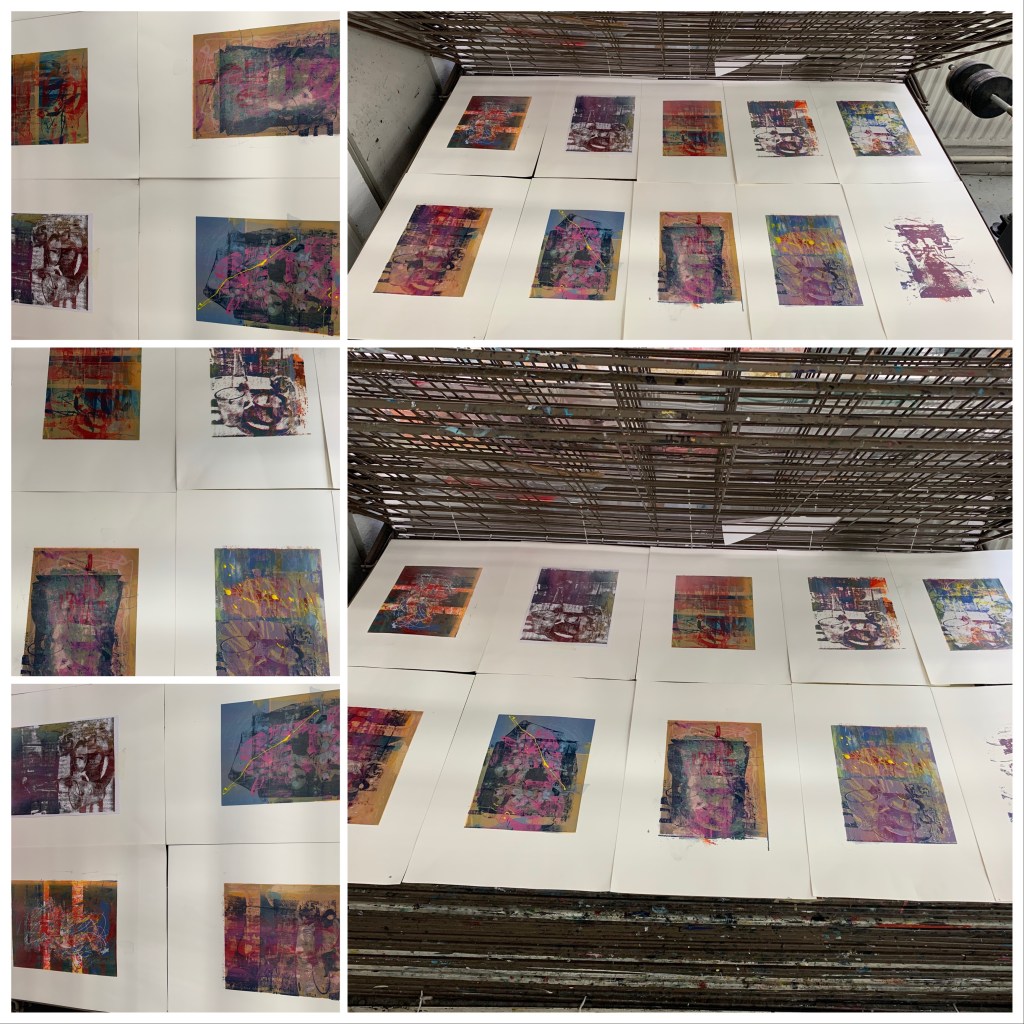
Initially, I taped a screen and established a form of registration. I used a number of experimental techniques including masking, drizzling and flicking. I dragged the squeegee across and continuously overprinted my under-images with countless layers of harmonious colour transparencies. My creative intention was to achieve a sense of depth of colour and sensitivities of related textures. Subsequently, I used the same images as for the cyanotype workshop and developed both of the on the same screen.
Background colour considerations:
Using the screen, I overprinted the backgrounds using a similar range of techniques and ideas. Here again, my intention was to achieve effects of mysterious ambiguity, which forces viewers to interpret rather than read images. I was particularly intrigued by electric properties of a bright pink ink, when combined with rich and deep blues, and subdued yellows. My final experimentation and printmaking proposals, which I subsequently developed, are dynamic and full of healthy curiosity of the painterly space. The subject matter is visually suggested and not described. When dry, I will continue to work with these prints to refine them and enhance their colour further through a range of digital processes , possibly extending to stop frame animation.







 HYPNOTIC REPETITION