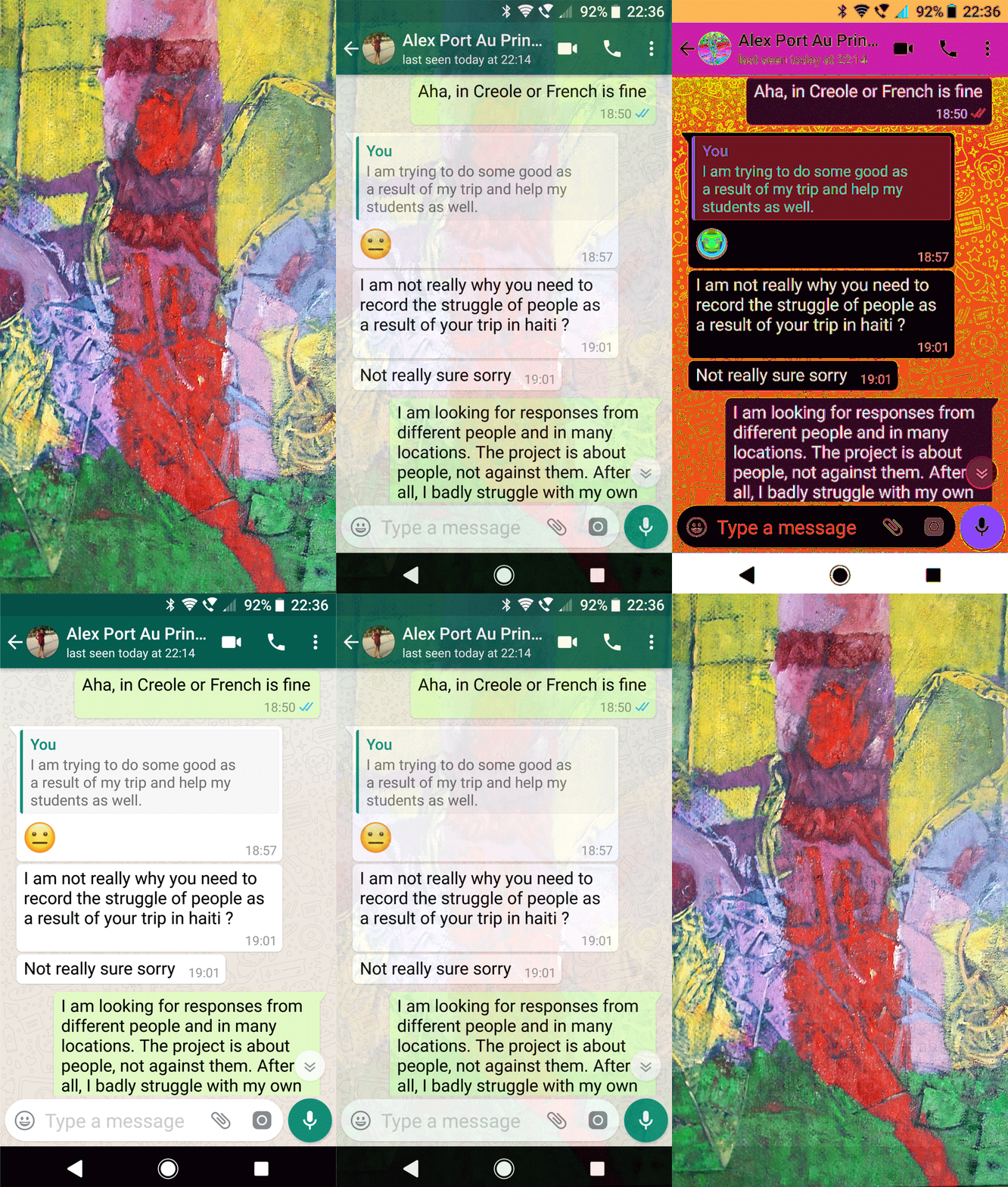
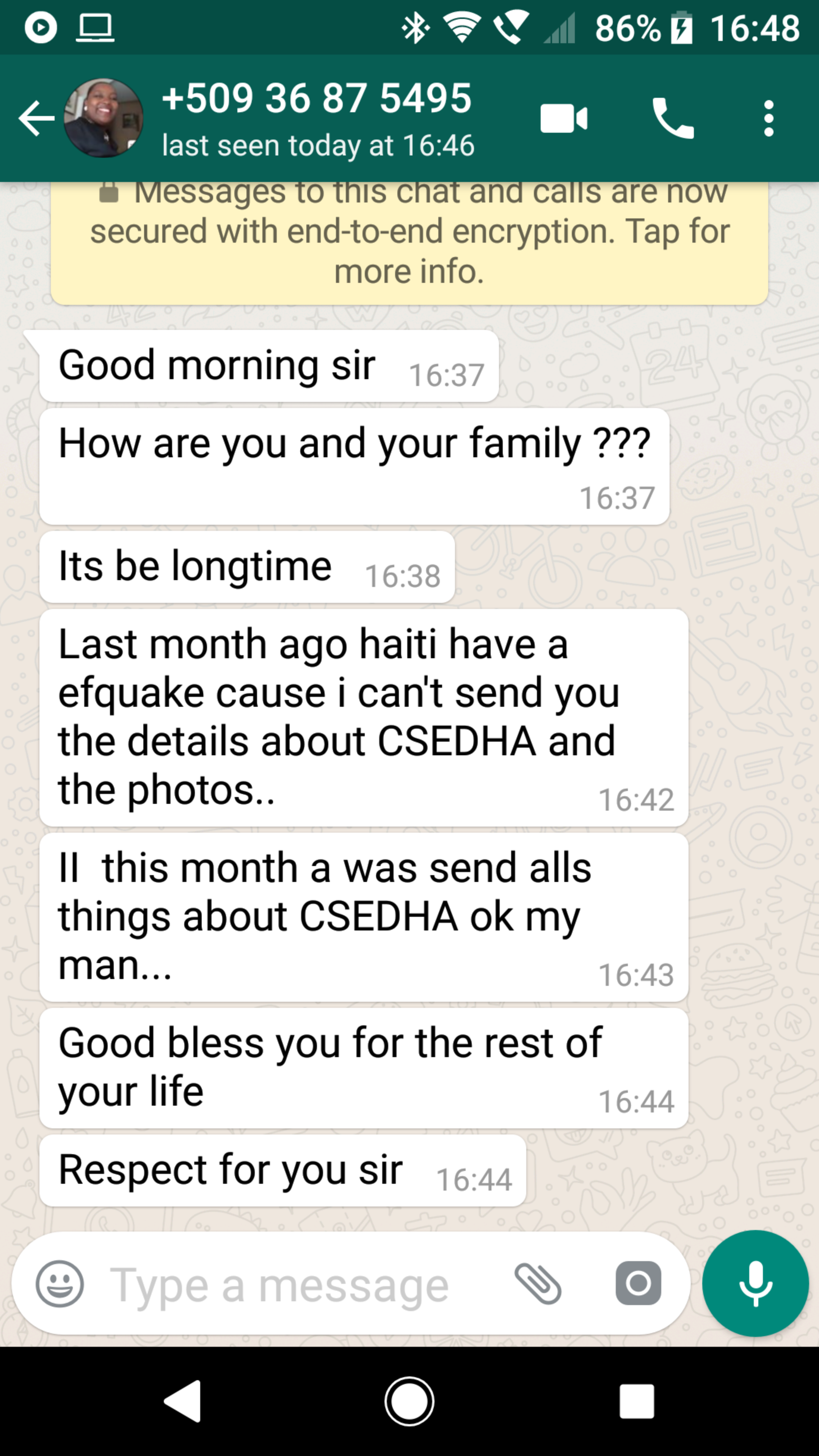
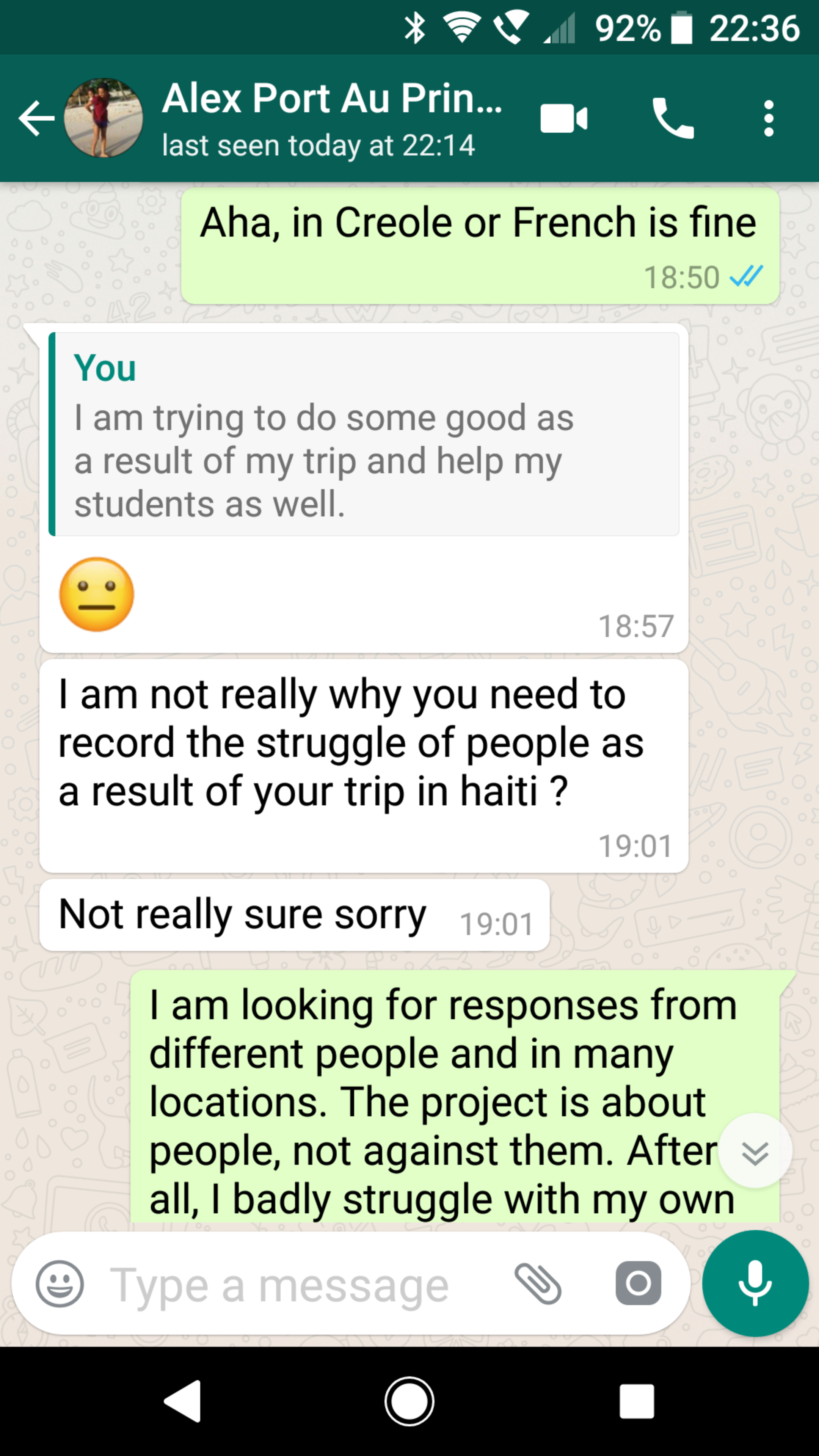
I am constantly bombarded with messages for help. This has led me to want to embed some of those into my painterly backgrounds to create a clash between the impact of colour in response to the beauty of Haiti and desperate plea for help in broken English sent via digital media.
The time taken for the message to become apparent contradicts the immediacy of the need and how instant the process of sending a message is.
It takes a long time to sink in.
The question remains the same: how do I respond? What is the impact of the message on me and my consciousness; it is definitely unsettling, disturbing and leaves a dilemma. I am unable to help them all. How do I help and select potential recipients.
This is how a sudden message can interfere and disturb the focus on painting. The shift is noticeable and reflects the change in thinking processes.
Following the guilt and frustration with not being able to respond in a constructive way, the painting regains its importance. However, this is a cyclic process; absolutely vivid and flashing at times – therefore, overwhelming all other feelings.
I finally feel that I am “getting” somewhere. The painting, the message, the flashes, the vividness, the cyclic re: occurrence.
Does witnessing poverty and deprivation make me want to change their situation on the one hand, or on the other, it merely changes my reflections on my own life, ambitions, aspirations and priorities?
Their uncertainties are an unsolvable dilemma and my reflections are simply frustrating.
Mortality is the essence in Heidegger’s proposal of authentic living. His concept of Dasein (being-there, existence) has become very current in the context of my reflections on viewing art in Valencia.
The idea that death forms the meaning to life is well-defined within the philosophical framework. Many thinkers have discussed ‘death’ and its relationships to what we do and how are. Montaigne argues that “to study philosophy is to learn how to die”. Seneca proposes that “life is nothing, but a journey to death.” This was further extended and contradicted by Nietzsche, who states that life’s purpose and meaning are defined by our goals and inspirations.
Existential writer – Camus emphasises the absurdity of life. This thought process is extended by Kierkegaard, who questions the sense of life in the context of death.
Many others also suggest that love, beauty or reason are necessary to provide existence with meaning. My reflection is that most Philosophers will not simply assert that death is sufficient to give our existence a form of meaning and reason. Is art as a language of expression perhaps that addition, which is needed? Is visual exploration trying to solve the biggest puzzle of life?
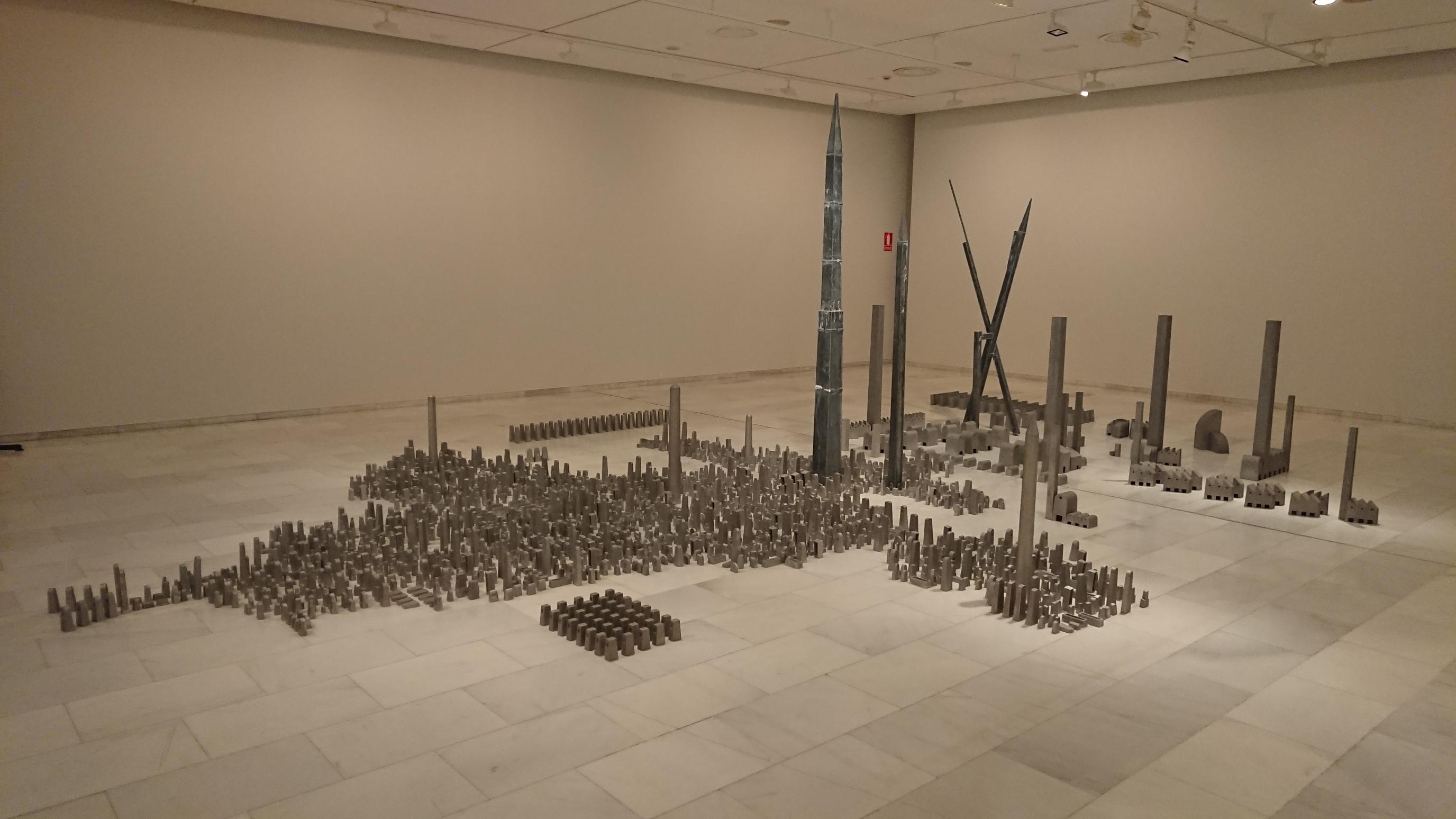
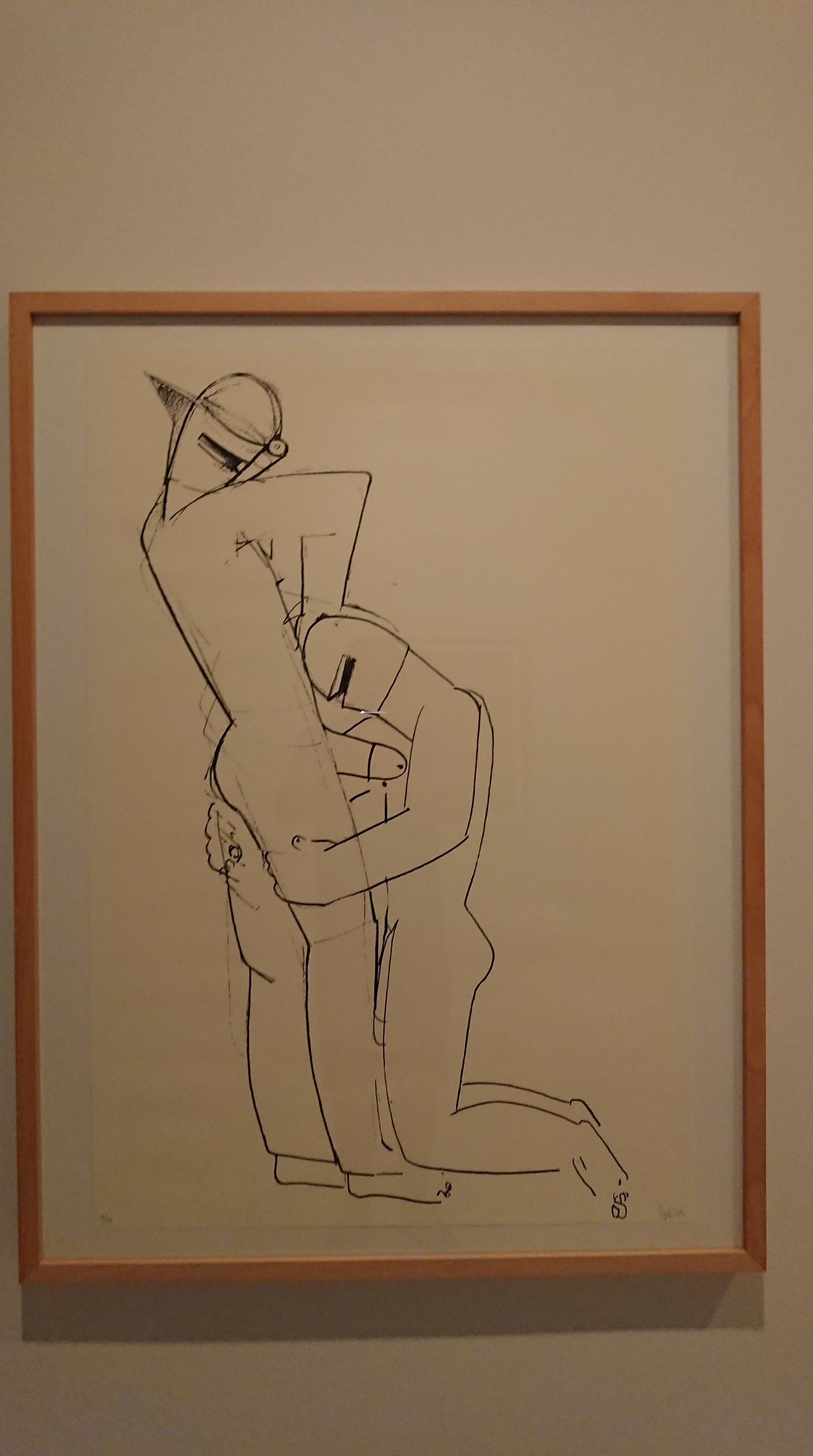
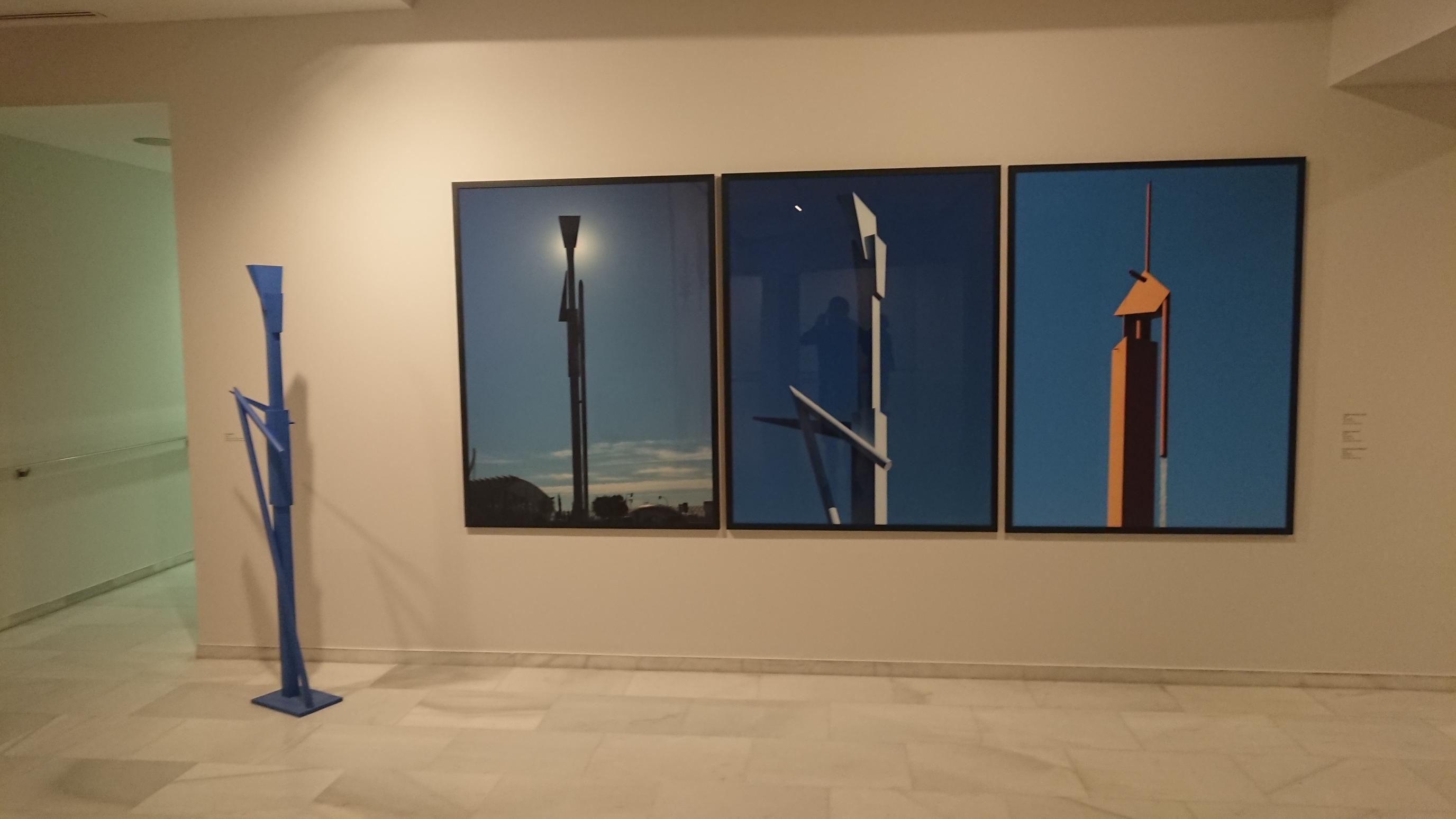
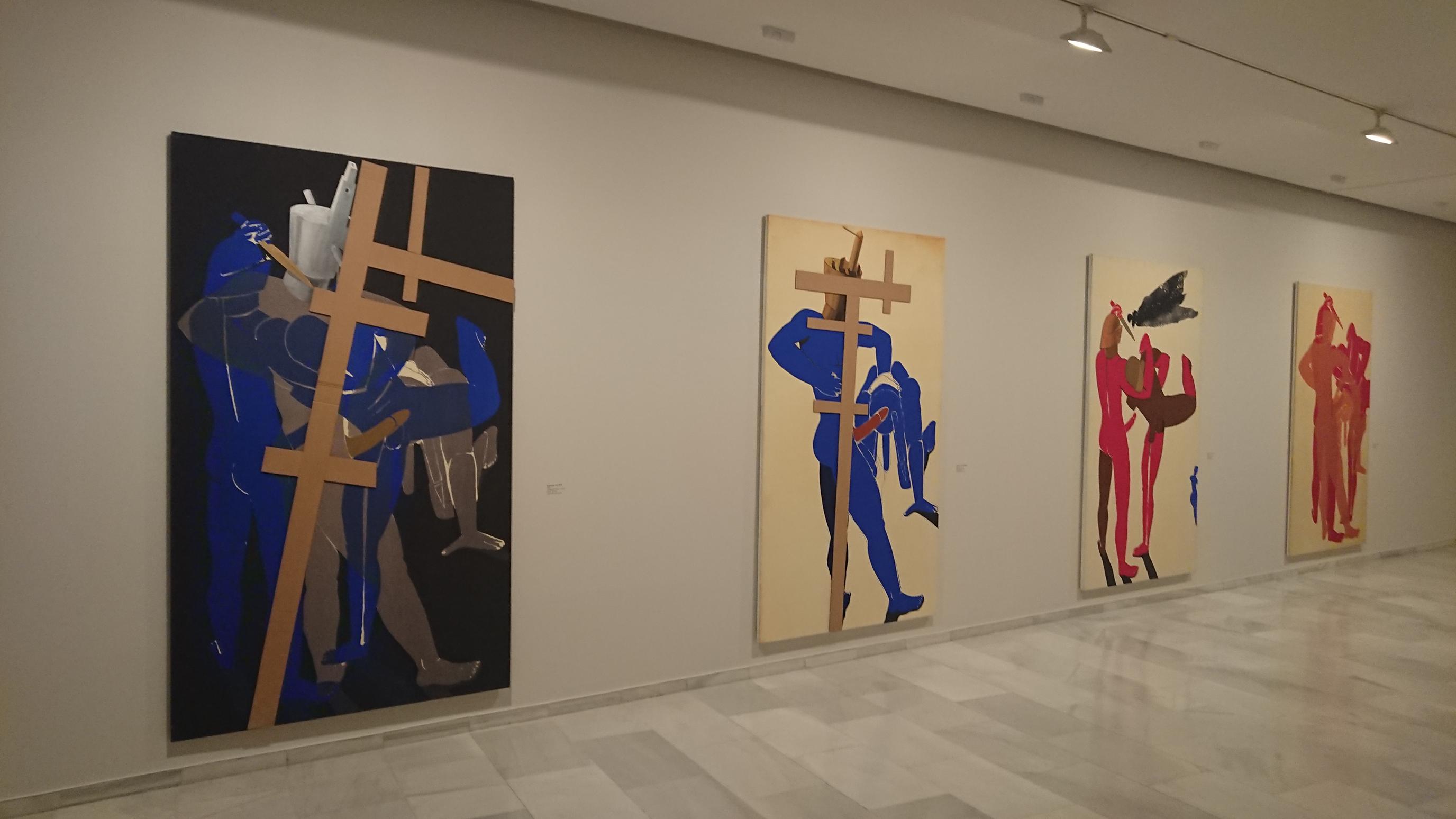
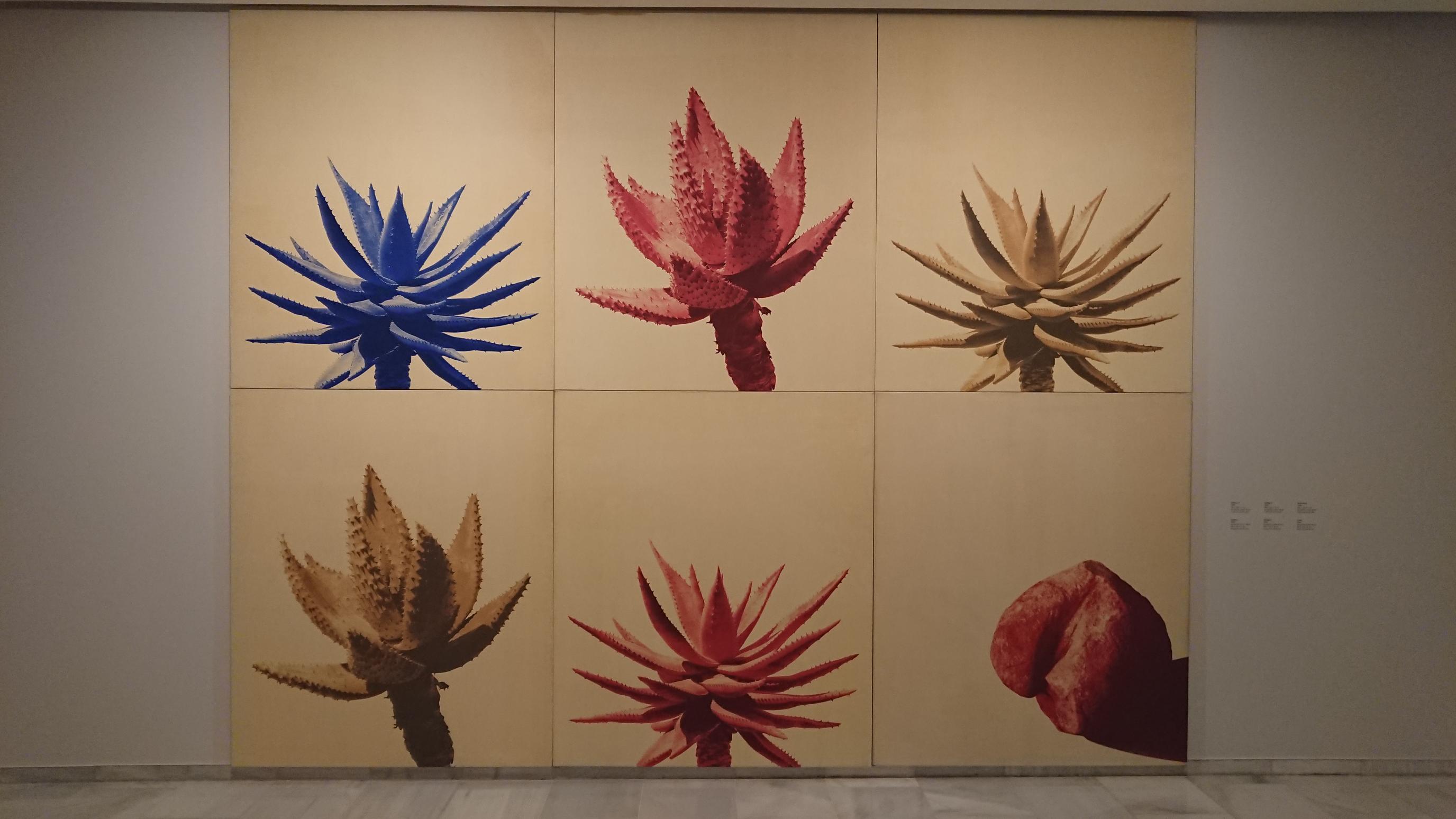
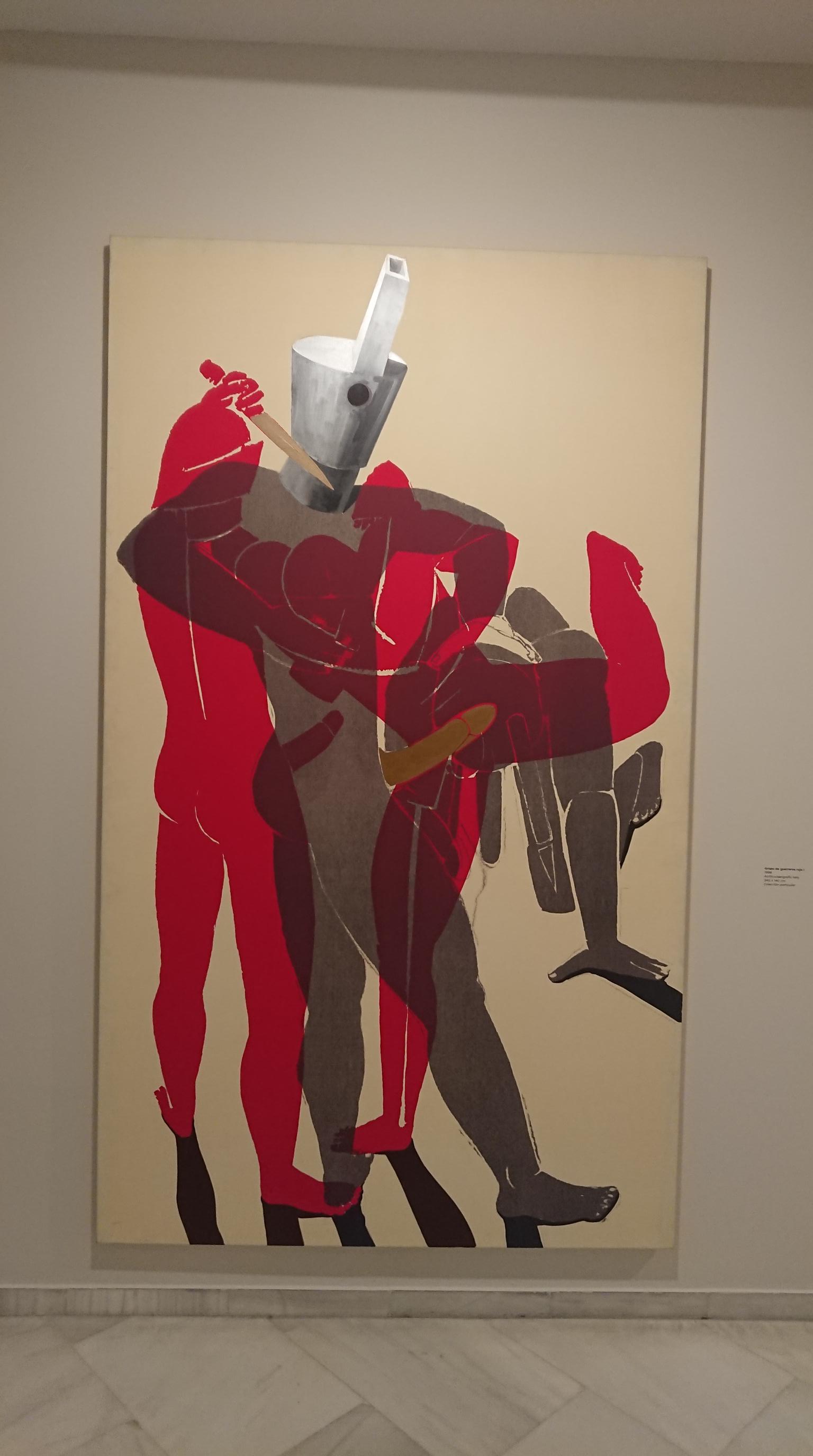
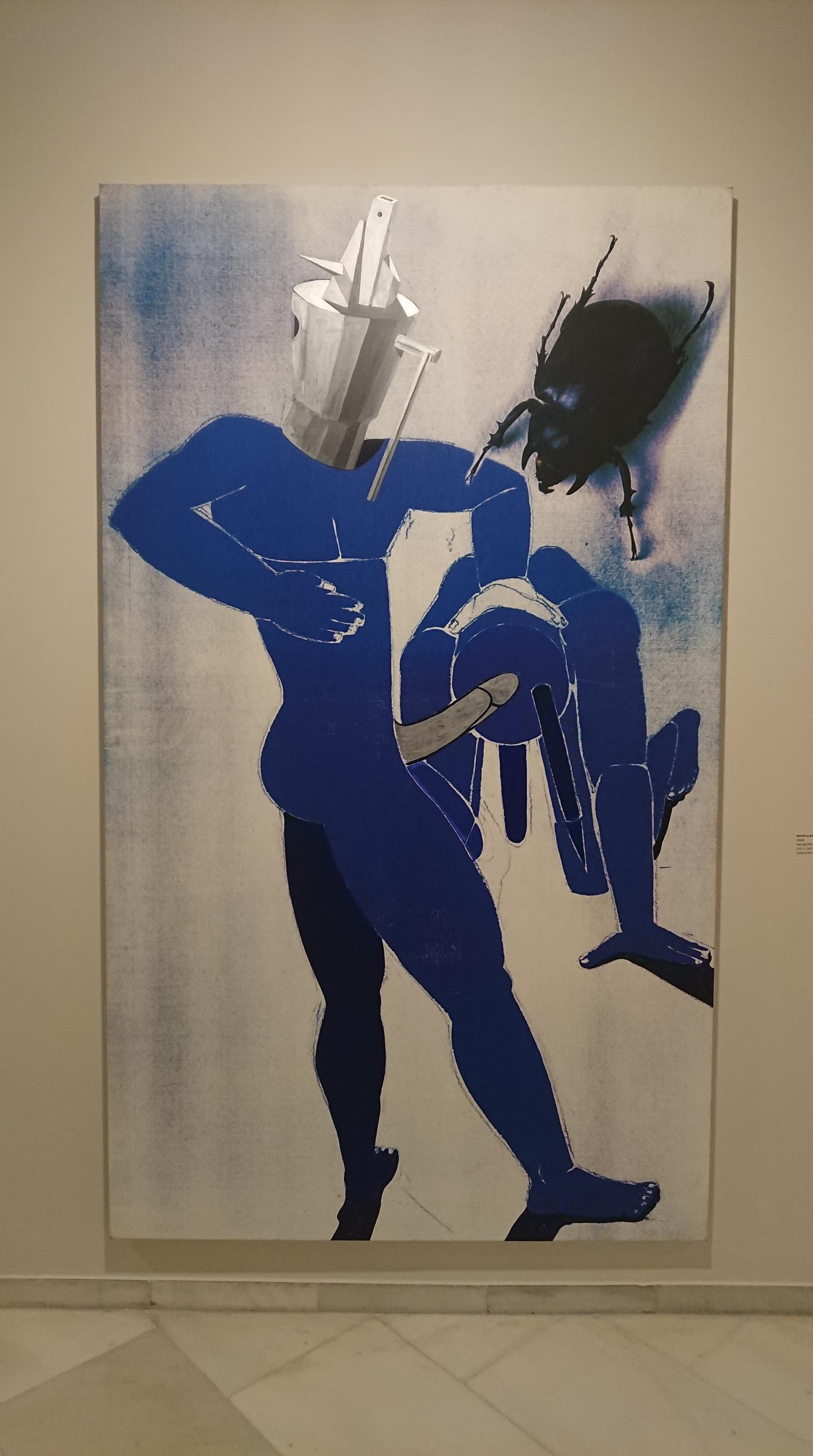
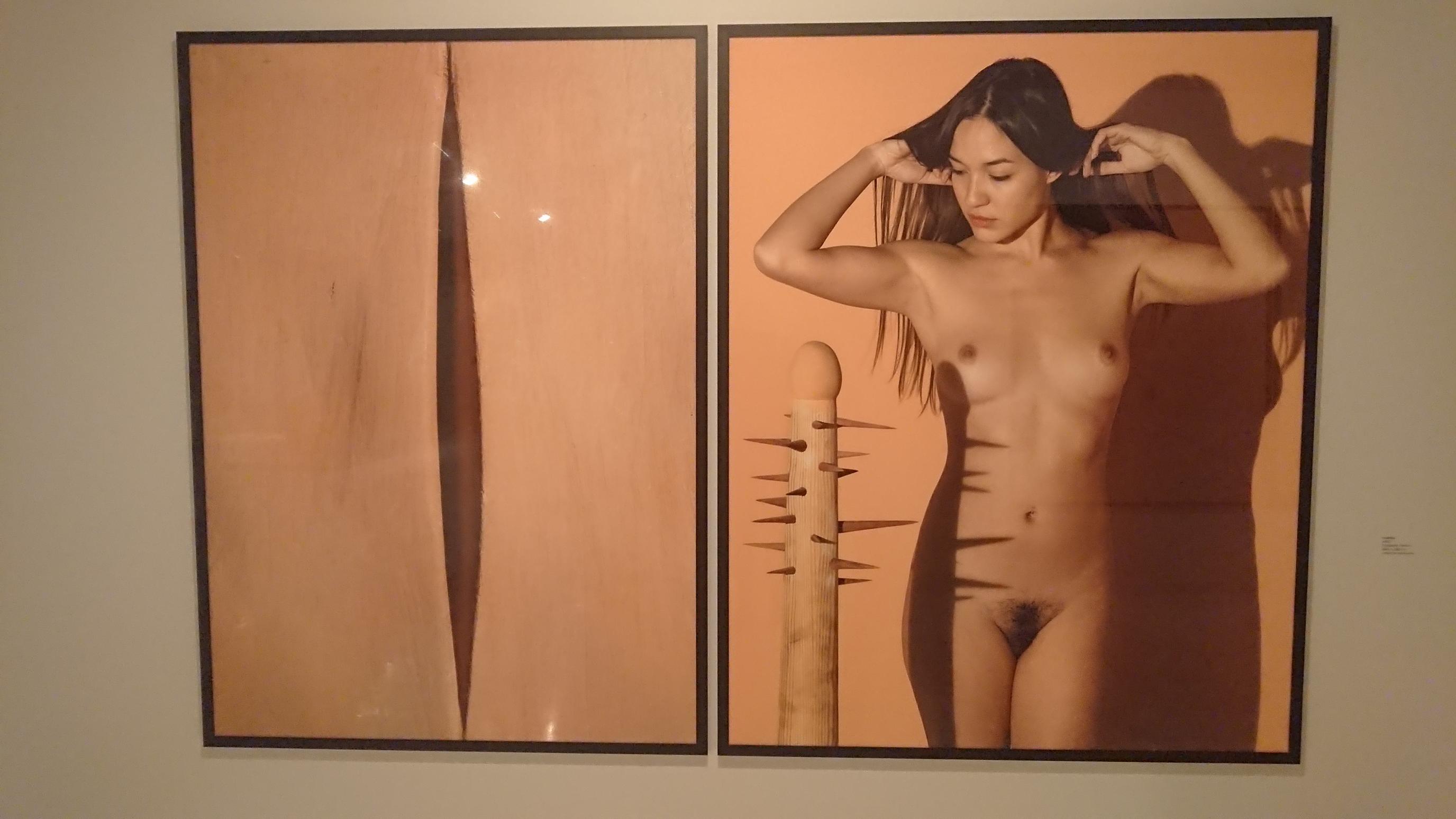
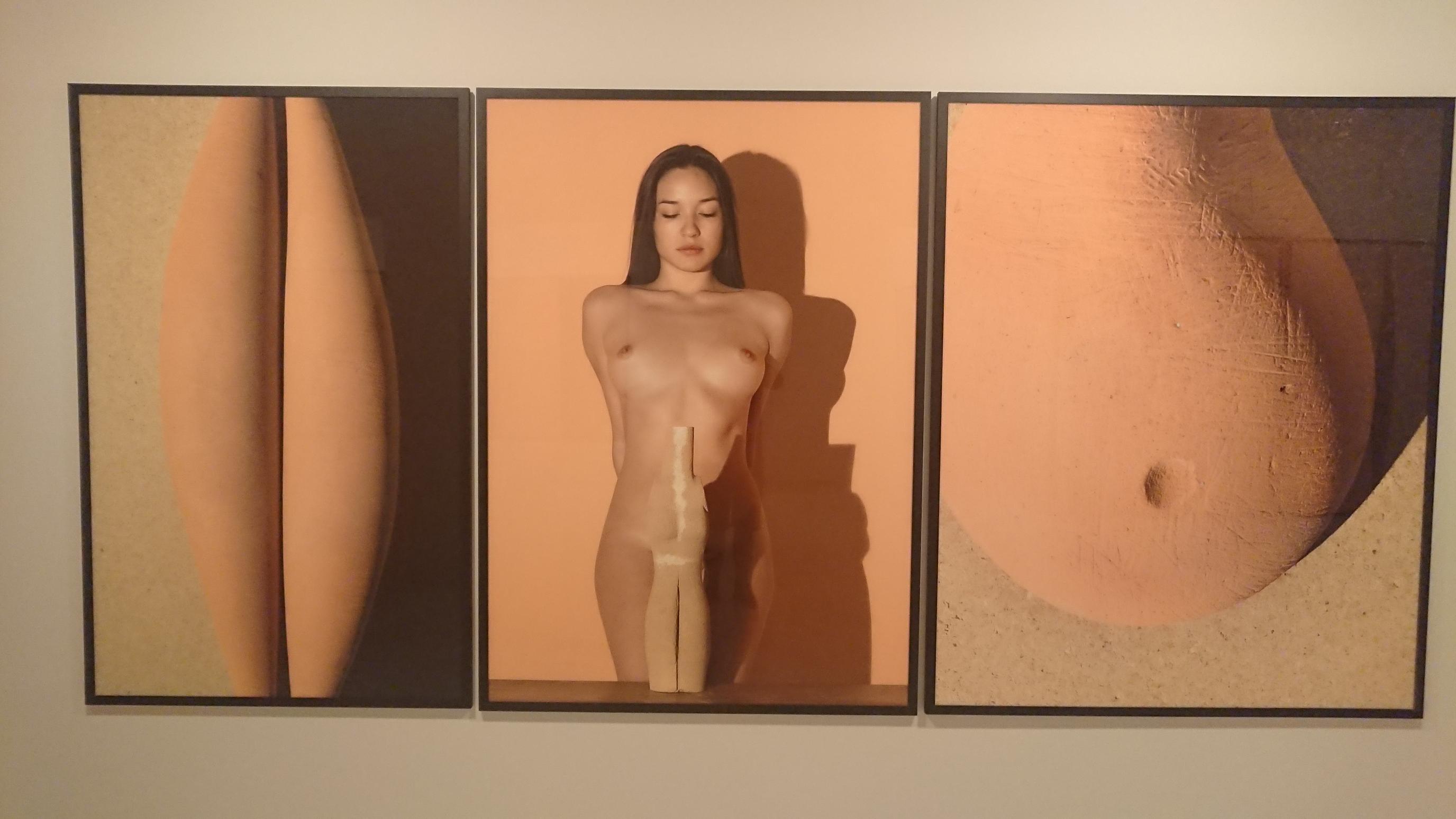
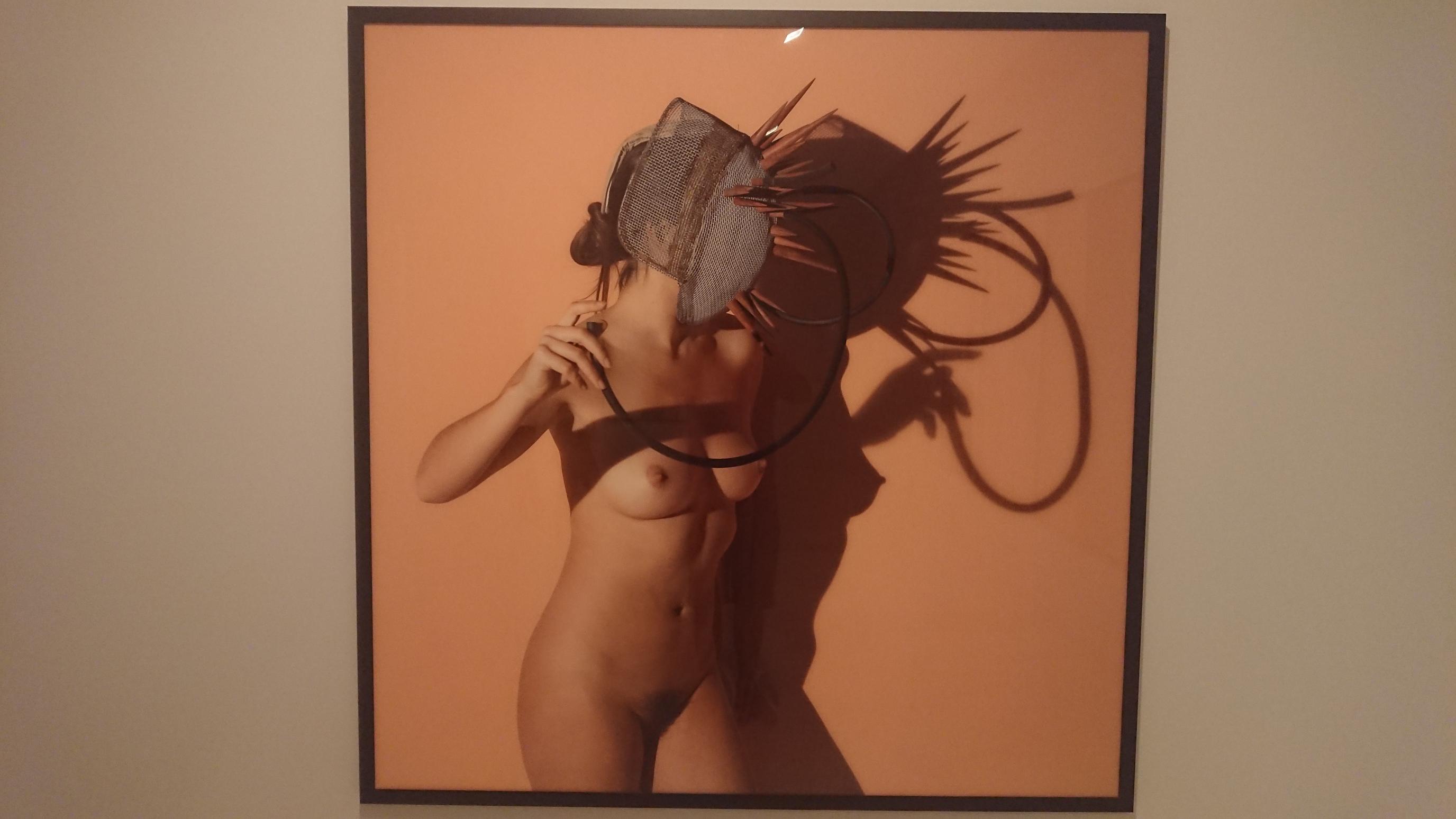
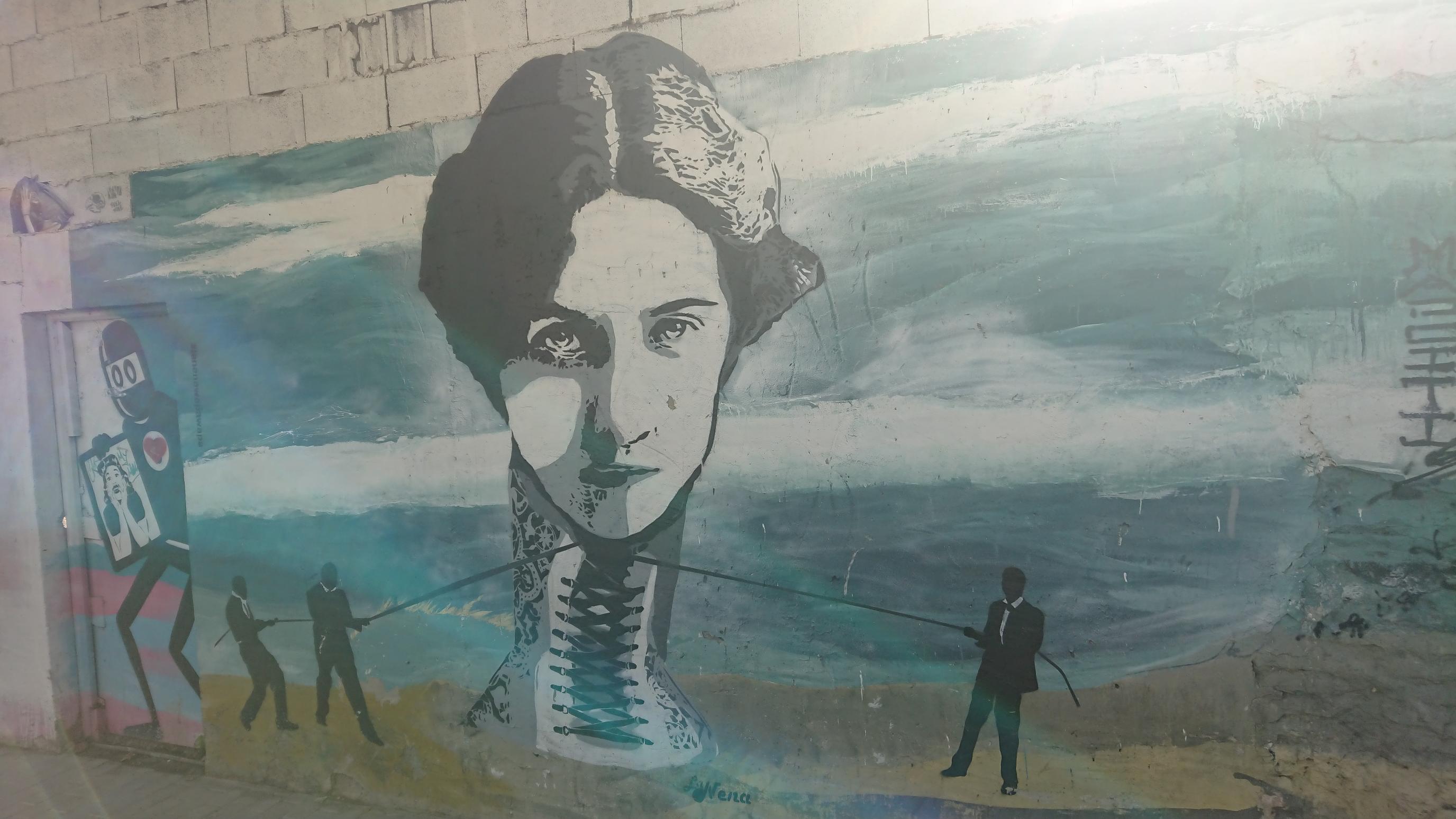
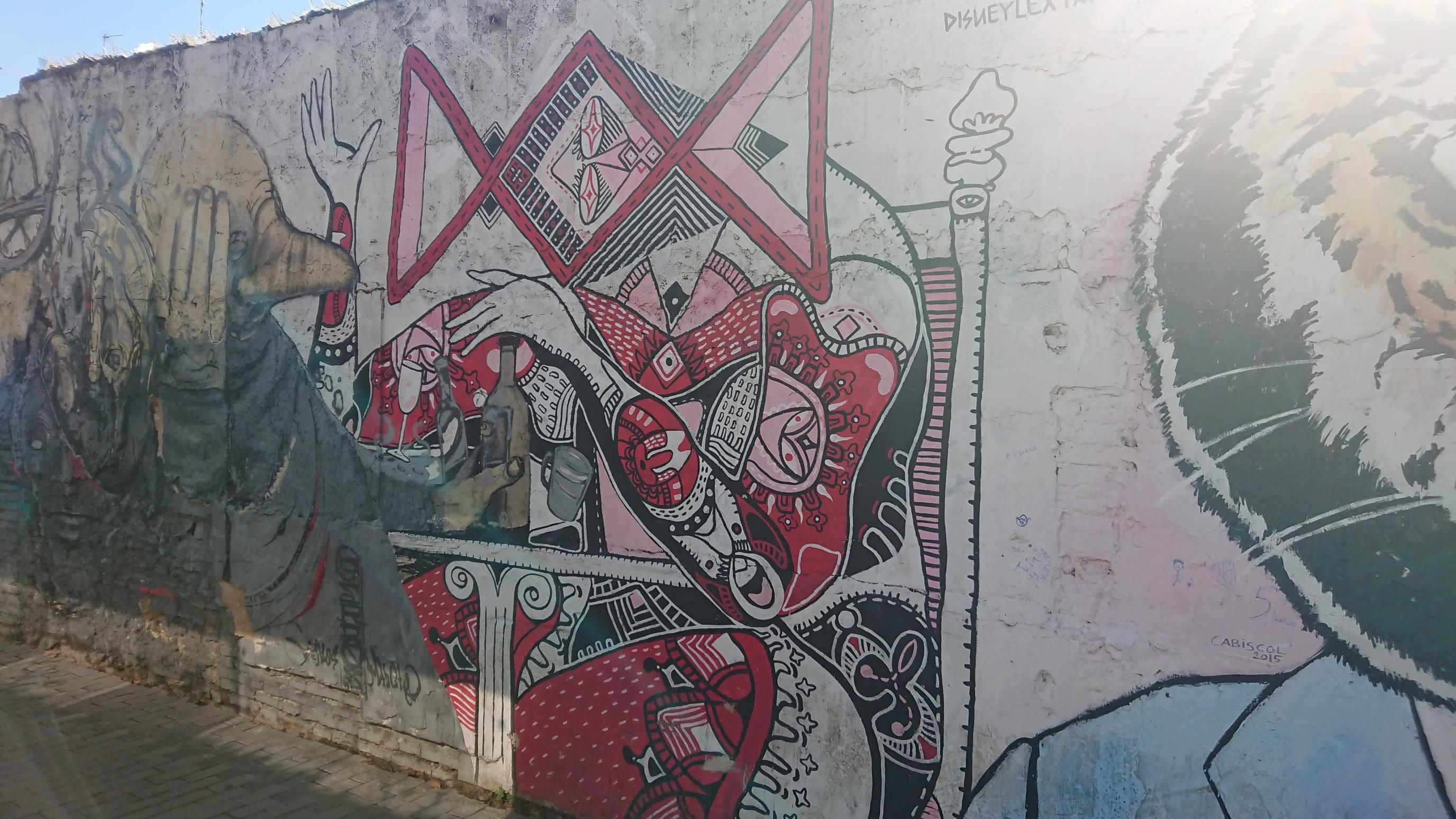
I have spent the last two days exploring a range of galleries and museums in this bustling city. Currently, there is a broad offer of exciting exhibitions available, covering both Spanish and internationally renowned; traditional and contemporary fine artists. During my viewing experiences, I tried to categorise artefacts by the essence of their subject matter or theme. After a very careful consideration, I have concluded that our common fear of transience is the origin of all of our thoughts, feelings and undertakings. We are subjected to mortality and this is where all of our worries and anxieties are stemmed from. This phenomenon can manifest itself in a variety of forms, from religion, fear of omnipotent God and the ‘Last Judgement’ to death, illness, pain and other general life’s misfortunes. I found an ever-increasing evidence of loneliness, isolation, alienation and forever present inability to establish a deeper rapport and communication with others.
The most common theme in all work was an act of inner desperation to get ‘help’ from someone out there, who can help us to embrace our uncertainties through some ‘magic’ participation in our lives.
In conclusion, I have a growing uncertainty concerned with an inclusion of ‘religion’ in my visual research and experimentation
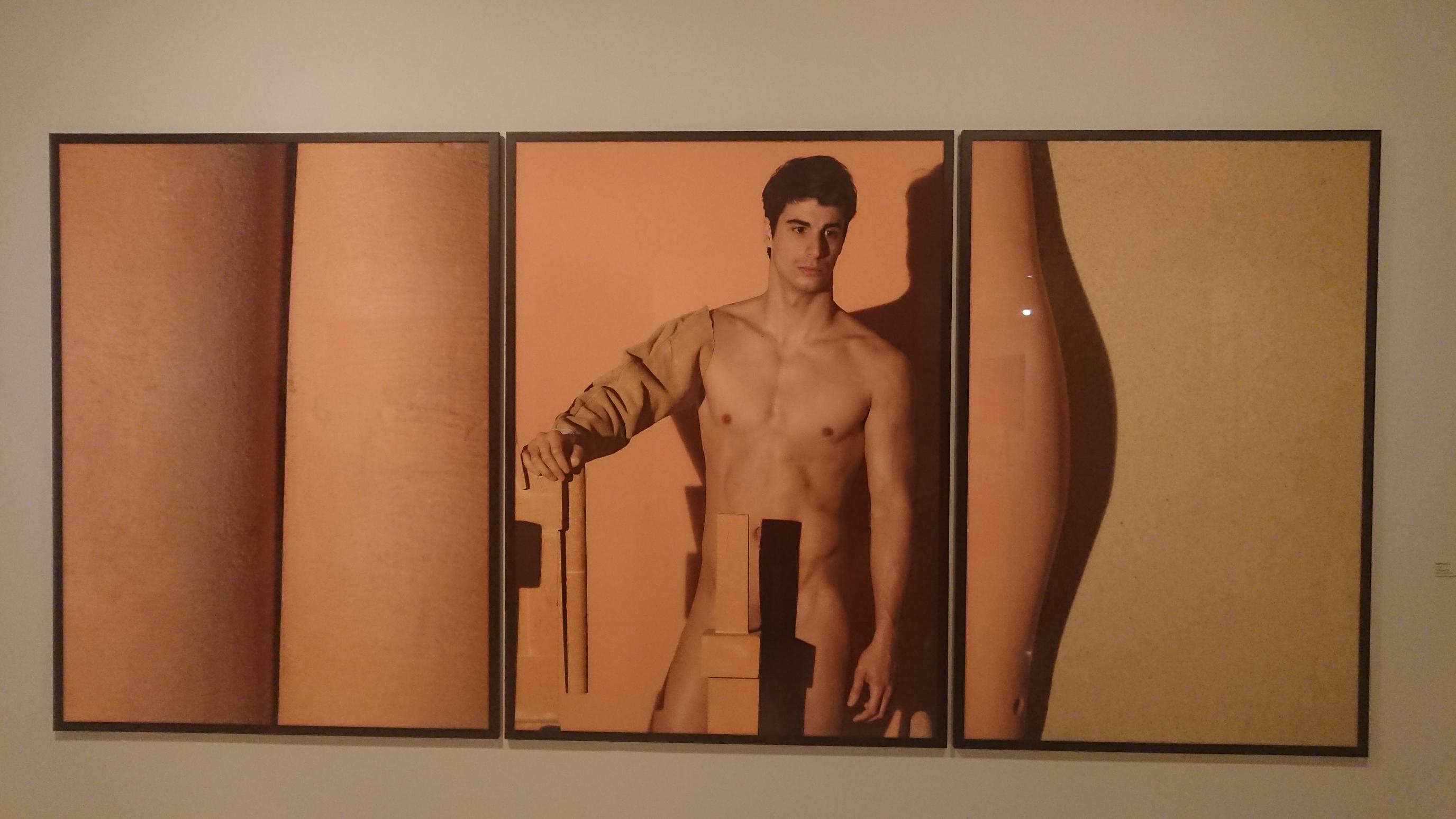
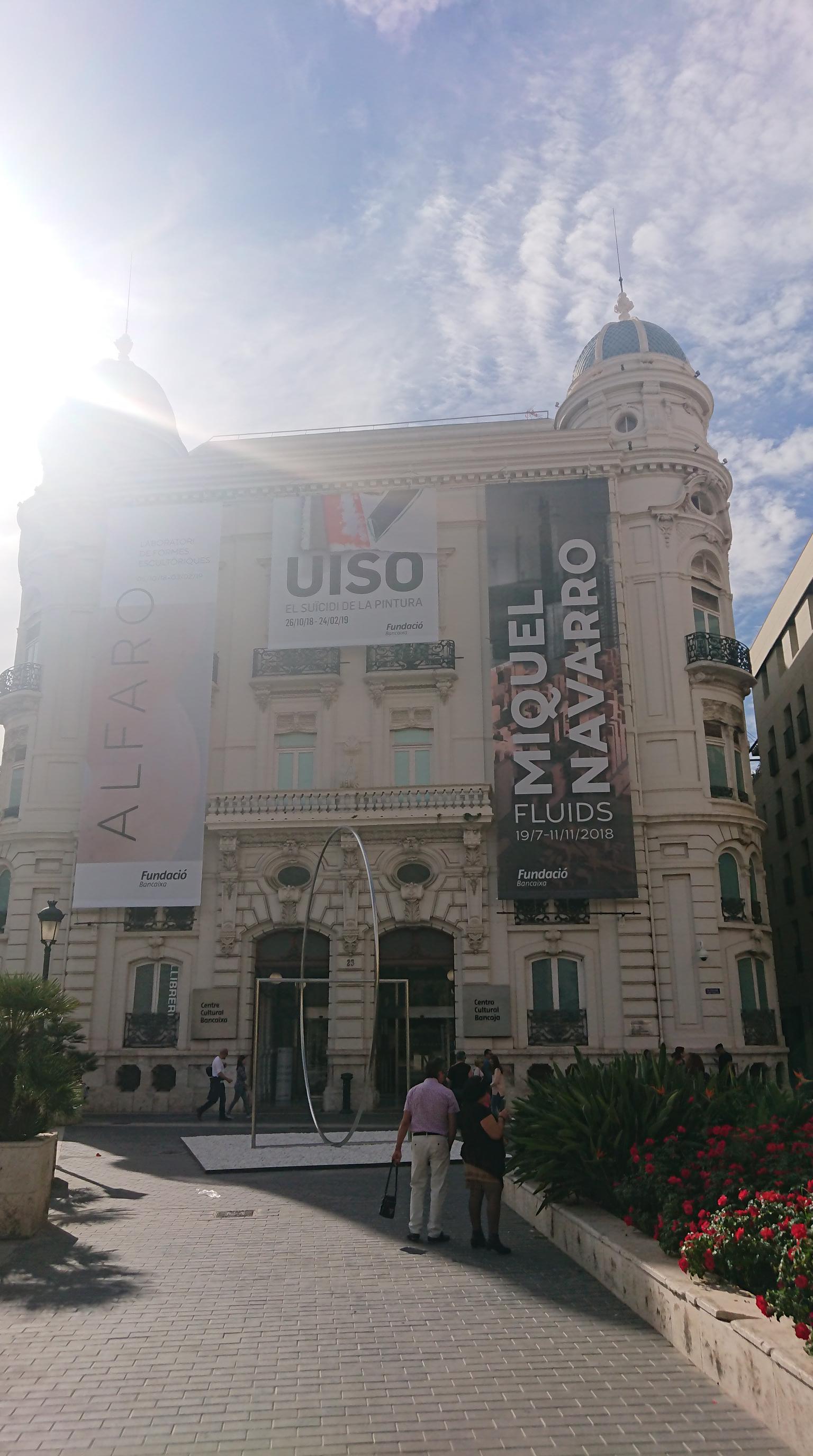
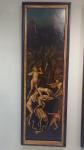
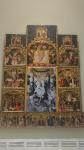
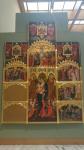
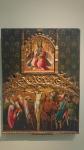
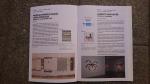
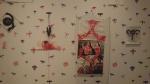
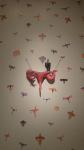
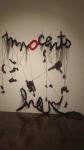
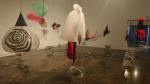
A documentary photographic review is below:
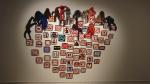
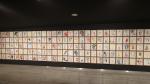
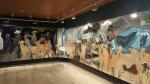
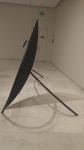
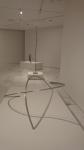
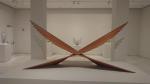
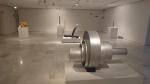
IVAM – Institut Valencià d’Art Modern
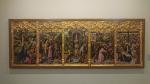
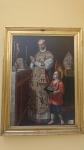
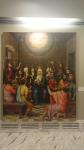
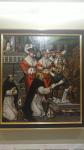
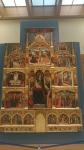
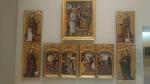
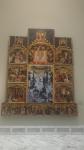
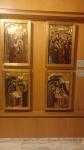
Museu de Belles Arts de València
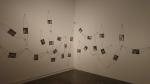
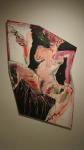
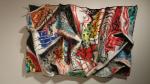
Annette Messager. Pudique – Publique
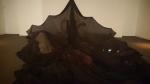
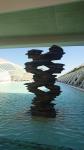
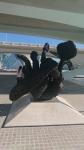
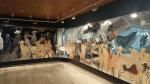
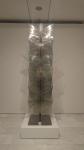
Tony Cragg’s work at the Palace of Arts and Science.
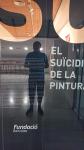
Ulso Elemany’s exhibition at the Boncaixa Foundacion titled
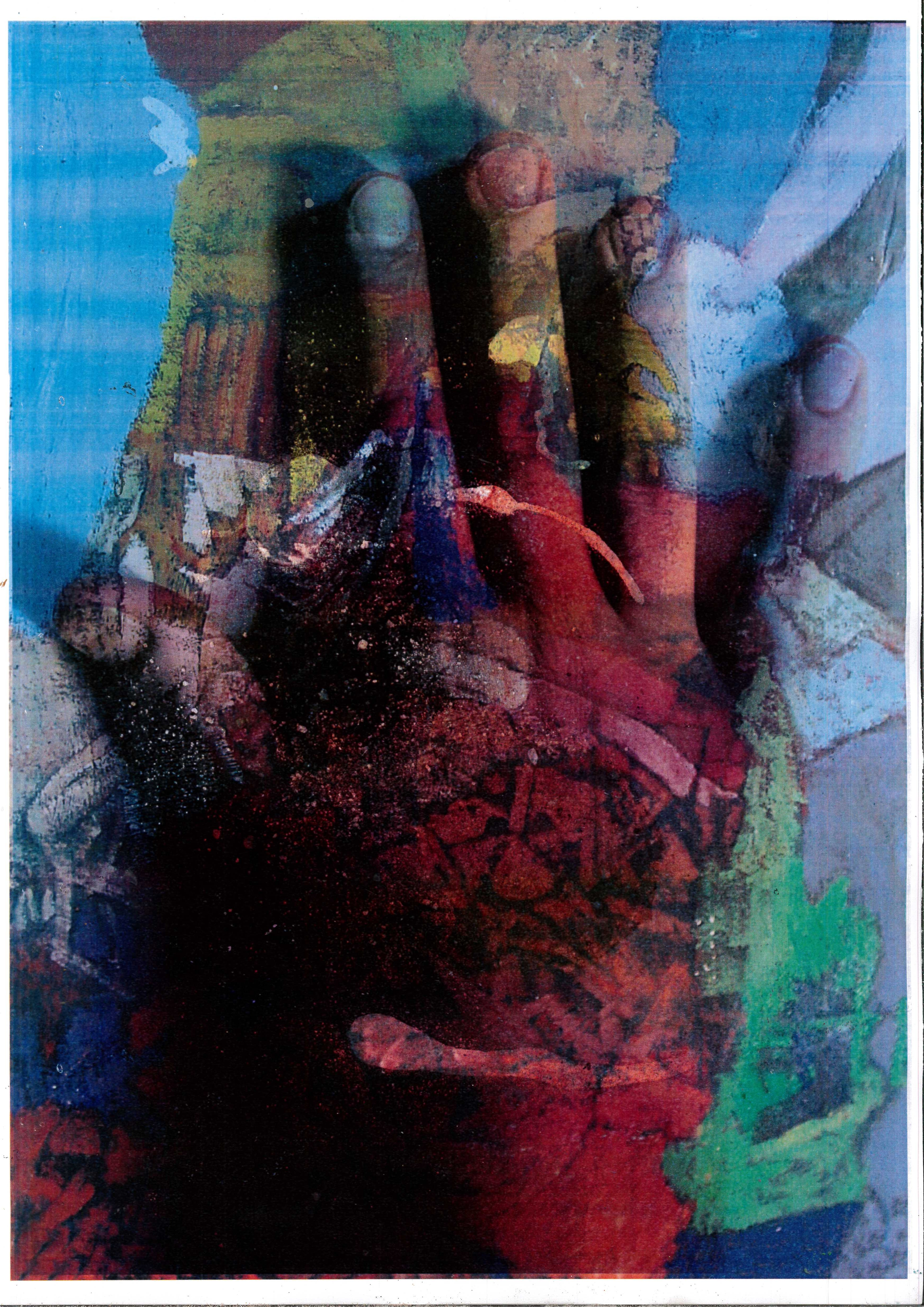
Encaustic and oil on primed board, projection of hand, mixed media, PVA and sand.
Everything will turn into dust, including my painterly desires and uncertainties.
This is especially true, when re evaluating the hierarchy of needs in reflection to my experiences in Haiti.
Hand gesture tries to stop a painterly process of expression and is gradually replaced by emptyness. The hole shaped as a silhouette of a wine glass, is marked with the anxieties of the past, which have turned into dust.
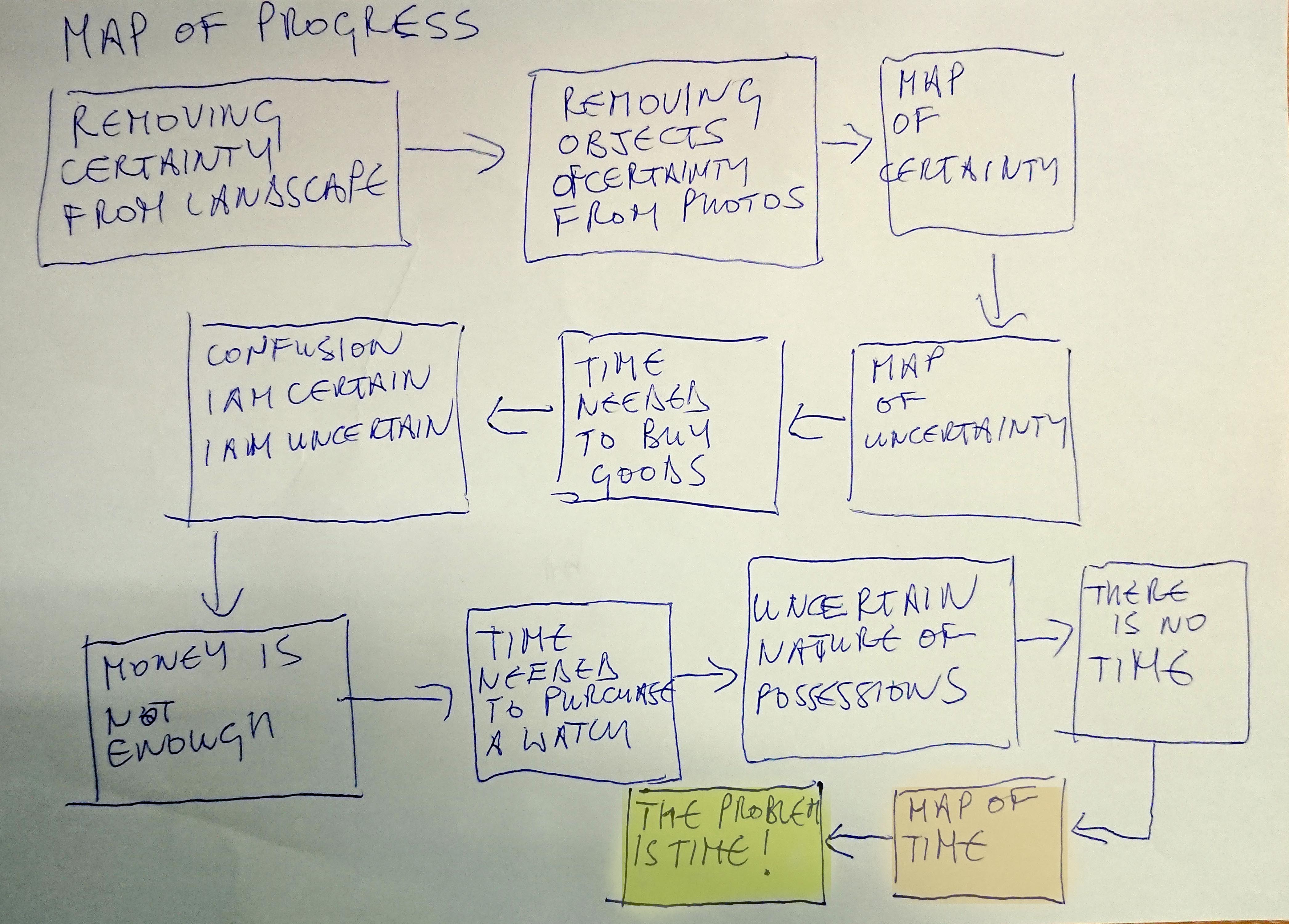
Map of Progress
I have created the above map of progress to try to find out, where my research journey has taken me so far. It should help me to get things in focus. It has also allowed me to write a list of activities, which I need to finish before moving on with additional lines of enquiry, as follows:
1. Explore references to the designs of Mr Jones watch – I need and I wantI
2. ‘I have time’ video needs to be completed and edited
3. ‘Paintings and Mirror’ video needs to be extended.
4. I have created a range of food videos and should include them in my records.
5. Check and complete a range of reflective accounts, which are currently in a note form.
6. Isolate the element of questioning, while considering the following : What am I doing? How can I develop it? What is the next step?
7. Update references with research into: Time Chance Change Uncertainty
I have designed the following Map of Time.
I have time for I have no time for
I have time to I have no time to
This video has just been updated. I am trying to deal with self-reflection in the mirror and the gradual replacement of focus from painting onto reflected image and vice versa.
Refinement 2.
Refinement 1. Please, observe the inside of the mirror.
There are certain benefits of uncertainty. Perhaps one the most significant advantages is “chance”.
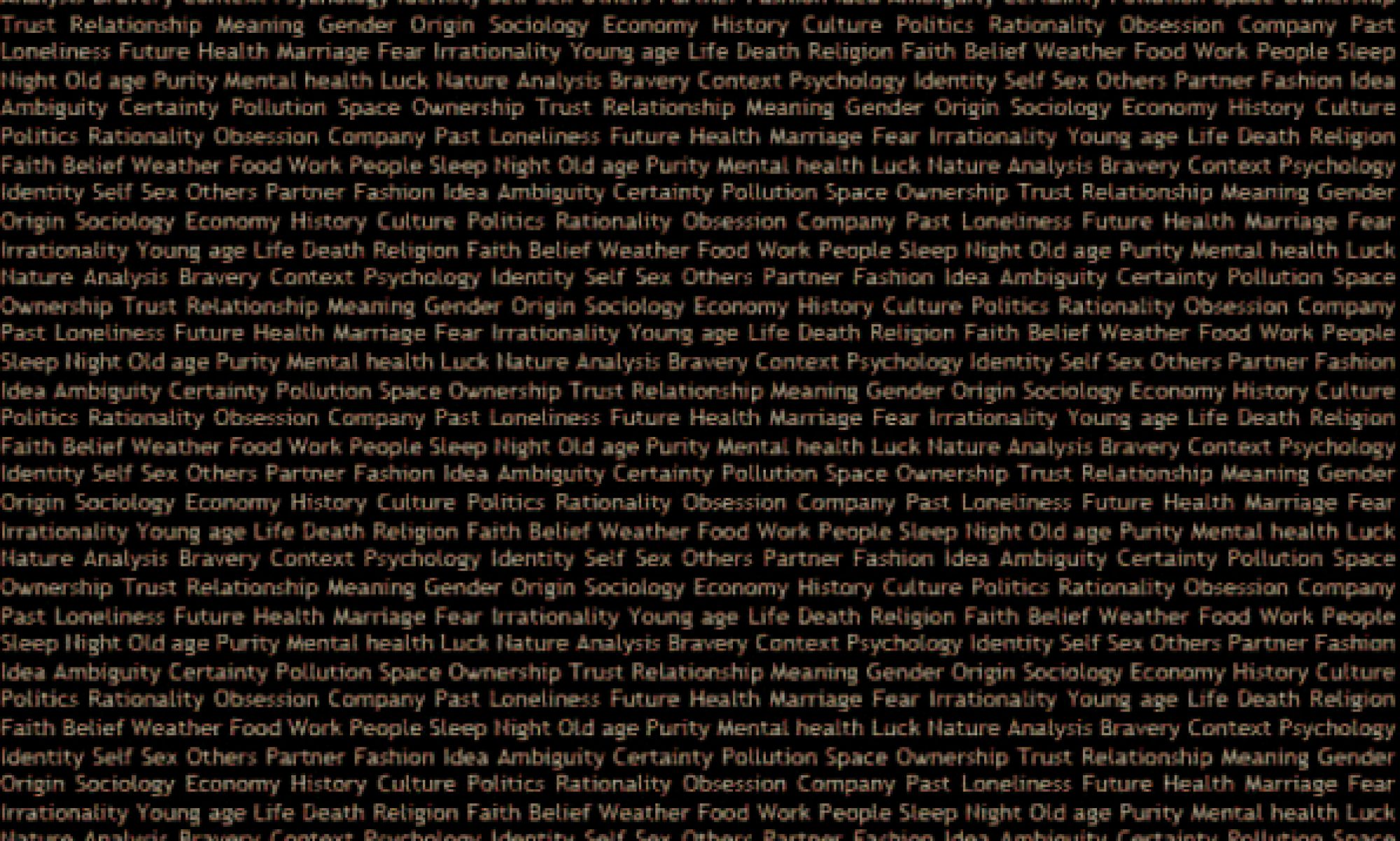
Our obsession with uncertainty about the future can be visualised in terms of probabilities. These are very difficult to communicate effectively outside the time typical infographics, including graphs, charts and diagrams. The impact of Hi-Tec and interactive methods of visualisation offers totally new opportunities and can be of substantial help here. However, communicating deeper uncertainties remains problematic due to incomplete or disrupted knowledge and other external factors, which may affect our perception of the nature of what we are unsure of. Are we purely entertaining the feeling of being unsure?
Confidence is frequently perceived as a sign of arrogance?
This thought has led me to exploring the importance of chance and probability in the context of my response to what I feel is certain and what is not.
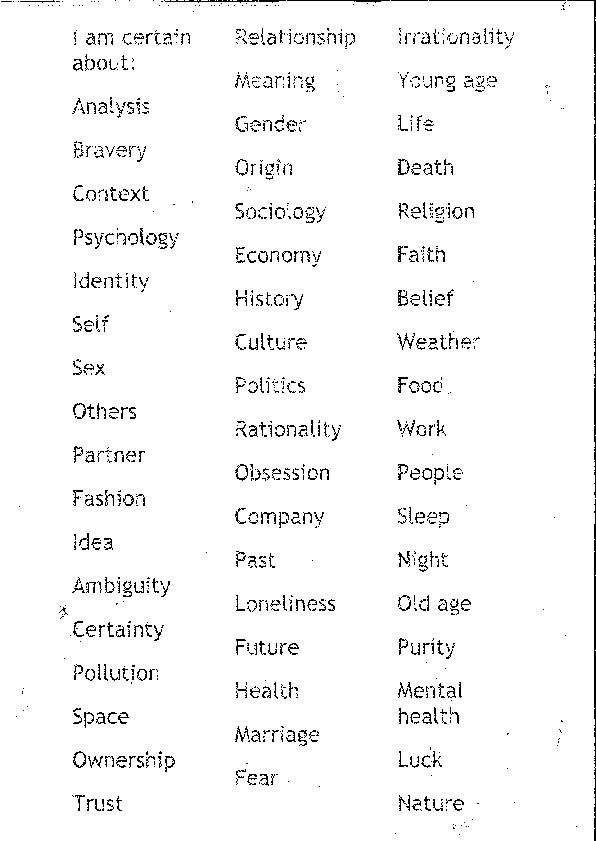
Contexts of certainty and uncertainty
The alphabet of certainty and uncertainty.
The map of certainty and uncertainty.
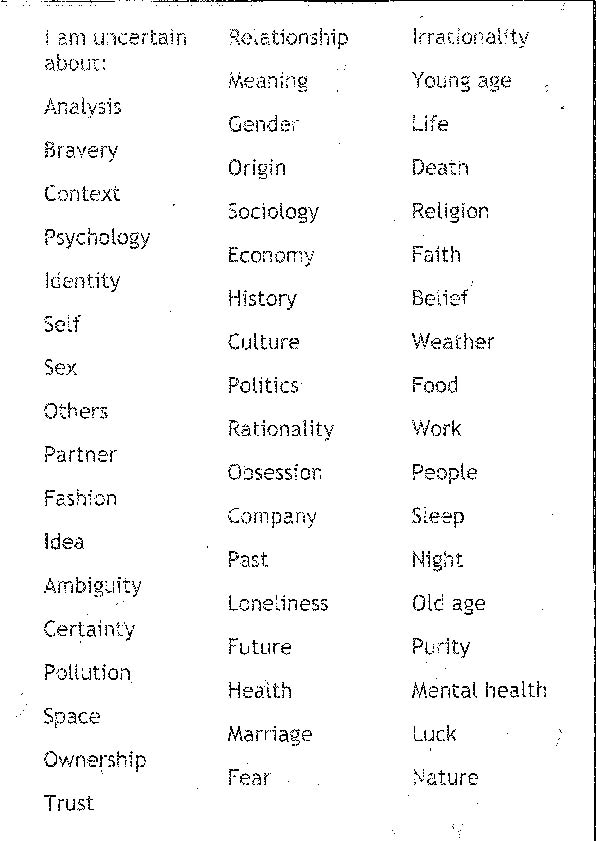
By chance, things have suddenly become much more uncertain:
How do I measure chance in all those contexts?
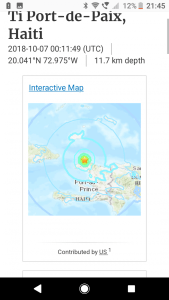
Unfortunately, Haiti was struck by another earthquake today. All of my friends there have been affected.
What does poverty mean in the context of sustaining life?
How do I communicate the extent of uncertainties exaggerated by this natural disaster?
Making Certainty Uncertain and Unpredictability Definitive
“Uncertainty about what?
While the Heisenberg Uncertainty Principle (HUP) does not mean “there are some things you can never be sure of”, it does imply “you can never be sure of everything.” How can this be? If you can never be sure of everything, doesn’t that mean there are some things you can never be sure of? Surprisingly, no.”
(Wiseman, 2012)
Fundamental certainties of the past have become the greatest uncertainties of the future. The most significant uncertainties of the past have evolved to become almost certain today and definitive tomorrow.
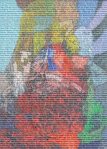
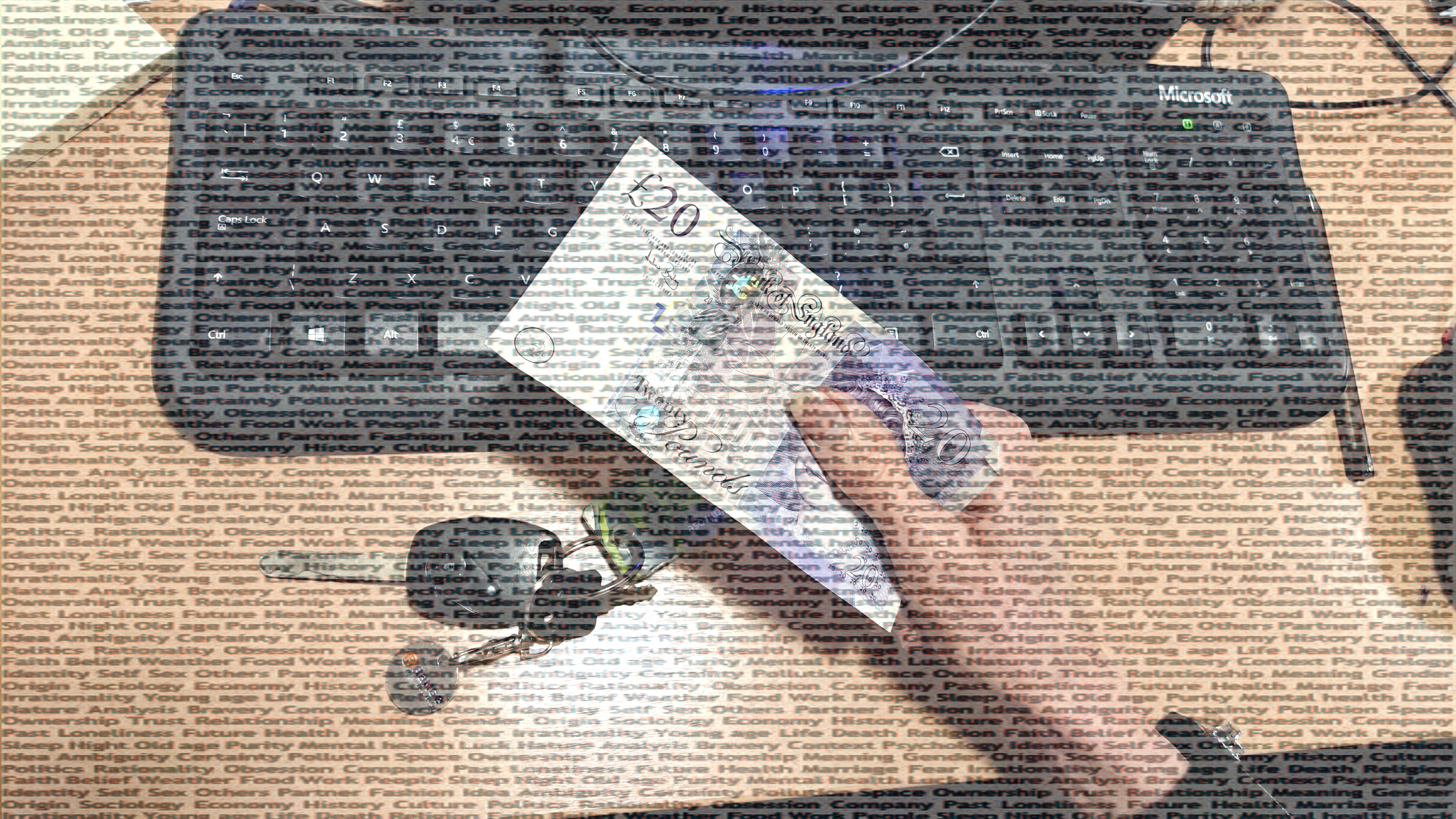
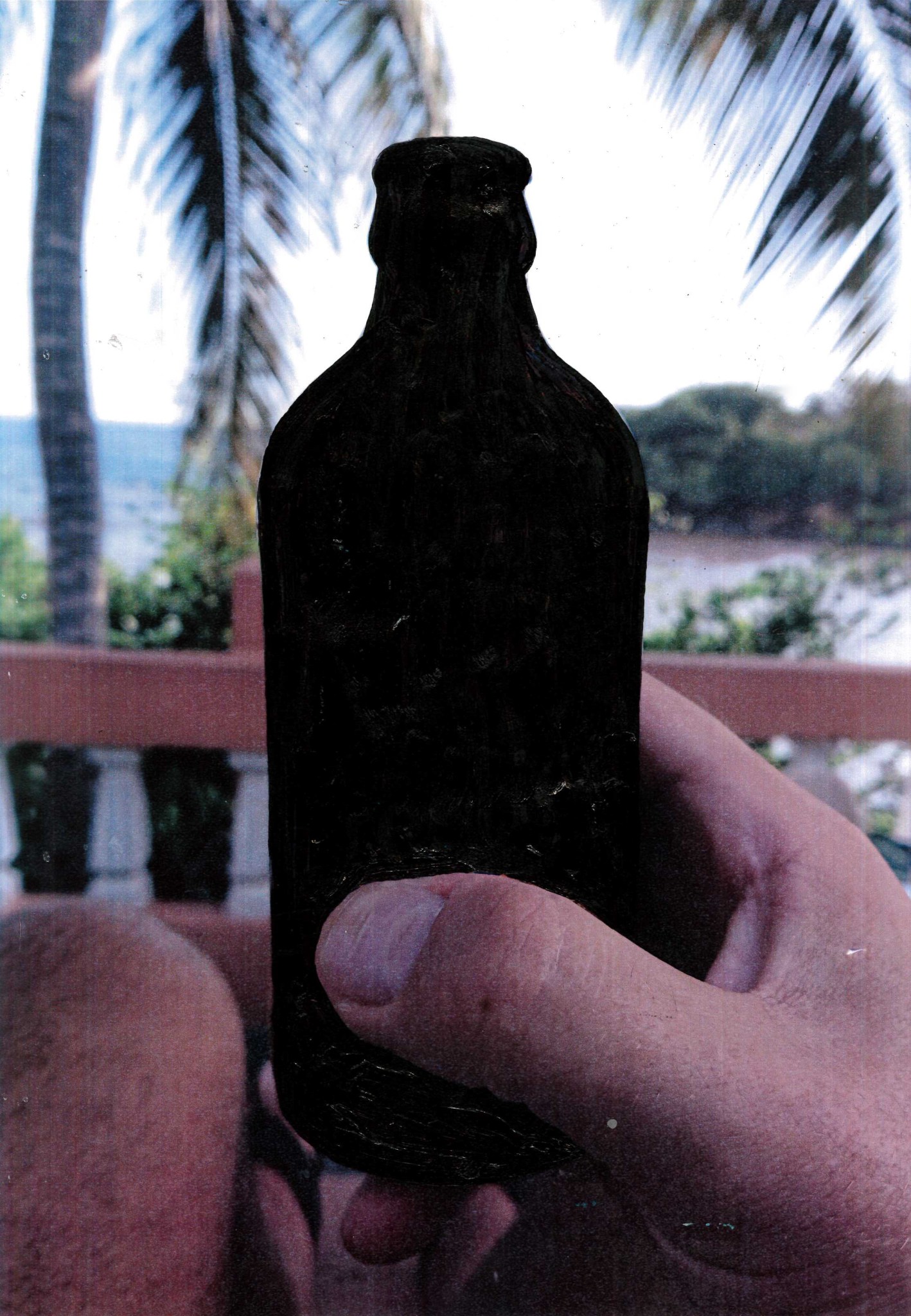
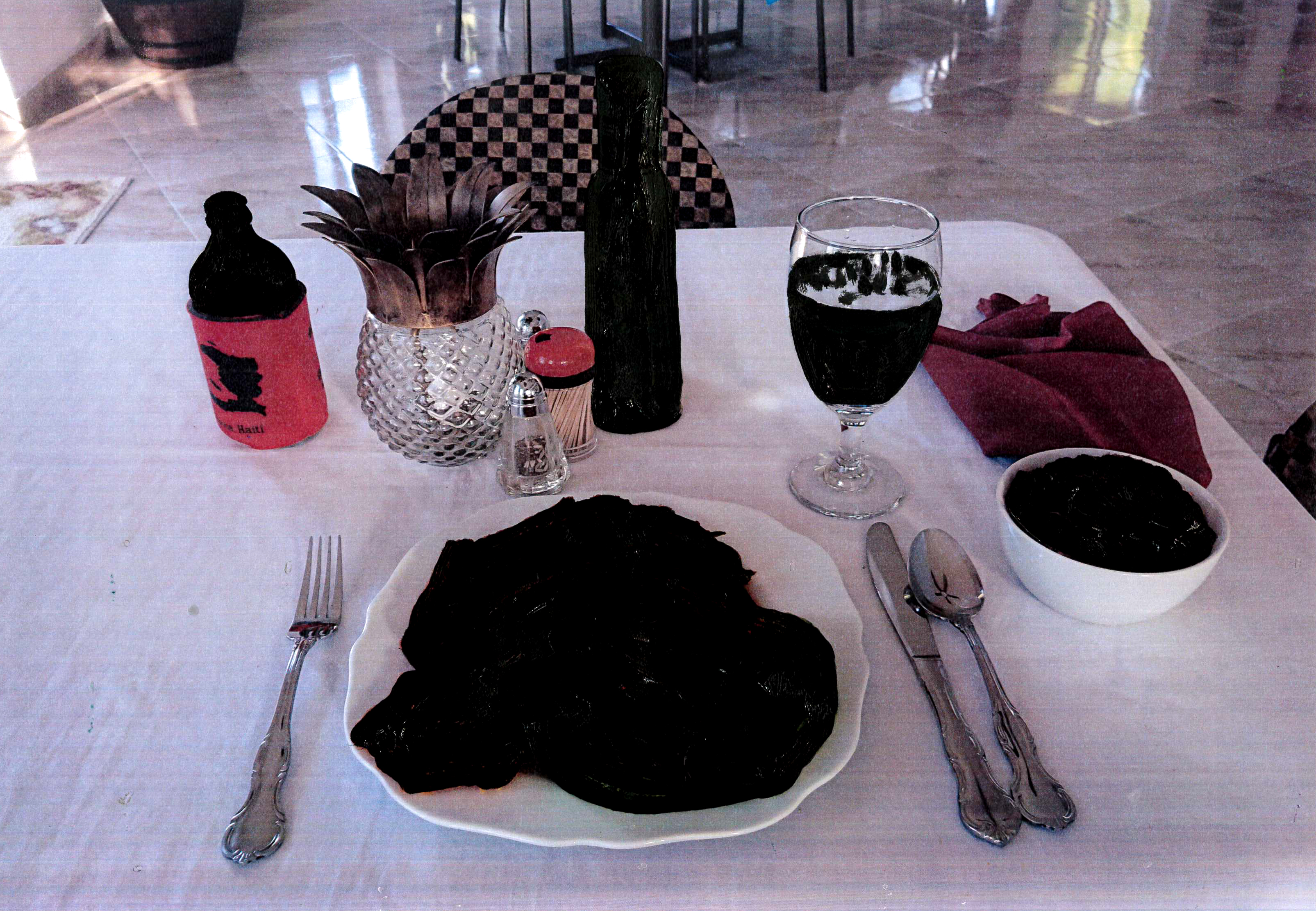
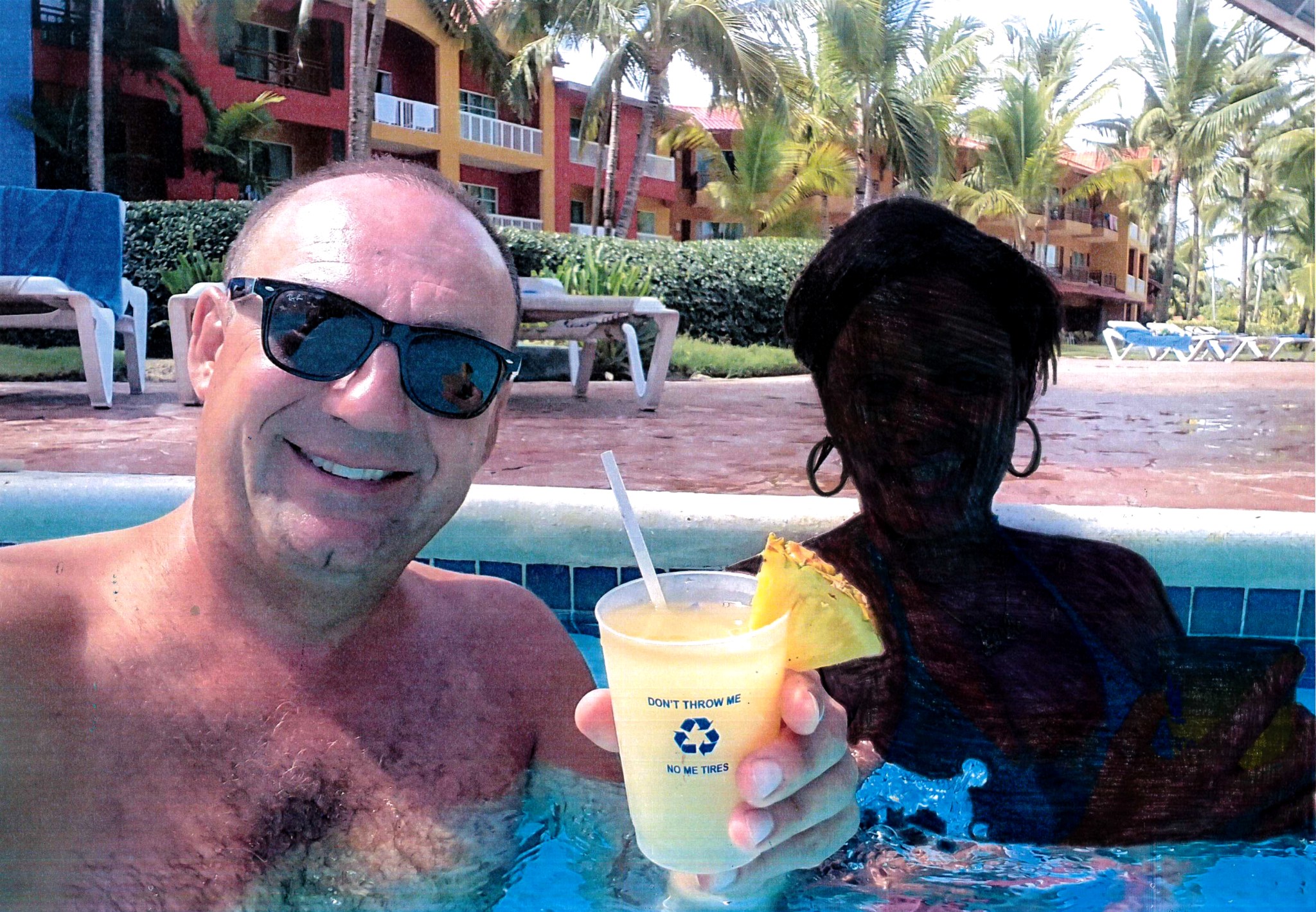
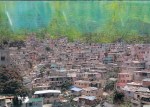
In reflection to my experiences in Haiti, I am experimenting with removing my certainties from the certainly uncertain world there! Through these image manipulations, I am questioning what is uncertain? Can the removal of certainty create anxiety of unpredictability?
My certainties are their uncertainties! I am certain of having a meal and they are never sure of what will happen; what to expect – moment after moment, day after day, year after year.
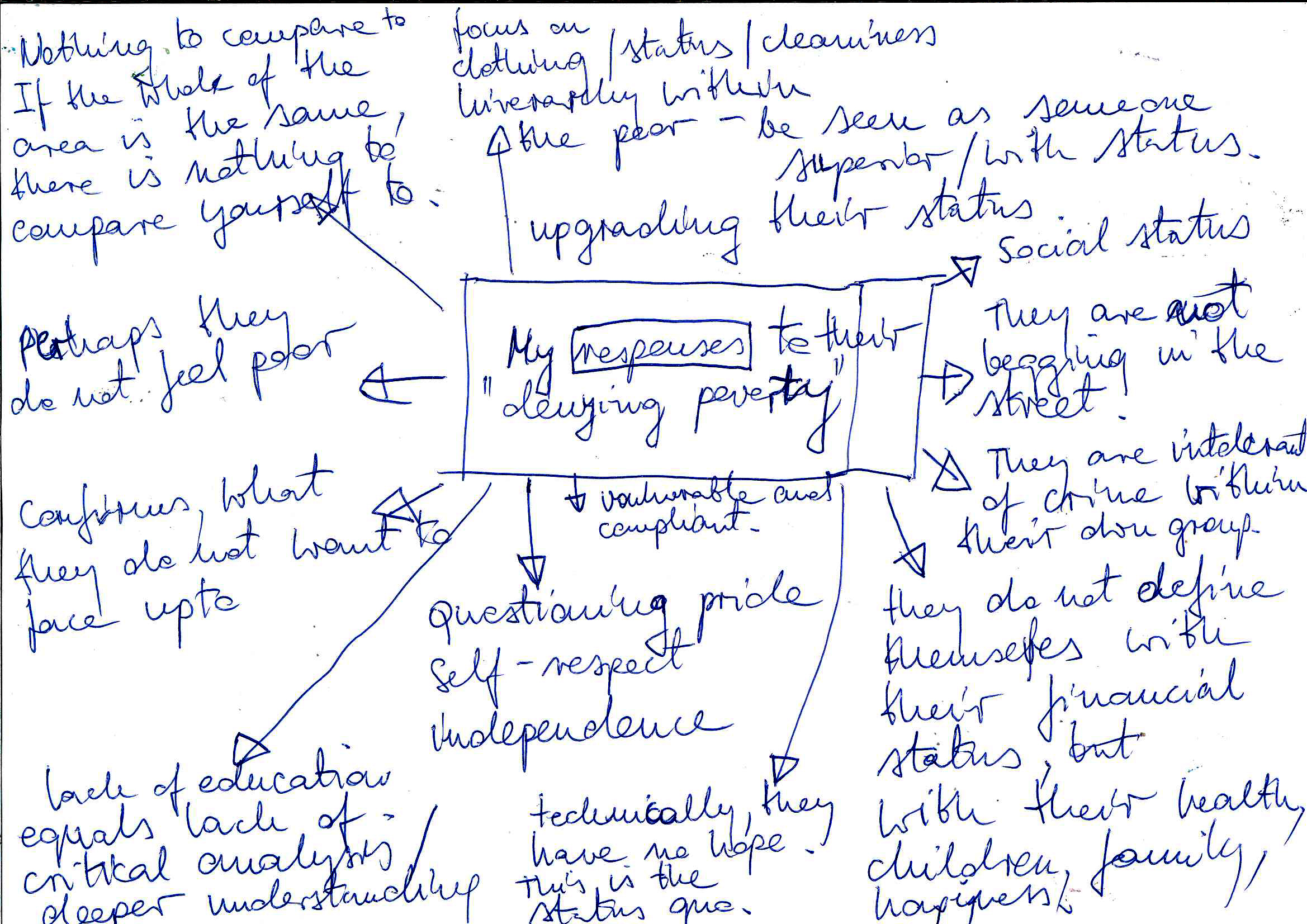
The world of certainties is totally denied to some unfortunate people, both physically, emotionally and in the sphere of dreams, aspirations and ambitions. Their focus of poverty is completely different, placed on survival rather than luxuries and unnecessary commodities. This is in contrast to the superficial and trivial obsessions of the “Western World”!
I am watching their uncertain world through the “removed” certainty on my afternoon beer.
I am staring with uncertainty at the certainty of my luxury meal. The table is set up and ready, but the food has been removed. What is on my plate, in the bowl? How am I going to satisfy my hunger for security and thirst for predictability?
Everett argues that we live in a Universe of multiple space-times and each spacetime is governed by Lorenz contraction of time (Barrett, 2011). Therefore time is perhaps the key factor, which forms our perception of certainty and uncertainty. Both feelings belong to parallel yet distinctly different worlds: prosperity and poverty; the arrogance of confidence and hesitant insecurity.
Heisenberg implies that uncertainty is often a result of a measurement (Wiseman, 2012). The act of measuring an object’s position changes its speed or vice versa. Perhaps the real origin is much deeper. The uncertainty principle exists, because everything in the Universe behaves as a particle and a wave at the same time. In quantum mechanics, the exact position and speed of an object have no meaning.
To explore this idea further and visualise this concept, I need to experiment with images by manipulating them into “behaving” simultaneously like a particle and a wave. Particles exist in a single place at any instance in time and waves are disturbances spread out in space.


















 HYPNOTIC REPETITION