I have made some real progress today. I set up a video recording session of the washing of the Three Burmese Monks piece. Everything was arranged in the print room. As the DLSR run out of power, I had to result to using my iPhone XSMax with a tripod.
Following a discussion of details included in my storyboard, Georgie, our technician, agreed to help with the washing performance.
My picture frame was purposely wanky and crocked. I wanted to include a glimpse of a fire extinguisher and PVC pipes in the view. I also thought that bleeding stains on dirty floor make a valuable contribution to the overall impact of captured images, their meaning and the recording.
The raw footage is relatively long and full of accidental disruptions. They will all need to be edited out in order to create a cohesive video piece. The details of my plan will emerge soon, and continue to evolve and grow.
I enclose the final washed up image of the Three Burmese Monks piece and some raw and culminate footage below:
Following a long period of consideration and reflection, I have restarted work today on the Thai Masseur piece.
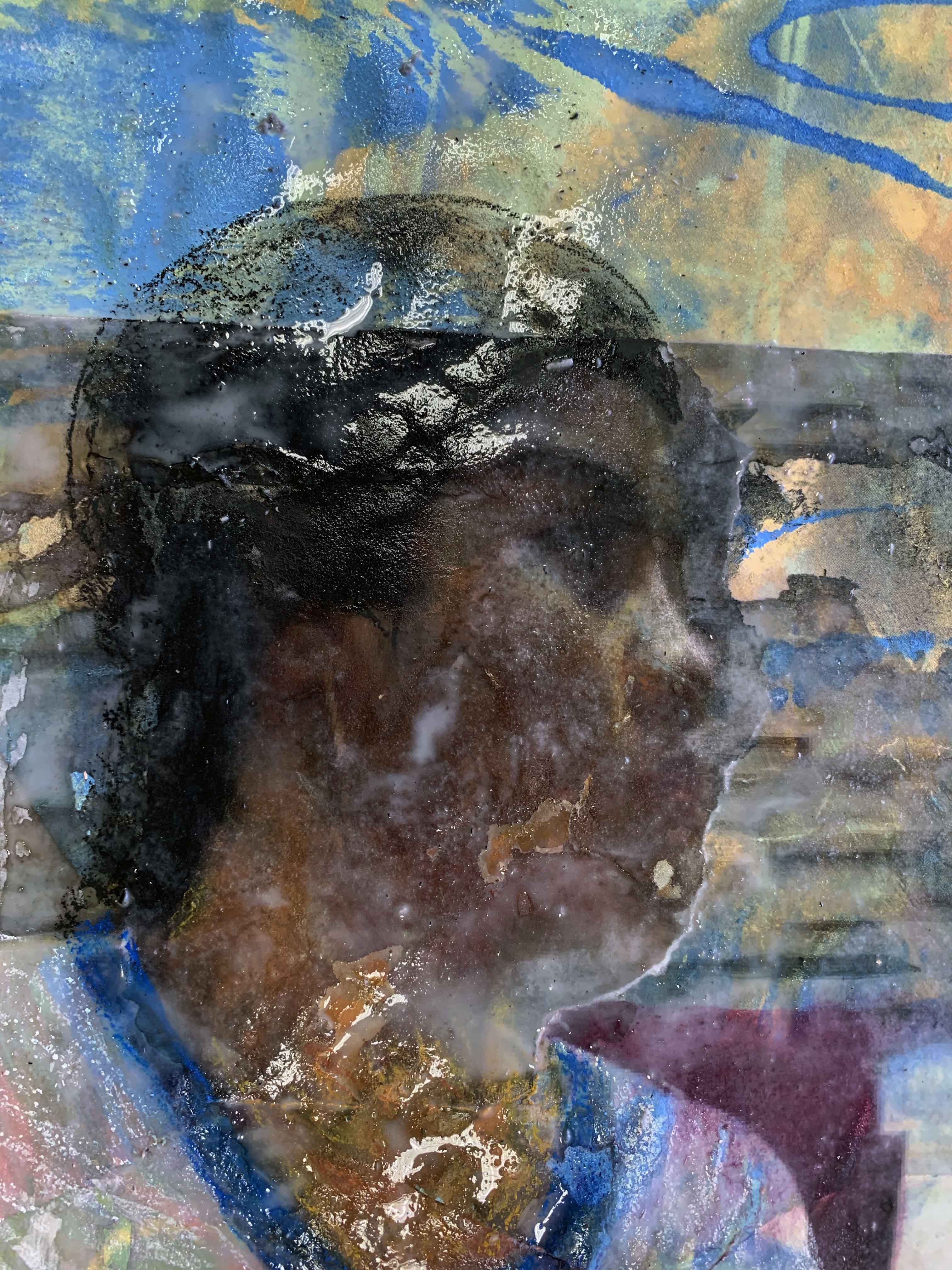
The main issue was to complete painting the face. On the one hand, I wanted for the portrait to be recognisable, on the other, I have struggled with solving a number of ethical issues regarding a possible reaction and rejection of my work by the model. I experienced this kind of a situation with one of the former pieces. Subsequently, this unpleasant episode had let to the destruction of my own work and several alterations to other experiments.
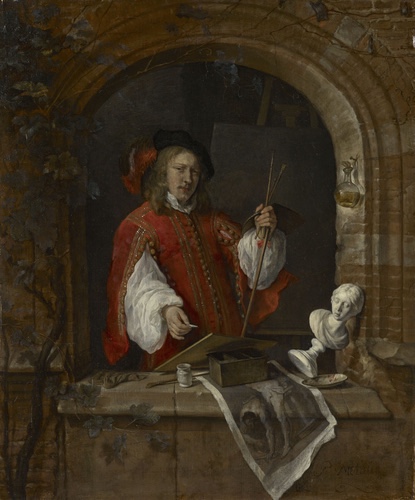
My new idea is inspired by deeply glazed and moody flemish paintings. I am especially inspired by Metsu and his self portrait. He positioned himself inside a window arch. This implies a composition within a composition. I am also using a double rectangular. My creative intention is to achieve a sense of ambiguity while drawing all attention to the centre – on the masseur. I want to rely on a visual suggestion of portraiture rather than a descriptive portrayal of a woman. The plan is to leave her facial features undefined, like a ghostly outline of what is really there.
A Self-Portrait c.1655-8 Oil on panel | 37.7 x 31.4 cm (support, canvas/panel/str external) | RCIN 405943
To give the surface more vibrancy, I used water solvable oil pastels. ‘Dancing’ with a crayon on top of the painting allows me to achieve a sense of mystery – secret light, which brings out parts of the skull and the jaw – all in the dusk of the space portrayed.
The next stage of the painting process will be to glaze the overall piece with a variety of transparent layers of an acrylic medium, perhaps combined with some watered down PVA glue. This is to prepare the surface for the overprinting stage using the silk screen technique and enhance a feeling of unity between the different formal elements and parts of the composition.
I have already prepared a new pattern based on decorative elements, which I have isolated from the interior of the massage salon. I will use this design to create a random over-image. This, in turn, will have a dual function. The first is to help to engage the centre in the overall painterly illusion. The second aim is to increase the amount of detail and enhance holistic and expressive qualities of my piece.
At this stage, I am considering using a range of gold and crimson tones. This initial plan might be subsequently altered in favour of a more spontaneous and instinctive decisions and reflections in action.
I am enclosing photographs of the final stages of work today and a close up of the ‘New Face’
In preparation for my presentation, I have created a separate category on my blog titled Seminar. The entry is split into four individual parts as follows:
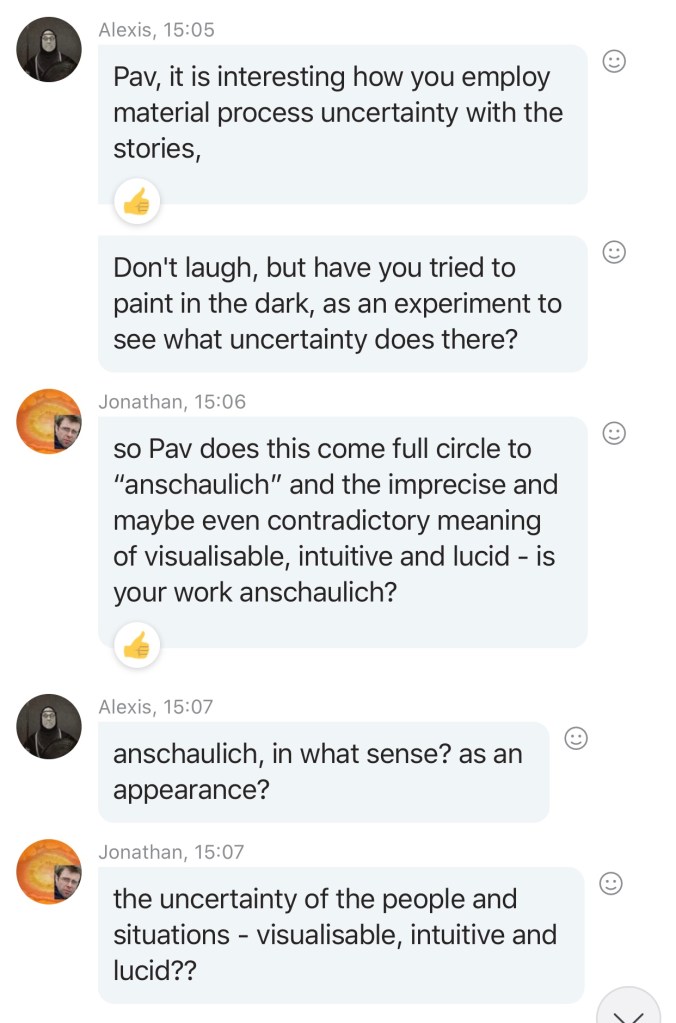
The idea was to introduce all participants to a logical journey of though. I started with an outline of the theoretical concept of “anschaulich”. Than, I moved on to contextualising and extending a framework of references. Subsequently, the presentation concluded with a form of an appraisal of several visual pieces, which I have created in consequence to my research observations and findings.
I was under a general impression that my ideas were well received and complemented on. I paced the delivery in order to ensure that there was a suffict time available to discuss all parts of the prepared material with the group.
Rushing through the seminar or missing out on the final section were not an option. Therefore, timing was of primary importance as well as directing the way, in which the debate was progressing.
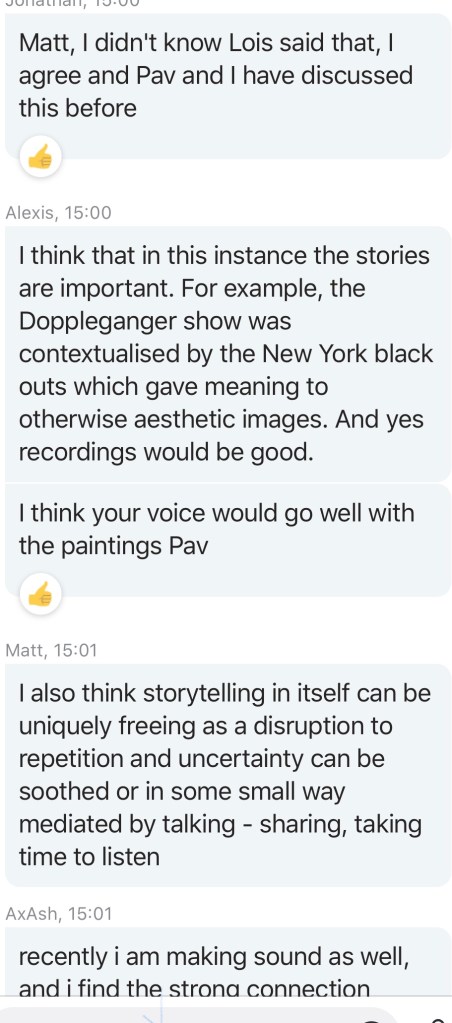
I found the session very beneficial to refining my thought processes and reflections on how to make meaningful progress. It also confirmed my previous feedback and reinforced the importance of a recording a running narrative explaining the meaning of my work and its context. I am convinced that the use of sound will have a substantial impact on the broader understanding of both my project and my creative intentions.
I have now embraced this advice and taken it fully on board.
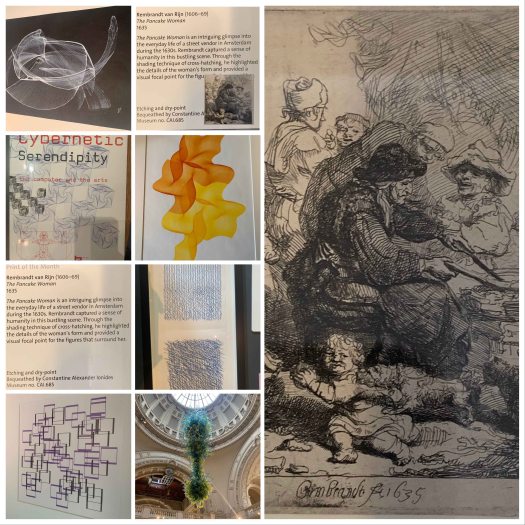
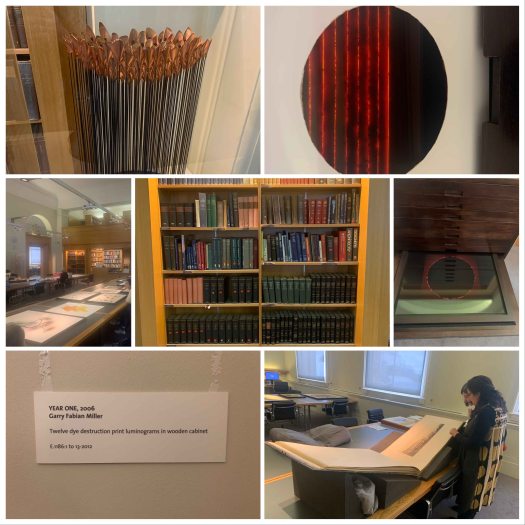
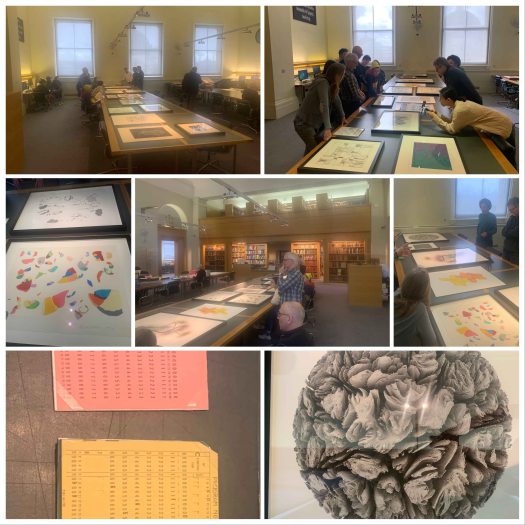
This was a fascinating journey through the history of computer generated printmaking. The talk was delivered by a senior curator Doug Dodds and his assistant MELANIE. Both have amazing knowledge regarding the collection at the V&A and far beyond.
The content of the presentation covered a detailed explanation of and discussion about key example of computer generated art going back to the early 60s.
The overall experience was highly informative and truly inspirational.
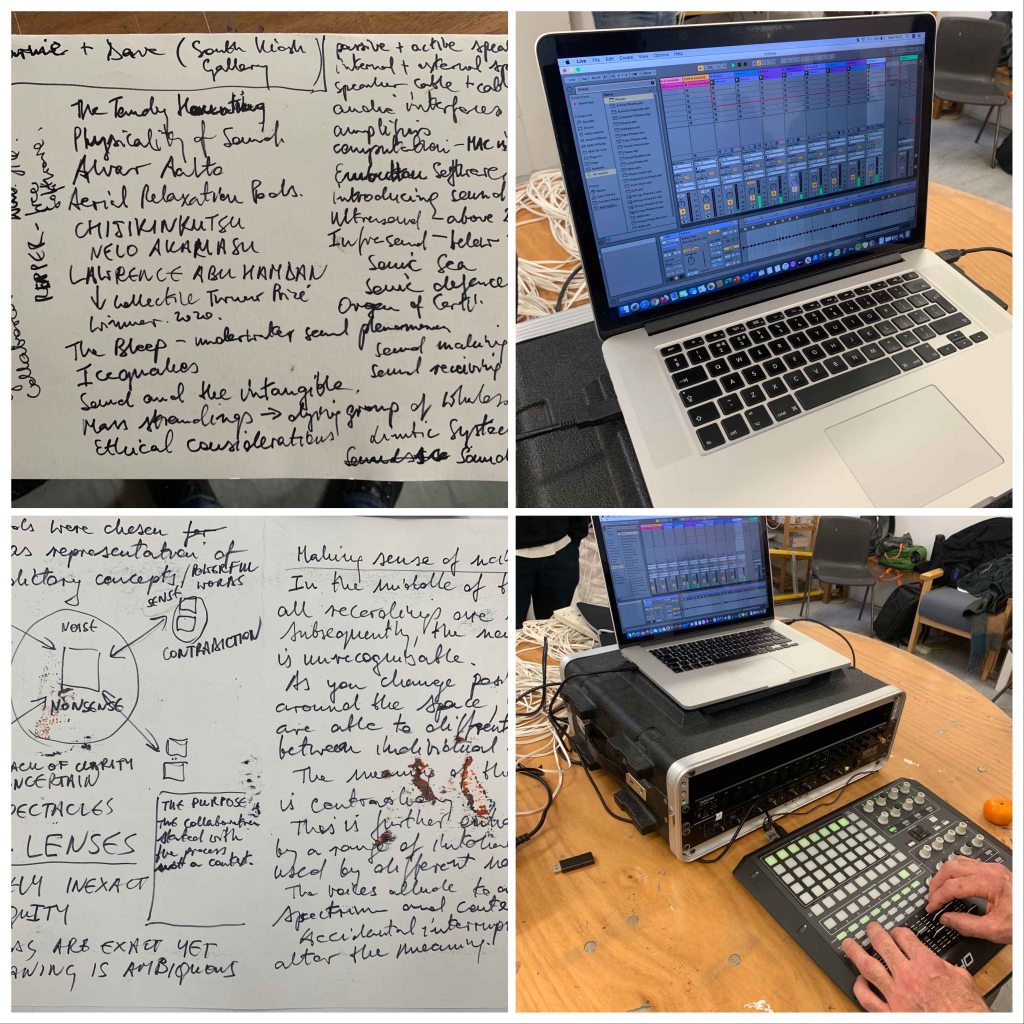
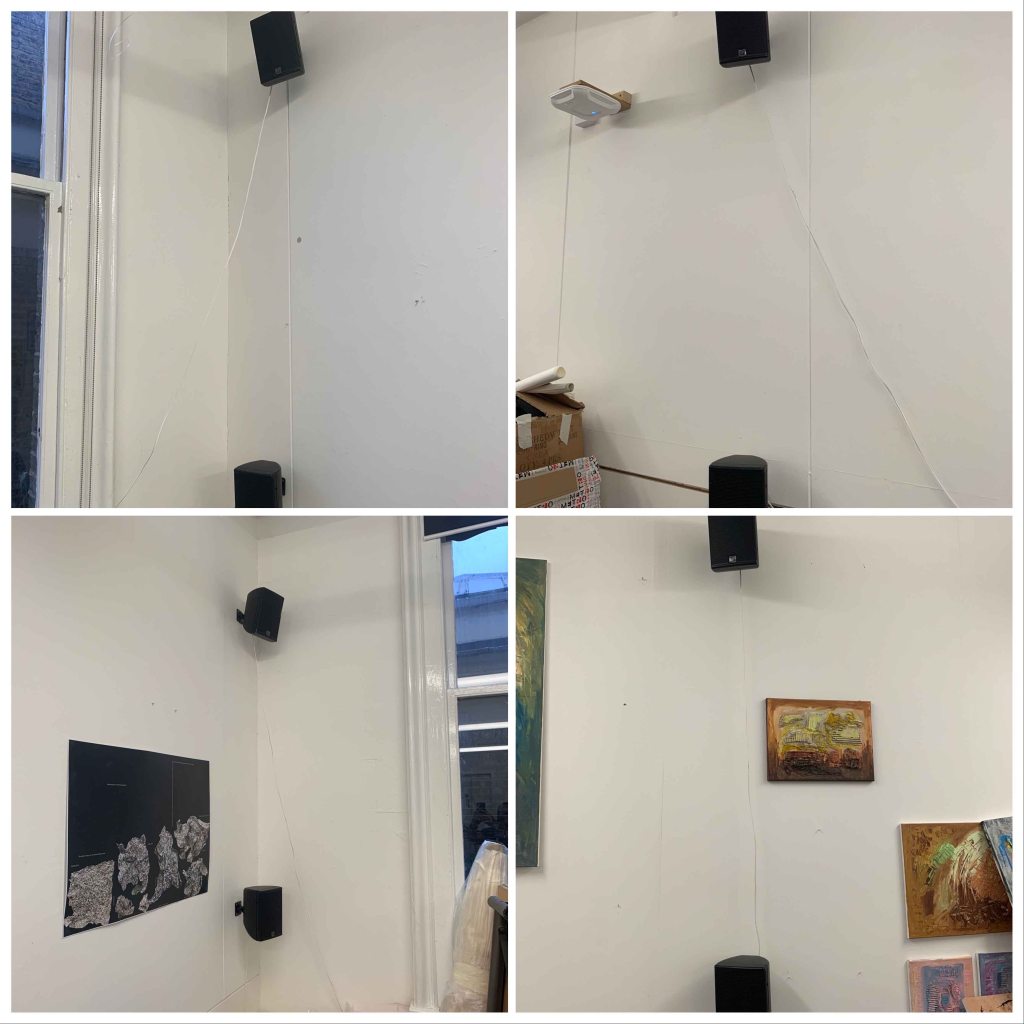
Both have an extensive knowledge and experience of working with sound and use sophisticated equipment to fully explore a broad range of opportunities this medium offers.
Following an illustrated presentation of technical and theoretical ideas, we were split into groups of three. The aim was to develop a cohesive sound project covering approximately 2 minutes of time.
I worked with KK and Alexis. Following a debate, we settled down on a concept inspired by the work of Bruce Nauman.
The work process was split into five distinct stages:
1. Brainstorming ideas and refinement of supporting thinking.
2. Composing the text comprising of a list of contradictory words and meanings
3. Recording of four narrations.
4. Editing of sounds and problem solving.
5. Refinement and re-evaluation of project concept, and creative intentions. Critical analysis of our work.
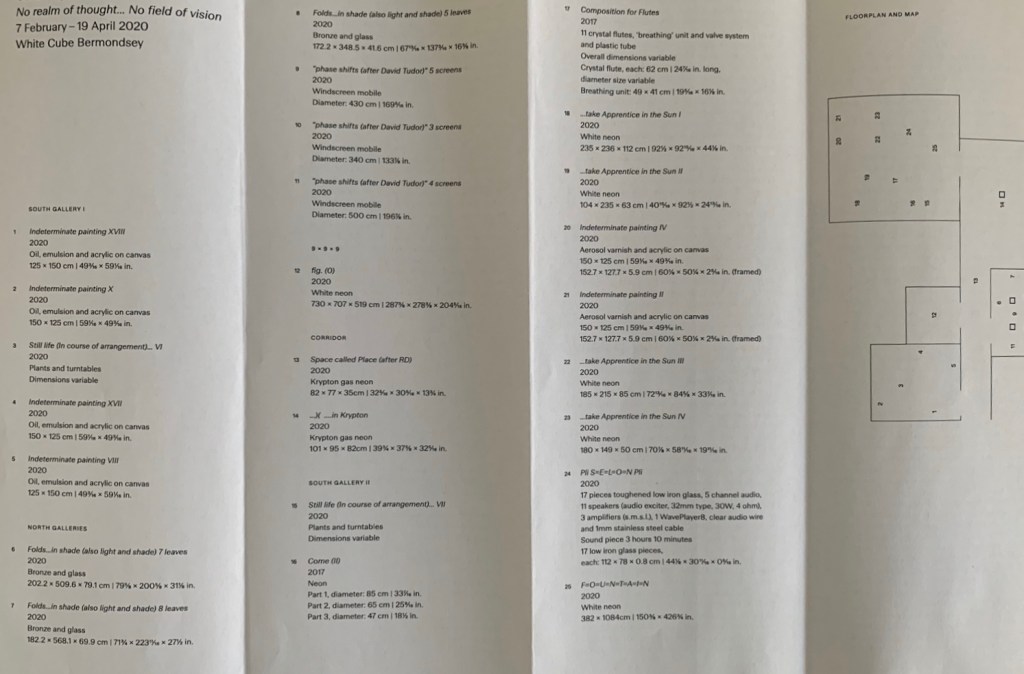
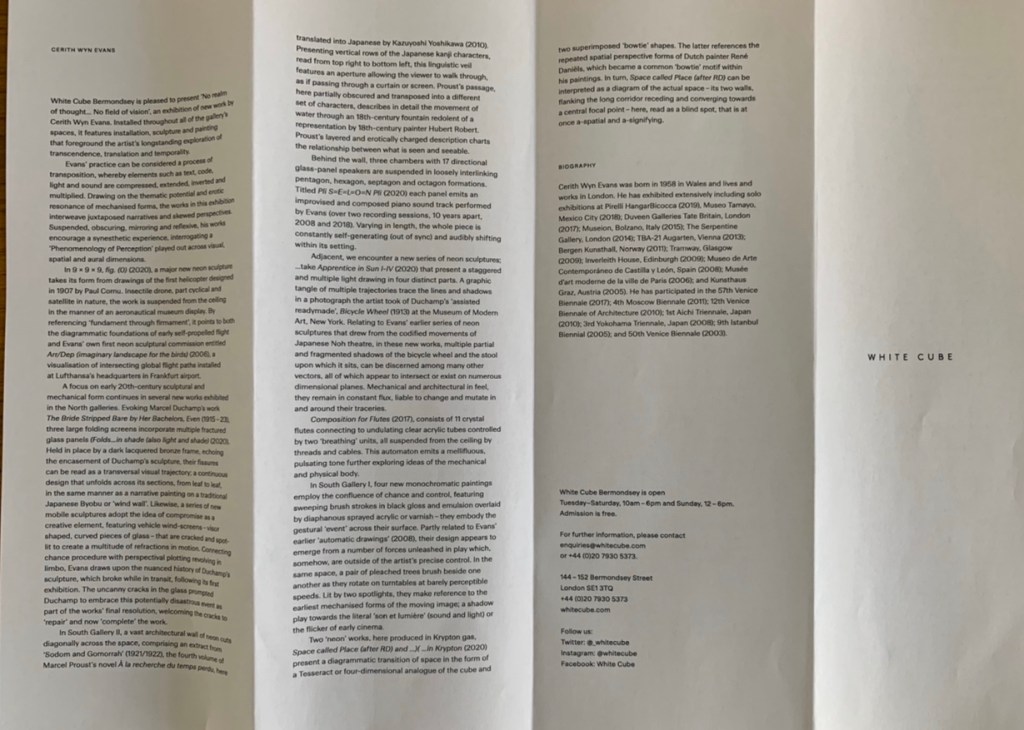
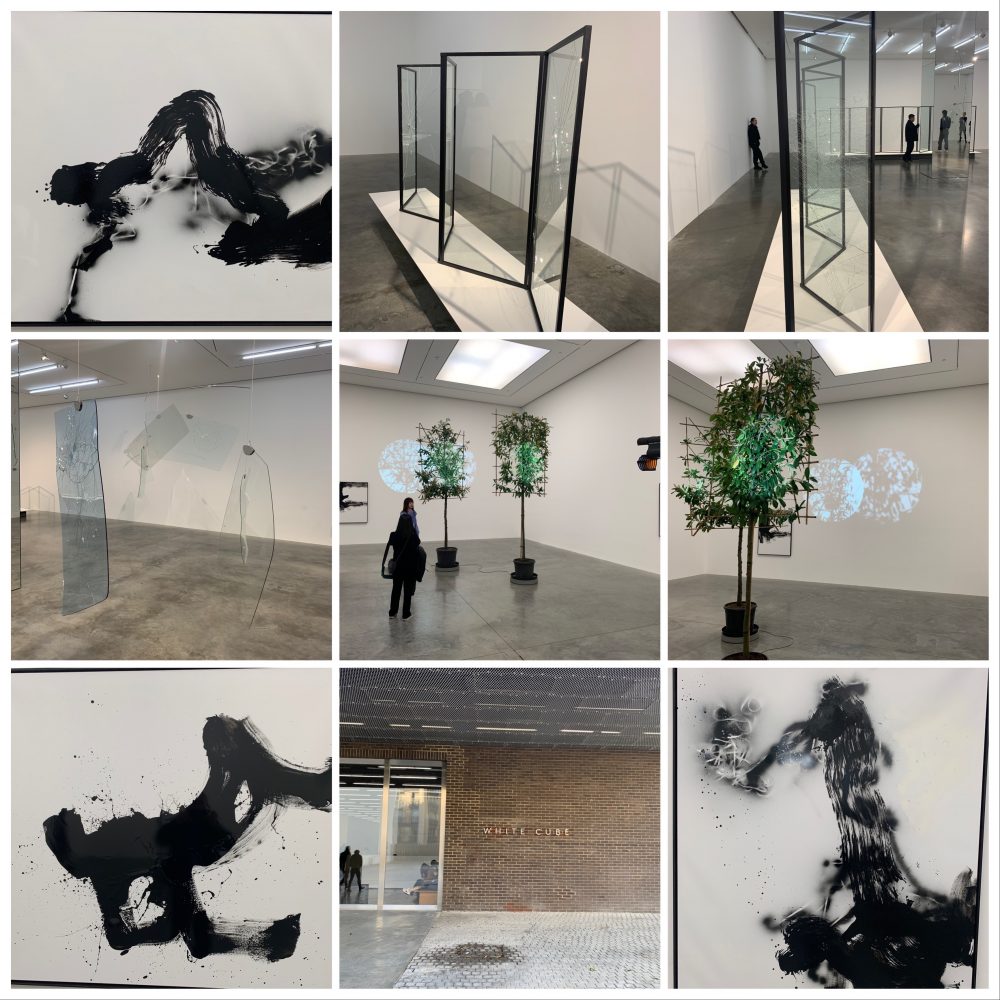
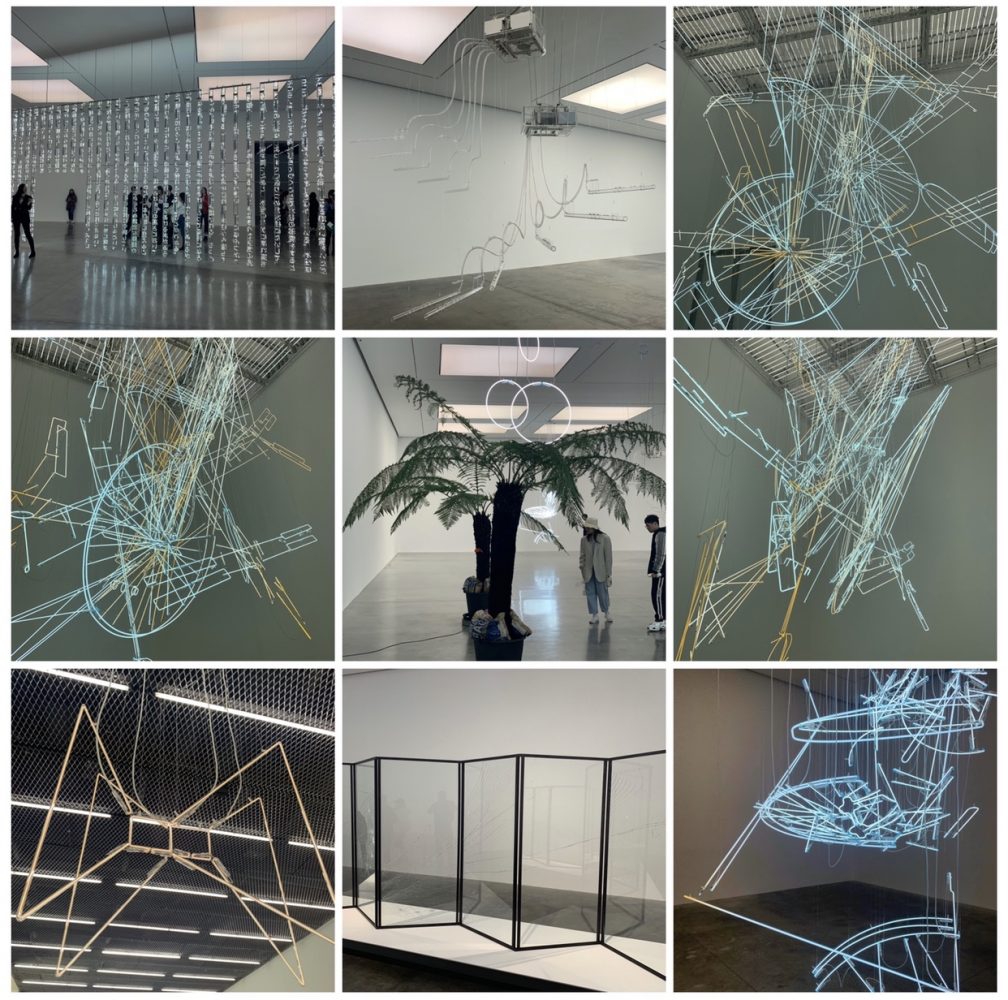
I have just visited fascinating glass and light exhibition at the White Cube Gallery in Bermondsey. Her pieces are full of reflections and transparency, incorporating visitors to participate in the overall scene. The work has poetic, reflective qualities and astonished with precision of execution and bizarre aesthetics of broken shards. The artefacts are suspended in the air, somehow interacting with each other while populating empty spaces. The inclusion of Chinese writing in one of the rooms contextualises her ideas while making references to both the Great Wall and a metaphorical open doorway in it.
This has been a very intensive and exciting day. Matt Edwards, who run this workshop is an expert with a fast knowledge in this area. The purpose was to initiate experimentation with filming and editing footage in an intentional and meaningful way. A strong focus on the overall idea is very important in order to develop a holistic and professional piece.
In order to ensure consistency between individual workshops and experimentation, I have decided to create and record a mini pop-up show of my screen prints.
I used a Nikon D90 camera and a tripod. The idea was to capture a broad view of an art studio. All work in progress provides the frame with detail and sets the seen, while contextualising the video. I practiced with recording myself, while continuously displaying prints on a white wall to form a large rectangular composition. Subsequently, the pieces were removed one by one. White wall as a start and the same white wall as the end. This concept has provided my with the boundaries for my action and narrative.
I have experimented with a range of possibilities and considered a number of unassuming angles for shooting. My creative intention was to ‘go’ beyond a simple use of a documentary or media approach. I wanted to create a short art film.
Simultaneously, this provided me with an excellent opportunity to photograph my prints using a digital SLR.
As soon as all images and video footage are processed, I will include them and other visual material in this post.
Premier Pro is an advanced piece of sophisticated video editing software, which allows for a superb level of control, manipulation and intervention.
To aid my memory, I made a number of notes. I hope to use them as guidance in further experimentation. I am excited about taking my current ideas further and this process will begin shortly.
I feel that I have learned a lot about the impact of colour changes on video and the way in which it is perceived and understood by an audience.
Surprisingly, there is a similarity to how this applies to traditionally developed imagery.
I created a number of clips and sequences and experimented with additional effects including the use of alteration layers.
All in all, the day was very successful and demanding. I have benefitted from being challenged, especially in the context of experimentation and risk-taking leading to the development of new ideas and discussions of alternatives.
I am looking forward to the next stage of refinement of the work, which I have started to produce today.
To diversify my experiences from last year with mono-printing and etching, I opted for screen-printing.
Following an excellent presentation of technical possibilities, we reviewed an extensive range of examples of prints, covering numerous pieces produced by both, staff and students.
Tony Lee delivered a detailed demonstration of a variety of processes, while discussing alternatives to the time-typical practice. To my surprise, he also gave me all of my prints from last year’s workshop. I was astonished by this amazing surprise! Thank you Tony.
Brian Whitewick introduces us to the technical aspects of coating and developing screens. His knowledge and experience were excellent.
With his help, I was able able to achieve a crisp transfer of my images onto a silk screen.
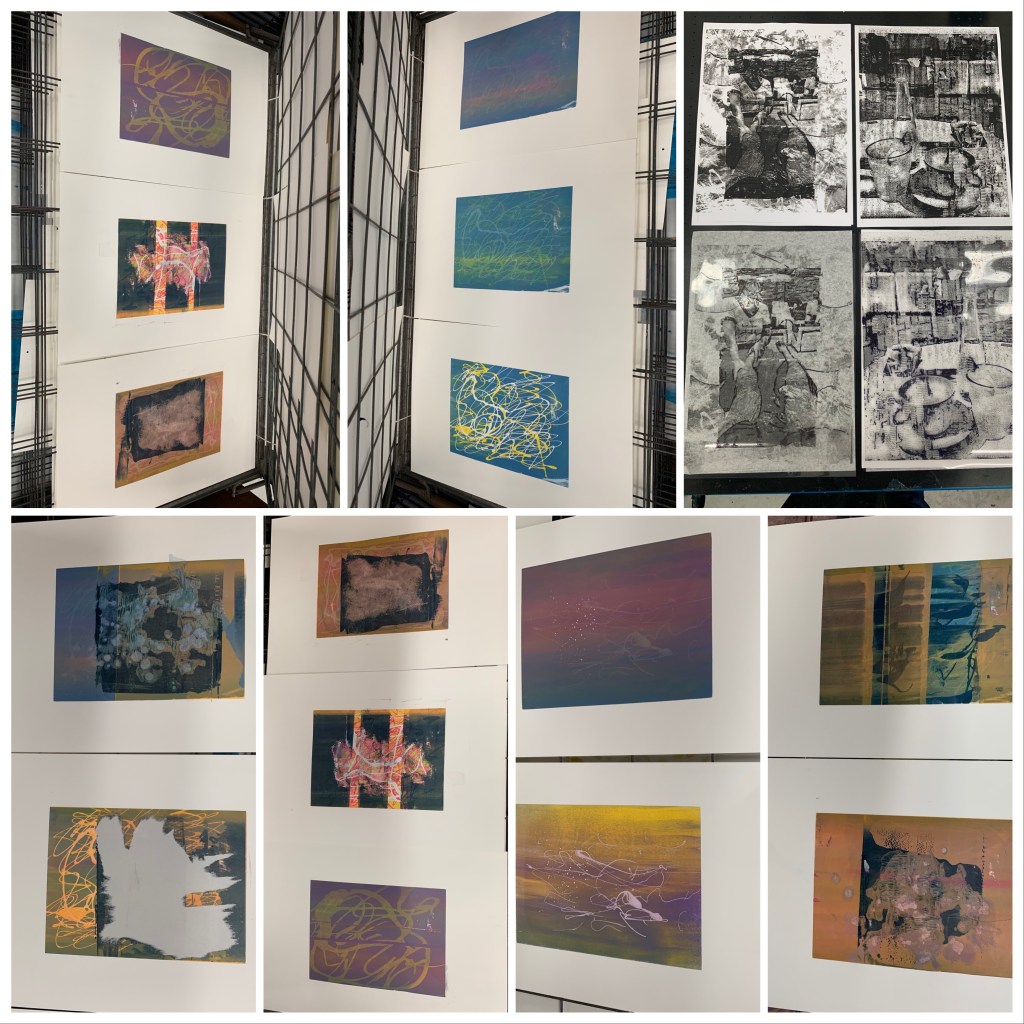
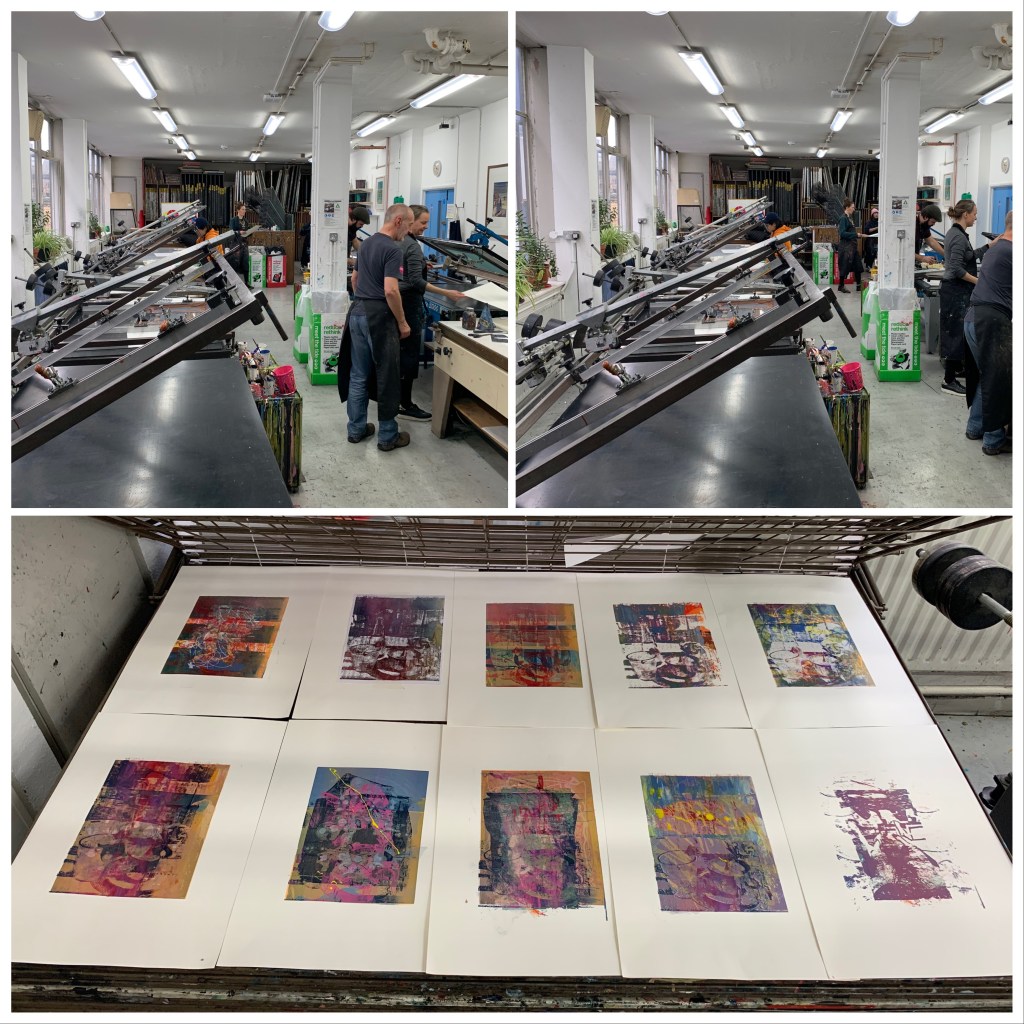
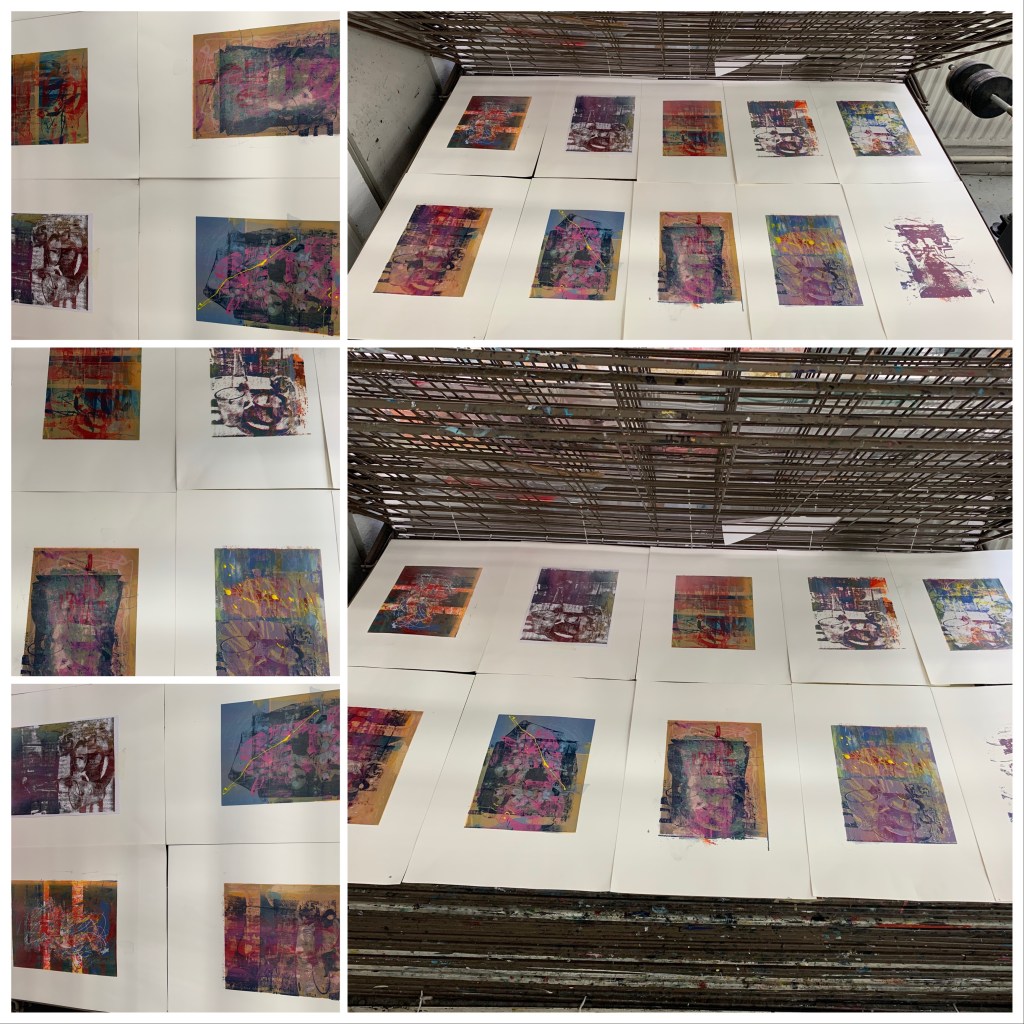
Initially, I taped a screen and established a form of registration. I used a number of experimental techniques including masking, drizzling and flicking. I dragged the squeegee across and continuously overprinted my under-images with countless layers of harmonious colour transparencies. My creative intention was to achieve a sense of depth of colour and sensitivities of related textures. Subsequently, I used the same images as for the cyanotype workshop and developed both of the on the same screen.
Background colour considerations:
Using the screen, I overprinted the backgrounds using a similar range of techniques and ideas. Here again, my intention was to achieve effects of mysterious ambiguity, which forces viewers to interpret rather than read images. I was particularly intrigued by electric properties of a bright pink ink, when combined with rich and deep blues, and subdued yellows. My final experimentation and printmaking proposals, which I subsequently developed, are dynamic and full of healthy curiosity of the painterly space. The subject matter is visually suggested and not described. When dry, I will continue to work with these prints to refine them and enhance their colour further through a range of digital processes , possibly extending to stop frame animation.
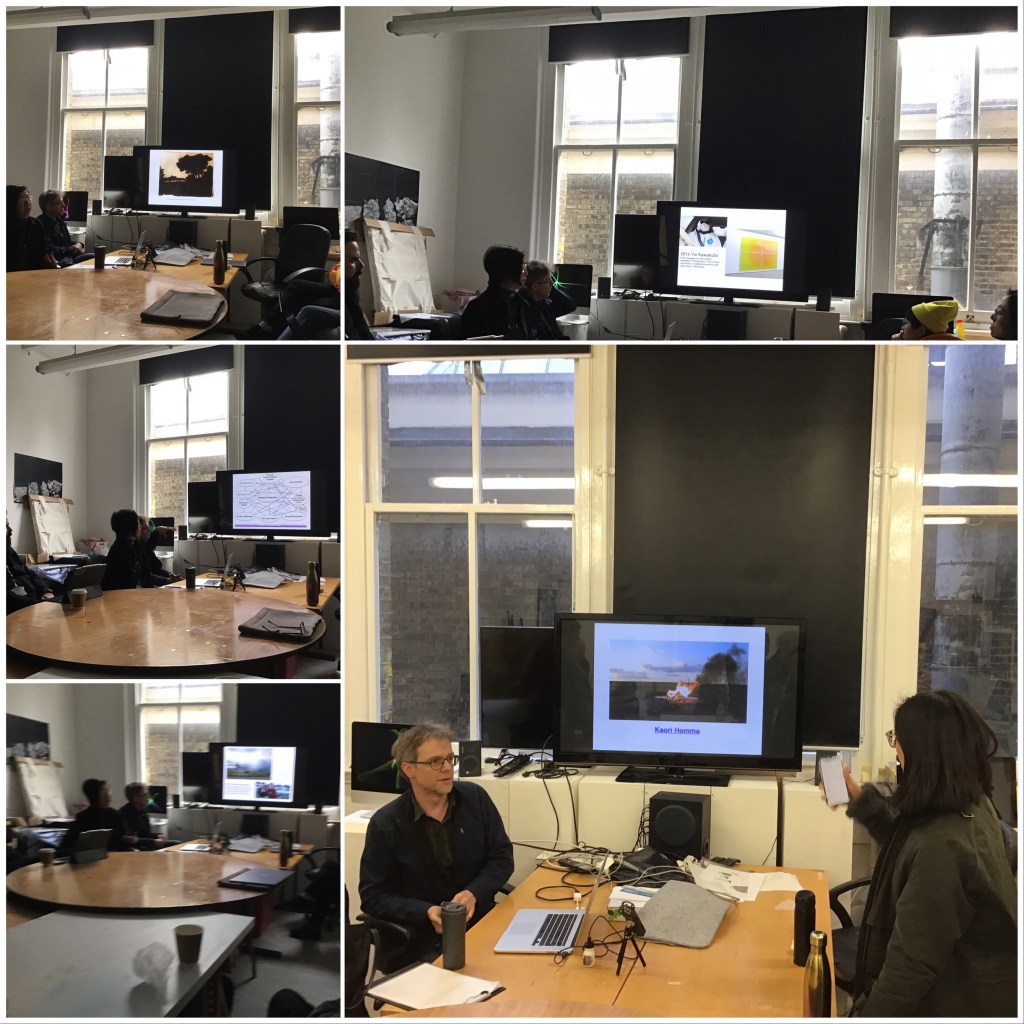
Kaori’s presentation was a very personal review of her own art work and inspirations. To contextualise this and extend our critical analysis of her work, she framed her practice by recollecting several important life events, which were pivotal in the refining of her practice.
She identified the impact of her motherhood, life-threatening illness of her daughter and the recent Tsunami in Japan as the three most remarkable stages in the development of her art practice.
Maori has also elaborated on her broad understanding of her creative practice and identified a number of key components, which make a contribution to the holistic idea of being an artist.
Art project questioning reoccurrence and ritual as a distraction to the uncertainties of tomorrow.
Tutorial with Lois Rowe, Matt and Betty
Learning Centre – 10-12.30
I presented my work as the third person, after Matt and Betty.
Following a brief outline of my ideas, we started to discuss the essence of my conceptual framework and supporting thinking.
It become apparent that all recipients were fascinated by my stories and observations from my travels. The outcome of this tutorial has reinforced previous suggestions by Jonathan to include a background narrative, which gives an insight into my relationship with my models and their story.
Lois was extremely helpful and guided me carefully until I was in a position to refine my plans for the final exhibition. The vital questions remain unchanged:
What is my work all about?
What am I trying to communicate?
What is the element of questioning in my work?
How am I using the visual language in order to communicate complex ideas?
Finally, including self in the research process.
I am very grateful for that. I need to focus more on the holistic use of my language in the final exhibition.
The tutorial was recorded by Betty and I am waiting for a copy of this file.
Thanks to Betty, I have pasted a link to sound recordings of all three tutorials. My session is last.








 HYPNOTIC REPETITION