
Feedback from Leo and Fleur

I have asked two of my Foundation students to provide me with further feedback. Their key comments are summarised below.

  • There is an interesting dynamic of placing myself as a lens of a camera inside of a machine, which represents cycle
  • Focus on a relationship between ‘me’ and the nature of my work – interaction with references to monotony
  • It is very relevant to the key events of the Corona virus crisis – combination and juxtaposition of chaos and moments of stillness
  • It is necessary to keep the entire cycle in the video to express my creative intention of waiting
  • Consider using a real washing machine as a working object and experimenting with different cycles and programmes.
  • There is a good level of demanding the patience and feeling of entrapment.
  • Leo really enjoyed watching the entire experience, from start to finish, despite understanding how a washing machine works.
  • It is not just about painting – the focus is on the whole experience.
  • Watching the machine work from the inside has shifted the perspective totally and created the division between the inside and the outside.
  • There is a great relevance on the context of the pandemic through the purpose on the metaphorical meaning of cleaning.
  • It is about putting your own meaningful artwork through this process and getting it transformed into something new without having any control over how it will develop.
  • Both, the video and the audio provide appropriate contextualisation.

When Will I See You Again?

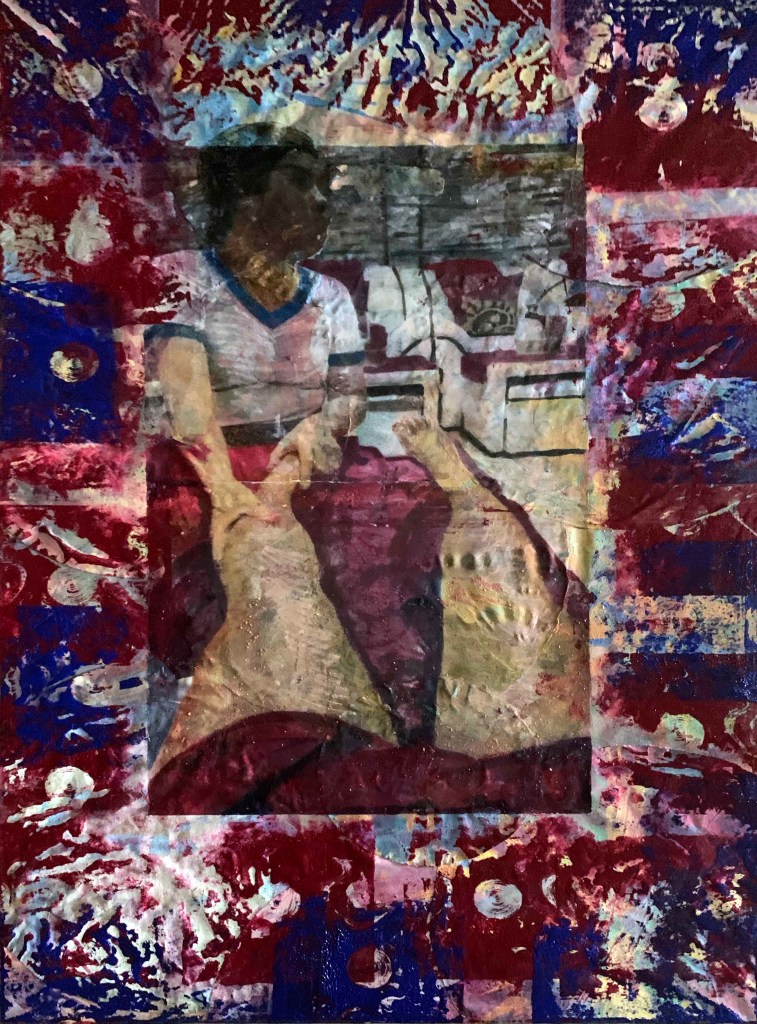
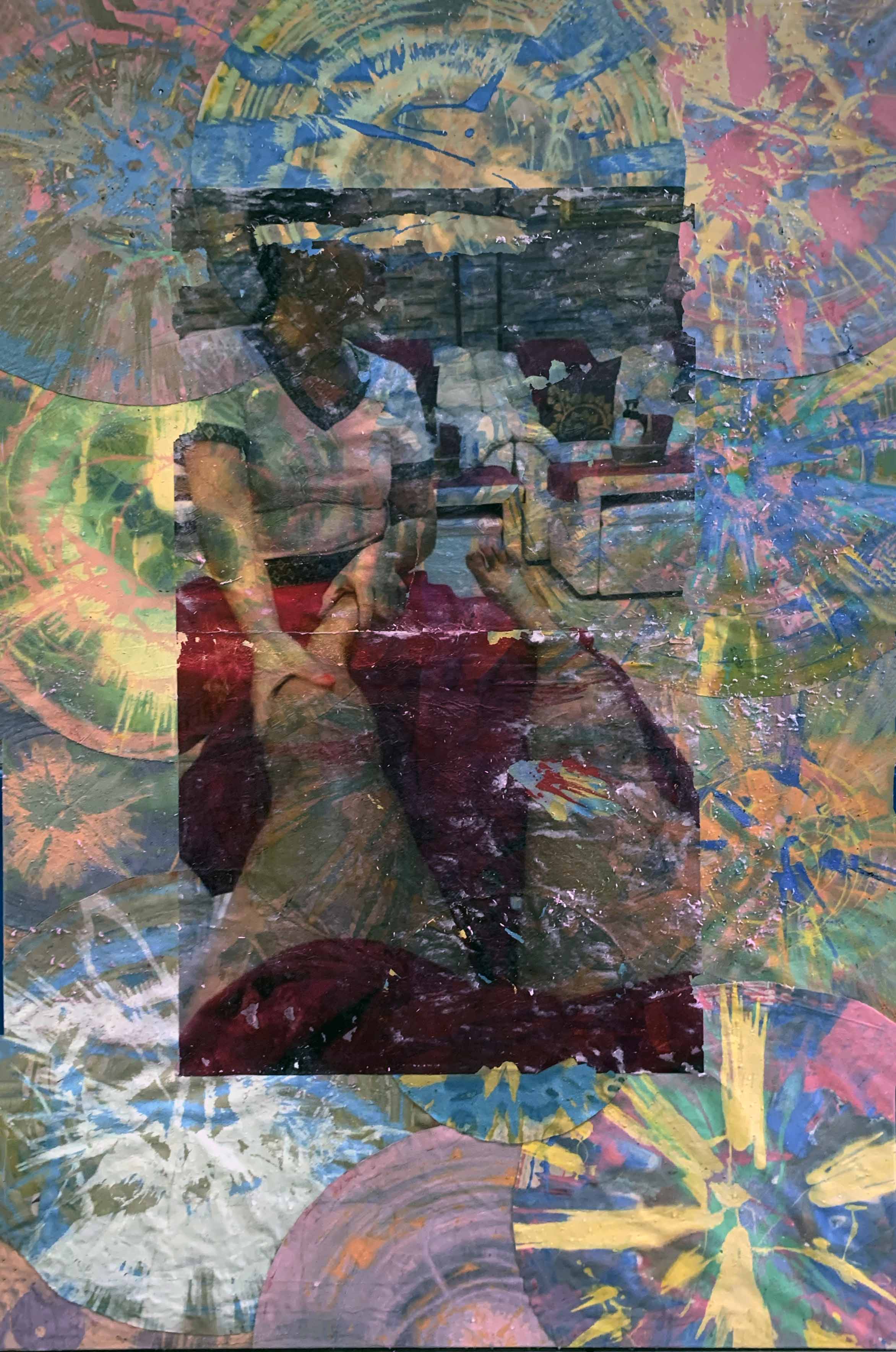
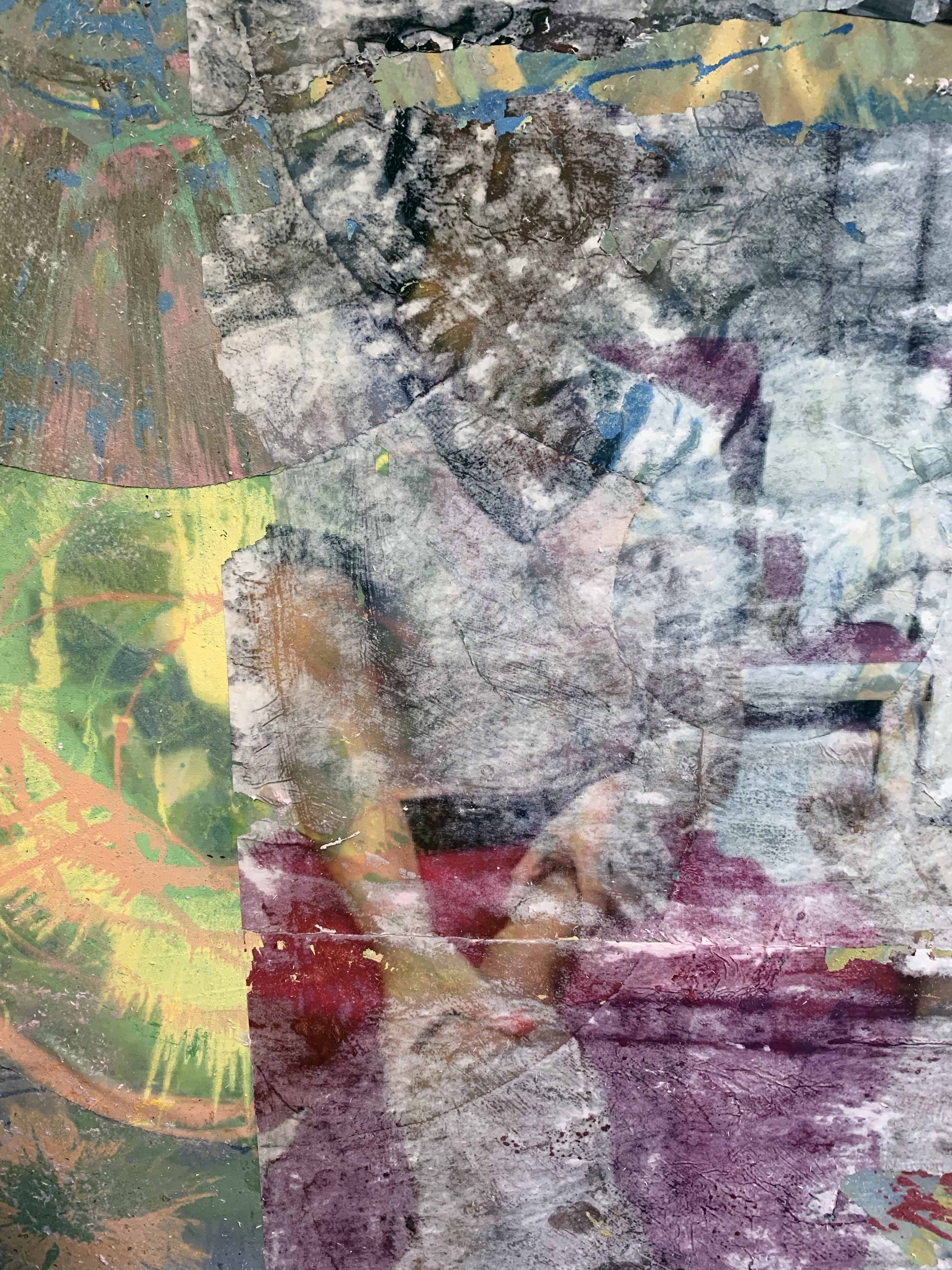
This is the last photograph of my current piece. I had no option, but to leave it to dry. The new layers of paint and ink need time to settle down and cure.

I am feeling a sense of loss and sadness. The most annoying paradox is that now, in social isolation, I have an ocean of time to paint and produce exciting work. However, it is very difficult to transport my work between my studio and home.

There is a great similarity between the Thai Masseur and I, a sense of parity of our situation. Perhaps, the title of this piece describes it best:

Not Working, Only Waiting…

When will I see you again?

Only Waiting, Not Working…

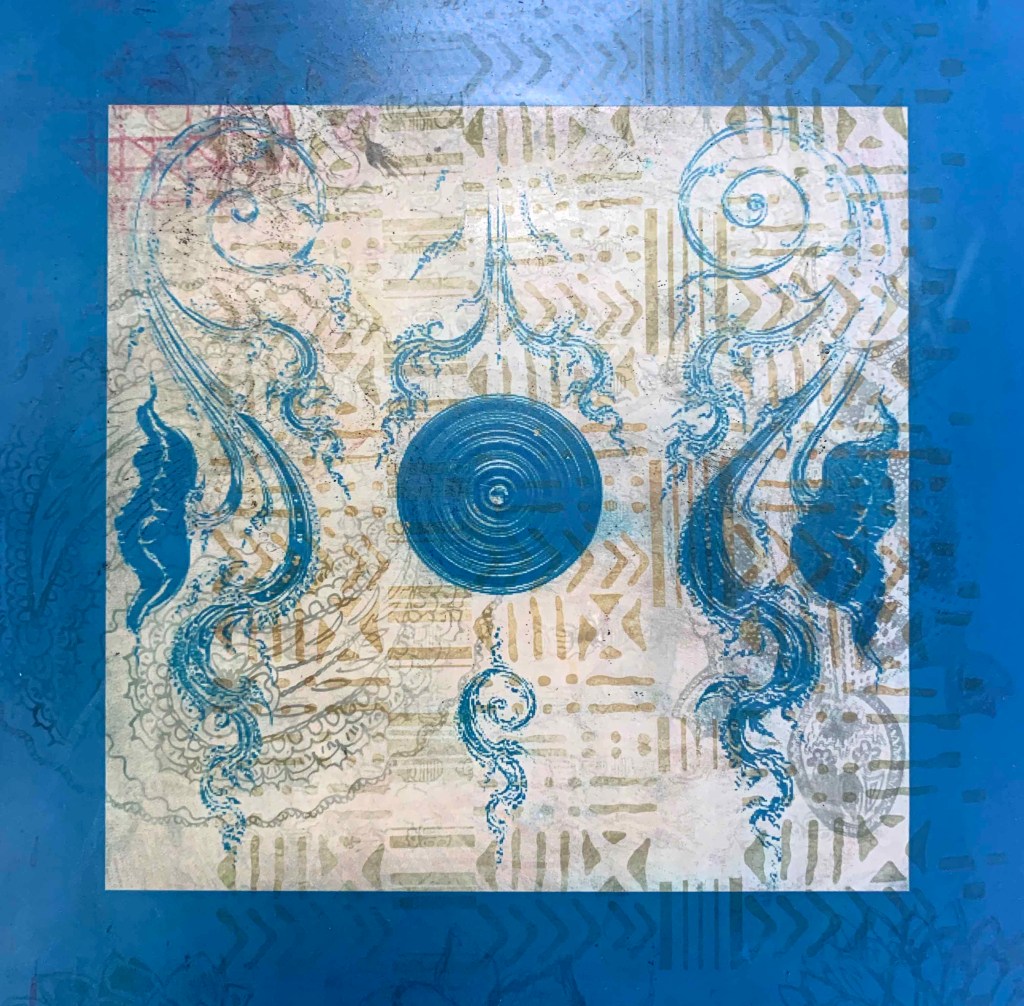
Following a period of stagnation I have moved ahead with full steam. I have developed a new screen. The images comes from a repetitive Royal Thai pattern. It is of cultural significance and has resemblance to the glory of this country. I managed to wash out the light sensitive filler with great precision to reveal all sensitivities of detail.

However, my creative intention was to use the screen in a much more spontaneous way. I overprinted the colourful frame around the masseur. I tried to echo the existing colour scheme in order to achieve a sense of cohesion, unity and flow. To destroy an effect of a decorative motif, I used a wet sponge to work into the prints and make them bleed.

I continued with using rich alizarin crimson based colours and royal blues. Ultimately, the painting reached a very gloomy and dark stage. The central section with masseur begun to shrink and partially disappeared. The peaceful and relaxing interior of the salon was overwhelmed by the aggressive background , which had watery qualities and resembled an angry and powerful waves of an ocean. The collage of spin paintings has been lost under a build up of new layers of colour and strokes of a sponge and imprints of a towel.

I have reached a stage, where I can do nothing more but let the canvas dry.

The only question in my mind is – when will I see my work again. A repeatedly ringing thought, which is brought about by the current predicament.

Bye Bye Burmese Monks

I have made some real progress today. I set up a video recording session of the washing of the Three Burmese Monks piece. Everything was arranged in the print room. As the DLSR run out of power, I had to result to using my iPhone XSMax with a tripod.

Following a discussion of details included in my storyboard, Georgie, our technician, agreed to help with the washing performance.

My picture frame was purposely wanky and crocked. I wanted to include a glimpse of a fire extinguisher and PVC pipes in the view. I also thought that bleeding stains on dirty floor make a valuable contribution to the overall impact of captured images, their meaning and the recording.

The raw footage is relatively long and full of accidental disruptions. They will all need to be edited out in order to create a cohesive video piece. The details of my plan will emerge soon, and continue to evolve and grow.

I enclose the final washed up image of the Three Burmese Monks piece and some raw and culminate footage below:

New Face

Following a long period of consideration and reflection, I have restarted work today on the Thai Masseur piece.

The main issue was to complete painting the face. On the one hand, I wanted for the portrait to be recognisable, on the other, I have struggled with solving a number of ethical issues regarding a possible reaction and rejection of my work by the model. I experienced this kind of a situation with one of the former pieces. Subsequently, this unpleasant episode had let to the destruction of my own work and several alterations to other experiments.

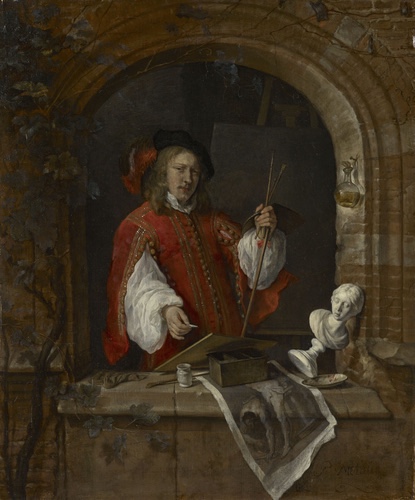
My new idea is inspired by deeply glazed and moody flemish paintings. I am especially inspired by Metsu and his self portrait. He positioned himself inside a window arch. This implies a composition within a composition. I am also using a double rectangular. My creative intention is to achieve a sense of ambiguity while drawing all attention to the centre – on the masseur. I want to rely on a visual suggestion of portraiture rather than a descriptive portrayal of a woman. The plan is to leave her facial features undefined, like a ghostly outline of what is really there.

https://www.rct.uk/collection/405943/a-self-portrait

GABRIEL METSU (LEIDEN 1629-AMSTERDAM 1667)

A Self-Portrait c.1655-8 Oil on panel | 37.7 x 31.4 cm (support, canvas/panel/str external) | RCIN 405943

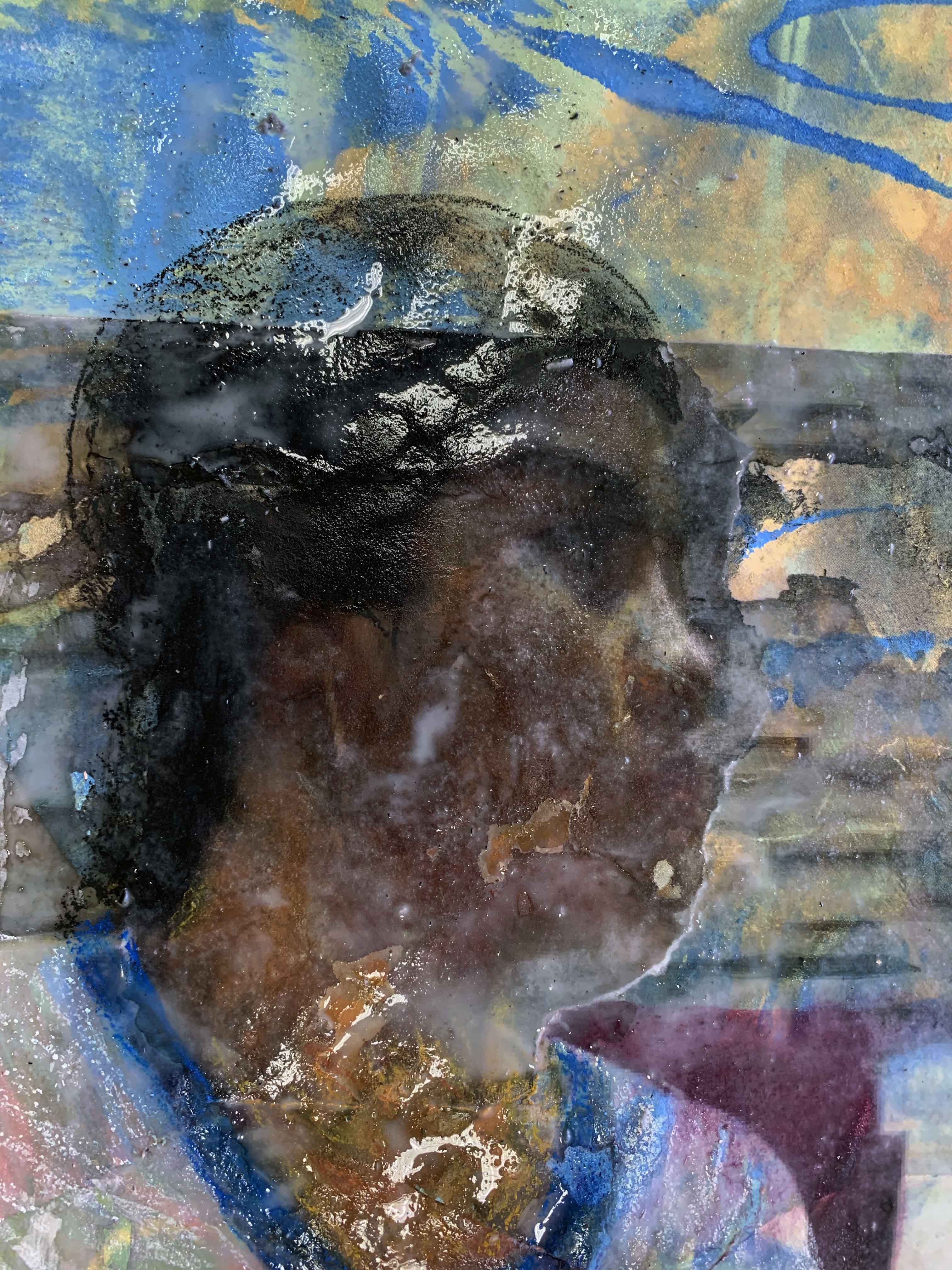
To give the surface more vibrancy, I used water solvable oil pastels. ‘Dancing’ with a crayon on top of the painting allows me to achieve a sense of mystery – secret light, which brings out parts of the skull and the jaw – all in the dusk of the space portrayed.

The next stage of the painting process will be to glaze the overall piece with a variety of transparent layers of an acrylic medium, perhaps combined with some watered down PVA glue. This is to prepare the surface for the overprinting stage using the silk screen technique and enhance a feeling of unity between the different formal elements and parts of the composition.

I have already prepared a new pattern based on decorative elements, which I have isolated from the interior of the massage salon. I will use this design to create a random over-image. This, in turn, will have a dual function. The first is to help to engage the centre in the overall painterly illusion. The second aim is to increase the amount of detail and enhance holistic and expressive qualities of my piece.

At this stage, I am considering using a range of gold and crimson tones. This initial plan might be subsequently altered in favour of a more spontaneous and instinctive decisions and reflections in action.

I am enclosing photographs of the final stages of work today and a close up of the ‘New Face’

Andrew Gadd at Art Number 23

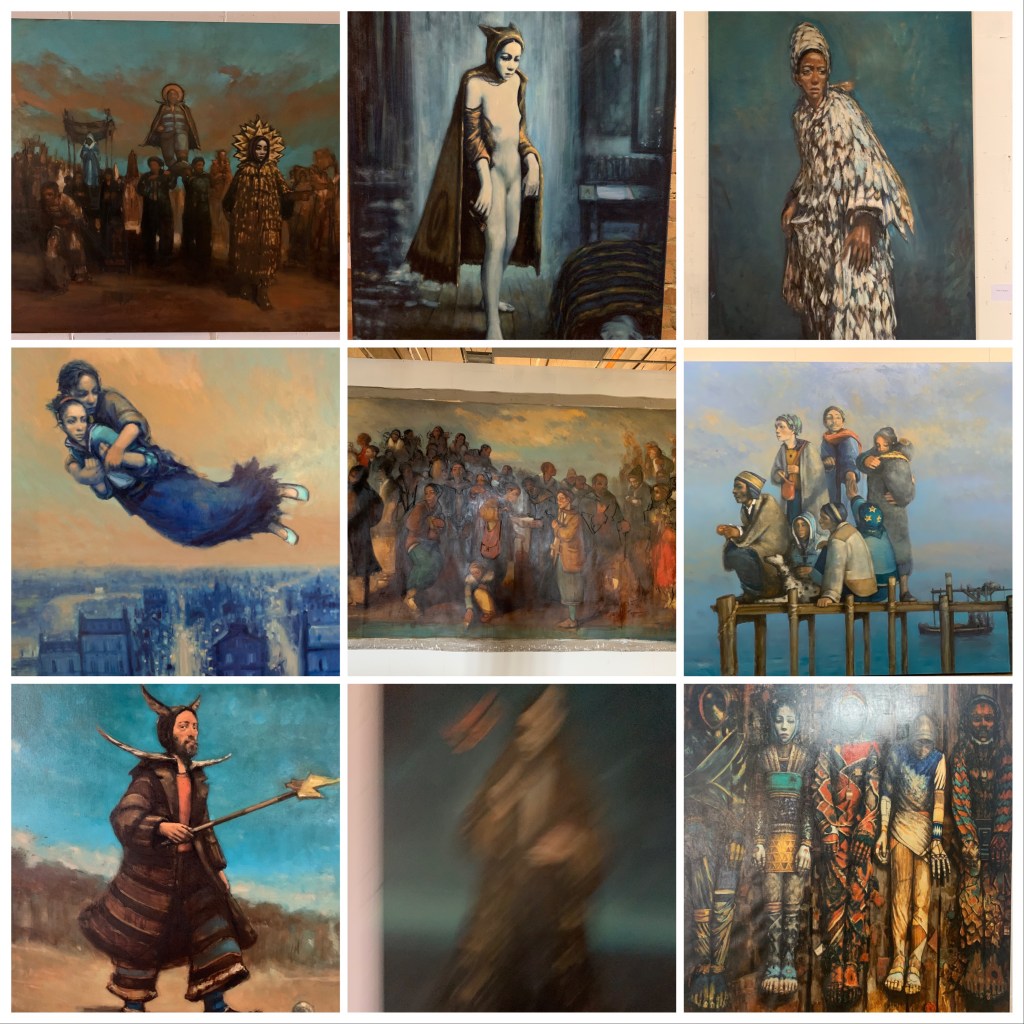
I have finally organised to collect Burmese Captain from an exhibition at the Old Biscuit Factory. I am so pleased to have recovered this piece.

At the same time, I got a chance to preview a new exhibition of large scale dramatic paintings by Andrew Gadd. He studied at Falmouth and the Royal Academy of Art. His paintings resemble a combination of war inspired pieces from the Renaissance and Russian romanticism in painting.

I include a selection of his work below:

Screen-Printing Workshop

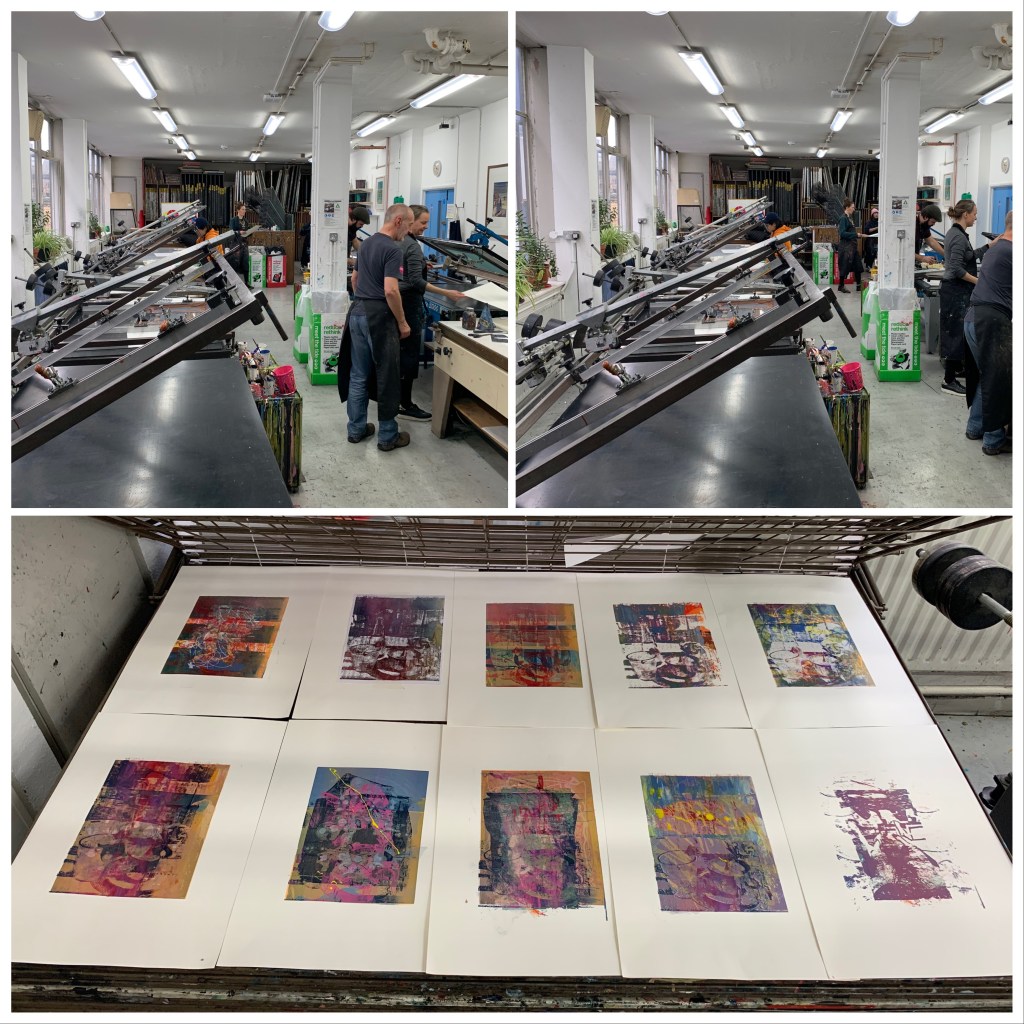
To diversify my experiences from last year with mono-printing and etching, I opted for screen-printing.

Following an excellent presentation of technical possibilities, we reviewed an extensive range of examples of prints, covering numerous pieces produced by both, staff and students.

Tony Lee delivered a detailed demonstration of a variety of processes, while discussing alternatives to the time-typical practice. To my surprise, he also gave me all of my prints from last year’s workshop. I was astonished by this amazing surprise! Thank you Tony.

Brian Whitewick introduces us to the technical aspects of coating and developing screens. His knowledge and experience were excellent.

With his help, I was able able to achieve a crisp transfer of my images onto a silk screen.

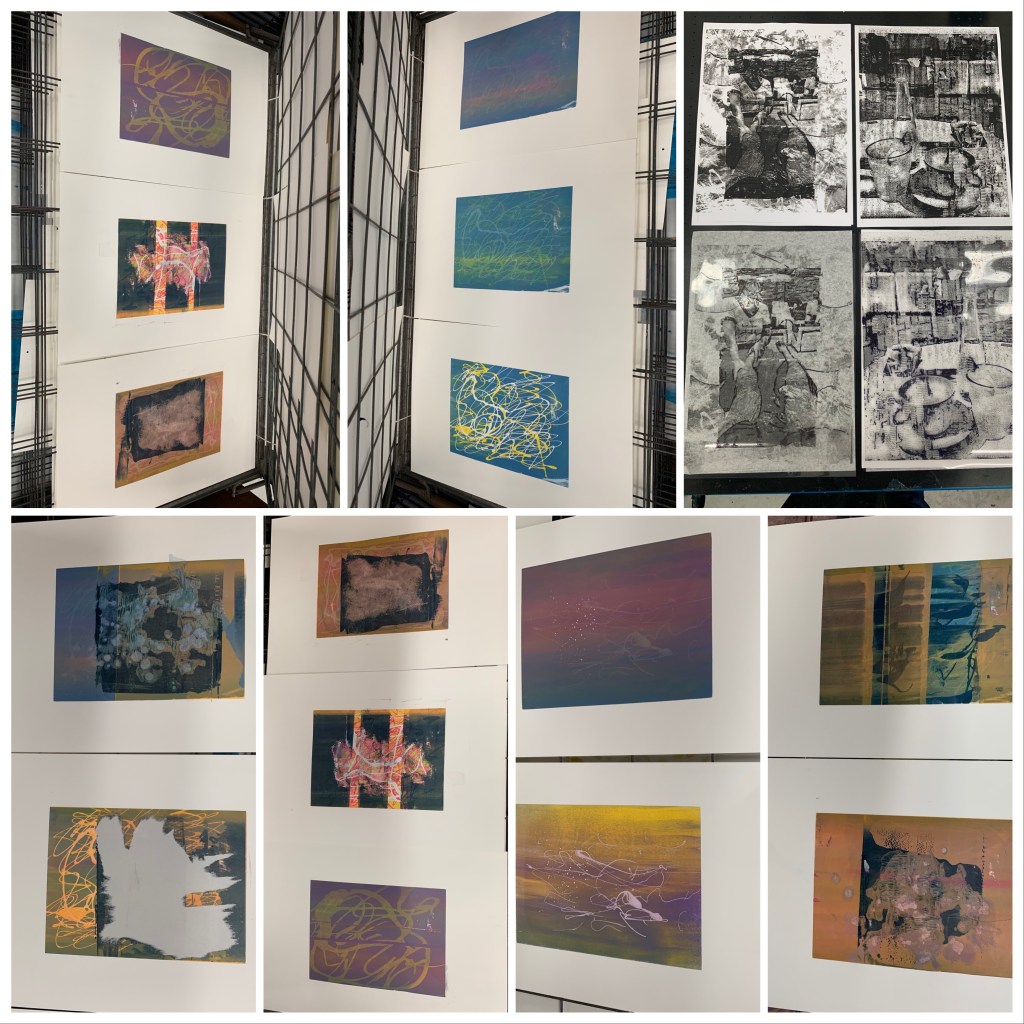
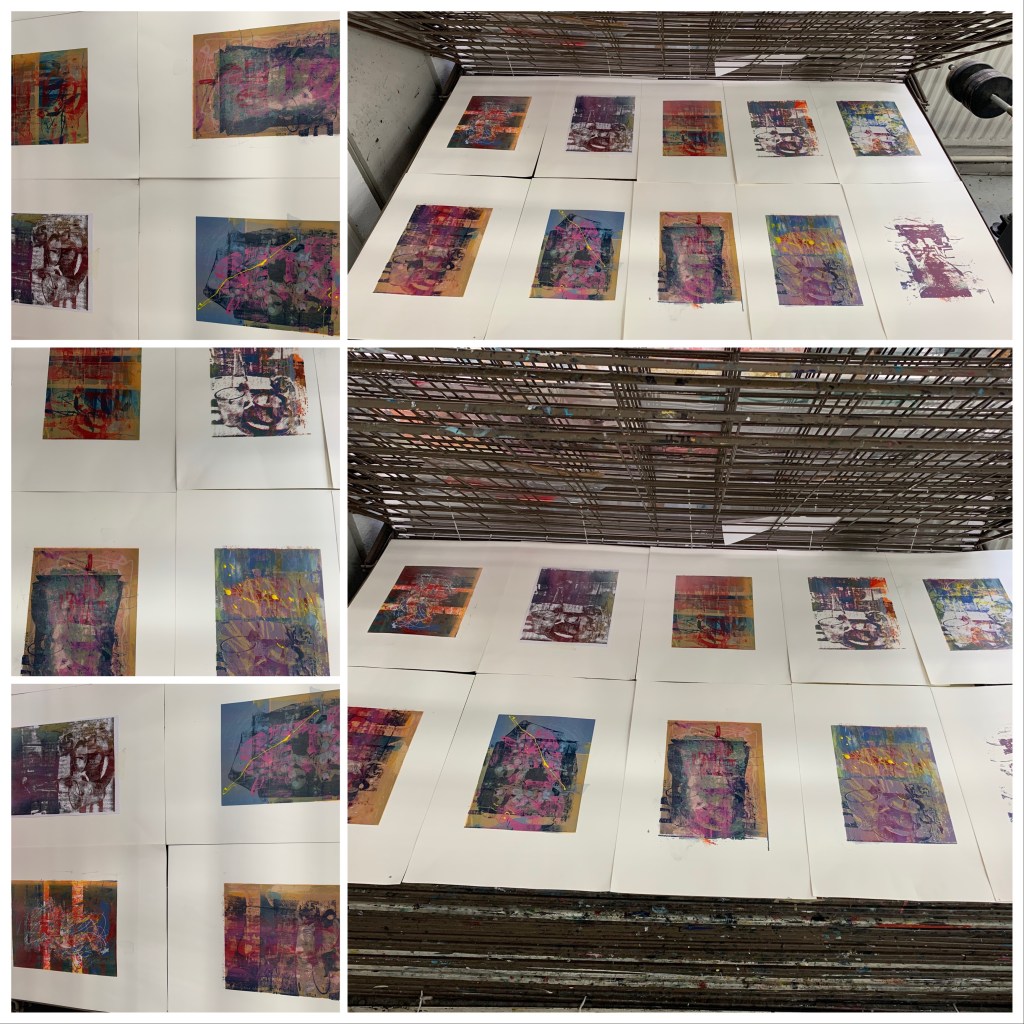
Initially, I taped a screen and established a form of registration. I used a number of experimental techniques including masking, drizzling and flicking. I dragged the squeegee across and continuously overprinted my under-images with countless layers of harmonious colour transparencies. My creative intention was to achieve a sense of depth of colour and sensitivities of related textures. Subsequently, I used the same images as for the cyanotype workshop and developed both of the on the same screen.

Background colour considerations:

Using the screen, I overprinted the backgrounds using a similar range of techniques and ideas. Here again, my intention was to achieve effects of mysterious ambiguity, which forces viewers to interpret rather than read images. I was particularly intrigued by electric properties of a bright pink ink, when combined with rich and deep blues, and subdued yellows.
My final experimentation and printmaking proposals, which I subsequently developed, are dynamic and full of healthy curiosity of the painterly space. The subject matter is visually suggested and not described. When dry, I will continue to work with these prints to refine them and enhance their colour further through a range of digital processes , possibly extending to stop frame animation.

Thai Masseur – Recent Progress

I have made some progress with my recent piece.  The key focus was to start gradually building up a range of colour layers with sensitivity.  I tried to avoid loosing a diversity of previously created marks and accidental stains.  However, due to the fact that my spin paintings were executed using diluted gloss paints, the saturation of the background composition was very low.  I did not have enough paint to achieve a deeper and richer colour compositions on the circular patches.  Subsequently, I have created a distinct rectangular window within my canvas. This is an obvious problem and I am faced with a disjointed and incohesive piece.

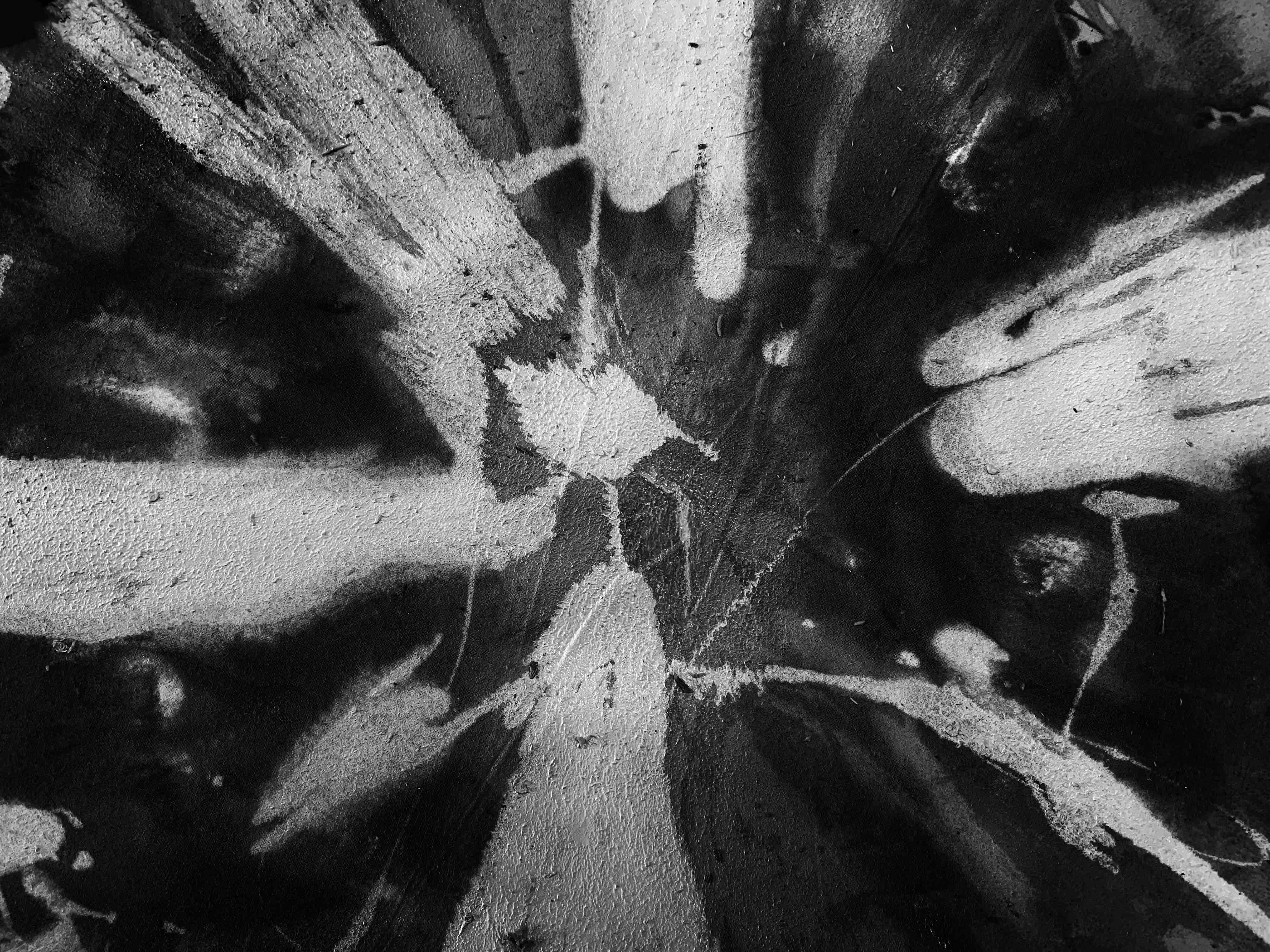
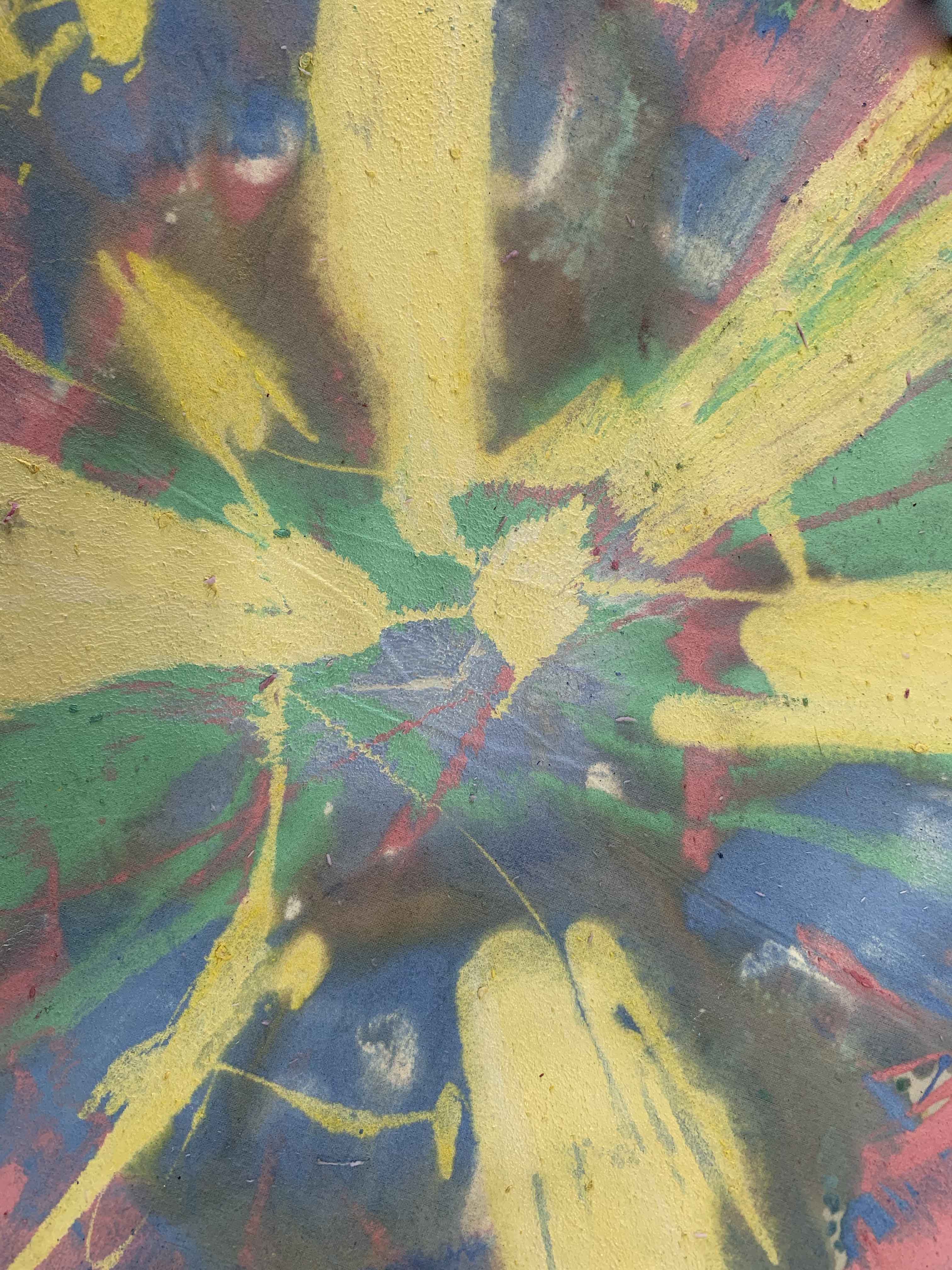
In order to solve this, I have identified a dynamic part of the background composition and isolated a section from the bottom, right hand corner.  The idea was to open this image in Photoshop and manipulate it sufficiently to develop a strong and contrasting idea for a new silk screen.  This pattern like ‘splash’ will be used  for partial overprinting of the background painting , hopefully achieving a greater sense of a holistic flow.  I will also try to pick up vibrant crimsons and Prussian blues to increase the overall energy of the piece and, therefore, its impact.

Additionally, I will need to work much more carefully and precisely on the painting itself to bring out more detail to the hands of the masseur and the feet of the model. They too flat and appear to have lost some of their form.

The Thai masseur would also benefit from a more pictorial description of her face.  However, this will happen at a later stage.

I am considering glazing the piece with a diluted solution of a medium and allowing it to dry before returning to the printing process next week. I also need more time to develop my ideas for the screen further.

Black and white proposal for a transfer onto screen.

IMG_6757

Dynamic section isolated from the background.

IMG_6757

Thai Masseur

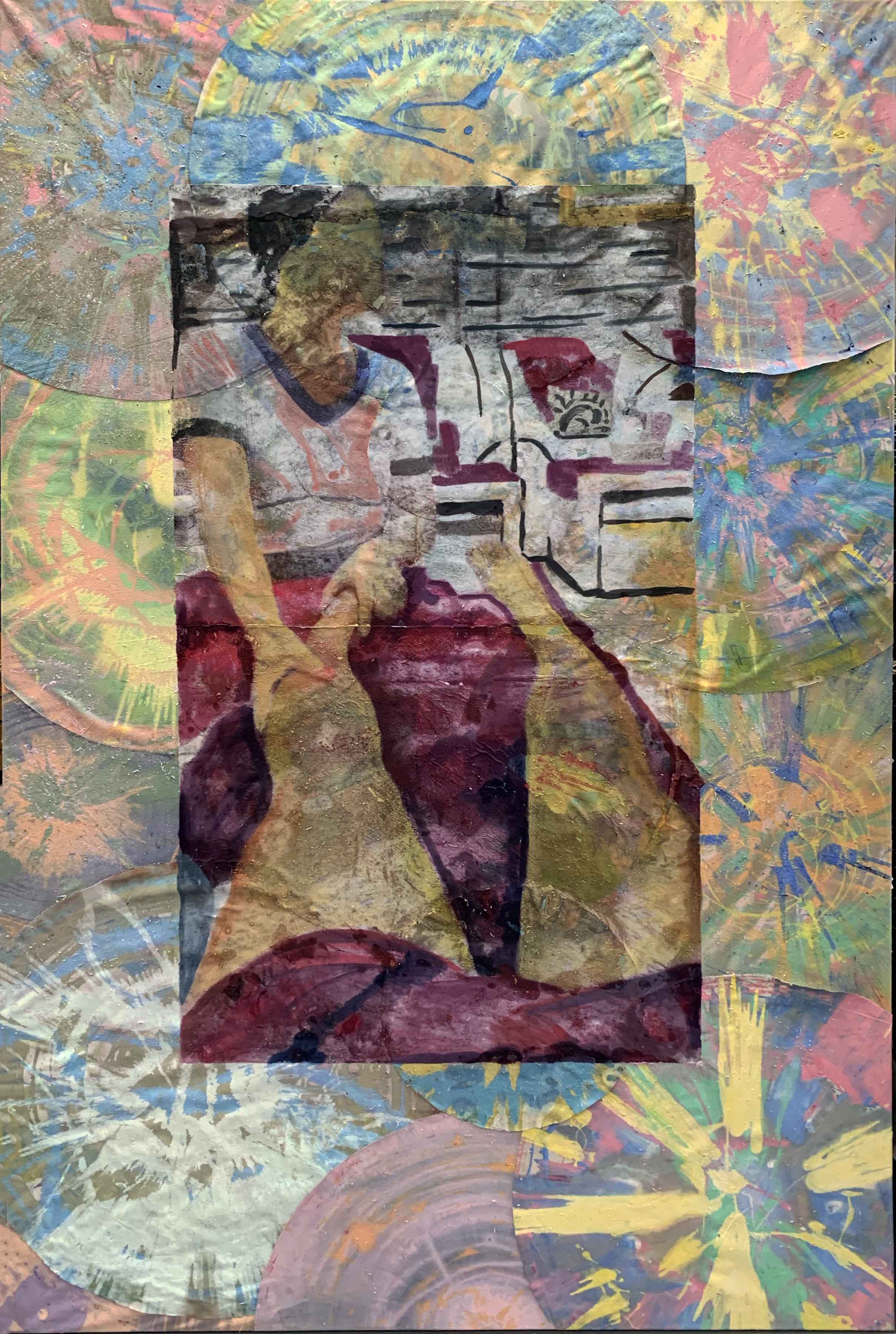
In result of reviewing sign paintings by Hirst, I have experimented with a range of simple spin paintings.  I attached circles of unprimed canvas to an electric wheel in ceramics. I immersed myself in a child-like play pouring diluted gloss paints onto the spinning surface, regulating the speed with a foot pedal.

The next stage was concerned with arranging a suitable composition using a variety circular spin paintings.  I thought that the circular motion resembled a rotating image in a bull-eye window of a washing machine.  When I achieved an appropriate layout, I pasted the entire thing together using a solution of diluted PVA glue.

The underage was dramatic, dynamic and vibrant.  Simultaneously, it contained a diverse range of colours, textures and expressive smudges.  This created a perfect environment for the painting stage.  I focused an an ambiguous portrayal of a foot masseur from Pattaya, entrapped in a repetitive routine and bored with the activity.

There is a number of holes in the painted surface, through which, the background is visible.  I felt that this blending and effect of superimposure, enhanced an overwhelming character and feel of the composition.

The next stage of work will include bringing the image out by very gradual process of building colour on top of the surface with water soluble pastels.  Hopefully, the impasto will become sufficiently thick to increase a sensation of weight in this piece.

Although, I would like to achieve a sense of openness to interpretation, I would like create more focus on the hands and their smoothing function and symbolic meaning of, which is associated with a touch.

I am really excited to have started to explore a new possibility while extending on my current development of both: conceptual thinking and technical methodology.

Additionally, this painting is on a very large scale stretched canvas, perhaps the biggest piece I have approached since starting this project.

Dimensions:

115 X 184 cm

IMG_6707


IMG_6717 2

Spin!

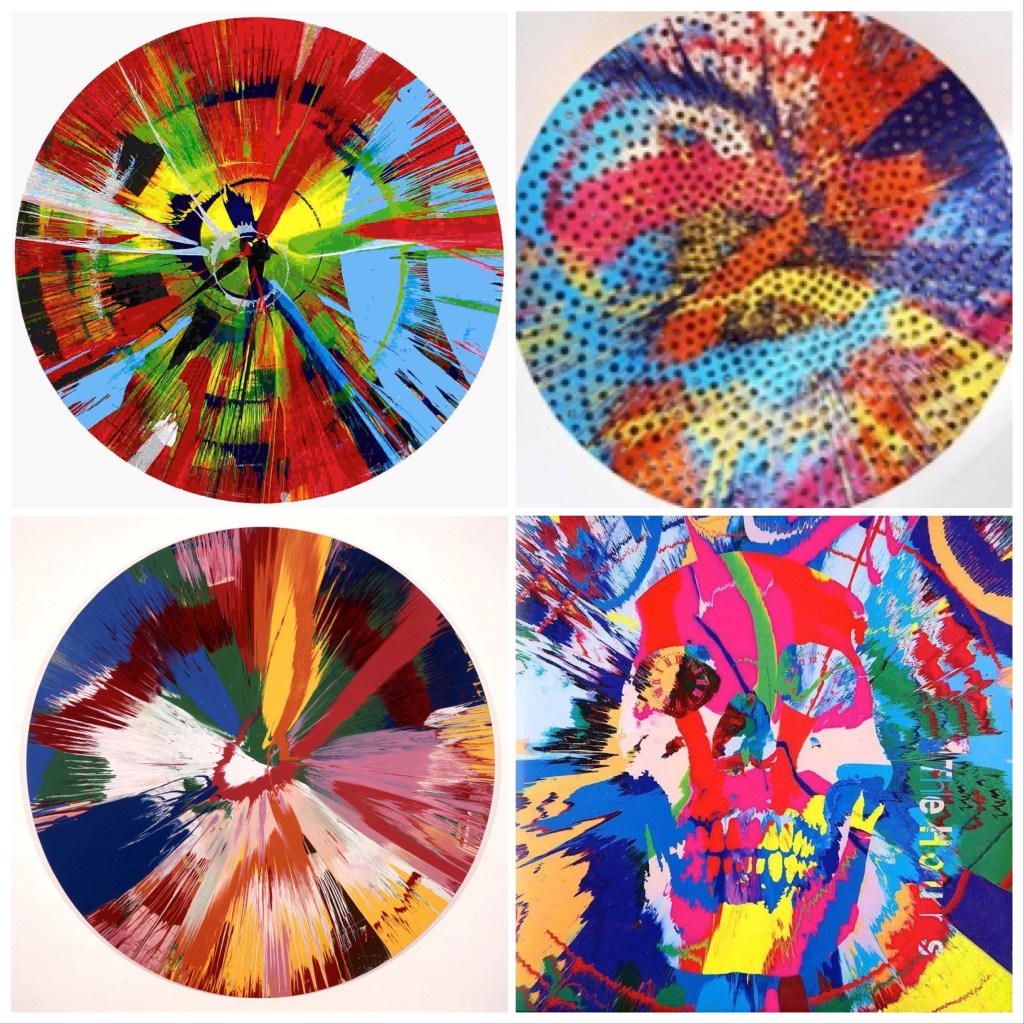
I came across the first series of spin paintings by Damien Hirst in the early 90s. I learned about this experiments, when he first started to explore a range of possibilities using this technique in 1992 and extending on alternatives by employing the idea of a stencil.

In addition to their powerful colours, patterns and textures, they were frequently composed on circular formats. I was touched by a great similarity between the look and feel of these works and my ideas concerned with recording the spinning cycle through a bullseye circular window of a washing machine.

On reflection, I came to a conclusion that his famous spin paintings were very influential in forming my new ideas for a series of images.

The spinning motion is monotonous, repetitive and echoes the nature of what I am trying to portray and question in my project.

I include a collage based on his various work below:

Morning Coffee – The Process Begins

I have started working on a new idea for a painting.

Critical analysis:

Following my practical experiment with a repetitive activity, I came to the following conclusions:

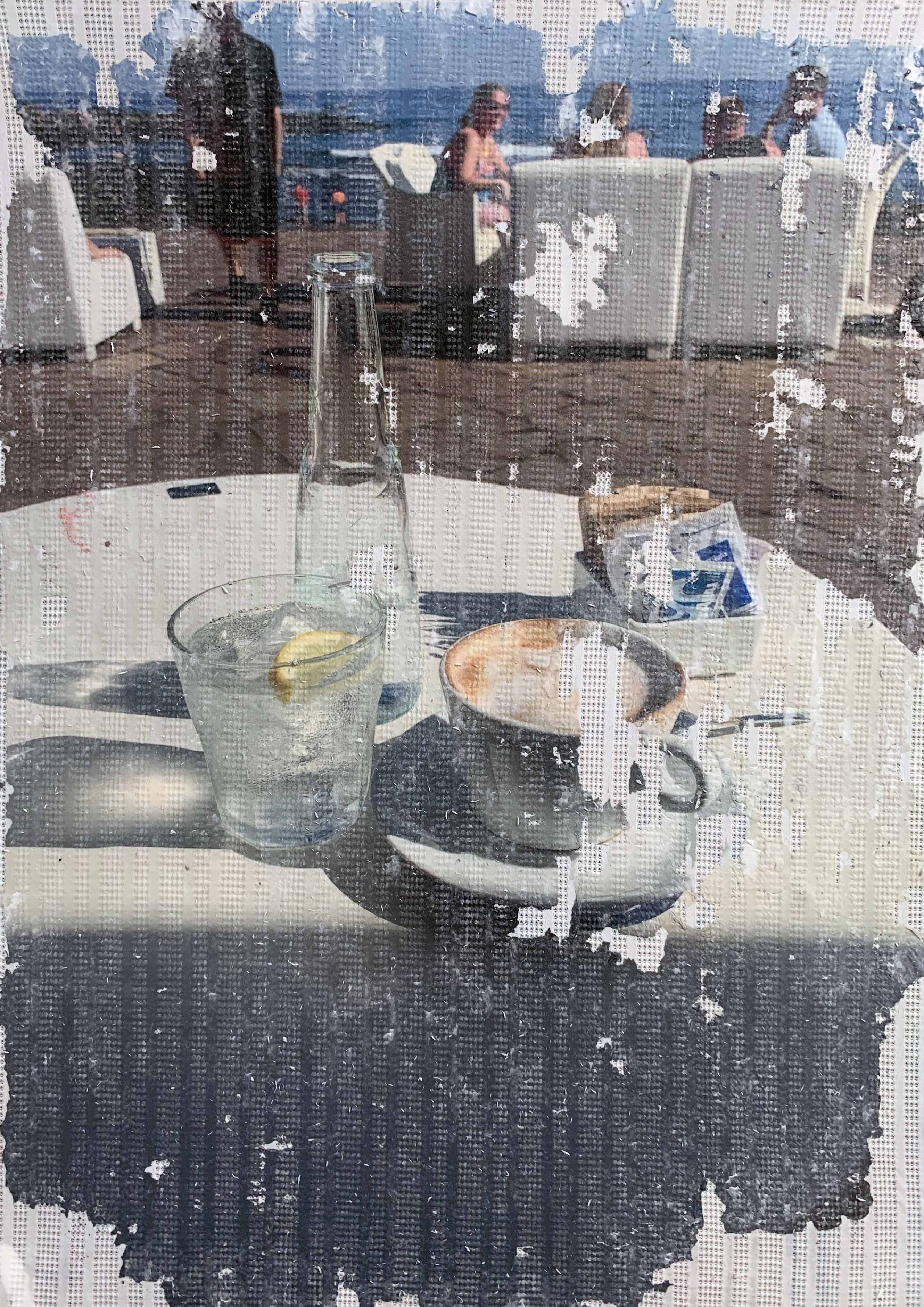
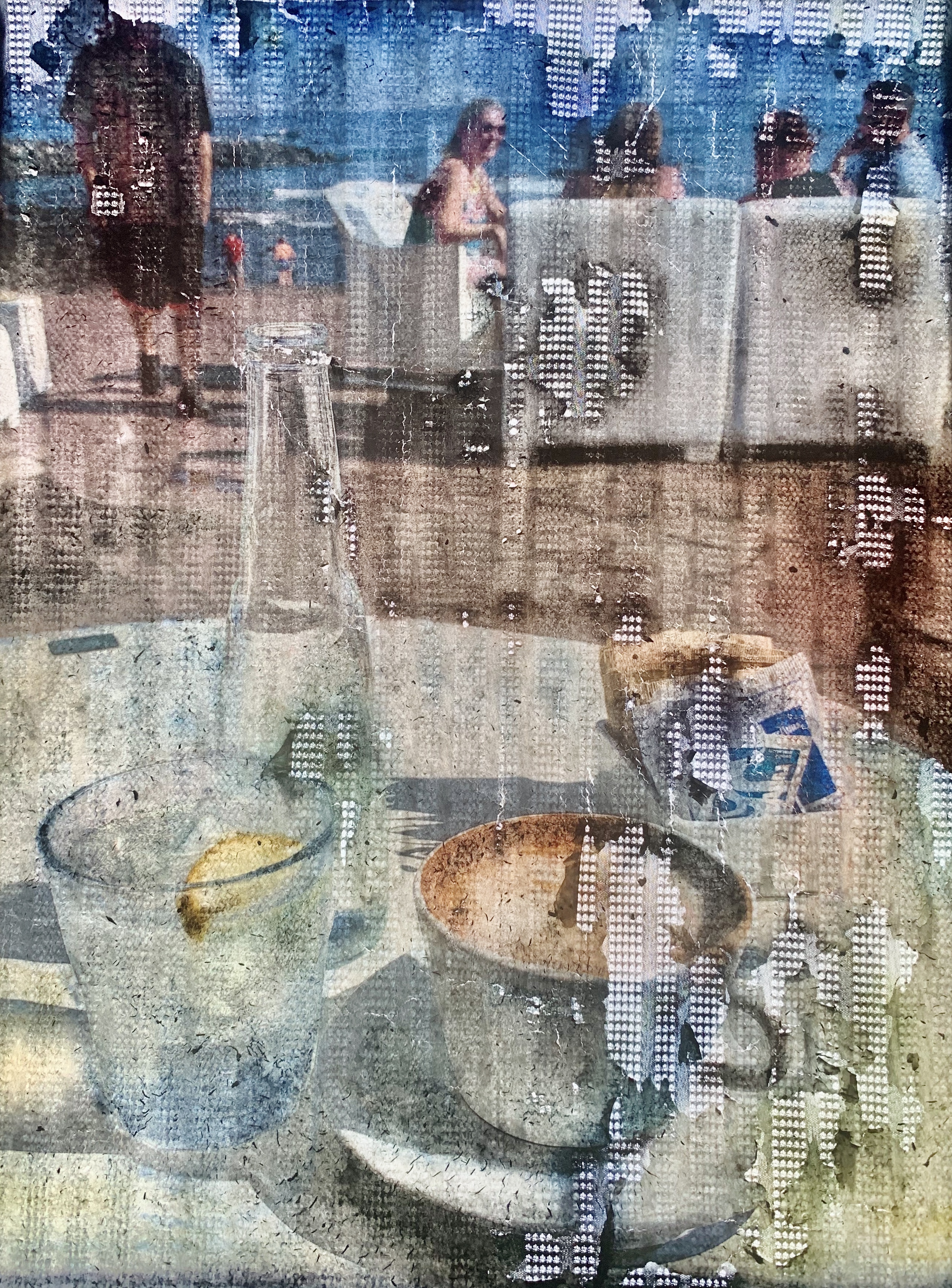
My composition should focus on the essence of this exercise – the coffee, glass with ice and lemon, and a bottle of sparkling water. This still life setting is a constant in my experiment and in the foreground of the overall image. It never changes and there are no visible modifications and adjustments to the position of all items on the table.

The view with people and arm chairs in the background is the variable of the image. This part of the composition is dynamic and frequently altered by randomly passing visitors, slow morning business or just emptiness of the space. Interestingly, the focus in my work is reversed from people onto objects. The underpinning narrative of action in the background, behind the centre, is out of focus and less important than a simple still life like setting in the foreground. The same cup of latte, the same slice of yellowish lemon and the bubbles of gas in the glass.

Subsequently, my plan is to remove the constant and the obvious – the expected. The place in the sub-light, the focus of the composition will become empty and covered by the background colours and textures.

I plan to use paint and, step-by-step, over-paint all foreground objects, while recording this process digitally, perhaps as a video or a photographic timeline. Editing will follow to further refine and emphasise my creative intentions. I want to divert attention from the foreground to the background. A jet of water, or a cleansing power of a washing machine and powerful detergents will be replaced with a hand painted background.

The Three Burmese Monks are gone and disintegrated now. The time has come up to erase my morning coffee experiences.

All really important issues always take place behind the scenes, in the distant and seemingly unimportant vacuum of background void.

Morning Coffee – Constant Versus Variable. Thanks

I have spent a lot of time considering differences between constant and variable within my new composition.

The constant is the known, predictable and expected. All of these feelings are associated with safety and security, with certainty and control. On the contrary, the variable is the dynamic, unknown and unpredictable. It makes us uncertain and anxious. It reminds us that we have little or no control over our destination and associated events. It makes us realise that we are walking in darkness with no sense of a real direction. All we do is to assume that we are in charge.

Although this piece has some potential, it would benefit from a further development. I need to question the relationship between certainty and uncertainty in the context of repetition and monotony.

Following a range of discussions with my colleagues and students, I have come to conclusion that the next step will be to remove certainty from the work and emphasise the variable part of the composition.

Until know, I have managed to explore possibilities and discuss alternatives with the following experimentation using light and digital manipulations:


Error
This video doesn’t exist