Spin!

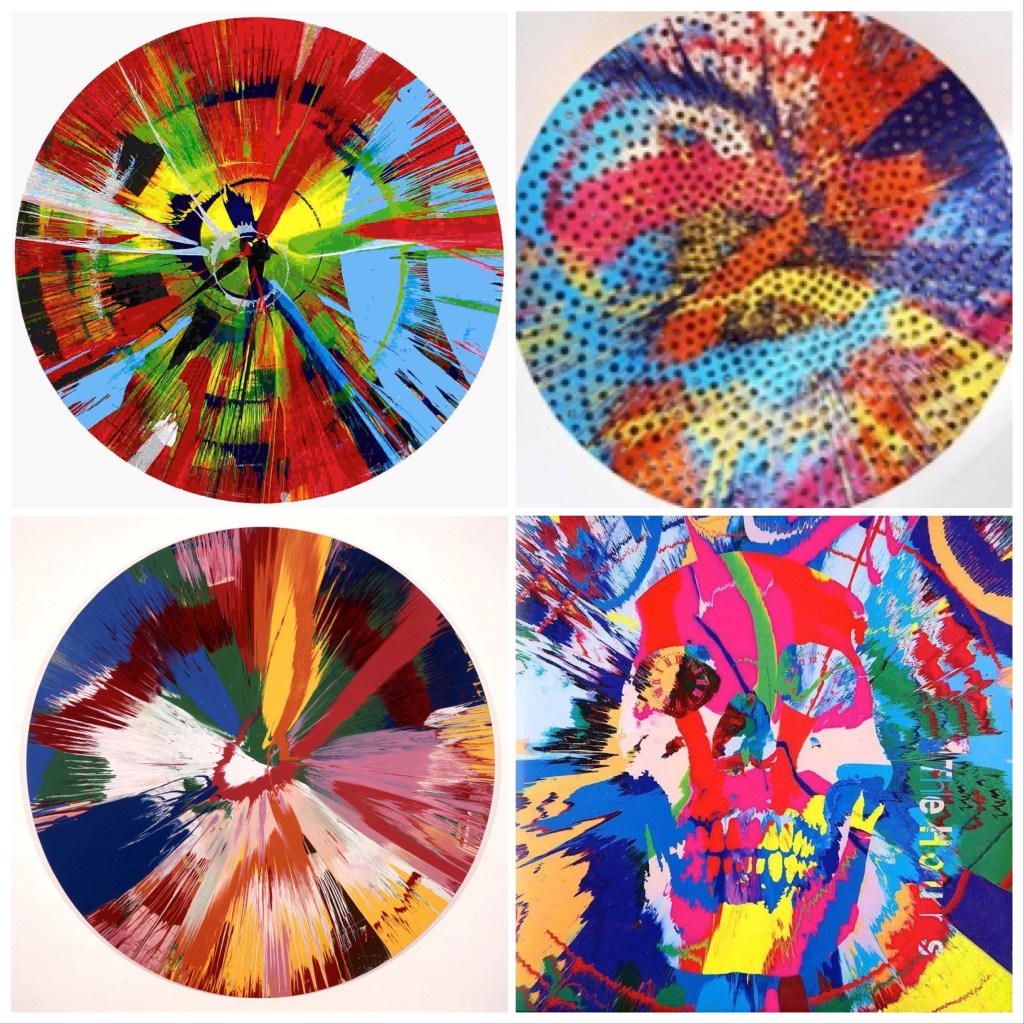
I came across the first series of spin paintings by Damien Hirst in the early 90s. I learned about this experiments, when he first started to explore a range of possibilities using this technique in 1992 and extending on alternatives by employing the idea of a stencil.

In addition to their powerful colours, patterns and textures, they were frequently composed on circular formats. I was touched by a great similarity between the look and feel of these works and my ideas concerned with recording the spinning cycle through a bullseye circular window of a washing machine.

On reflection, I came to a conclusion that his famous spin paintings were very influential in forming my new ideas for a series of images.

The spinning motion is monotonous, repetitive and echoes the nature of what I am trying to portray and question in my project.

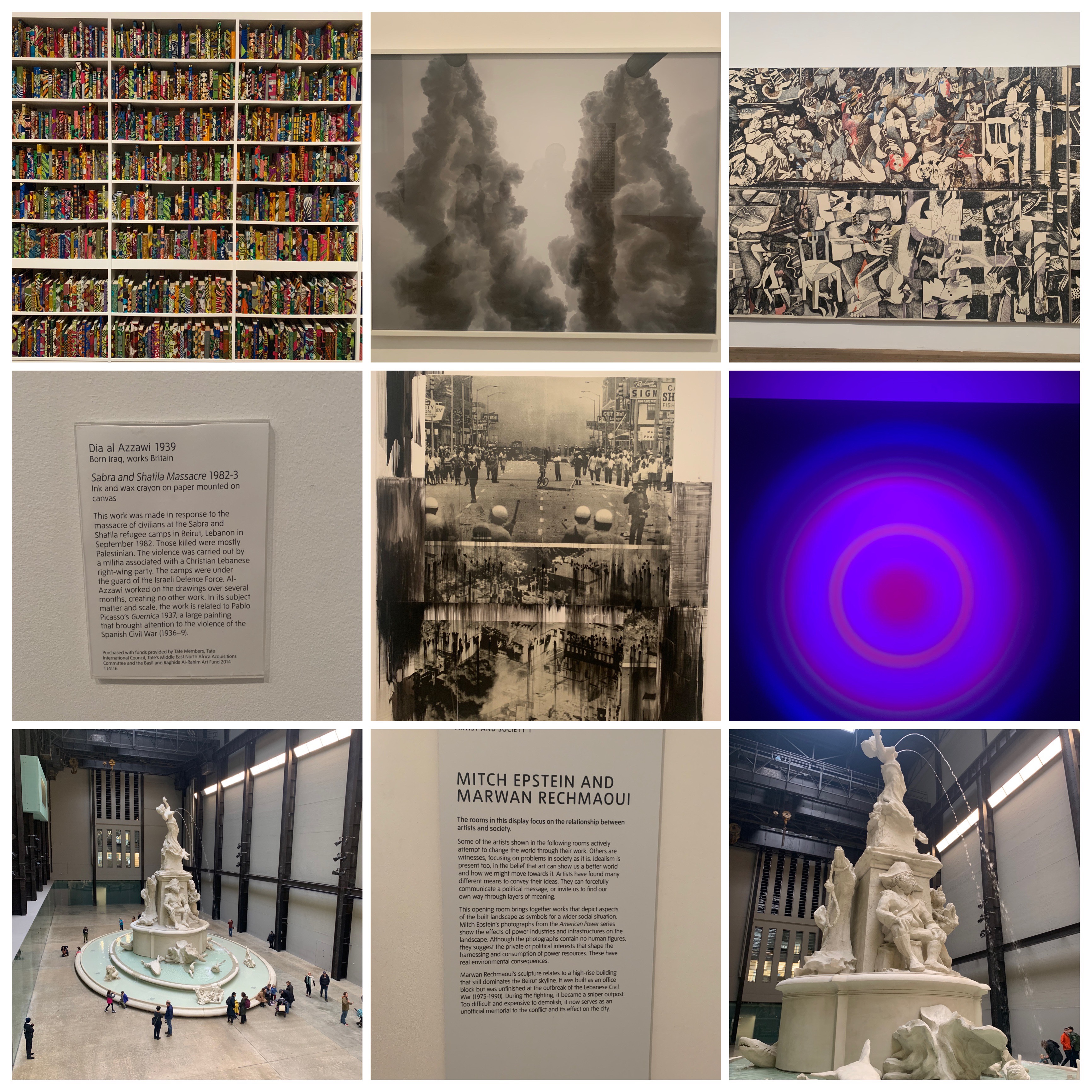
I include a collage based on his various work below:

Eureka Moment

It has taken me a long time to realise that I am fascinated by erosion and destruction. This is what transforms a surface to make it exciting and more evolved. I am actively engaged in observing and recording this magic and rapid transition. Superficial new becomes old and worn almost instantly, practically overnight.

Memories implanted by transience and the patina of time leave their stunning traces on everything, while staining, crumbling, disintegrating, glazing with dirt and human interventions.

I have spent the whole day exploring some rough parts of Gran Canaria’s rotting buildings and places. I was shocked to learn how mesmerising they all were! I have experimented with these ideas, while searching for effects of destruction in my own project through blasting my paintings with water jets and spinning my work in washing machines. Paradoxically, both art and life are about turning something special, into dust and nothing. New becomes old; young ages and wrinkles, swish and desirable turns into shameful and unwanted rubbish.

Vive la destruction!

Symposium Part 3 – Repetition and Ritual.


Life tends to deal with these problems naturally through repetition and obsessive engagement in distractions.

An excellent interpretation of this concept was developed by Zbigniew Rybczynski(1981) and his Oscar winning piece titled ‘Tango’.

and his subsequent 1987 animation called ‘Imagine’

Both are characterised by identical starting points and their destinations.
This would imply that there is no room for progress in hypnotic repetition?
Roman Opalka, seems to be a master of this phenomenon in his ‘Counted Paintings’ series, which consumed his life.

He began painting numbers from one to infinity in 1965, in his studio in Warsaw and continued until his death in 2011.

ROMAN OPALKA

  • Daily rituals, work and religion.
  • Time, procedures and commuting.
  • Breathing, heartbeat, sustenance and sleep.
  • Everything is done to order.
  • Retirement, loss of purpose and death.

Entrapment in hypnotic repetition.
Suspension in the vacuum of life.
Charlie Chaplin questioning industrial repetition as a lifestyle:

We live in an industrialised society and are compelled to take part in this repetition.

Points for discussion:
• What is your entrapment?
• Do you find it comforting and reassuring that tomorrow is going to be there?

Symposium Part 2 – Isolating the Key Elements of Life.

There appears to be a sense of cohesion between life and science.
When one considers my visual responses in my project, it becomes clear that the predicament is universal.

In some small way, we are all trapped in the cycle of work, life, and existence; oscillating between certainty and uncertainty.

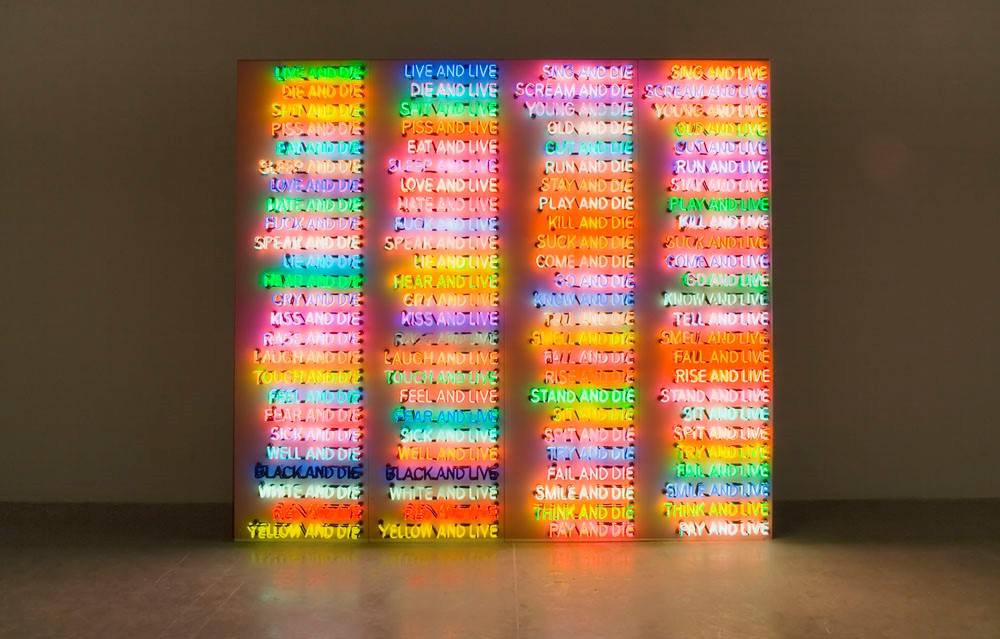
This can be, perhaps, best interpreted by Bruce Nauman in his ‘One Hundred Live and Die’, 1984. He boils down the essence of our being to the basic activities of life, without location or possessions.

BRUCE NAUMAN

When analysing my primary sources, I made some exciting observations:

– The less you have got the more certain your life appears.
– Contemporary life in a western society superficially looks certain.
– In reality, it is full of surprises and the most certain things become a nightmare.
– The more you have the more you want, and the less satisfied you are in life.

Points for discussion:
• Can uncertainty become inspirational?
• If the future was predictable would you have less motivation?

Art 23, African Art Exhibition.

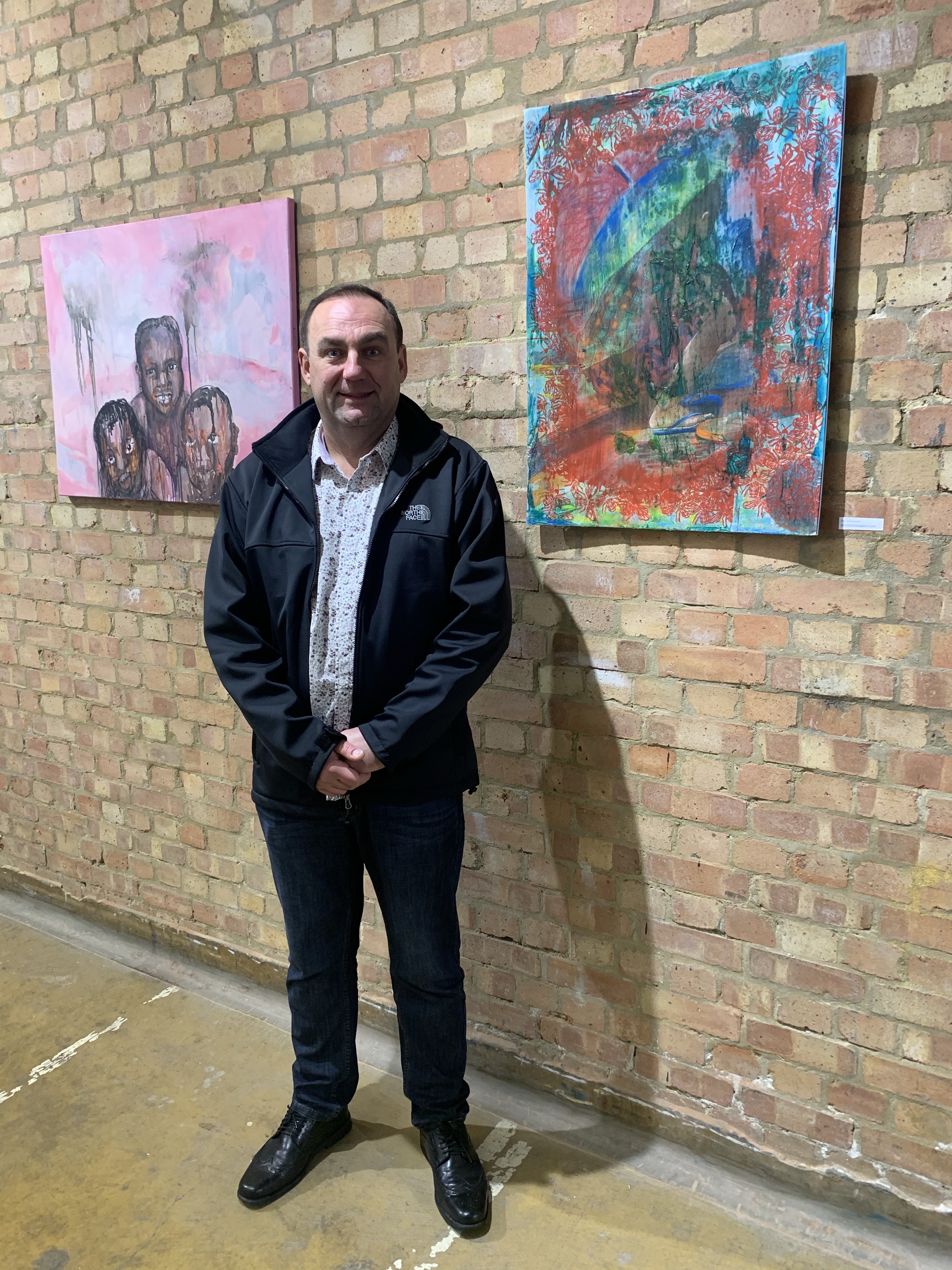
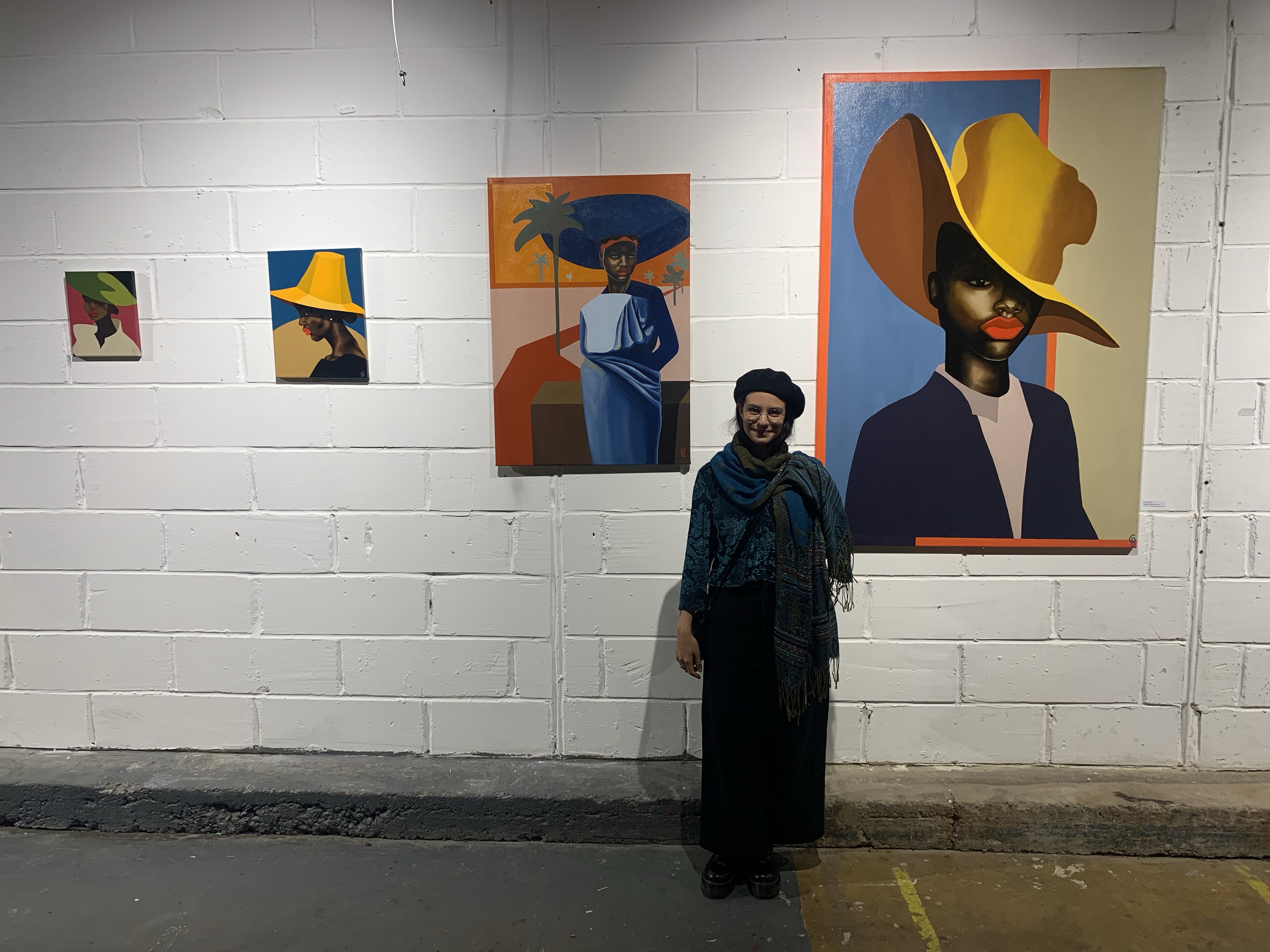
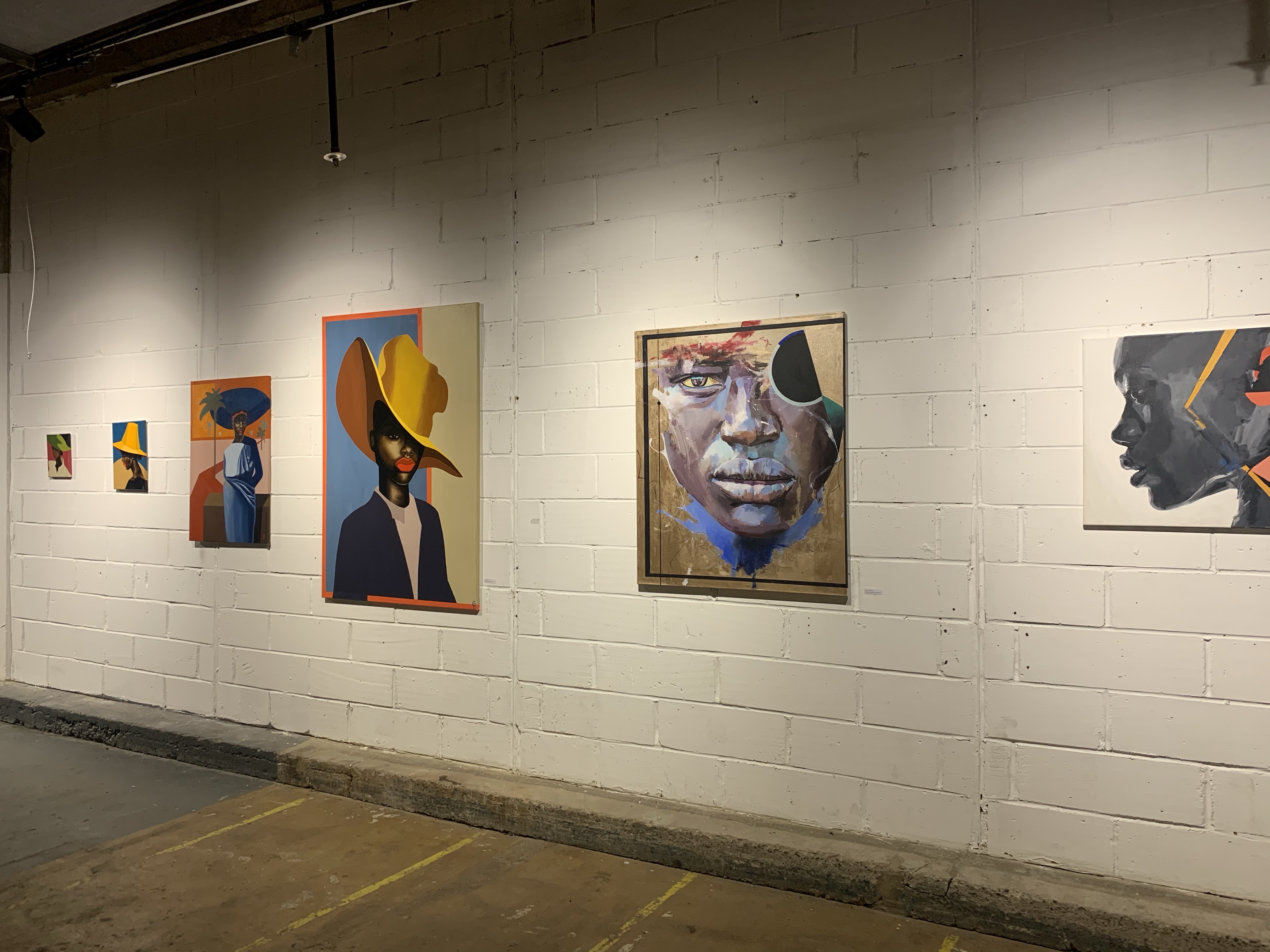
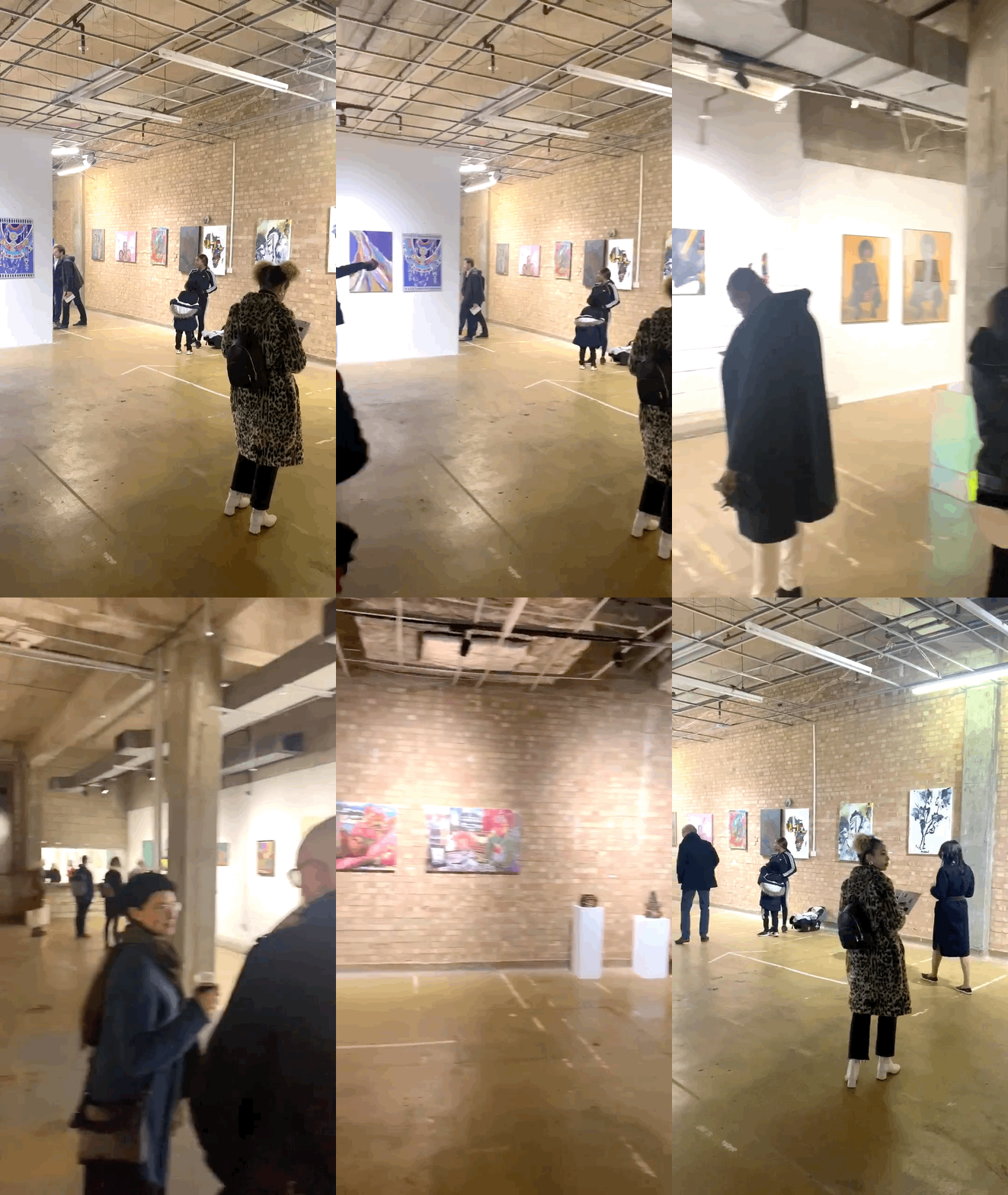
The private view was very well organised and attended. I have made several exciting contacts with artists from all over the world. Some work on display was truly magical and gave an individual insight into the colours and flavours of Africa and its people.

New Inspirations.

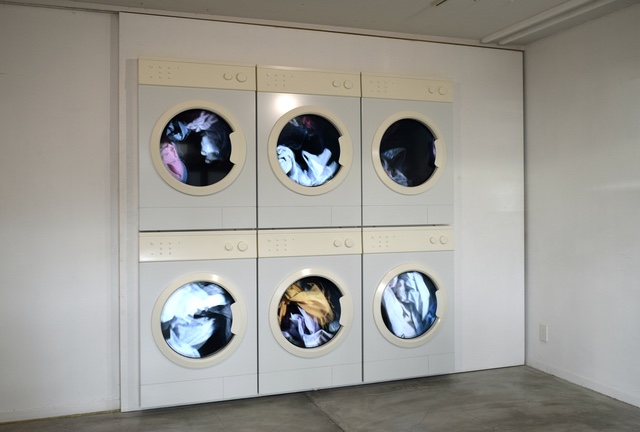
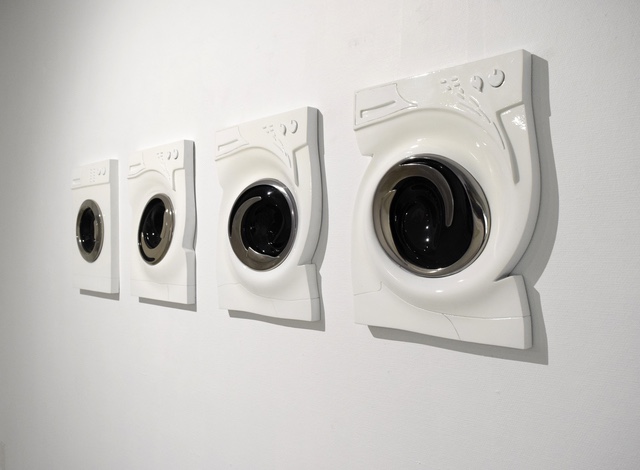
Leandro Erlich is an internationally renowned artist from Argentina. I have just discovered two of his pieces called Laundry, 2018. They are both a part of a series of works titled

Washing Machines – The Fate of Function, 2018

The first one is an installation, which portrays six simoultanously spinning washin machines.

The second consists of four, gradually twisting, machine fronts. This makes a visual suggestion that a spinning movement of the drum affects the entire form of the machine.

Leandro Erlich, Laundry, 2018.

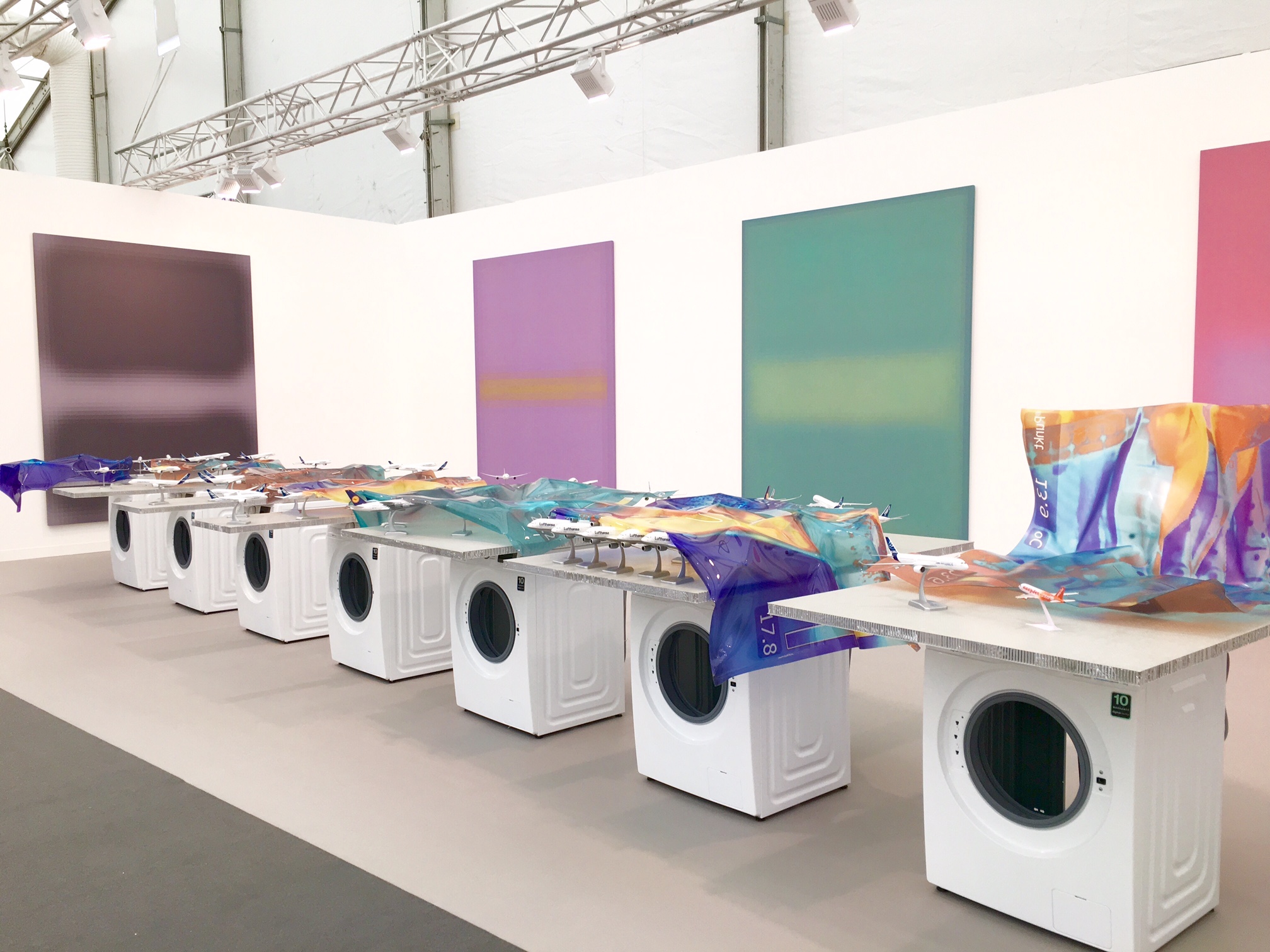
The other inspiration comes from a large-scale installation by Yngve Holen at Stuart Shave/ Modern Art.
This gallery won the 2015 Frieze Stand Prize.

Christie Chu comments on her work:

(Her) striking sculpture deconstructs and recombines industrial and domestic materials. The model airplanes, washing machines, thermal imaging and honeycomb cardboard sheets present a jarring landscape that both entices and repels viewers.

(From 15 Artists To Watch at Frieze London 2015, Christie Chu in https://news.artnet.com/market/frieze-artists-london-2015-340163)

On reflection, this reassures me that my thoughts about recording the process of washing of my art and projecting the hypnotic repetition of spinning, has potential for further development.

Finally, I have found an interesting post on Tweeter. It introduces magic to the mundane process of laundering.

Perhaps washing my art in a commercial setting will achieve the same?

Presentation to the UAL

I was asked to deliver a presentation during a national training event for the UAL partner institutions.

The event is being held at Mary House conference centre in Tavistock Place, London.

My talk is concerned with sharing my experiences of delivering a brand new qualification. It will focus on the questioning of external examinations in art and design.

I am simply touched to be asked again to share my observations and expertise in this field with others.

After the event. I will post links to my presentation materials.

presentation1-ual.pptx

blurb-copy.docx

Laundrette.

I have used, in my experimentation, a domestic washing machine before. I employed this kind of intervention during my work on the Dialogue with Pearl Twink series.

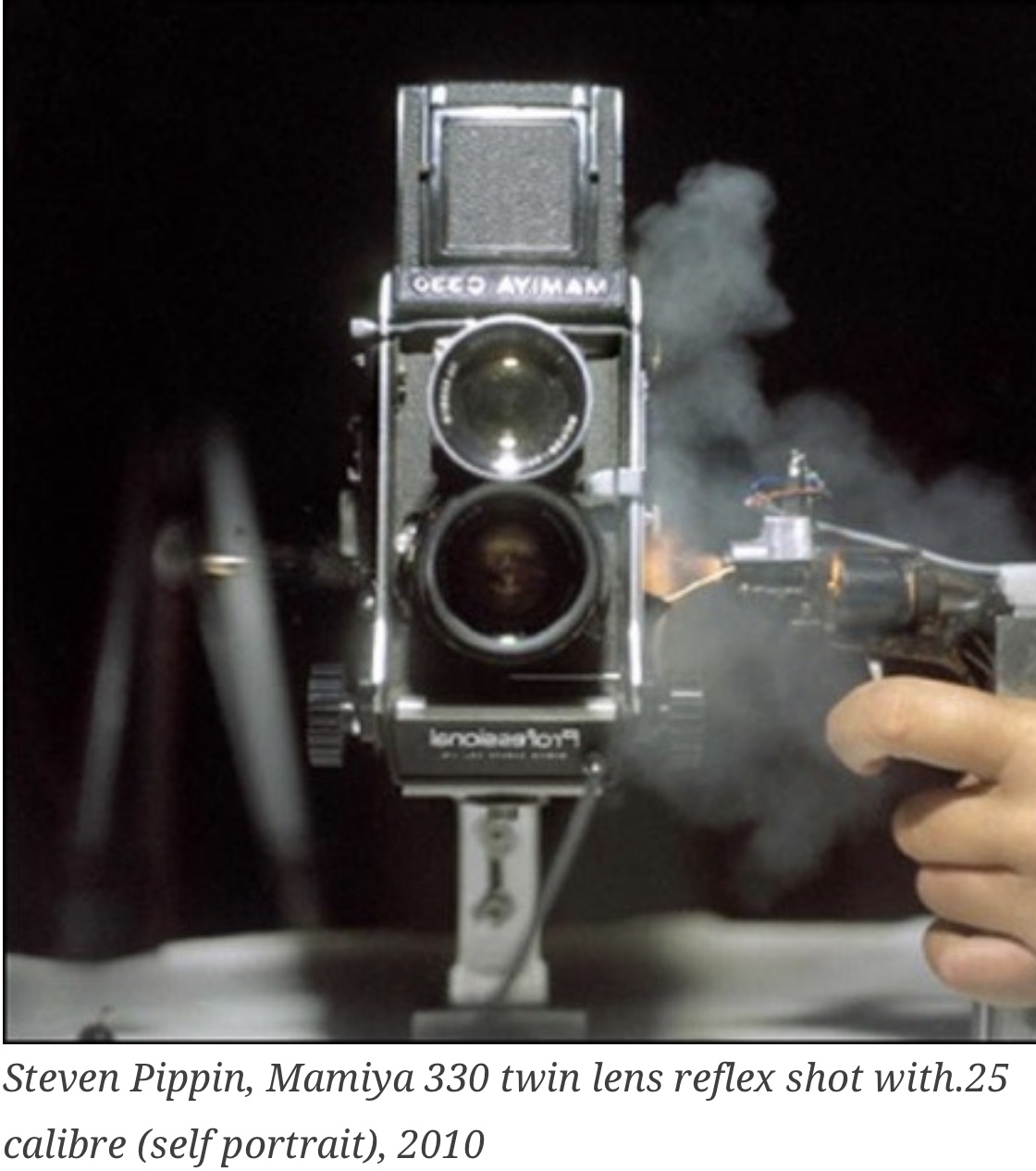
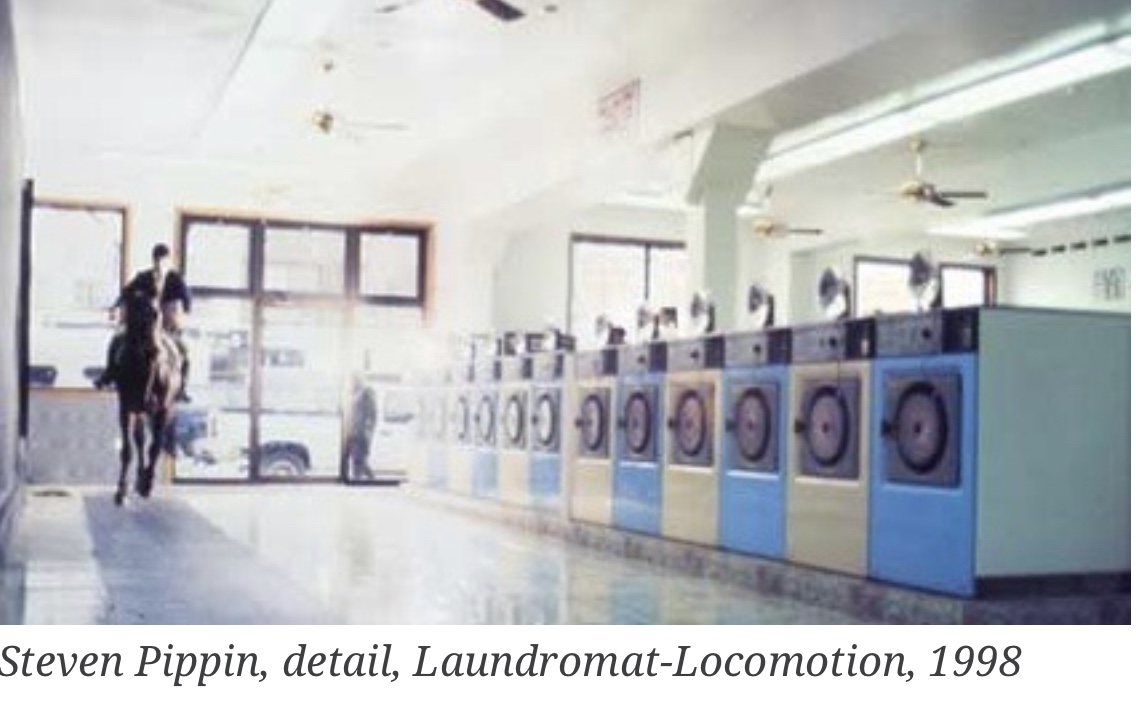
My ideas were independently developed and had no resemblance to Steve Pippin’s projects. However, I have seen his fascinating work before and was particularly intrigued by his ‘death of the camera’ and locomotion pieces.

To understand his thinking better, I have just completed reading of his 1999 book. This has led to a range of reflections and, subsequently, interesting conclusions.

I would also like to experiment with video recording in a comercial laundrette setting. My creative intention is, however, to create a moving image of the washing cycle of my paintings using a number of large scale washing machines set in a line.

There is something special about watching a machine continuously spinning – just a perfect example of hypnotic repetition. This, coupled with a great uncertainty of what will be left from the paintings after this process is completed.

Washing and it’s metaphorical meaning is ideal in terms of making progress with my thinking and the development of new ideas.

In order to make it happen, I will need to prepare a range of new images on un-stretched materials in readiness for the performance.

Theatre of Washing – a busy Saturday morning would be an ideal time for this type of video recording. More progress planning and reflection will need to take place, before I am in a position to make my new idea to materialise.

I am hoping to record several simultaneously spinning washing machines, the loading and unloading process, the long cycle of hypnotic repetition… accidental participation of additional character (people using the facility at the same time) should increase the authenticity of this undertaking and extend on the narrative.

Ultimately, the value of my of my previous and time consuming painting will be reduced to dirty underwear. Sounds great!
https://we-make-money-not-art.com/point_blank/
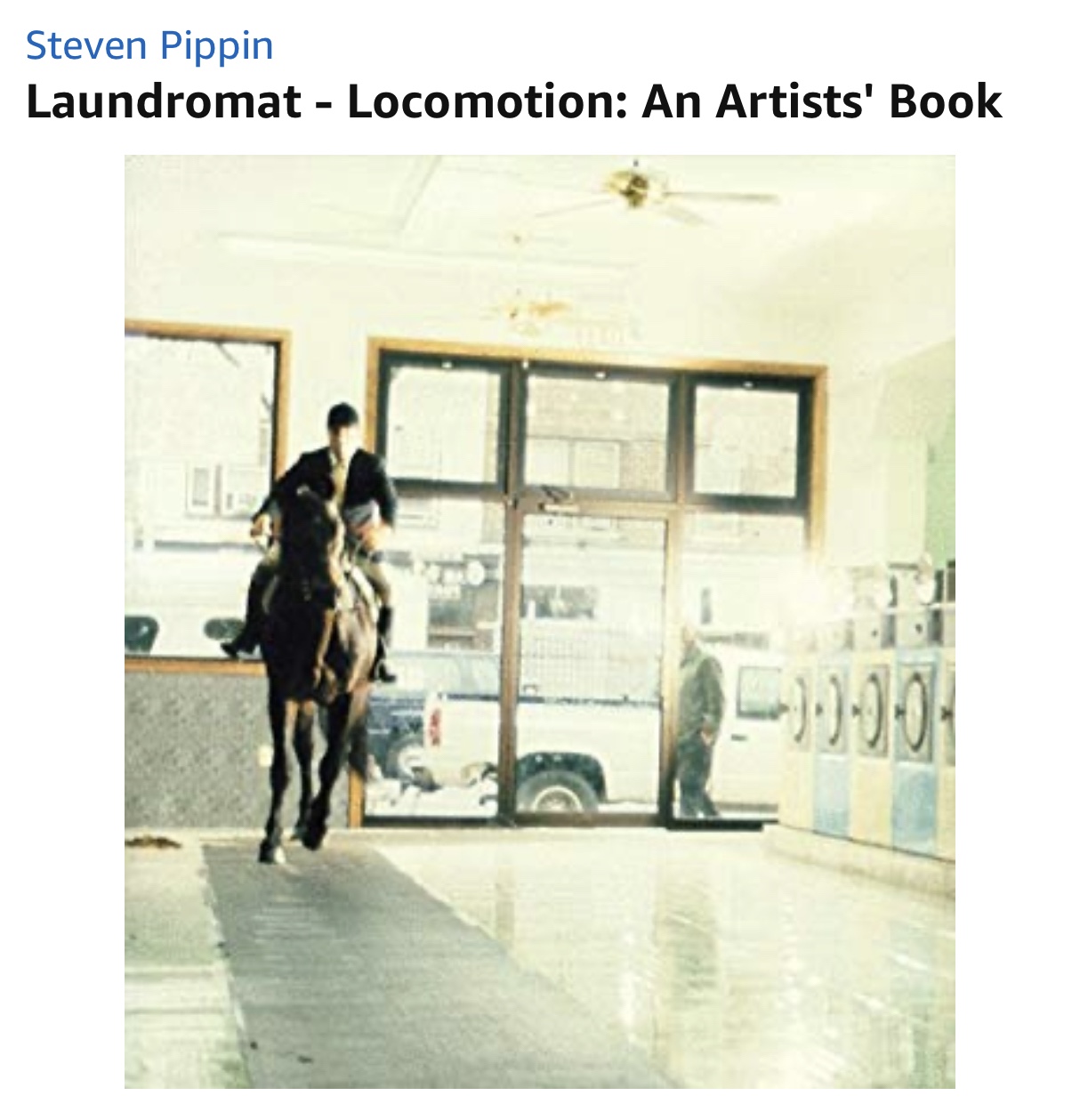
 

Pippin, S. (1999) Laundromat – Locomotion: An Artists’ Book; London: Verlag der Kunst