
Symposium Part 4 – HYPNOTIC REPETITION & My Observations.

1. One Legged Pool Player

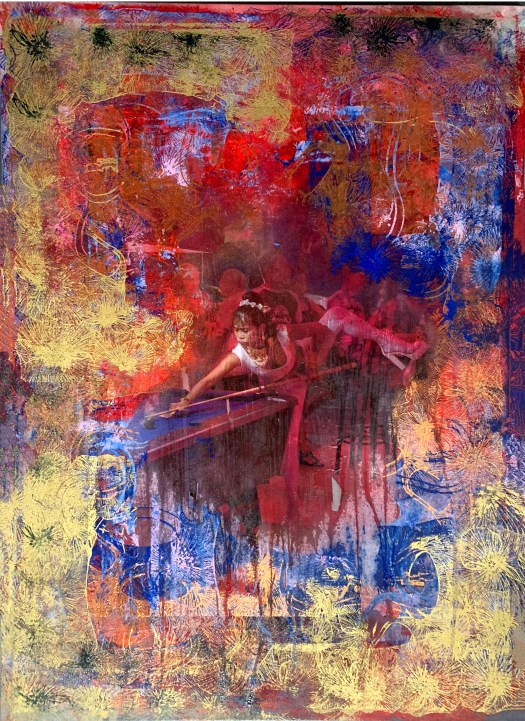
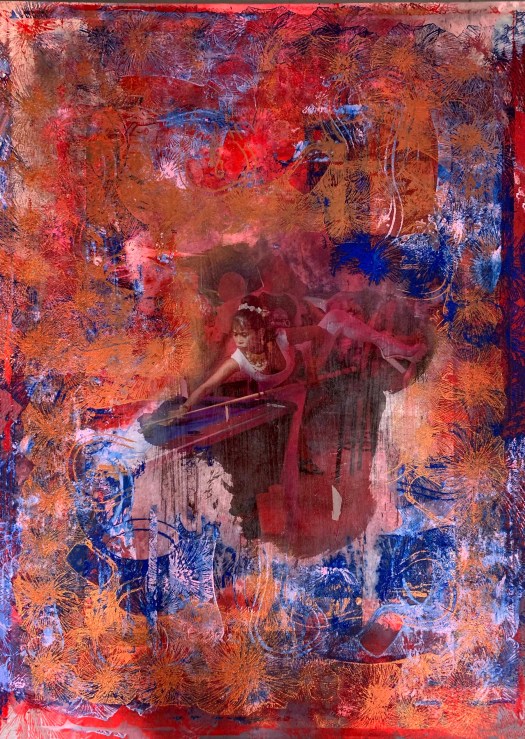
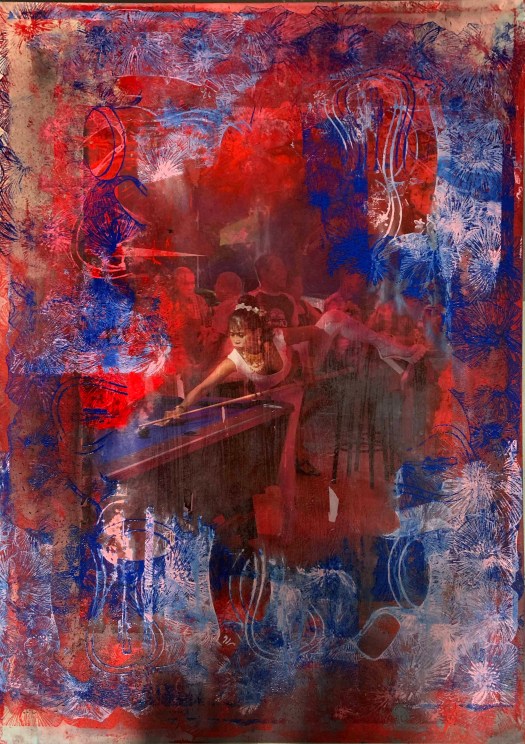
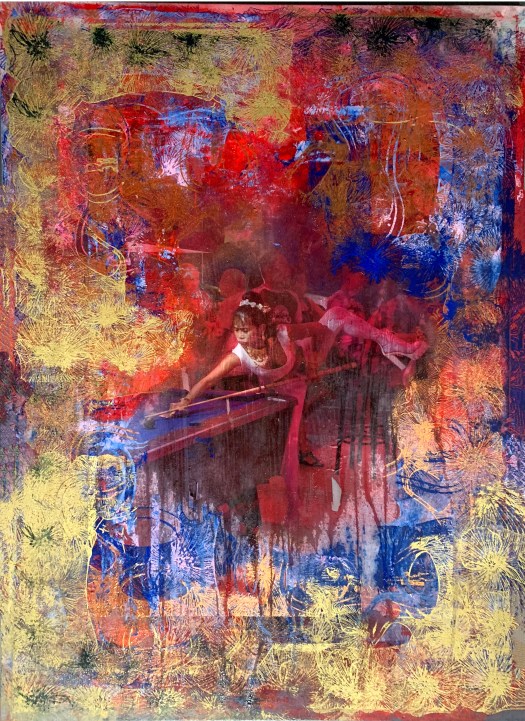
The One Legged Player is totally on the task. Her appearance looks frivolous and theatrical to distract from her determination and the fact that she cannot afford to miss any shots. Her outwards image portrays glamour and fame, but the reality is diametrically different.
The One Legged Player is frozen in a stretched position, suspended in the vacuum of repetition. Every shot is executed in an identical posed pose in a hope to attract attention and increase the stakes, hence maximise profits.
I am hesitant to come to conclusions that there is something repulsive about it. The first impressions of wonder and curiosity are replaced with laughter and astonishment.
The performance continues regardless.
888888

https://wordpress.com/post/pavszymanskiart.wordpress.com/2120

2. Coach To Myiek

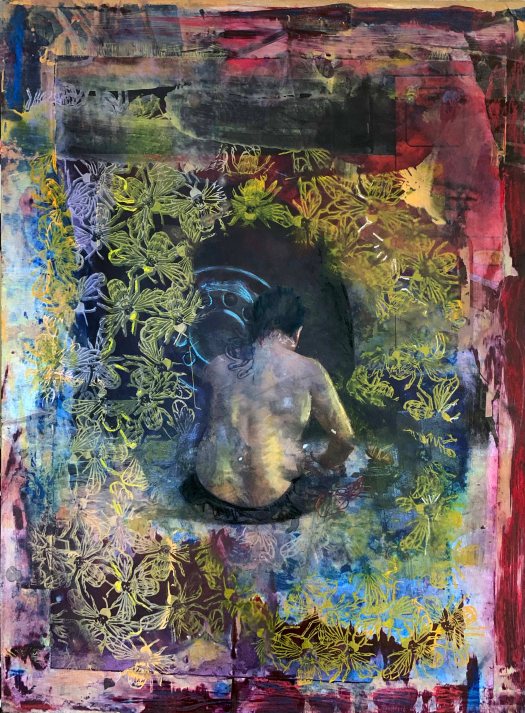
This piece portrays a coach driver. He is preparing to leave Kawthoung for a 20 hour long journey to Myiek. The road is terrible and unpredictable. His old coach must be in a top condition before the passengers are allowed to board.
The driver looks very tired and substantially overweight. He spends his life driving his coach between those two distant cities in Myanmar.
1111

https://wordpress.com/post/pavszymanskiart.wordpress.com/2072

3. Burmese Captain

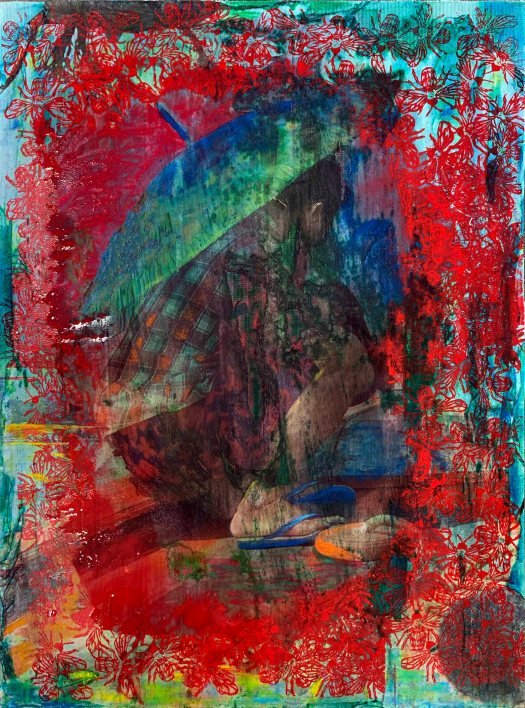
This work portrays a Burmese captain in charge of a long boat. His job is to transport people and cargo from Ranong in Thailand to Kawthoung at the furthest southern point of Myanmar. His main clientele are poor illegal workers from Burma trying to earn a few baht in Thailand.
Following a long conversation with him, I become one of his passengers. To maximise income, he accepts as many people as possible. He even travels on the very front of the boat to save valuable space. This place is very uncomfortable and rocky. He is also fully exposed there to the power of the tropical sun. He tries to get some relief from the burning heat by hiding under a colourful umbrella.
The image is very clashing in colour – very kitsch. This is further enhanced by his crude and cramped body position.  His ankle reveals a massive tumour.
There is a gigantic growth on his leg, perhaps caused by prolonged exposure to the sun and continued contact with polluted water in the port.
My creative intention was to portray him in his usual setting, while crossing the same water many times every day.
The focus is on him. The beautiful surroundings no longer matter. He cannot see the landscape. He is trapped in his daily routine.
The colour of his shirt blends in with the orange stripes of paint on the boat. The umbrella is feminine and looks absolutely ridiculous.
IMG_1581

https://wordpress.com/post/pavszymanskiart.wordpress.com/1884

4. Three Monks Begging

Mixed media on unprimed canvas.
168 cm x 118 cm
This new piece portrays three Burmese monks taking a break from their money collecting duties, while entertaining themselves with a large group of pigeons.
In the area, there were large numbers of child monks present. Most of their days are spend extorting large amounts of cash from the hard working, fearful and deeply religious market community.
They are immaculately dressed in pink robes and sarongs. Simultaneously, they walk bare foot to project an image of poverty and humbleness.
However, the truth is different. They have got daily targets to fill their metals trays with a mixture of coins and bank notes to satisfy the needs and expectations of their superiors.

https://pavszymanskiart.wordpress.com/2019/12/02/three-monks-new-gif/
 

Symposium Part 3 – Repetition and Ritual.


Life tends to deal with these problems naturally through repetition and obsessive engagement in distractions.

An excellent interpretation of this concept was developed by Zbigniew Rybczynski(1981) and his Oscar winning piece titled ‘Tango’.

and his subsequent 1987 animation called ‘Imagine’

Both are characterised by identical starting points and their destinations.
This would imply that there is no room for progress in hypnotic repetition?
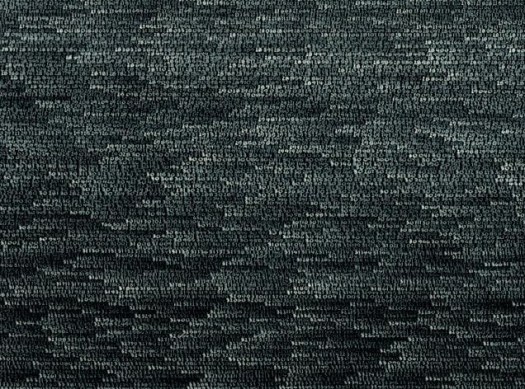
Roman Opalka, seems to be a master of this phenomenon in his ‘Counted Paintings’ series, which consumed his life.

He began painting numbers from one to infinity in 1965, in his studio in Warsaw and continued until his death in 2011.

ROMAN OPALKA

  • Daily rituals, work and religion.
  • Time, procedures and commuting.
  • Breathing, heartbeat, sustenance and sleep.
  • Everything is done to order.
  • Retirement, loss of purpose and death.

Entrapment in hypnotic repetition.
Suspension in the vacuum of life.
Charlie Chaplin questioning industrial repetition as a lifestyle:

We live in an industrialised society and are compelled to take part in this repetition.

Points for discussion:
• What is your entrapment?
• Do you find it comforting and reassuring that tomorrow is going to be there?

Symposium Part 2 – Isolating the Key Elements of Life.

There appears to be a sense of cohesion between life and science.
When one considers my visual responses in my project, it becomes clear that the predicament is universal.

In some small way, we are all trapped in the cycle of work, life, and existence; oscillating between certainty and uncertainty.

This can be, perhaps, best interpreted by Bruce Nauman in his ‘One Hundred Live and Die’, 1984. He boils down the essence of our being to the basic activities of life, without location or possessions.

BRUCE NAUMAN

When analysing my primary sources, I made some exciting observations:

– The less you have got the more certain your life appears.
– Contemporary life in a western society superficially looks certain.
– In reality, it is full of surprises and the most certain things become a nightmare.
– The more you have the more you want, and the less satisfied you are in life.

Points for discussion:
• Can uncertainty become inspirational?
• If the future was predictable would you have less motivation?

Symposium Part 1 – Contextualisation of Progress.

The Principle of Uncertainty by Heisenberg (1927)
Hilgewood (2016) proposes that Heisenberg devoted most of his professional life to the study of quantum mechanics, especially the Uncertainty Principle. He proved his theory through a long process of mathematical elaboration. When his famous article was first published (Heinsenberg, 1927 in https://plato.stanford.edu/entries/qt-uncertainty/), the title contained a German term: “anschaulich”. The meaning of this word contradicts preciseness and roughly translates as visualisable, intuitive and lucid. The defined and exact language of science has suddenly become very vague and ambiguous.

Points for discussion:
• Can science be imprecise?
• Does everything need to be measurable, therefore certain?

Current Map of Progress.

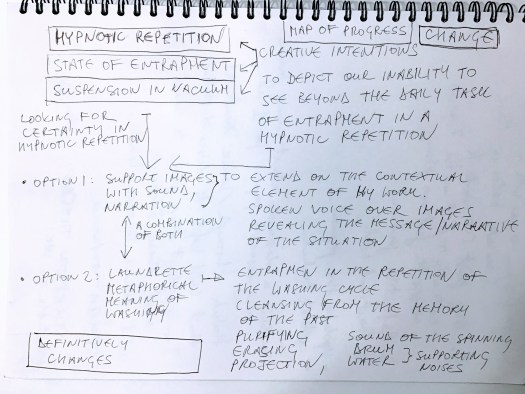
Today, we had the last Skype meeting before Christmas. We were introduced to the new brief, which is full of exciting challenges. I am very motivated and committed to producing a body of exploratory work and questioning my creative intentions with reference to their meaning, sophistication of my concepts and the overall use of the visual language in my projects. I really appreciate the life-changing impact of this course and am very eager to realise my full potential, while investigating new possibilities and discussing alternatives through risk taking and further experimentation.

In the light of both, my recent written feedback and the requirements of Unit 2, I have decided to seriously reconsider the direction of my research journey and create an updated map of progress. The diagrammatic format of this chart gives me a clear overviewed my current position.

I have also worked hard to design a solid structure to my presentation for the forthcoming symposium. Participation in this event is a requirement of the assessment. However, I would also like to maximise all benefits from this process and, in turn, enrich my visual practice through both, insightful feedback and the experience of preparing for and presenting work to an important, visually trained and sensitive audience. The entire process can be crucial in my continuous search for identifying meaningful quality improvements and building on the overall awareness of self perception, quality of thinking, critical analysis and art work.

Three Monks.

Mixed media on unprimed canvas.

168 cm x 118 cm

Following a long period of working on small to medium size canvasses, I have got the confidence to approach a large-scale painterly composition. The current size amounts roughly to 4 times A1. This “space” should allow me to explore the painting matter on a much broader front and experiment with integrating a range of media and processes.
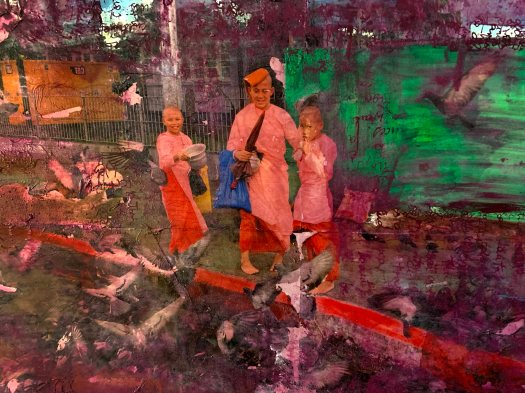
The new piece portrays three Burmese monks taking a break from their money collecting duties, while entertaining themselves with a large group of pigeons. My primary sources originate from Yangon in Myanmar. I was undertaking some visual research by recording activities in a remote market area of the city.
There were large numbers of child monks present. Most of their days are spend extorting large amounts of cash from the hard working, fearful and deeply religious market community. They are immaculately dressed in pink robes and sarongs. Simultaneously, they walk bare foot to project an image of poverty and humbleness.
However, the truth is different. They have got daily targets to fill their metals trays with a mixture of coins and bank notes to satisfy the needs and expectations of their superiors.
My creative intention is to disrupt the entrapment in the vacuum of hypnotic repetition of daily routines. This concept will be further articulated through the recording of the washing cycle using a laundrette. I am very much intrigued by the metaphorical ambiguity of the meaning of the cleansing process. It is more than just the removing of every day stains and dirt, and washing off sins and unwanted memories of the past in order to ensure cleanness and purity.
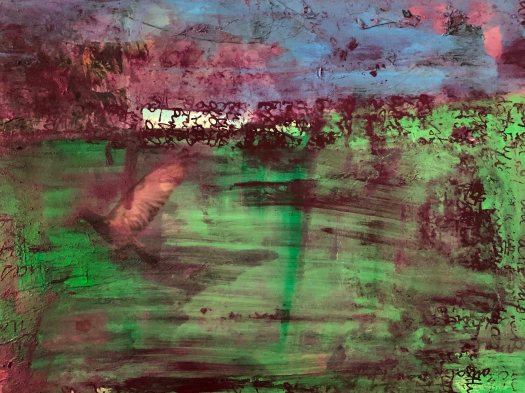
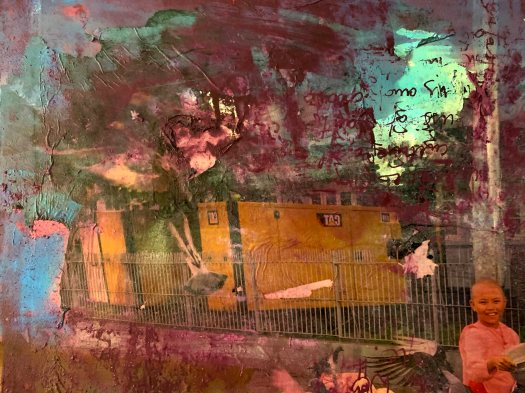
The dynamism of the composition created by the birds has got partially got lost in the process of glazing and overprinting. The screen-printed text contains a collage of remains of my notes and observations from this experience. Perhaps, I need to consider different ways of bringing it back. I have also considered some experimentation with both, my painting and the original video recording.

I have included below, a range of documentary photographs depicting the overall composition and a variety of intriguing detail.

cc

aa

bbddeeffgg

New Inspirations.

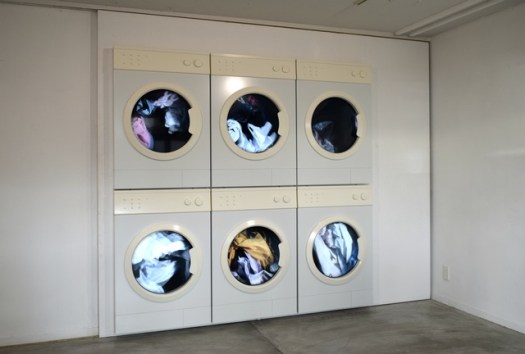
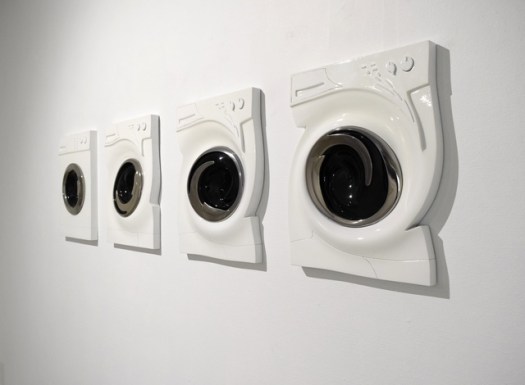
Leandro Erlich is an internationally renowned artist from Argentina. I have just discovered two of his pieces called Laundry, 2018. They are both a part of a series of works titled

Washing Machines – The Fate of Function, 2018

The first one is an installation, which portrays six simoultanously spinning washin machines.

The second consists of four, gradually twisting, machine fronts. This makes a visual suggestion that a spinning movement of the drum affects the entire form of the machine.

Leandro Erlich, Laundry, 2018.

The other inspiration comes from a large-scale installation by Yngve Holen at Stuart Shave/ Modern Art.
This gallery won the 2015 Frieze Stand Prize.

Christie Chu comments on her work:

(Her) striking sculpture deconstructs and recombines industrial and domestic materials. The model airplanes, washing machines, thermal imaging and honeycomb cardboard sheets present a jarring landscape that both entices and repels viewers.

(From 15 Artists To Watch at Frieze London 2015, Christie Chu in https://news.artnet.com/market/frieze-artists-london-2015-340163)

On reflection, this reassures me that my thoughts about recording the process of washing of my art and projecting the hypnotic repetition of spinning, has potential for further development.

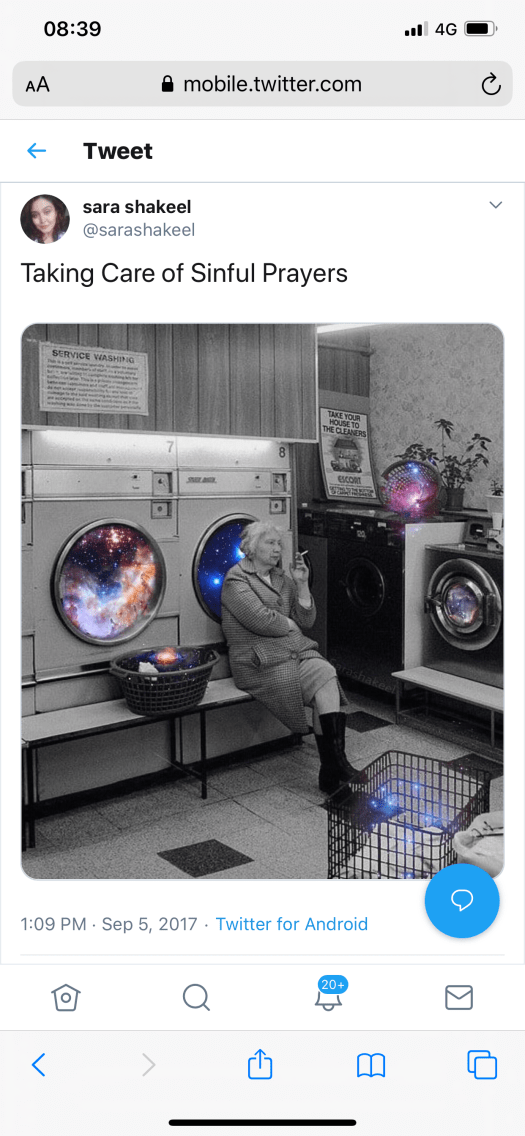
Finally, I have found an interesting post on Tweeter. It introduces magic to the mundane process of laundering.

Perhaps washing my art in a commercial setting will achieve the same?

Laundrette.

I have used, in my experimentation, a domestic washing machine before. I employed this kind of intervention during my work on the Dialogue with Pearl Twink series.

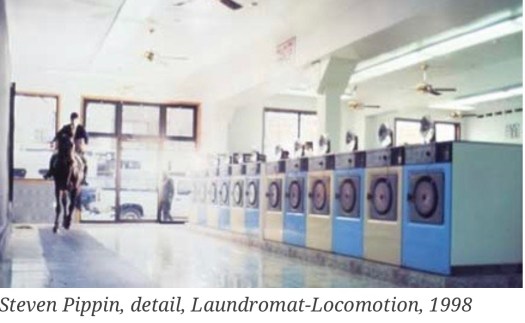
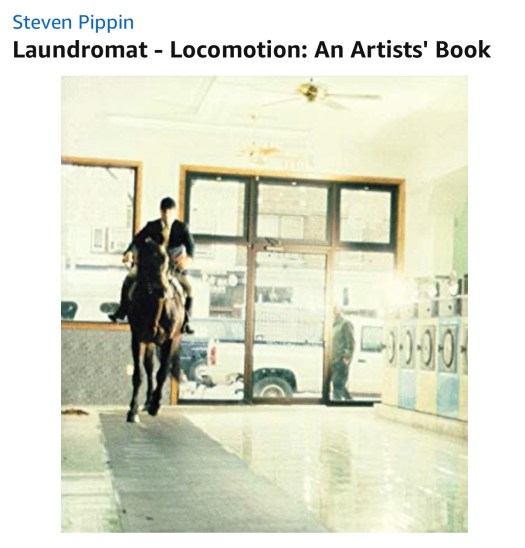
My ideas were independently developed and had no resemblance to Steve Pippin’s projects. However, I have seen his fascinating work before and was particularly intrigued by his ‘death of the camera’ and locomotion pieces.

To understand his thinking better, I have just completed reading of his 1999 book. This has led to a range of reflections and, subsequently, interesting conclusions.

I would also like to experiment with video recording in a comercial laundrette setting. My creative intention is, however, to create a moving image of the washing cycle of my paintings using a number of large scale washing machines set in a line.

There is something special about watching a machine continuously spinning – just a perfect example of hypnotic repetition. This, coupled with a great uncertainty of what will be left from the paintings after this process is completed.

Washing and it’s metaphorical meaning is ideal in terms of making progress with my thinking and the development of new ideas.

In order to make it happen, I will need to prepare a range of new images on un-stretched materials in readiness for the performance.

Theatre of Washing – a busy Saturday morning would be an ideal time for this type of video recording. More progress planning and reflection will need to take place, before I am in a position to make my new idea to materialise.

I am hoping to record several simultaneously spinning washing machines, the loading and unloading process, the long cycle of hypnotic repetition… accidental participation of additional character (people using the facility at the same time) should increase the authenticity of this undertaking and extend on the narrative.

Ultimately, the value of my of my previous and time consuming painting will be reduced to dirty underwear. Sounds great!

https://we-make-money-not-art.com/point_blank/


Pippin, S. (1999) Laundromat – Locomotion: An Artists’ Book; London: Verlag der Kunst

Dripping in Gold.

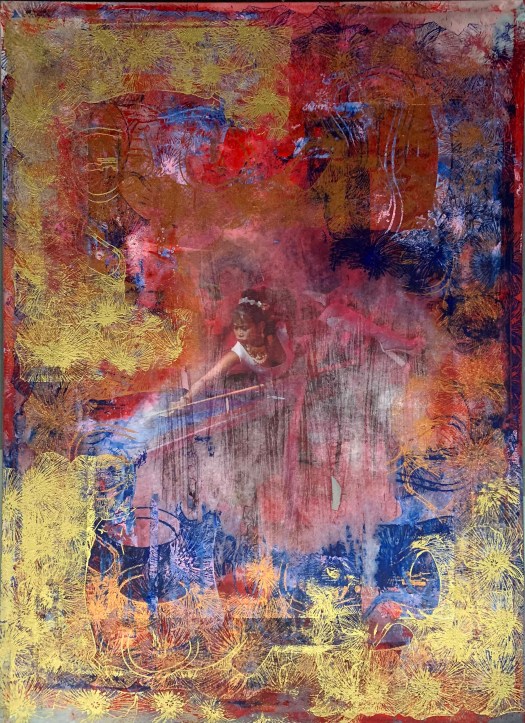
The new idea with gold overprinting seems to have worked very well.  It created a sensation of opulence, celebration and, simultaneously,  increased the overall curiosity in the piece.

The lower image is the initial stage and the top photograph portrays a more resolved version with details in Prussian Blue.

I feel ready to enter the final stage of the development process and initiate a range of quality improvements through drawing on top of the surface, with water soluble pastels.  This should allow me to concentrate on detail and make it more intricate and sensitive.

I will be also able to rebuild and refresh some of the parts, which got lost in the semi-accidental turbulence of printing, washing and glazing.

My creative intentions:

To explore possibilities for visualising the concept of hypnotic repetition, which is a form of a survival mechanism for everyday life.

Visual language:

Through painting, printmaking, experimentation and risk taking, I would like to develop a range of images addressing the idea of suspension in the vacuum of repetition. My focus is on entrapment in mundane routines, which are necessary in order to exist. My work is a vibrant and polychromatic attempt, to discuss the underlying narrative of lives of people, who I have developed a rapport with during my research expeditions.

The project is intended to be a deep, highly subjective and personal reflection on the essence and meaning of our repetitive journey through the ‘ocean’ of time, which is given to us – adventurous and bizarre travel between the boundaries of birth and death.

The strongest aspects of my current work are definitely:

  • polychromous and dynamic colour scheme
  • the underlying narrative and originality of the lead character
  • ambiguity and vibrancy of the composition
  • surface quality and textural considerations

My subsequent working focus will be on:

  • refreshing detail
  • clarification and rebuilding of “whites” in the composition
  •  addressing some issues with contrast and organisation of colour stains on the surface.

Getting the Gold.

The image below contains a range of initial overprints in gold.

33333

The One Legged Player is totally on the task.  Her appearance looks frivolous and theatrical to distract from her determination and the fact that she cannot afford to miss any shots.  Her outwards image portrays glamour and fame, but the reality is diametrically different.  The new broken layers in deep and cerulean blue, echo the colour of the lining on the pool table.  These have also enhanced the overall colour scheme and its polychromatic character.

The way, in which, I overprinted the under image indicates the complexity of the situation and implies that a greater narrative is hidden under the camouflaging layers.

On reflection, I need to, through glazing, washing and blending, reduce the severity of the cloud like division between the central image and the surrounding overprints.

I also feel that the piece requires a more opulent use of gold to reinforce her true motives. Gold is of symbolic value here as it drives her energy and inspiration to win.


Taking the Shot.

I have started to overprint the under image with deep and cerulean blue.  The surface was than blasted with a jet of water to achieve a range of accidental effects and bleeding colour stains.  I have tried to control this process with sponges and used brushes to direct the glaze to specific areas on the piece.  Subsequently, the top layer is divided into smaller compositional areas and the pattern of poppies is somehow more difficult to decipher. The next step is to continue with the printing process, while extending the colour pallet and move towards using gold.

Gold and its metaphorical significance is integral to the overall creative intention and the language of visual communication.

Opulence and ugliness; value and kitsch; ultimate symbol of desire and repulsive reality – my thinking is inspired by the two references below:

Marc Quinn, Siren, 2008

His solid gold statue of Kate Moss titled ‘Siren’ was displayed at the British Museum Statuefilia Exhibition in the Nereid Gallery.

Image result for mark quinn moss

https://www.telegraph.co.uk/news/celebritynews/3122144/Kate-Moss-gold-statue-unveiled-at-British-Museum.html


Maurizio Cattelan: “America”, 2016 at the Guggenheim Museum in New York.

Recently, this piece was stolen from Blenheim Palace.  It was exhibited on loan from the permanent collection of the Solomon R. Guggenheim Museum.

An installation view of Maurizio Cattelan's "America" at the Solomon R. Guggenheim Museum in New York.

https://www.guggenheim.org/exhibition/maurizio-cattelan-america


One Legged Pool Player.

I have developed a pattern consisting of petals and flowers.  This is to enhance the feel of celebration of both, the performance and the location.  The pattern has been dynamically printed on top of the under-image in order to create a sense of busyness and extend the redness of the light and space.

The next step will be to continue using the screen while extending the colour range and perhaps using some deep blues to echo the tone of the pool table lining.

The idea is to develop a strong focus of the One Legged Player, frozen in a stretched position, suspended in the vacuum of repetition.  Every shot is executed in an identical posed pose in a hope to attract attention and increase the stakes, hence maximise profits.

I am hesitant to come to conclusions that there is something repulsive about it.  The first impressions of wonder and curiosity are replaced with laughter and astonishment.

The performance continues regardless.

IMG_5775