Working Title:
Hypnotic Repetition.
Aims:
- Subjectively interpret the ritual of daily repetition in various contexts of waiting for change.
- Encourage collaboration with the viewer to enable them to question their own ways of dealing with daily routines.
Objectives:
- Gather a wealth of stimulating primary sources for generating meaningful under-paintings.
- Identify photographs, video and text messages for superimposing.
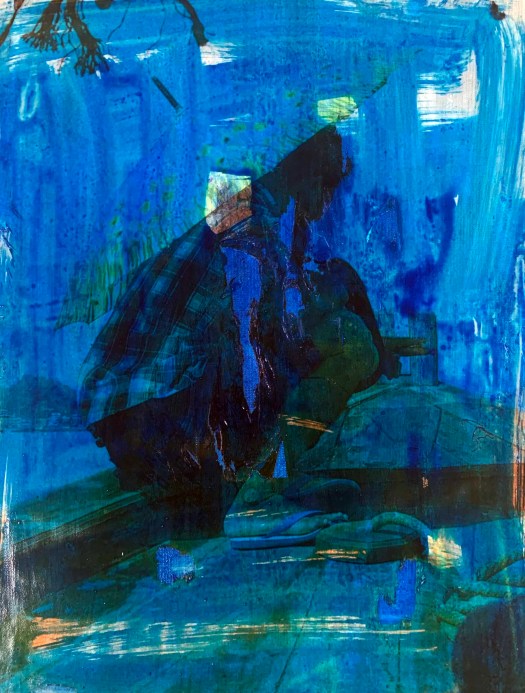
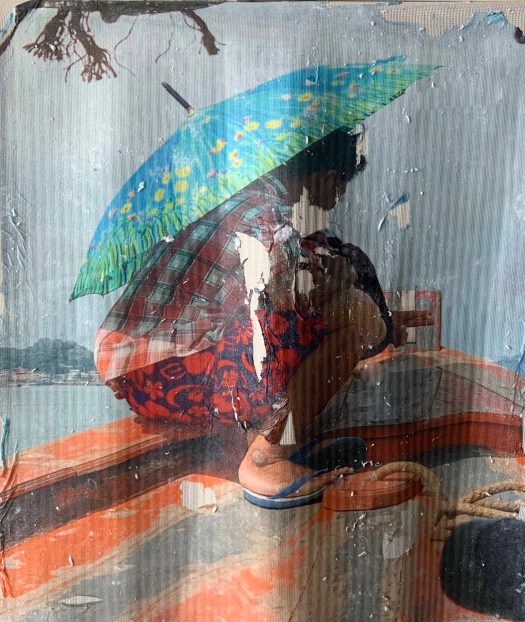
- Experiment with embedding photographic images and text into paintings.
- Develop and assemble a range of images and audio that explore entrapment in daily and hypnotic routines.
- Introduce machine intervention to degrade images.
- Evaluate and use relevant text messages to reinforce the communication of the overall concept.
- Continuously reflect “in” and “on” action in order to extend the element of critical analysis and develop deeper understanding of work in progress and the entire creative process.
Context:
My research question has evolved over the year. Initially, my work was an attempt to explore the concept of waiting for change. Following a considerable amount of research and critical analysis of my own experimentation, I have slowly started to develop a deeper understanding of my creative intentions. My focus is now firmly placed on uncertainties of tomorrow in the context of waiting for change, while being trapped in a daily routine. I am looking at how people deal with their unfulfilling lives. Time is a very important factor in the proposed intervention.
My thinking has been extended by Samuel Beckett’s ‘Waiting for Godot’, supported by considerations of several scientific and philosophical theories of being and perception of time space. I am interested in visualising a range of different approaches to organising time, while waiting for something better to happen and change.
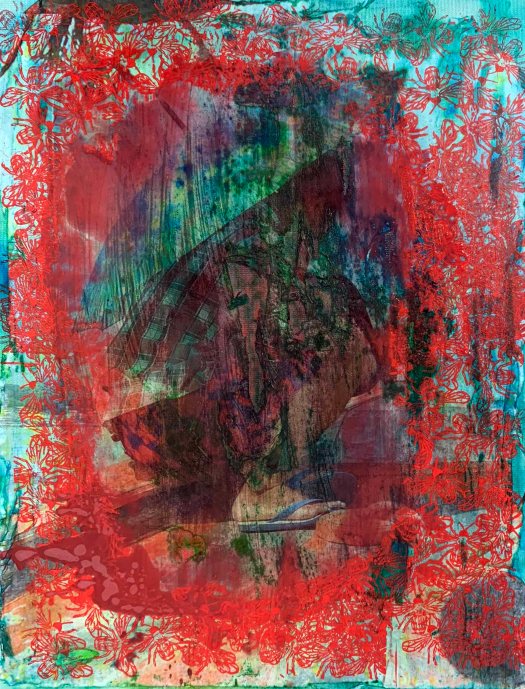
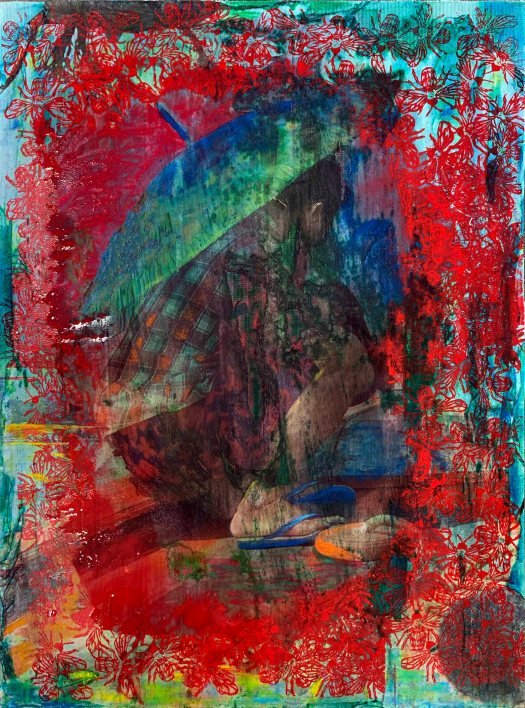
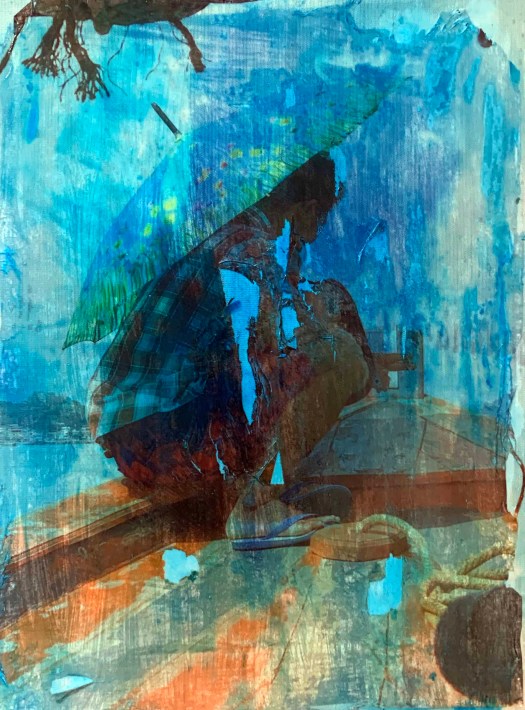
The plan is to develop a series of painterly explorations inspired by research from my travels and observations of what people are waiting for, their cravings, dreams and desires. I plan to superimpose my visual interpretations with photographic and, perhaps record them as video pieces, before degrading the actual works through machine intervention. This additional process is intended to create a very important element of my project. I hope to evoke feelings of insignificance and transience of life. Therefore, provoke a deeper reflection on the nature of human uncertainties, their meaning and hierarchy. I propose the question, what is important and what is insignificant? I plan to reinforce things, which cannot be ignored and encourage viewers to identify with problems discussed.
Entrapment in a repetition of daily routines.
Can presence last forever?
Will anything ever change?
Will this process have a positive impact on life?
Will my perception of existence continue to deteriorate, while making reality more and more miserable and unsustainable?
Historical Context
My initial explorations focused on looking at the work of William Hogarth and his portrayals of rough sleepers in London. He carefully observed desperate tenants, who were removing their belongings at night to escape an unscrupulous landlord.
It appears that his work was a call for early social reforms in England.
He discusses all forms of human desperation, such as prostitution, poverty, abuse, violence, addiction and the continuous dream of luxury. His detailed engravings are highly detailed, illustrative and thought-provoking.
I have also learned from looking at “The Potato Eaters” painting by Vincent van Gogh. He was particularly interested in exploring and recording the life of ordinary people and their daily struggles through drawings, engravings and two large-scale paintings on canvas. He rendered the underworld in a positivistic, uncompromising manner, while questioning the common understanding of moral and social views.
The further studies of “The Beggars” and “Peasant Wedding” painted by Bruegel in 1567 have helped me to understand visual details of lives of the underprivileged.
This depiction was further extended by L S Lowry, who was a visionary painter of the edge lands in a piece called “The Cripples”, 1949. He catalogued the lives of the working classes in Salford to draw attention to their daily challenges in satirical and sympathetic interpretation.
Contemporary Context:
I have looked at a broad range of contemporary artists covering a whole spectrum of areas from neon work and large scale painterly responses to enormous installation pieces.
Miroslaw Balka and his project titled “How It Is?” deals with human isolation, loneliness and existential uncertainties in the context of mortality and the possibility of life after death.
Bruce Nauman explores the key components of life, while setting and questioning the boundaries of existence. He isolates the essence of what life is about without making references to finance or possessions. In contrary to this, Michael Landy focuses on the presence of objects in our lives and stands in front of the exhaustive catalogue of 7,227 of his belongings, which he destroys. Subsequently, all he was left with was just his blue boiler suit.
Thasnai Sethaseree experiments with recurrent themes in his practice, which include issues of memory, migration, and a philosophical questioning of the nature of having, knowing and being. Sethaseree is best known for his conceptual and relational works, usually ephemeral in nature.
Neha Choksi manipulates our perception of a constant by removing certainty from life. The image of a curtained sun contradicts our expectations of the norm in a quite dramatic performance piece. The background sunset is also torn, neglected and destroyed.
Mattia Insolera produces photographs, which juxtaposition harsh reality of existence against the imagined fantasy of prosperity that is promoted on social media. He questions the fact that illegal refugees pretend to have a great time, when in reality, they have nothing and nowhere to live. They are too ashamed to admit to their failure.
Additionally, the formulation of my ideas was inspired by learning about human desperation. I have looked at dramatic photographic portraiture by Dorothea Lang taken during the Great American Depression. My particular attention was drawn to a piece titled “Migrant Mother”.
This line of questioning was extended by studying the work of a Brazilian photographer called Sebastião Salgado. His black and white pieces are full of impact and deal with heroic and almost biblical efforts of people at work.
Theoretical Context:
The focus on time in my project is based on the consideration of two concepts in physics and quantum mechanics as follows:
• The arrow of Time (entropy).
• Heisenberg Uncertainty Principle (HUP)
I have also explored the writings of Everett, who argues that we live in a Universe of multiple space-times and each space-time is governed by Lorenz contraction of time (Barrett, 2011). Therefore time is perhaps the key factor, which forms our perception of certainty and uncertainty. Both feelings belong to parallel yet distinctly different worlds: prosperity and poverty; the arrogance of confidence and hesitant insecurity.
This was further extended by Heisenberg implying that uncertainty is often a result of a measurement (Wiseman, 2012). The act of measuring an object’s position changes its speed or vice versa. Perhaps the real origin is much deeper. The uncertainty principle exists, because everything in the Universe behaves as a particle and a wave at the same time. In quantum mechanics, the exact position and speed of an object have no meaning.
This research will be expanded and analysed to develop a deep understanding of the theoretical framework and further contextualise my practice.
Methodology:
• Broad-ranging contextualisation
Identification and analysis of contextual references far beyond the direct line of my inspiration.
I am looking at the work of other artists, analysing their work in relation to my own questions and practice. I am initiating a dialogue and embedding the element of learning from this process into my own visual work.
• Own practice and experimentation through painting, photography, video, discussions, interviewing and questioning via text messages and WhatsApp.
• Theoretical framework with references to psychology, philosophy and the sciences.
Painting, photography, video, discussions and questioning via text messages and WhatsApp.
The project needs to grow and cover areas beyond the borders of Haiti. I plan to gather primary sources and record them through painting, photography, experimental video and text message manipulations from different locations to triangulate data and time through questioning their predicament during my return visit to Haiti.
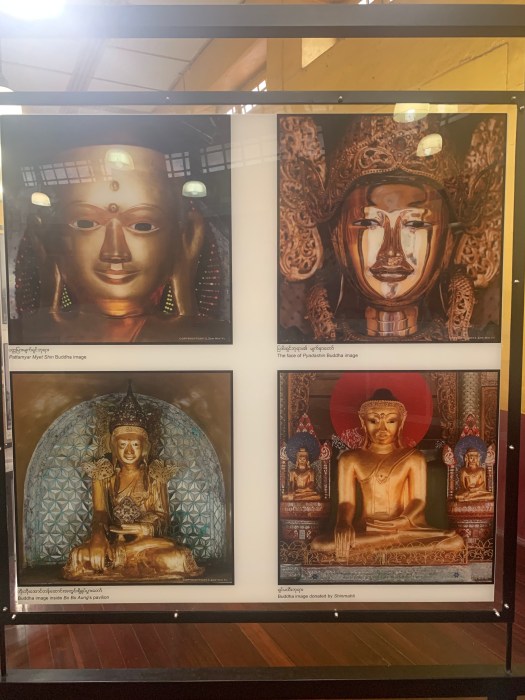
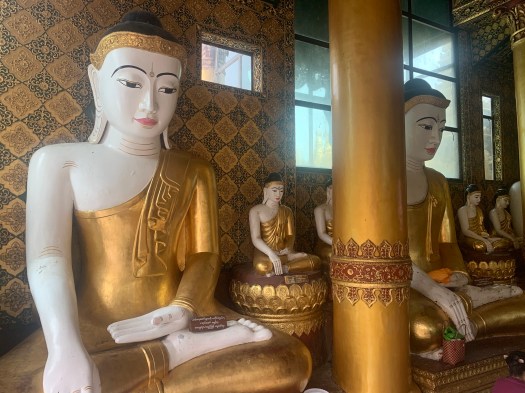
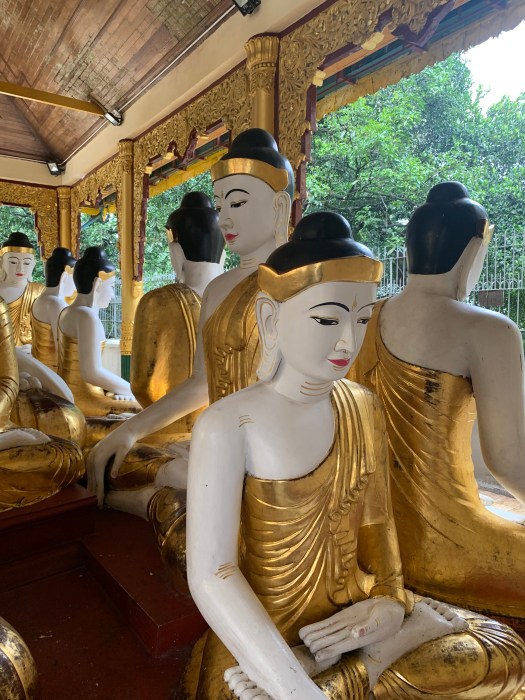
These reference materials will come from both deprived and developing countries. The idea is to find out what are people waiting for when entrapped in daily repetition; suspended in vacuum between hypnotic hibernation, anticipation and reality. Further data gathering visits are planned at regular intervals and itemised in the “work plan” section of this proposal.
Outcomes:
I propose to create a series of images questioning issues of daily repetitiveness, waiting, expectations and disappointment. The visual work is just a starting point to stimulate the greater understanding of this convoluted situation. Therefore, the focus is placed on the thinking and a form a psychological collaboration between the pieces, the viewers and their reflections, while challenging and questioning uncertainties of their future.
Just looking at work is simply not sufficient to gain the necessary deeper understanding, embrace reality and respond to it through the reflecting process.
Work Plan:
The immediate step will be to begin with painting experimentation from already gathered sources. I plan to work on a number of backgrounds including board and canvas using oil and encaustic media. The existing collection of initial sources will be further extended during the pre-planned research visits as follows:
•return visit to Haiti at Christmas 2018
•trip to Georgia and Azerbaijan at Easter 2019
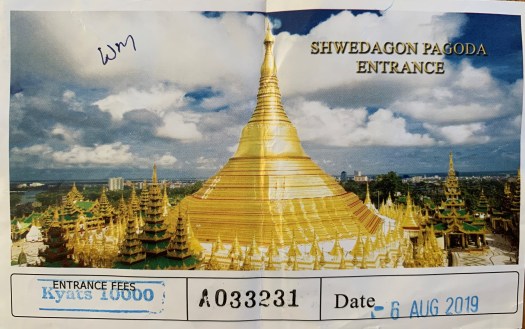
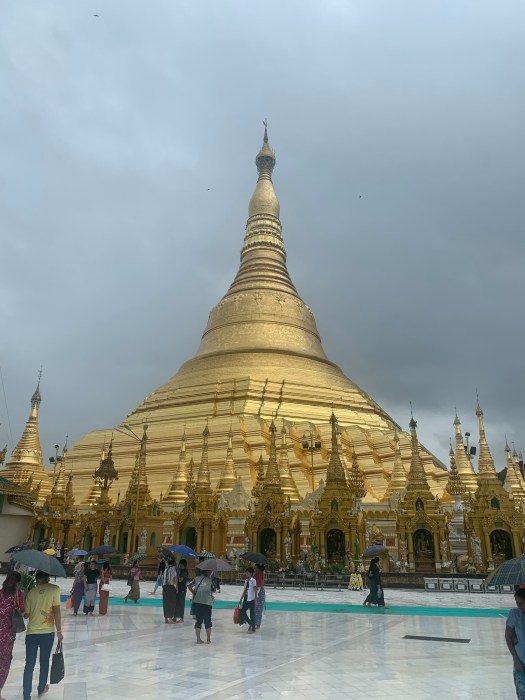
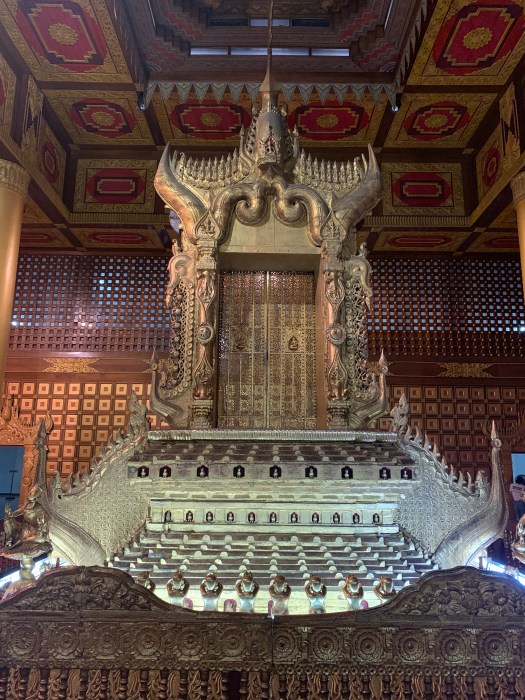
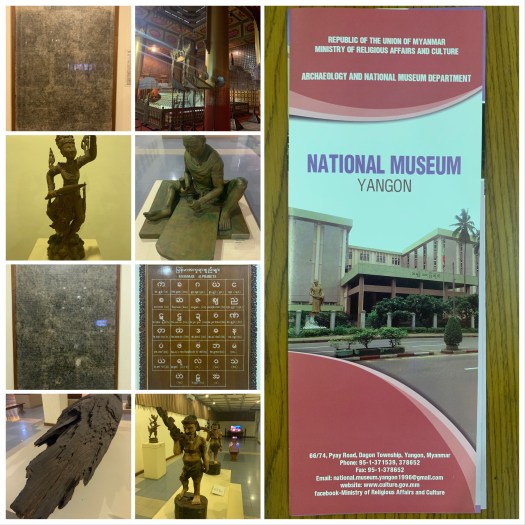
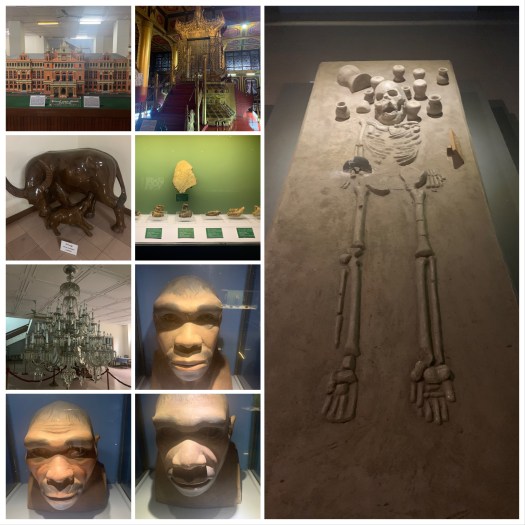
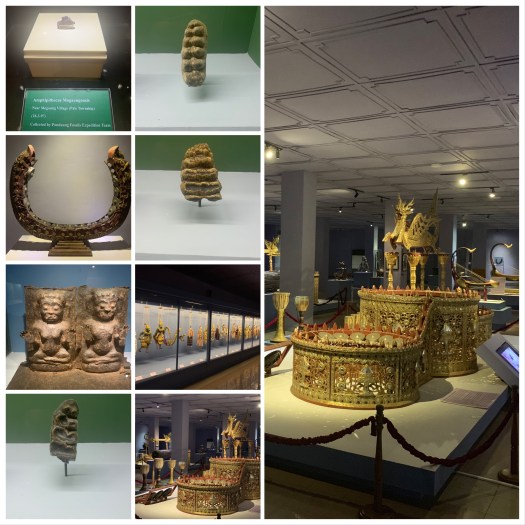
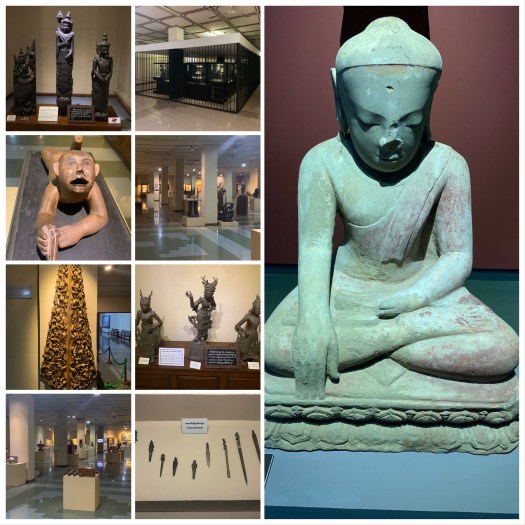
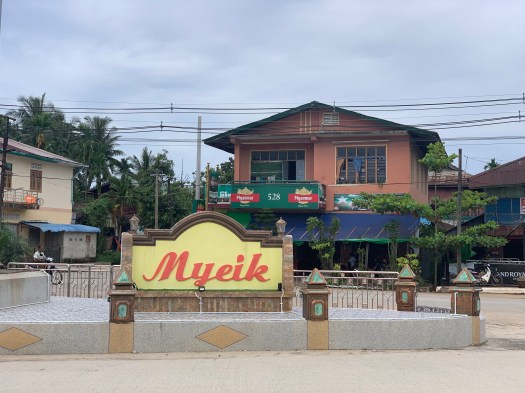
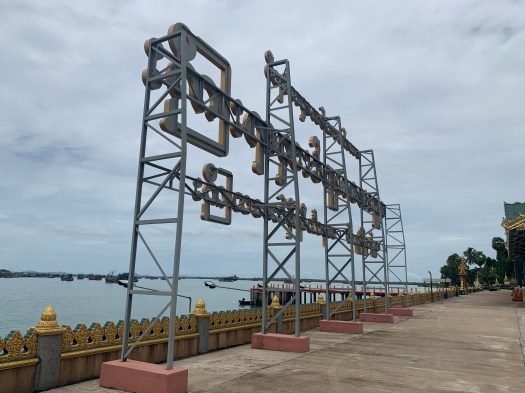
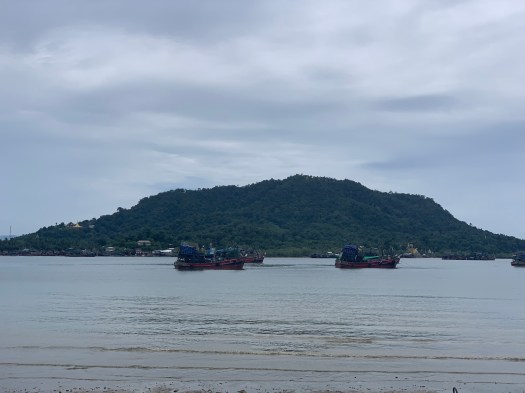
•trip to Thailand, Cambodia and Myanmar during the summer holidays 2019
Two additional source gathering expeditions:
- Spanish Islands at Christmas 2019
- Return trip to Thailand at Easter 2020
Additionally, I will consider using audio commentaries in my work and continue with experimenting with machine intervention to degrade and erode my work. The idea is to search for appropriate visual stimulations, while exploring possibilities and discussing alternatives beyond the obvious.
My work will continuously evolve. It will be updated and adjusted in the light of new discoveries and research findings until it becomes a more evolved and refined appraisal of human uncertainties of the future in the context of waiting for change while being trapped in daily repetition.
Bibliography:
Albert, D. and Loewer, B. (1988), Interpreting the Many Worlds Interpretation, Synthese,
Alonso, M. (1980) “Antonio Machado Poeta en el Exilio”, Antroporos: Ambitios Literarios
Barrett, J. A. (2011) Everett’s Pure Wave Mechanics and the Notion of Worlds, European Journal for Philosophy of Science, 1: 277–302.
Butterfield, J. (2001) The End of Time? All Souls College: Oxford
Cassidy, D. (1992), Uncertainty: THe Life and Science of Werner Heisenberg; New York: W.H. Freeman
Choksi, N. and Cummins , A. (2016) “In Memory of the Last Sunset”; 20th Sydney Art Biennale
Conover, E. (2016) Information Is Physical, Even In Quantum Systems, Study Suggests, Science News: Vol. 189
Hutton, W. (2016) Only fundamental social change can defeat the anxiety epidemic; The Guardian: Opinion Mental Health
Insolera, M. (2015) “Surviving Greece”; La Caixa Forum, Madrid, 2015
Jha, A. (2013), What is Heisenberg’s Uncertainty Principle? The Guardian
Nauman, B. (2015) ” Life, Death, Love, Hate, Pleasure, Pain”; La Biennale di Venezia – Biennale Arte 2015
Sethaseree, T. (2017) “Heads or Tails? Uncertainties and Tensions in Contemporary Thailand”; Sundaram Tagore Gallery: New York, 547 West 27th Street, Oct 12th – Nov 4th 2017
Spiegelhalter, D. et al (2011) “Visualizing Uncertainty About the Future” Science 09 Sep 2011:
Vol. 333, Issue 6048, pp. 1393-1400 DOI: 10.1126/science.1191181
Dorment, R. (2001), A Deconstructed Life; The Daily Telegraph
Wiseman, H. (2012), Explainer: Heisenberg’s Uncertainty Principle; The Conversation
Websites:
http://justinmortimer.co.uk/2012.html
https://www.artangel.org.uk/break-down/michael-landy-in-conversation-with-julian-stallabrass/
http://www.bbc.com/culture/story/20160713-michael-landy-the-man-who-destroyed-all-his-belongings
http://www.exactlywhatistime.com/physics-of-time/the-arrow-of-time/
https://www.tate.org.uk/art/artists/bruce-nauman-1691/long-read/raw-material
https://www.volcanodiscovery.com/earthquakes/2018/10/07/00h11/magnitude6-HaitiRegion-quake.html
https://www.tate.org.uk/whats-on/tate-modern/exhibition/unilever-series/unilever-series-miroslaw-balka-how-it
https://www.tate.org.uk/whats-on/tate-britain/exhibition/turner-prize-2001/turner-prize-2001-artists-martin-creed
Blood Mirror
http://www.artnet.com/artists/roman-opalka/carte-de-voyage-detail-2875545-2878714-a-HWRwg7H5Dw7Q4qIxVhR-iw2
WILLIAM HOGARTH – A FREEMASON
https://www.theguardian.com/culture/2003/jan/11/art
https://artsandculture.google.com/asset/peasant-wedding/hgGvote2WI8P3w
https://www.louvre.fr/en/oeuvre-notices/beggars
https://www.theguardian.com/artanddesign/2013/jun/24/ls-lowry-tate-britain










 HYPNOTIC REPETITION